


Edwardian Dining Chair
Edwardian dining chairs bring solid timber frames and period elegance to the table, offering dependable seating with distinct early twentieth-century character.
Form and Period
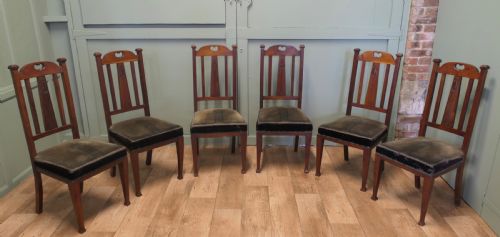
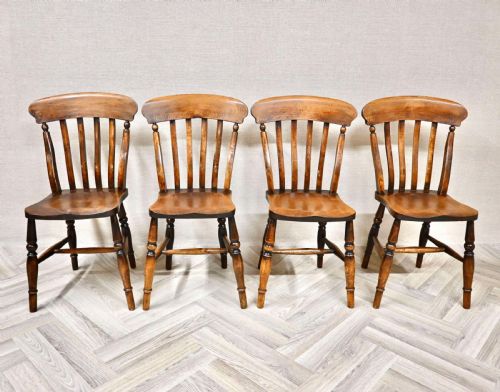
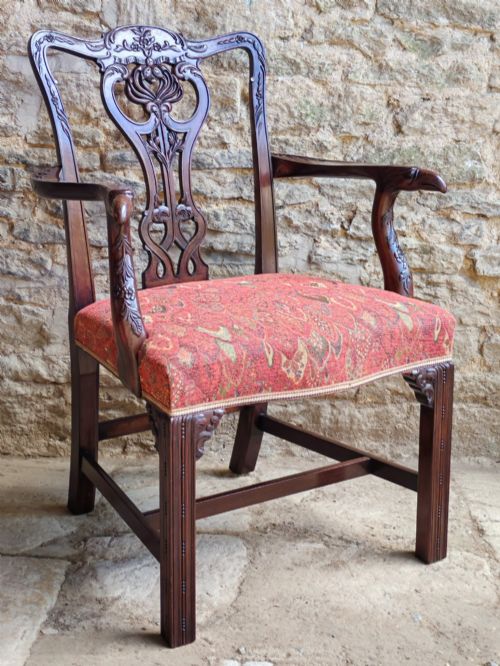
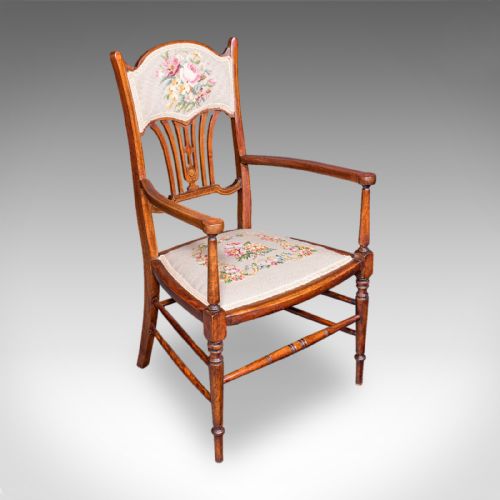
An edwardian dining chair bridges the gap between heavier nineteenth-century designs and lighter twentieth-century aesthetics, appearing frequently in sets or as individual carvers. Buyers searching this phrase encounter pieces spanning the early decades of the twentieth century, alongside occasional Victorian and Regency influences that inform the era's revival styles.
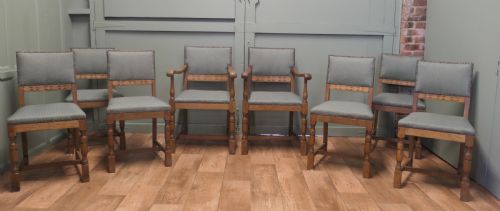
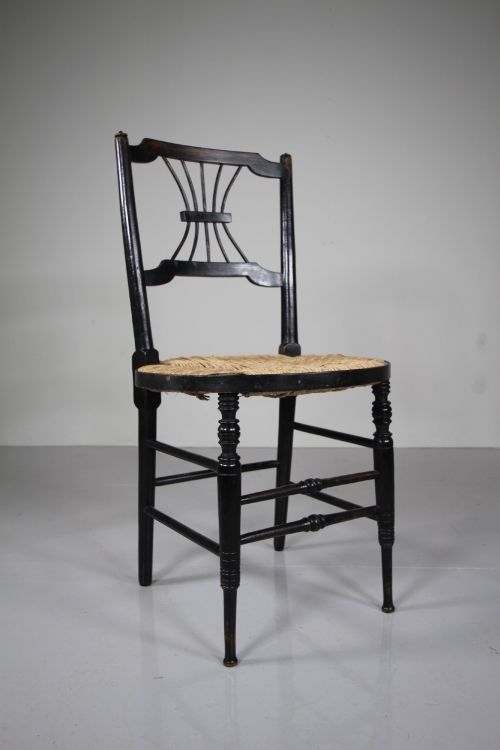
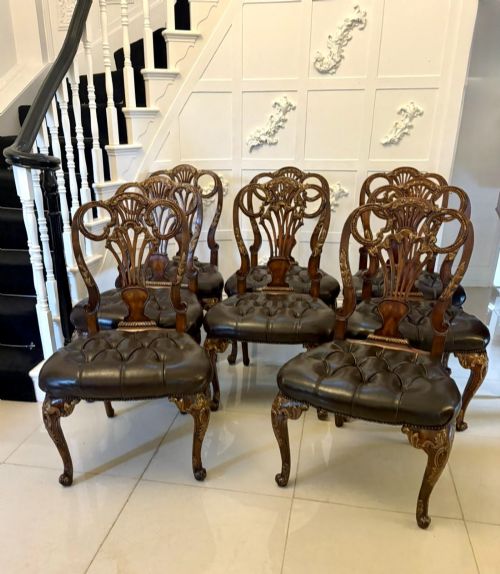
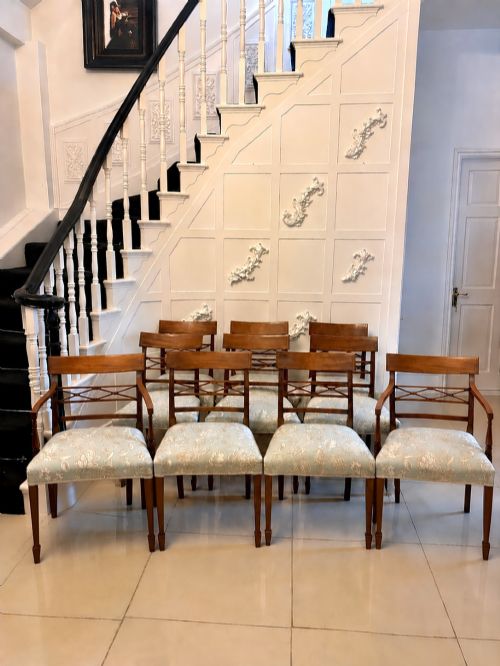
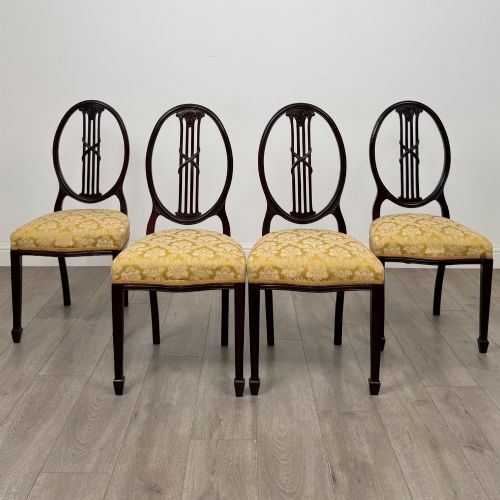
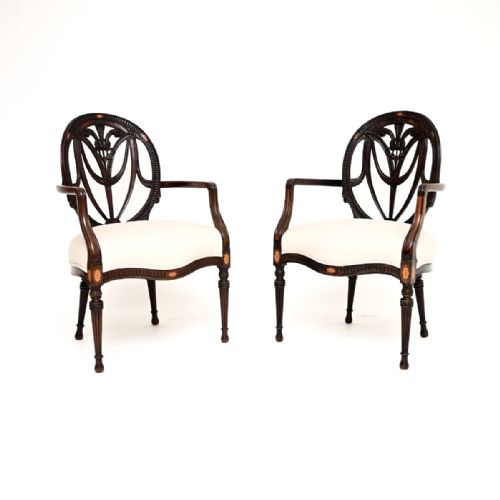
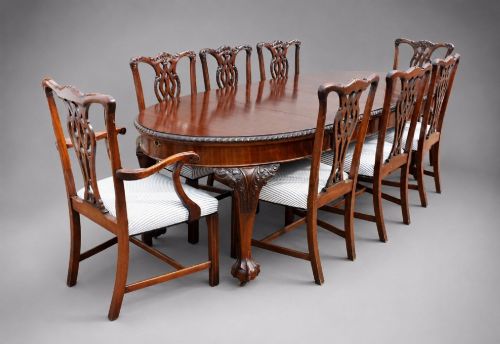
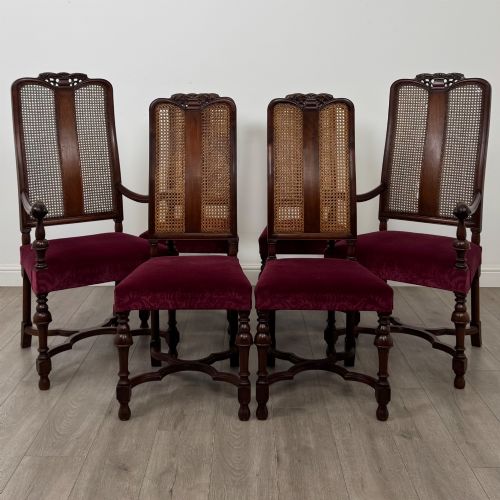
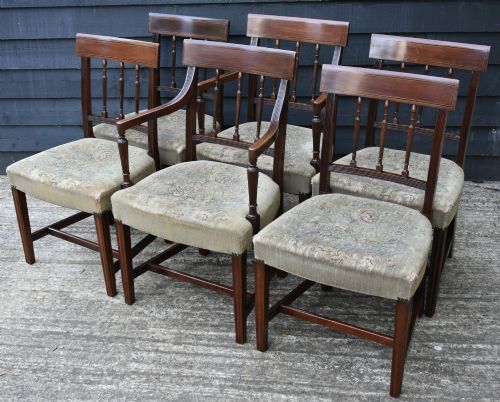
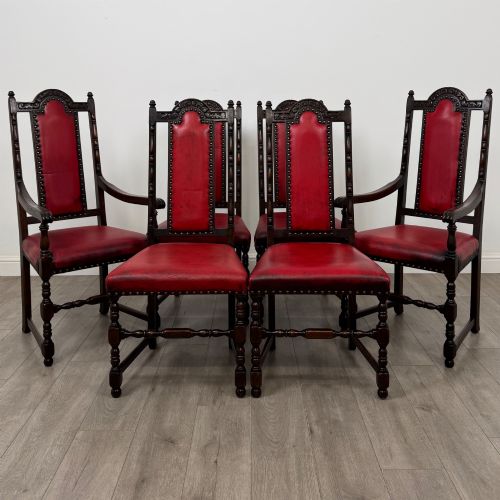
The physical forms range from plain side chairs to substantial carver armchairs with upholstered seats in fabric, leather, velvet, or cane. Common variations include Chippendale, Hepplewhite, Queen Anne, and Jacobean revivals, as well as Arts and Crafts iterations.
Origins are predominantly English, reflecting domestic workshop production and commercial cabinet makers of the period. Sets vary from pairs up to large groups of twelve, accommodating formal dining spaces as well as occasional bedroom use.
Materials and Construction
Construction relies heavily on hardwoods, with solid mahogany and oak forming the backbone of the surviving inventory, supplemented by walnut, teak, and occasional gilded accents. Timber frames frequently incorporate wood inlay, brass fittings, and carved detailing such as dolphins or intricate splats.
Upholstery materials range from traditional leather and velvet to modern fabric replacements and woven cane panels set into wooden frames. Joinery methods of the period ensure structural rigidity, supporting carved backs, balloon shapes, and ladderback configurations.
Retail Price Guide 2026
Typical UK retail prices for edwardian dining chair, calculated from the Sellingantiques database of over a million retail prices indexed since 2003. This retail price guide relies exclusively on Sellingantiques data; no external sources or auction records are used, so the figures do not describe the wider market.
Listings show a strong preference for mahogany and oak across Edwardian pieces, alongside walnut and teak.
Defining Quality
Quality reveals itself in the selection of timber and the crispness of the carving, where hand-finished details on walnut or mahogany outshine routine factory output. The integrity of the frame construction and the matching uniformity across a large set dictate the upper tier of the market.
The sophistication of stylistic adherence, such as detailed inlay work or faithful revival carving, separates standard utility seating from pieces produced by notable makers. Upholstery standard and the preservation of original timber patination further distinguish superior examples.
Waring and Gillow·Heals·Gordon Russell
The Edwardian Dining Chair Glossary
- Carver
- An armchair designed with side supports or elbows, typically placed at the head of a dining table.
- Splat
- The vertical wooden strip down the centre of a chair back, often carved or shaped in revival styles.
- Cane
- Woven rattan material used to form breathable seat panels or backrests within a wooden frame.
- Inlay
- Decorative wood or brass pieces fitted flush into the surface of the timber to create contrasting patterns.
- Balloon back
- A rounded, continuous wooden back frame shaped like a balloon, popular in nineteenth-century and transitional seating.
Frequently Asked Questions
How many edwardian dining chairs come in a set?
Sets commonly range from four to eight chairs, though larger groups of ten or twelve occasionally appear for formal dining rooms.
Individual carvers and pairs also exist for occasional use in bedrooms or studies.
What wood types were used for these chairs?
Mahogany and oak dominate the surviving examples, often selected for their durability and rich grain patterns.
Walnut, teak, and fruitwoods also appear alongside decorative brass elements and wood inlay.
Are edwardian chairs comfortable for daily use?
Solid timber frames and supportive upholstered pads make them well-suited for everyday dining.
Many retain or have been fitted with comfortable leather, fabric, velvet, or cane seats.
How do I spot an edwardian revival style?
Makers during this period frequently copied earlier Georgian forms like Chippendale and Hepplewhite.
Look for early twentieth-century construction methods combined with eighteenth-century aesthetic details.