

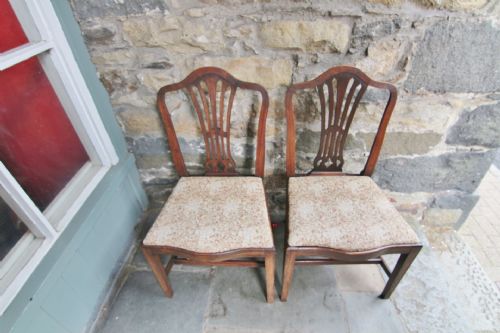

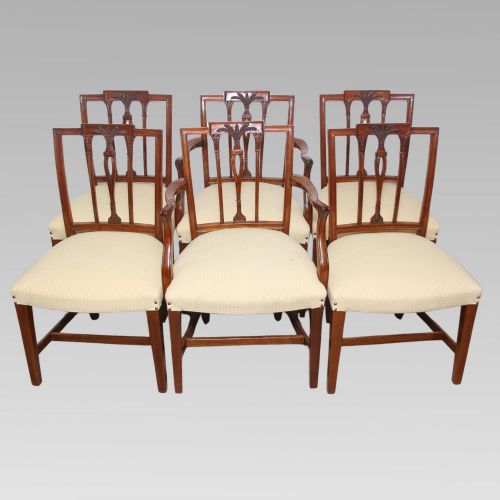


Hepplewhite Revival Chairs
Hepplewhite revival chairs bring elegant shield backs and refined mahogany frames into period and modern dining spaces alike.
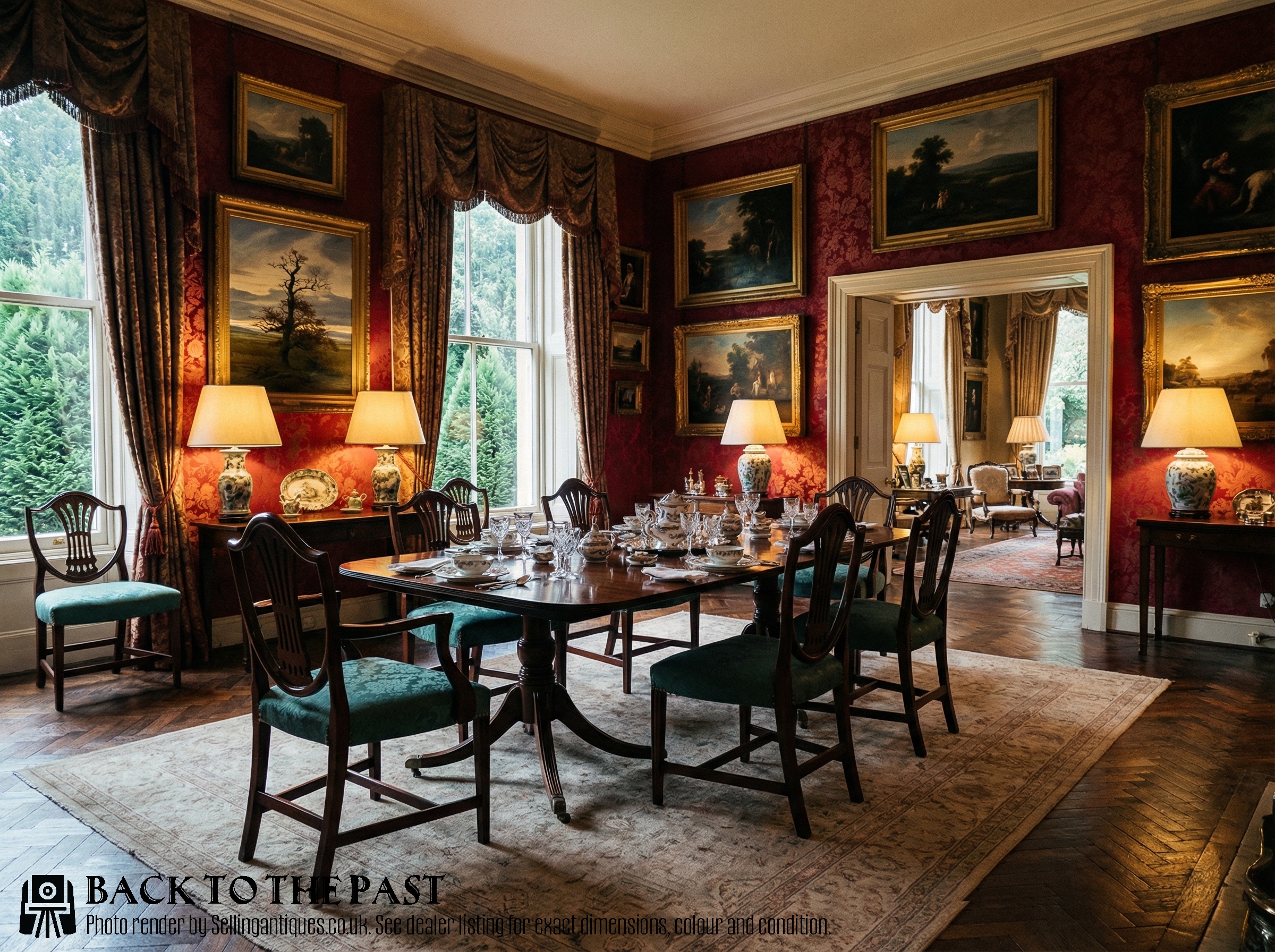
Hepplewhite Revival Chairs
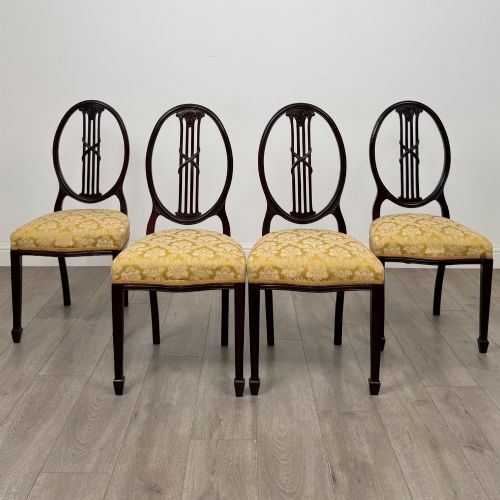
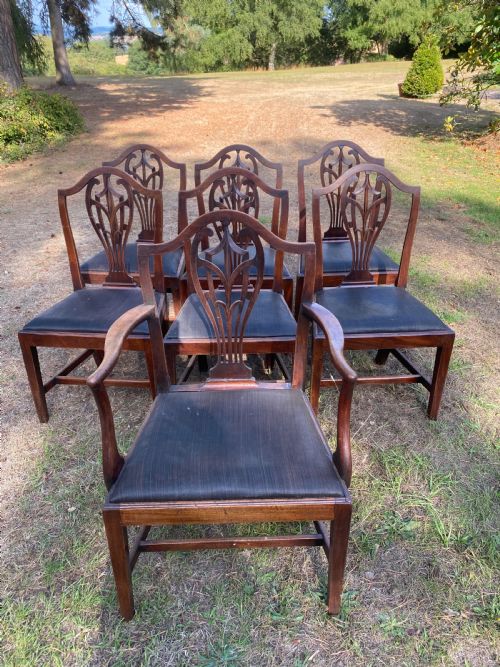
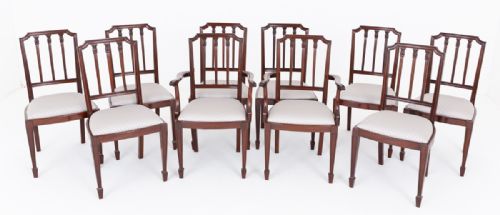
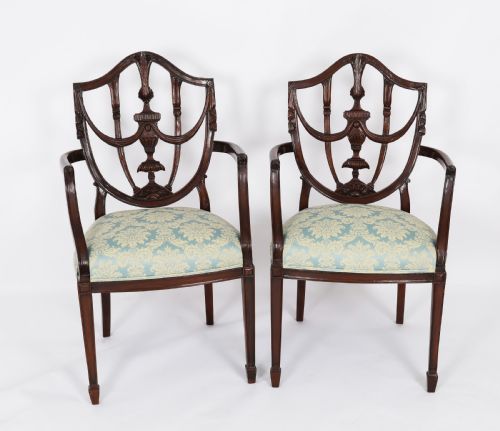
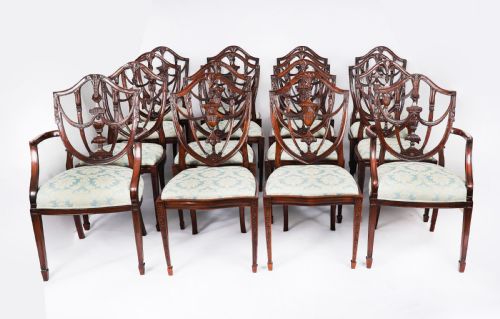
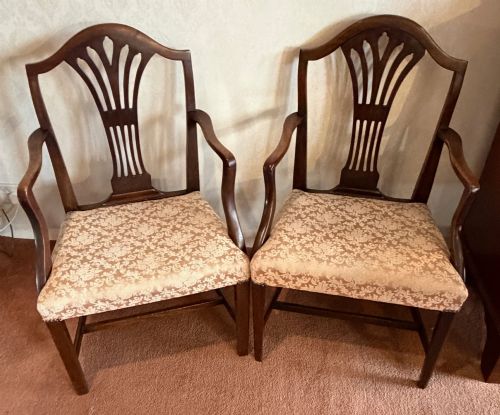
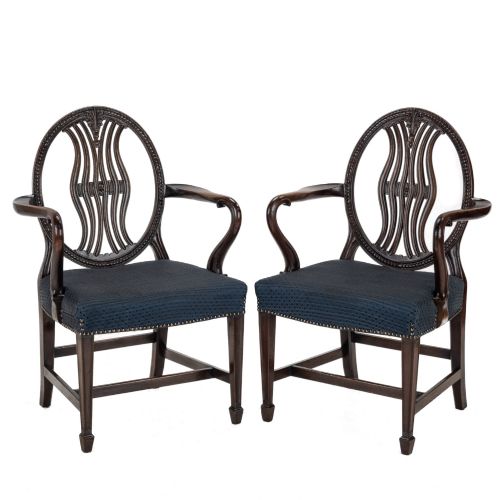
Hepplewhite revival chairs embody the graceful silhouettes of late eighteenth-century seating scaled for later dining rooms and parlours. Buyers searching for hepplewhite revival chairs encounter various configurations, from single pairs of open armchairs to complete sets of dining chairs spanning eight or ten pieces.
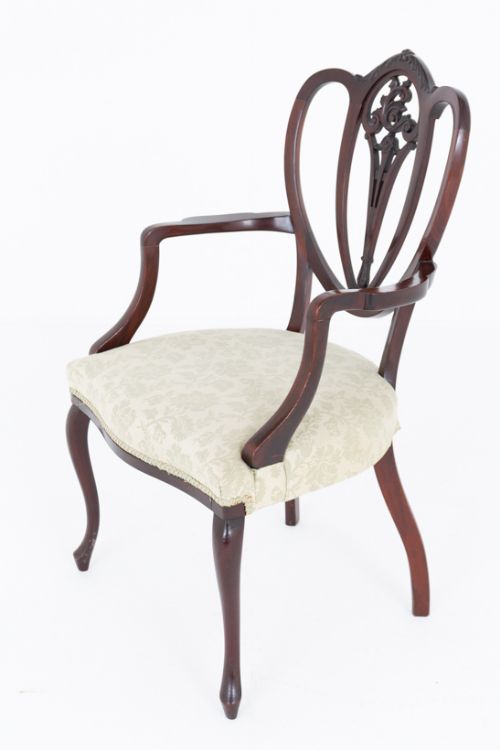
The selection here encompasses several distinct forms including shield back side chairs, carvers with scrolling arms, and occasional settees. These pieces emerge predominantly from Victorian, Edwardian, and early twentieth-century workshops interpreting earlier Georgian designs.
Makers often adapted the characteristic tapering legs and carved splats for contemporary comfort while retaining the formal geometry of the original style. This continuity of form allows buyers to mix individual armchairs with matching sets of dining seats seamlessly.
Materials and construction
Makers relied heavily on solid mahogany and occasional satinwood for frames, supplying the dense grain and rich tone required for intricate carving. Selected timber was shaped to form the curved stiles and distinctive shield backs typical of the aesthetic.
Upholstery completed the seating, utilising traditional textiles such as damask fabric, tapestry, and plain fabrics secured over padded seat foundations. Brass elements occasionally appeared in structural reinforcement or decorative detailing on finer examples.
Cabinetmakers combined hand-carving techniques with precise joinery to ensure the slender legs and open woodwork withstood daily use. Ebonised finishes and delicate string inlay provided alternative surface treatments on specific Victorian and twentieth-century interpretations.
Hepplewhite Revival Chairs Retail Price Guide 2026
Typical asking prices for hepplewhite revival chairs among the pieces listed under this phrase on Sellingantiques today, from the lower quarter to the upper quarter. They describe what is for sale here now, not the wider market.
Some Edwardian dining sets quietly accumulated extra carvers over the decades, turning ordinary family meals into small parliamentary debates.
Judging the range
Quality separates mass commercial production from master cabinet work through the crispness of the carved details on the shield backs and splats. Superior examples exhibit deeply incised motifs and balanced proportions that mirror eighteenth-century origins with precision.
The choice of timber grain and the integrity of the joinery at the leg and seat joints determine the structural longevity of each piece. Finer sets display carefully matched mahogany boards and harmonious grain patterns across every chair in the group.
The Hepplewhite Revival Chairs Glossary
- Shield back
- A chair back shaped like a heraldic shield, often featuring carved splats and a curved top rail characteristic of Hepplewhite design.
- Carver
- An armchair designed with armrests, typically intended for the head of a dining table or as a companion to side chairs.
- Settee
- A long wooden or upholstered seat with a back and arms, built to accommodate multiple sitters in a drawing room or hall.
- Satinwood
- A lustrous, yellowish timber utilised for fine inlay and decorative banding on select revival furniture.
- Damask
- A reversible figured fabric traditionally woven with intricate patterns, frequently chosen for period upholstery.
Hepplewhite Revival Chairs: Frequently Asked Questions
How do I date these chairs?
Dating relies on examining the timber preparation, secondary woods, and upholstery methods underneath the seat rail. Victorian and Edwardian revival pieces often reveal machine-sawn components alongside hand-finished carving.
Comparing the specific proportions and inlay styles to documented late nineteenth and early twentieth-century production helps narrow the decade of manufacture.
Can I mix armchairs with side chairs?
Dining sets frequently combine matching side chairs with a pair of armchairs, often called carvers, designated for the ends of the table. This traditional arrangement offers visual balance and practical seating variety.
Matching the wood tone and shield back geometry ensures a cohesive appearance when combining individual chairs into a unified dining group.
What fabric should I use for reupholstery?
Period-appropriate choices include damask fabric, traditional tapestry, and textured textiles that complement the mahogany frames. Selecting woven patterns consistent with Edwardian and Victorian interiors maintains the historical context of the furniture.
Upholstering over traditional webbing and stuffing preserves the correct seating height and firmness intended by the maker.
Are large sets difficult to find?
Complete dining sets comprising eight or ten chairs require patience to source because many originals were split up over time. Assembled sets often appear alongside matched dining suites from the early twentieth century.
Verifying that all chairs share identical carving details and timber selection confirms whether a large set originated together.