




Edwardian Georgian Revival Chairs
Edwardian Georgian revival chairs bring the elegance of eighteenth-century seating into early twentieth-century interiors through careful mahogany and satinwood carpentry.
Edwardian Georgian Revival Chairs
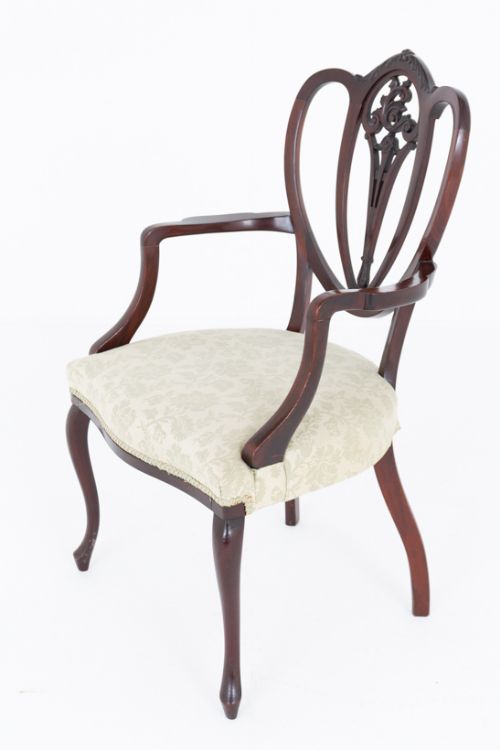
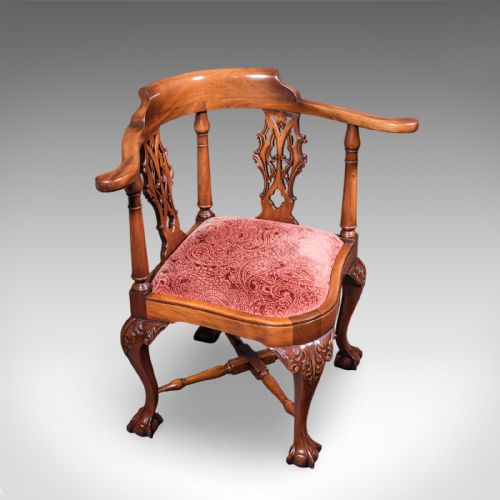
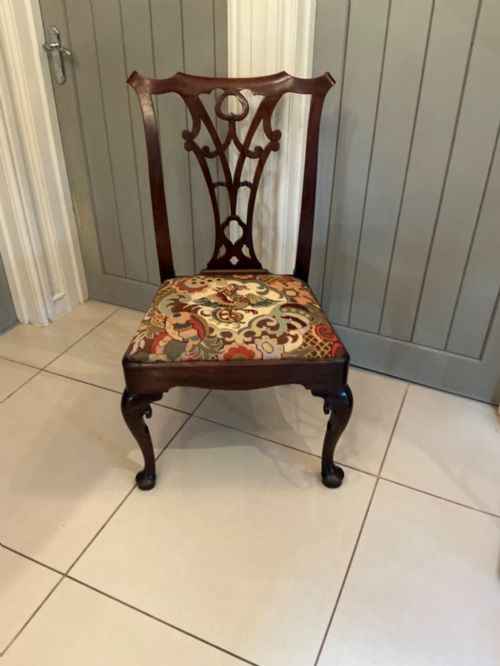
When you search for edwardian georgian revival chairs, you encounter seating built primarily around the turn of the twentieth century that reinterprets earlier forms. These pieces draw directly on the vocabulary of eighteenth-century makers, adapting classic outlines for later Edwardian and Victorian drawing rooms and dining spaces.
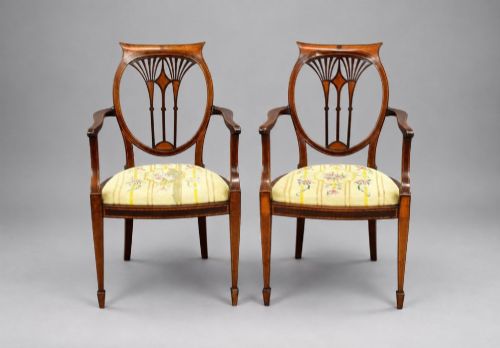
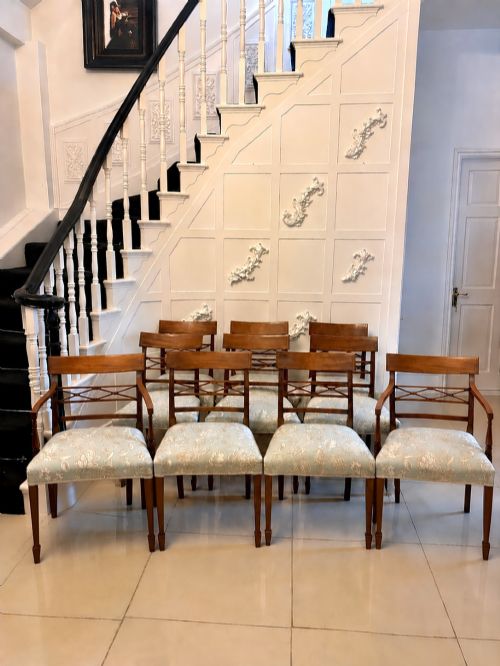
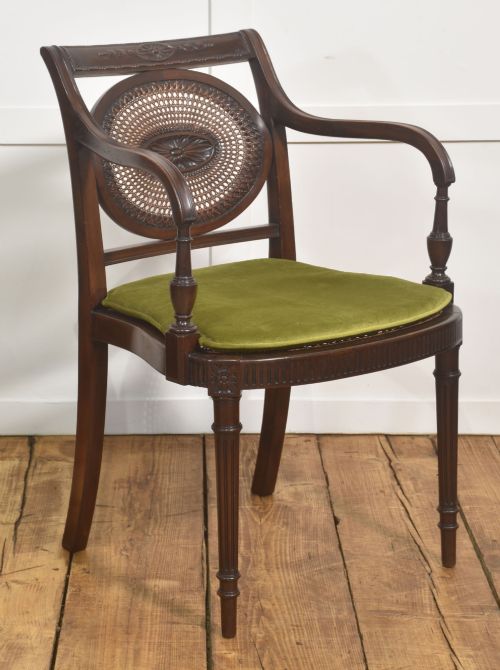
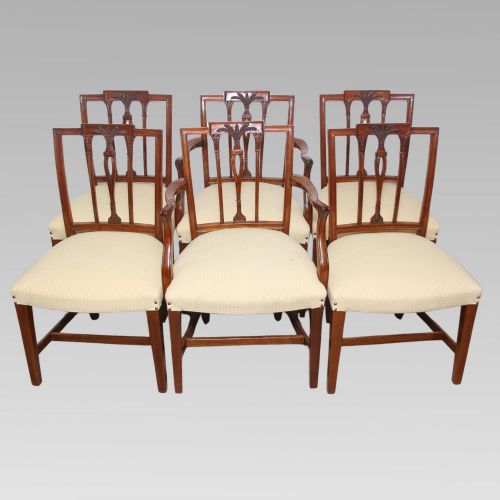
The version you are most likely to meet on this page is the dining chair or set of dining chairs fashioned from mahogany, often appearing in large groups with carver armchairs alongside side chairs. Single armchairs, elbow chairs, and library seats also surface frequently, carrying revival details from the Georgian, Sheraton, Hepplewhite, and Chippendale traditions.
Originating predominantly in the late nineteenth and early twentieth centuries, these chairs combine older stylistic motifs with the manufacturing capabilities of the period. They span single occasional seats, pairs of library armchairs, and expansive dining sets designed to anchor formal rooms.
What varies in quality
The calibre of edwardian georgian revival chairs depends heavily on the precision of the timber carving and the fidelity of the revival style. Pieces featuring hand-carved details, such as complex splats and sculptural feet, represent a higher standard of craftsmanship than simpler, mass-produced alternatives.
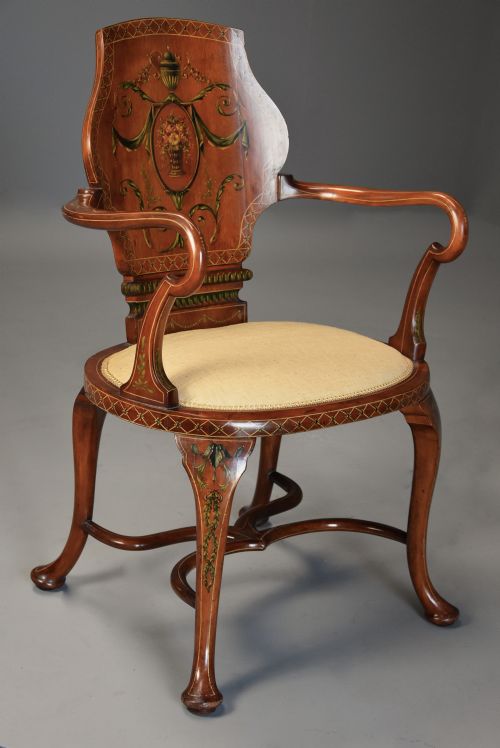
Materials also dictate grade, with finely figured mahogany and genuine painted satinwood distinguishing superior examples from standard production pieces. The integrity of the original upholstery framework, inlay work, and structural stability further separate the finest dining sets and armchairs from routine utilitarian seating.
The documented pieces span the late nineteenth century through the nineteen-twenties, incorporating Sheraton, Hepplewhite, Chippendale, and George II motifs.
The Edwardian Georgian Revival Chairs Glossary
- Carver armchair
- An armchair designed with arms, traditionally placed at the head of a dining table or used as an occasional seat alongside matching side chairs. These often formed part of larger dining sets.
- Elbow chair
- An alternative term for an open armchair, featuring supportive armrests flanking the seat. They appear frequently in Sheraton and Chippendale revival suites.
- Bergere
- An enclosed upholstered armchair with a wooden frame, where the sides often incorporate woven cane panels. This form offers deep seating comfort.
- Splat
- The vertical wooden strip down the centre of a chair backrest, shaped and carved in revival pieces to echo original eighteenth-century designs. Its contour defines the stylistic lineage.
- Inlay
- A decorative technique where contrasting pieces of wood or other materials are inserted into recesses in the primary timber surface. Satinwood stringing and floral motifs are typical examples.
Edwardian Georgian Revival Chairs: Frequently Asked Questions
How do I spot a revival chair?
Revival chairs display the stylistic characteristics of earlier eighteenth-century periods like the Georgian era, but construction methods, timber patination, and secondary woods reveal an early twentieth-century or late nineteenth-century origin.
Examining the underside of the seat frame and the crispness of the carving helps confirm whether the piece belongs to the Edwardian revival movement rather than the original historic period.
Were these chairs used for dining?
Many examples on this page served as formal dining furniture, sold in large sets that combined numerous side chairs with a pair of armed carvers.
Smaller numbers of armchairs and library seats were intended for drawing rooms, bedrooms, and writing desks rather than the dining table.
How should I clean mahogany frames?
Maintenance requires gentle dusting with a soft, dry cloth to protect the polished wood surface and any delicate inlay work from moisture damage.
Avoiding harsh chemical sprays preserves the original finish and patina developed over decades of domestic use.
Can I mix different revival styles?
Combining Sheraton revival pieces with Chippendale or Hepplewhite designs works well if the wood tones, particularly mahogany and satinwood, share a similar warmth and depth.
Matching the overall scale and foot style helps maintain visual harmony when placing different revival chairs in the same room.