

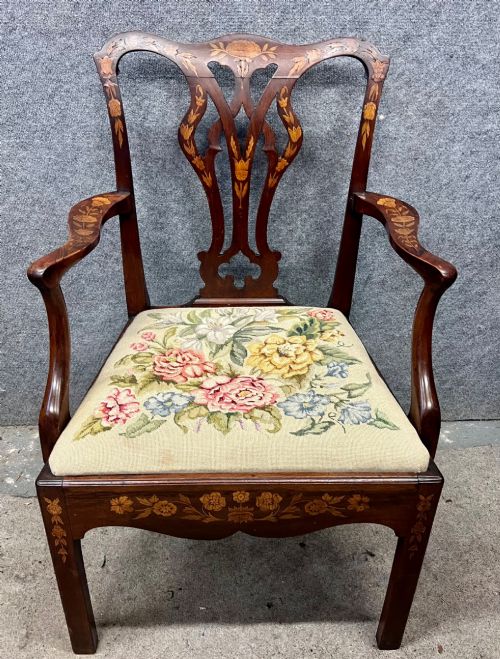
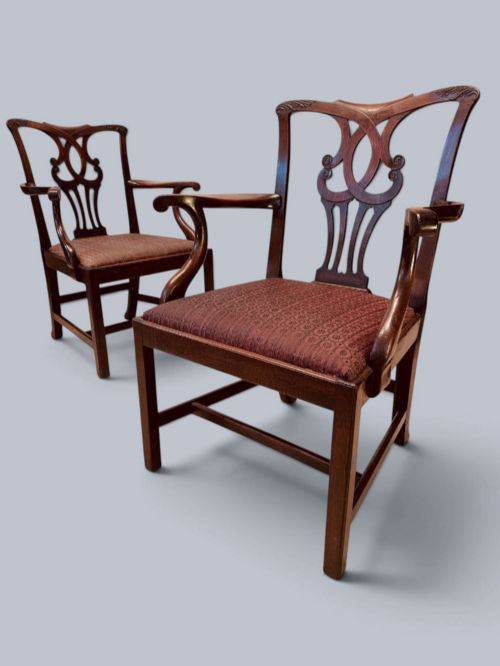
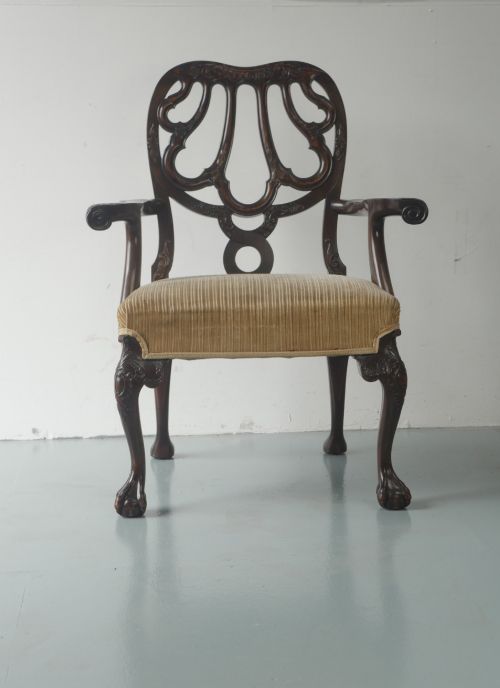
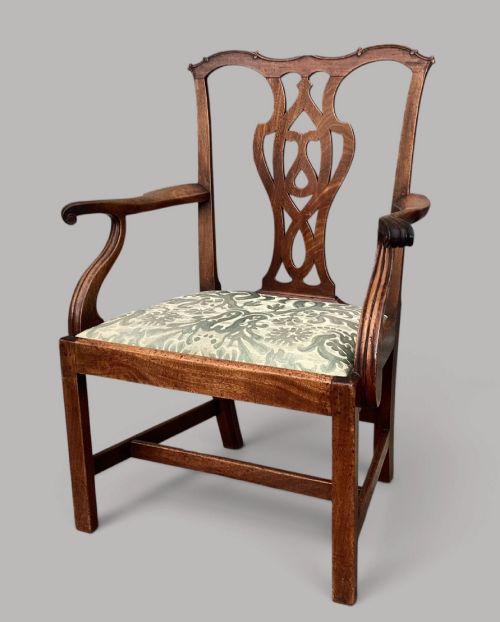
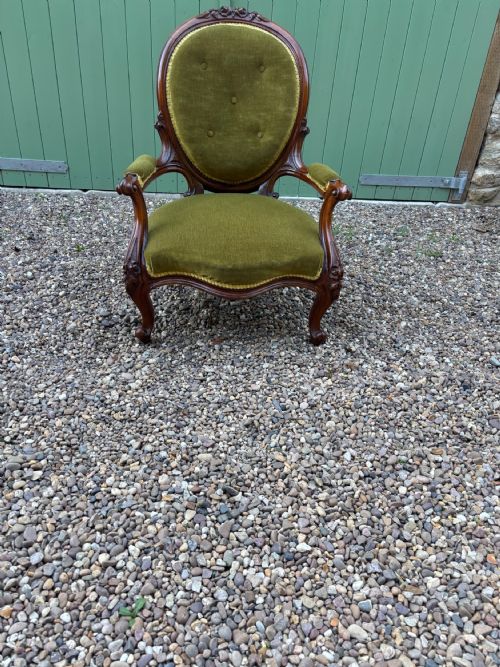
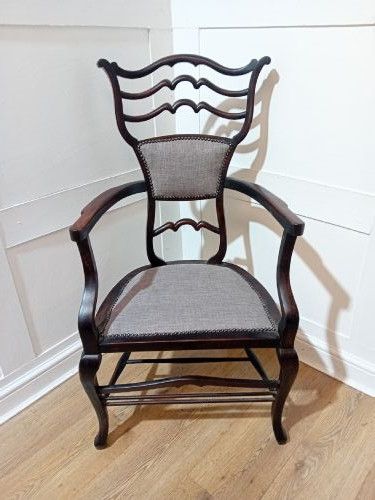
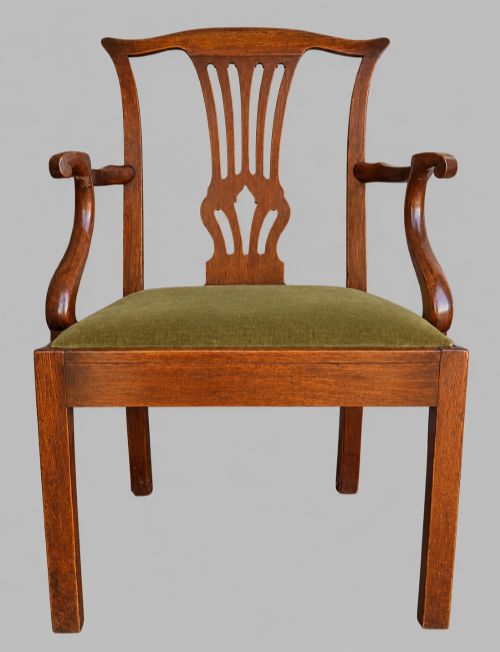
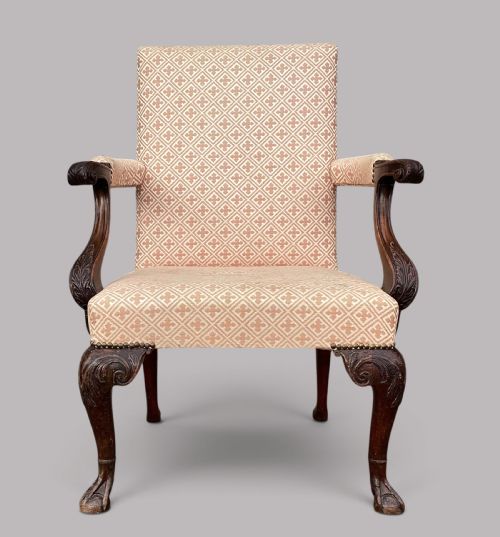
Carved Mahogany Open Armchair
A carved mahogany open armchair brings timeless structural warmth and rich timber grain to any interior.
Carved Mahogany Open Armchair
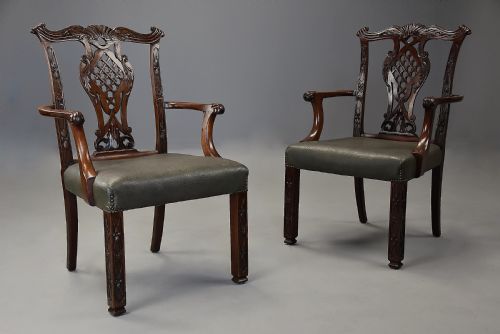
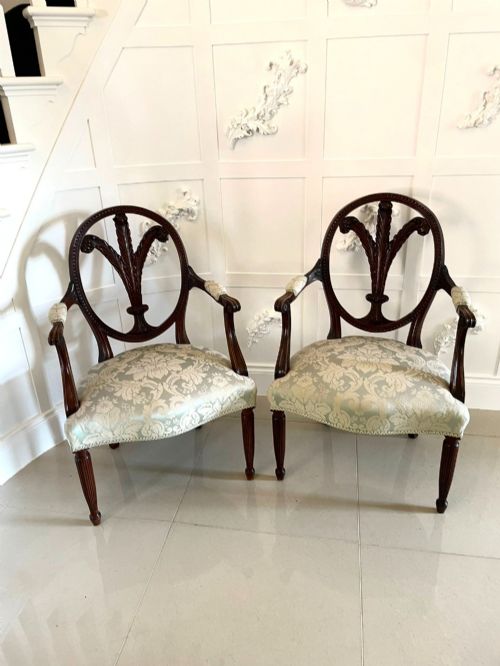
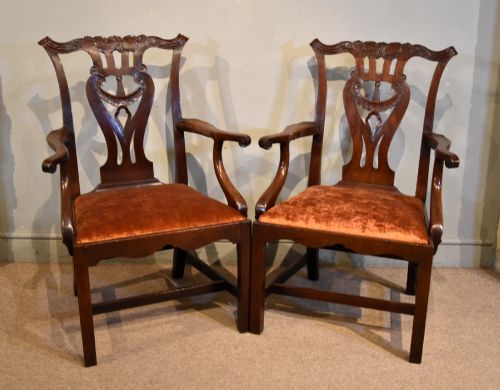
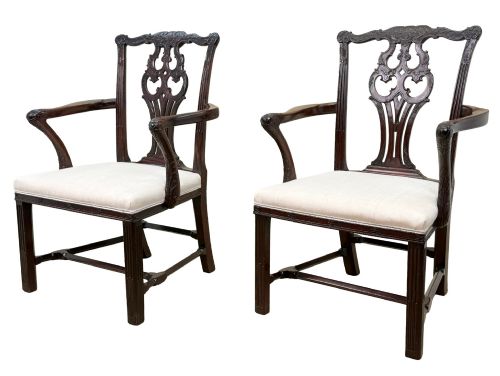
When you search for a carved mahogany open armchair, you encounter seating developed across the eighteenth, nineteenth, and early twentieth centuries. These pieces encompass forms from the Georgian and Regency periods alongside Edwardian revival pieces and later interpretations.
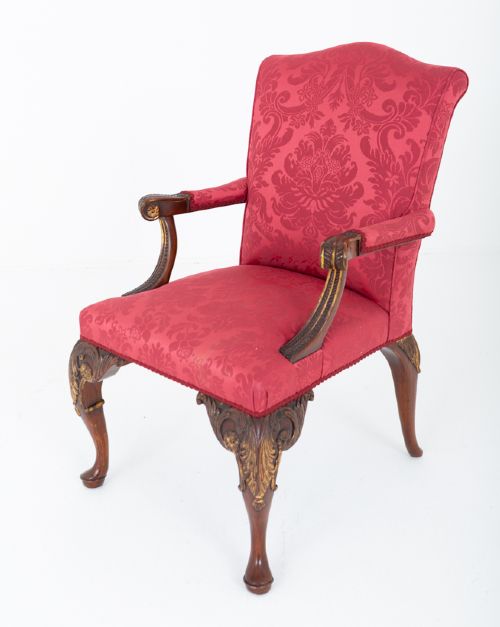
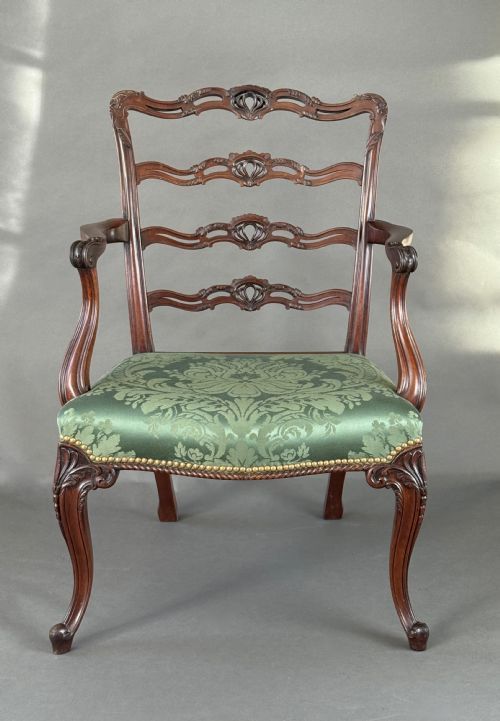
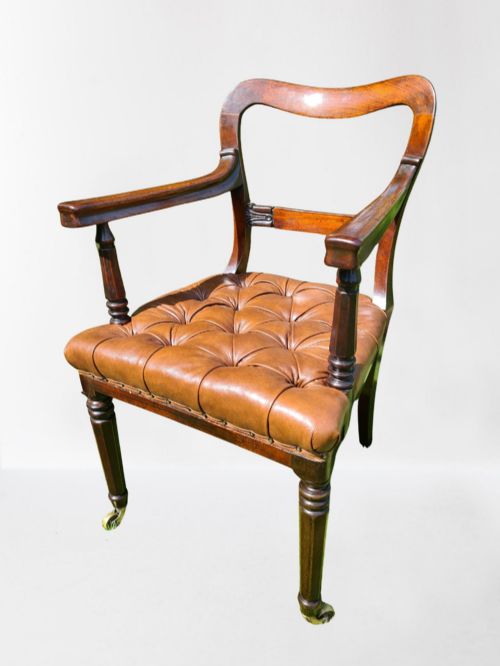
The inventory on this page shows elbow chairs, desk chairs, salon chairs, child's chairs, and porters or masonic chairs. You are most likely to meet Georgian Chippendale style examples and nineteenth-century carved armchairs in these listings.
Makers designed these chairs for parlours, desks, and libraries, combining structural open arms with dense tropical timber. The designated styles range from George II and George III through to Edwardian Empire Revival.
Construction and materials
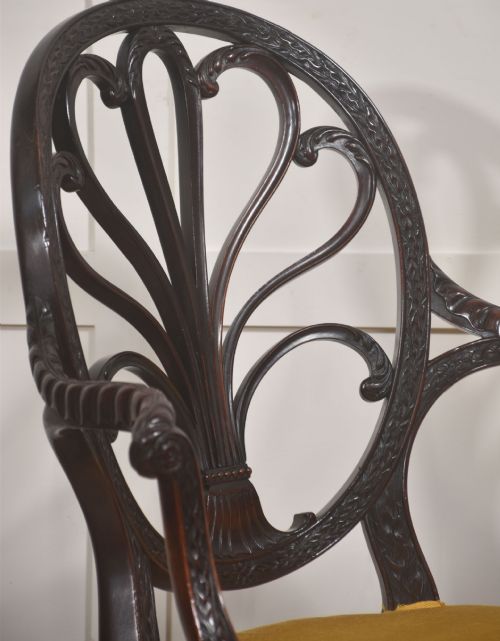
Cabinetmakers utilised solid mahogany to build the frames of these chairs, carving the dense wood along backs, rails, and arm supports. This timber accepted sharp chisel work and deep relief carving without splitting.
Workshops integrated textile elements into the seating through drop-in or fixed pads covered in fabric, silk, wool, velvet, and tapestry. Artisans secured these coverings using upholstery studs.
Carved Mahogany Open Armchair Retail Price Guide 2026
Typical asking prices for carved mahogany open armchair among the pieces listed under this phrase on Sellingantiques today, from the lower quarter to the upper quarter. They describe what is for sale here now, not the wider market.
The listings span five distinct eras: 18th Century, Georgian, Regency, 19th Century, and 1900.
Assessing quality and execution
The refinement of the carved ornament separates standard production from superior work. Crisp undercutting and purposeful chisel definition on the mahogany demonstrate a master carver's hand rather than hurried mechanical replication.
Proportional harmony in the open arms, stiles, and legs dictates the visual success of the chair. Grain selection across prominent crest rails also marks the distinction between ordinary stock and high-status seating.
The Carved Mahogany Open Armchair Glossary
- Mahogany
- A durable tropical hardwood known for its rich reddish-brown colour and stability under carved detail. It serves as the primary material across these listings.
- Carver armchair
- An armchair designed with open arms, frequently intended for use at the head of a dining table or as a desk seat. These pieces match standard dining chairs of the same suite.
- Bar back
- A chair back featuring a horizontal carved rail resembling a bar, common in Georgian carver armchairs. This element often incorporates central carved motifs.
- Upholstery studs
- Metal tacks driven in rows to fasten textile covers to the wooden frame. They provide a decorative border as well as structural security.
Carved Mahogany Open Armchair: Frequently Asked Questions
What is an open armchair?
An open armchair is a seat featuring unpadded wooden armrests rather than upholstered enclosures. This design allowed eighteenth-century sitters room for wide garments.
Such chairs functioned as desk seats, salon furniture, or auxiliary seating in principal rooms.
How do I date a mahogany chair?
Dating relies on the stylistic markers of periods such as Georgian, Regency, or Edwardian. Construction methods and wood patination also guide attribution.
Makers changed leg profiles, stretcher arrangements, and carving motifs across these decades.
What woods were used besides mahogany?
The listings on this page focus entirely on mahogany as the structural wood for these chairs. Secondary woods sometimes appear in internal frame linings.
Upholstery elements bring in textiles like silk, wool, and velvet.
How were desk armchairs used?
Desk armchairs provided stable, upright seating for writing and administrative tasks in libraries and studies. Their open arms accommodated movement while working.
These pieces combined utility with the formal appearance expected in period interiors.