

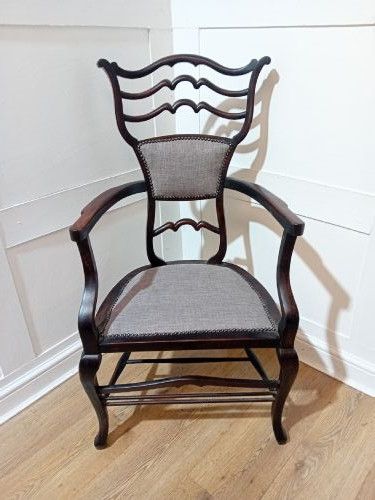
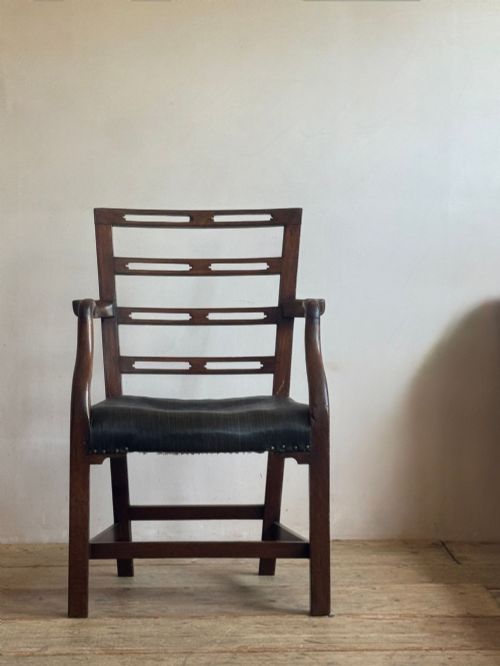
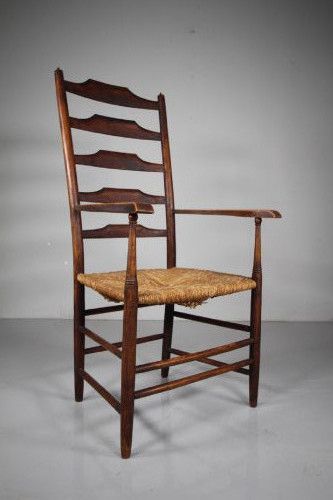


Ladder Back Armchair
When you choose a ladder back armchair, you select a sturdy traditional seat defined by horizontal rails across the back.
Ladder Back Armchair
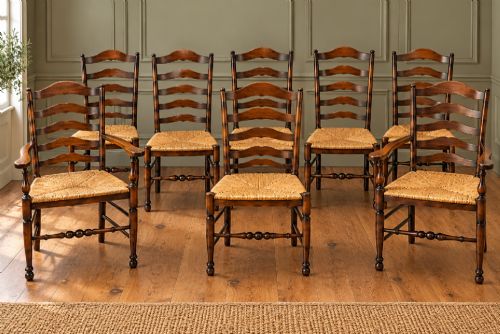
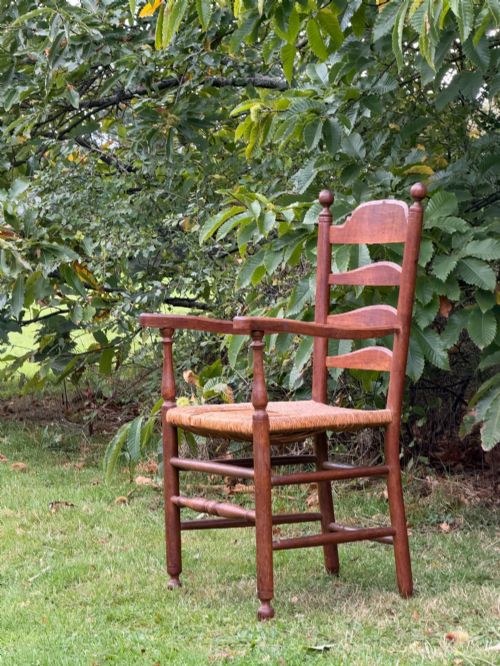
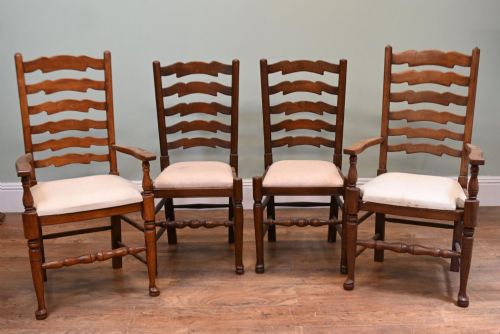
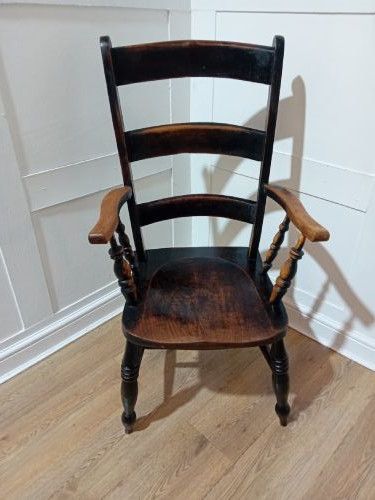
A ladder back armchair is a traditional form built with horizontal cross-rails set between upright posts, appearing across various regional styles from the eighteenth century onwards. These seating options include country carvers, dining armchairs, and rocking variants designed for domestic use.
The pieces on this page span several eras from the Georgian period through the nineteenth century and into the Arts and Crafts movement of 1900. English country vernacular examples sit alongside formal mahogany iterations influenced by Chippendale designs.
Regional variations such as Lancashire, Cheshire, and Macclesfield types show distinct local turning patterns and proportions. Buyers encounter both single armchairs and matched sets intended for dining spaces.
How they were made
Cabinet makers and vernacular turners utilised native timbers including ash, elm, oak, beech, and mahogany, often combining woods within a single frame such as an ash frame with an elm seat. Rush forms the traditional seating material for country regional chairs, woven tightly over internal frames.
Joinery techniques relied on pegged mortise and tenon joints to secure the uprights and rails, while turned spindles and finials required the use of a lathe. Frames left in original finish contrast with pieces exhibiting later painted surfaces.
Ladder Back Armchair Retail Price Guide 2026
Typical asking prices for ladder back armchair among the pieces listed under this phrase on Sellingantiques today, from the lower quarter to the upper quarter. They describe what is for sale here now, not the wider market.
Some ladder back armchairs double as library steps, proving that one piece of furniture can hold both a reader and their ambition.
What varies in quality
The integrity of the structural frame dictates the longevity of the piece, with tight joints and minimal replacement parts preserving the original geometry. Original rush seating intact from the period commands greater interest than completely replaced cordage.
Subtlety of turning on the arms and upright posts separates basic provincial work from finer regional craftsmanship. Timber selection and matching grain across the horizontal ladder rails also influence the visual cohesion of the chair.
Philip Clissett·Liberty And Co·Dicon Nance·Heals
The Ladder Back Armchair Glossary
- Carver
- An armchair designed to match a set of dining chairs, typically featuring wider proportions and supportive armrests. These pieces served at the head of the dining table.
- Rush
- Dried marsh grass woven tightly to create a durable, flexible seat pad. This material appears frequently on country regional chairs.
- Spindle
- A slender turned wooden rod used for structural support or decoration within the backrest and undercarriage. Turners shaped these components on a lathe.
- Vernacular
- Everyday domestic furniture made by regional craftsmen using local materials rather than following high London fashion. These pieces reflect local traditions of construction.
Ladder Back Armchair: Frequently Asked Questions
What is a ladder back armchair?
A ladder back armchair is a traditional seat featuring horizontal wooden slats arranged like the rungs of a ladder between the rear uprights. These pieces range from simple country ash and elm farmhouse chairs to formal mahogany versions.
Craftsmen produced these chairs across multiple centuries for everyday domestic utility. The design provides strong lumbar support through the stacked horizontal rails.
Where were ladder back chairs made?
Regional workshops across England produced these chairs, with specific areas like Lancashire, Cheshire, and Macclesfield developing distinct turning styles. Rural bodgers and country cabinet makers utilised local timber stocks available in their immediate surroundings.
Later makers in the Arts and Crafts movement also revived these traditional forms in studio workshops. Urban centres also produced refined mahogany variations for polite rooms.
How do I care for a rush seat?
Rush seats require dry indoor environments to prevent moisture damage and rotting of the natural woven fibres. Occasional gentle dusting keeps the material clean without introducing excess liquid.
Avoiding direct sunlight helps preserve the natural tone of the dried marsh grass over decades of use. Weight distribution should remain balanced to prevent localised stress on the weave.
How do I date a ladder back chair?
Dating relies on examining the turning details of the finials and legs alongside the wear patterns on the timber framework. Earlier eighteenth-century examples display different proportions and hand-carved details compared to nineteenth-century vernacular pieces.
Construction methods such as peg placement and timber preparation offer further clues to the period of origin. Comparing the piece to documented regional styles helps narrow down the decade of manufacture.