
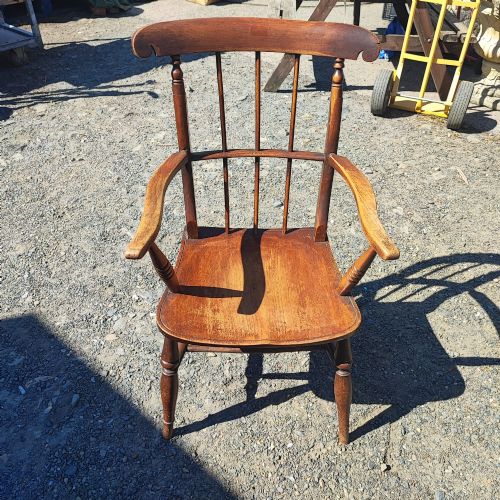
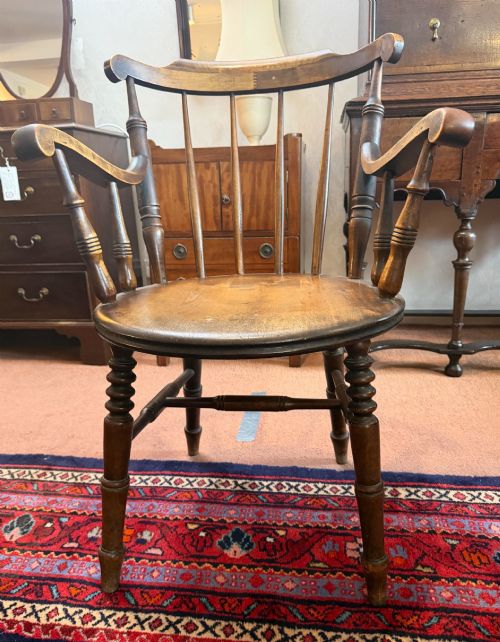
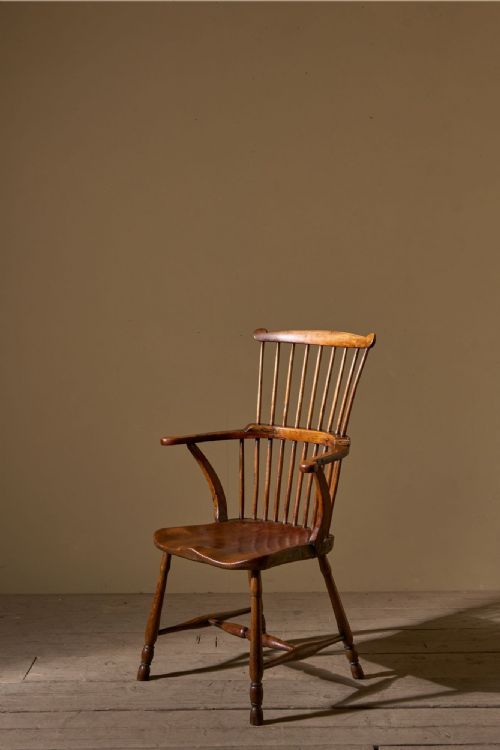
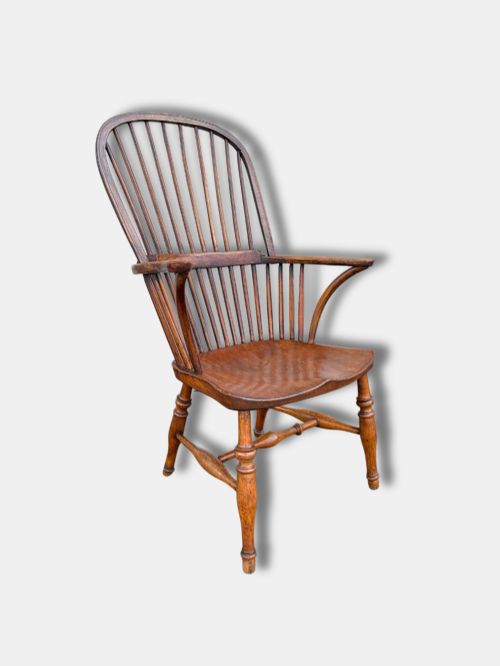

Brown Ash Armchair
A brown ash armchair brings sturdy vernacular character into a room, combining tactile native timbers with honest country craftsmanship.
Brown Ash Armchair
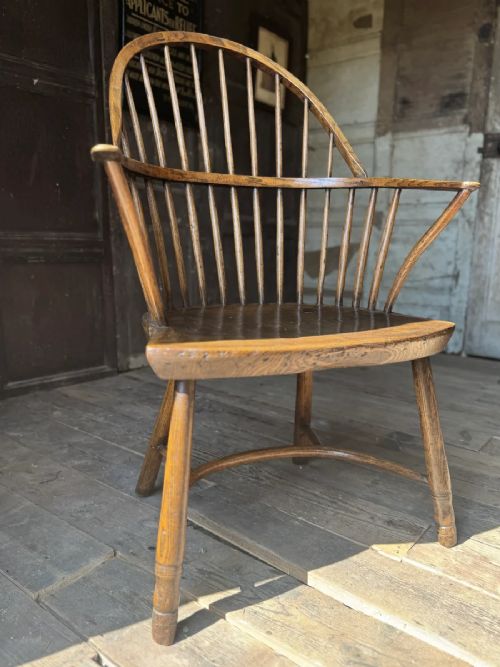
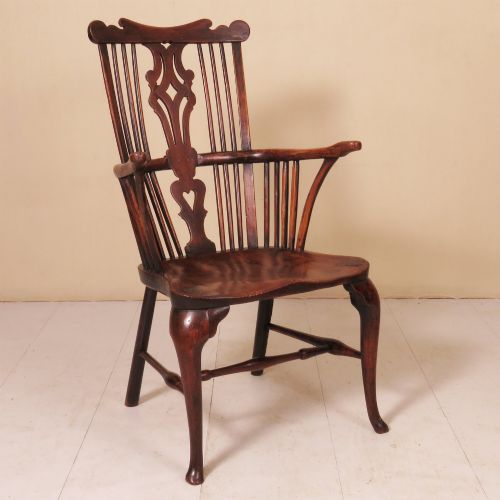
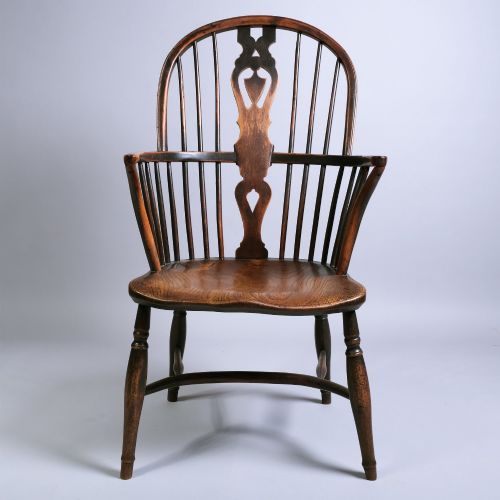
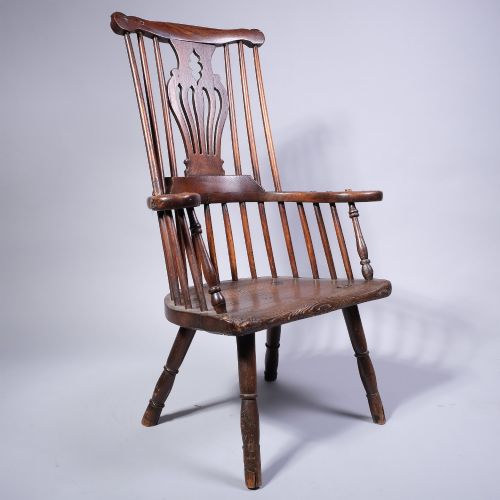
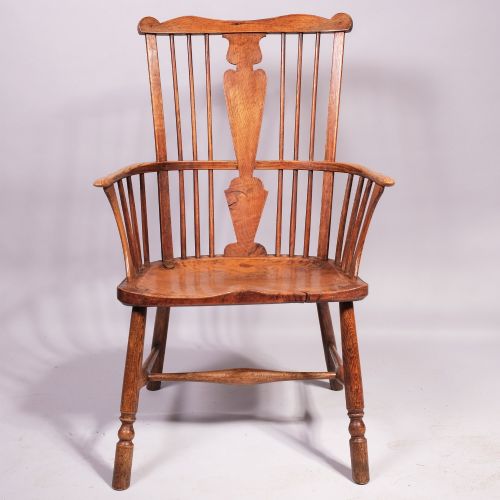
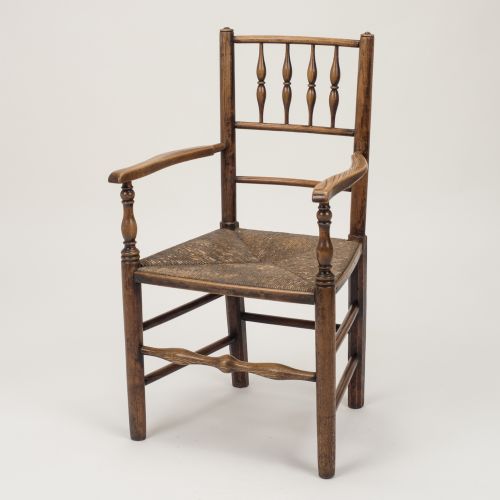
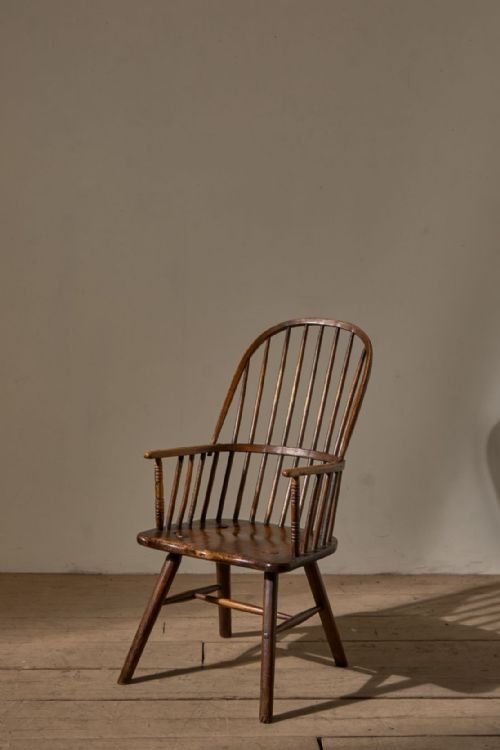
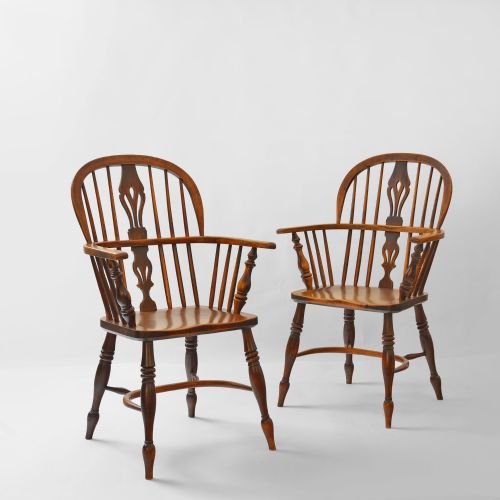
A brown ash armchair is a traditional country seating form, appearing on this page across the eighteenth, nineteenth and early twentieth centuries in styles such as Windsor, ladder back and vernacular farmhouse designs.
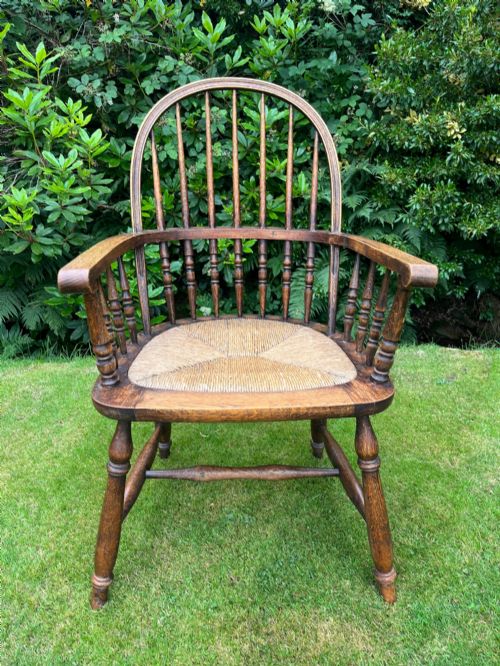
These chairs originate from English regional workshops, combining sturdy ash frames with elm seats, rush seating or secondary timbers like beech and yew.
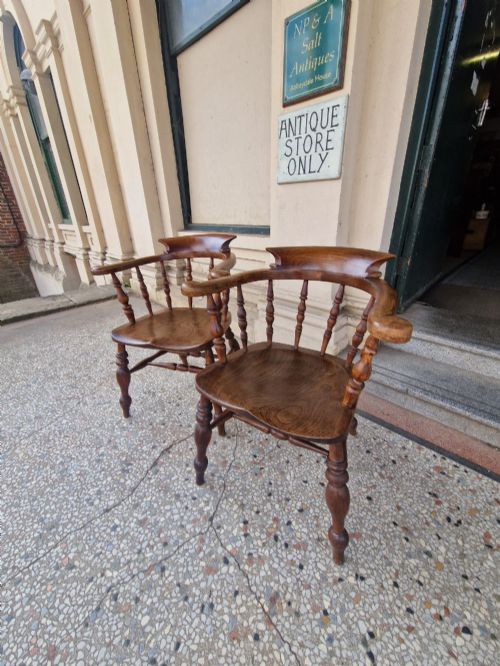
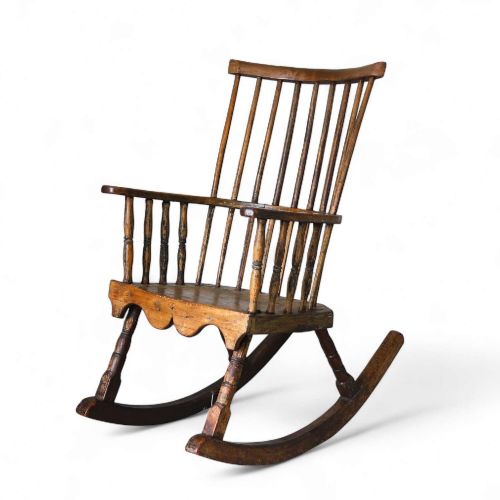
Forms range from low-back and comb-back Windsors to smokers bows, desk chairs and rocking chairs, reflecting the practical needs of domestic and workspace interiors.
How they were made
Maker-joiners utilised greenwood working techniques, steam-bending pliable ash for hoops, backs and spindles while turning legs and stretchers on pole lathes.
Seats were traditionally carved from solid elm planks, shaped with adzes and drawknives to provide a comfortable dish before wedging the tenoned legs and back uprights into place.
One chair even rocks through history, built by a comb-maker who clearly understood the value of a steady motion.
What varies in quality
Quality rests in the balance of proportions and the integrity of construction, where hand-turned spindles show crisp profiles and well-chosen grain directions provide structural resilience.
The sophistication of the arm bow shaping, the comfort of the elm saddle seat and the retention of original surface patination distinguish finer regional examples from simpler utility pieces.
Duncan McKellar·Fred Walker
The Brown Ash Armchair Glossary
- Windsor chair
- A chair built with a solid wooden seat into which the legs and back spindles are independently inserted. This form relies on a heavy plank base rather than a traditional framed chassis.
- Comb back
- A Windsor variation where the top rail resembles the spine of a comb, holding vertical spindles that pass through a horizontal arm bow. This design offers robust upper back support.
- Crinoline stretcher
- A curved under-stretcher linking the legs of a Windsor chair, often bowed outward. It provides substantial rigidity to the lower leg assembly.
- Smokers bow
- A low-backed armchair with a continuous turned armrail above spindle supports. These comfortable seats were common in country homes and rural inns.
Brown Ash Armchair: Frequently Asked Questions
What is a brown ash armchair?
A brown ash armchair is a vernacular wooden seat produced largely by regional English makers using native timber. These chairs combine turned ash frames with shaped elm seats and traditional joinery.
They serve as practical seating choices that bring historical texture and warmth into contemporary or traditional interiors.
How were these chairs used historically?
These armchairs functioned as everyday seating in farmhouses, cottages, offices and country inns. Their robust construction suited them for heavy daily use around dining tables, desks or hearths.
Different formats, such as low-back Windsors or desk chairs, catered to specific domestic and working tasks.
How do I date an ash armchair?
Dating relies on observing tool marks, timber selection, construction methods and wear patterns. Eighteenth-century examples often display subtle regional variations and softer hand-carved details.
Nineteenth-century pieces frequently show the influence of mechanized turning alongside traditional bodger techniques.
How do I live with an antique ash chair?
Living with these chairs involves placing them away from direct heat sources and sudden humidity changes to protect the dry timber. Regular dusting and occasional wax care help maintain the historic surface finish.
Their sturdy nature makes them practical for daily use as desk chairs, reading seats or occasional dining chairs.