
Rush Seated Country Chair
A rush seated country chair brings tactile texture and sturdy vernacular craftsmanship into modern dining rooms and kitchens.
Rush Seated Country Chair
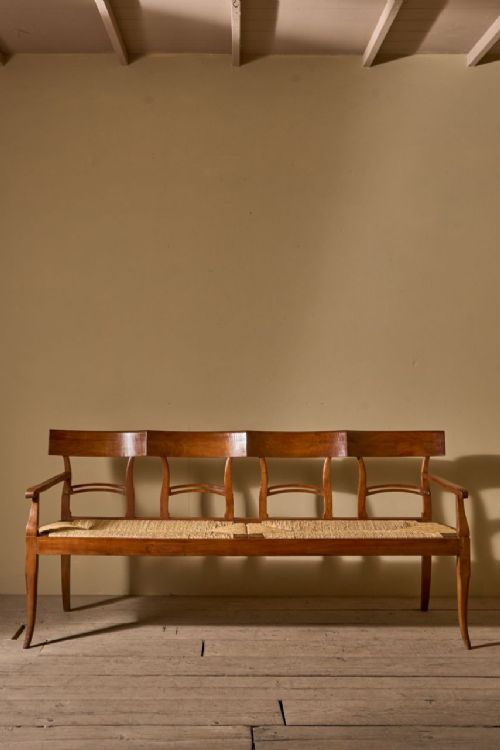
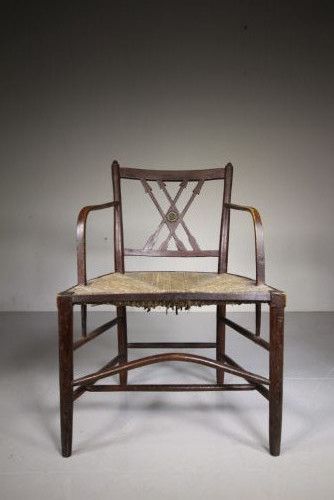
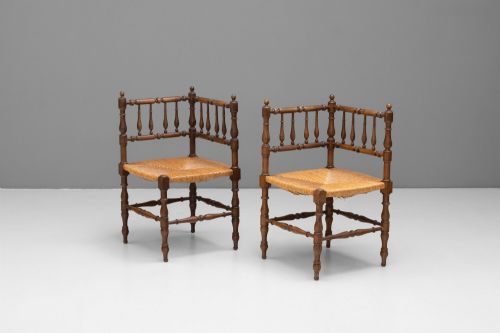
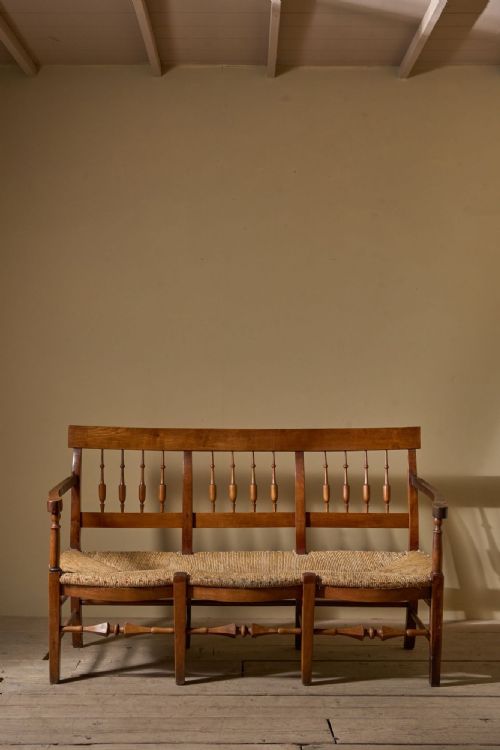
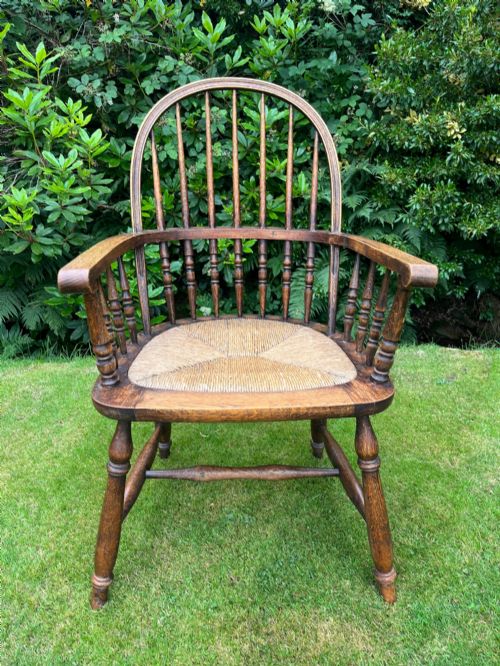
A rush seated country chair embodies the unpretentious domestic utility of past centuries, designed for everyday service in farmhouses, cottages, and provincial homes. These traditional seats span dining chairs, carvers, armchairs, and benches originating across English, French, and Dutch rural workshops.
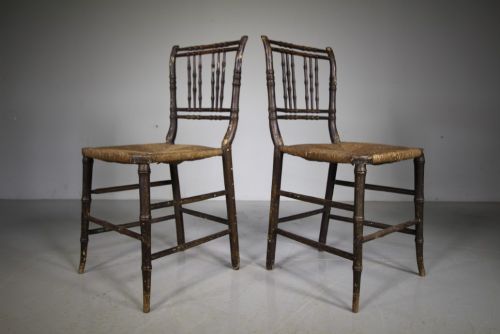
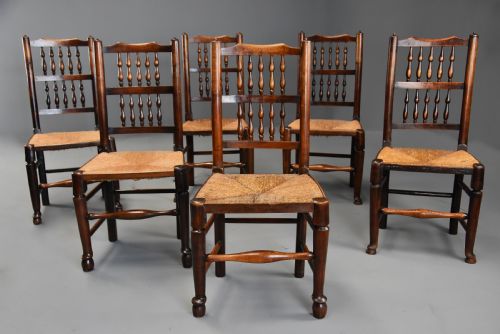
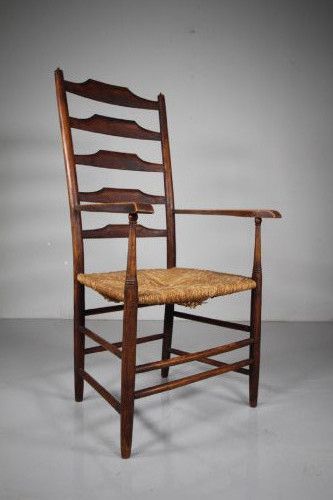
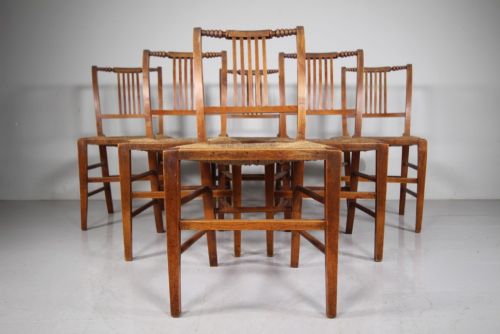
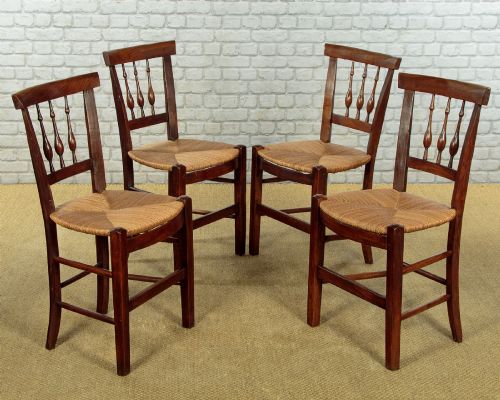
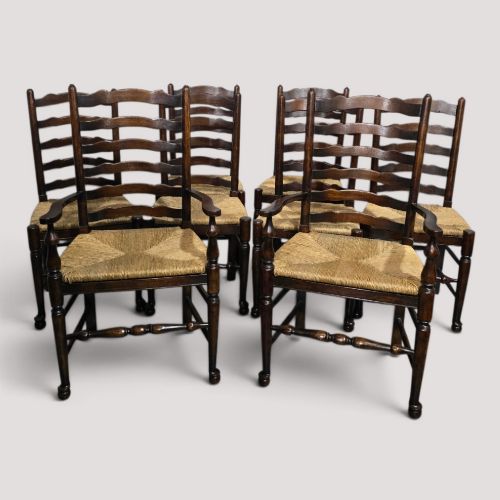
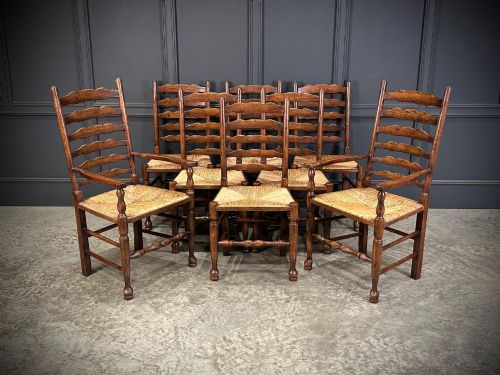
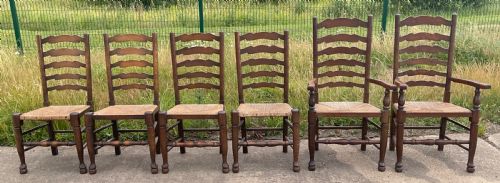
The version most commonly encountered on this page is the nineteenth-century ladder back or spindle back chair, constructed from native timbers with woven rush bottoms. Examples range from single kitchen chairs to matched or harlequin sets suitable for larger tables.
How They Were Made
Local makers utilised readily available regional timbers such as ash, elm, beech, fruitwood, and oak for the frames, turning spindles on lathes and bending wood for backs. These structural components were assembled using traditional joinery methods suited to the demands of rural daily life.
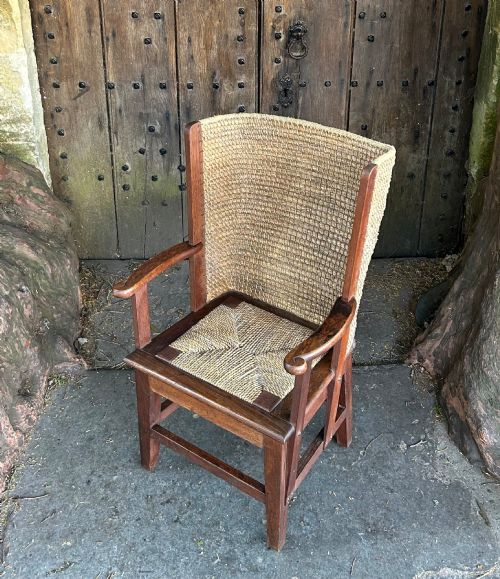
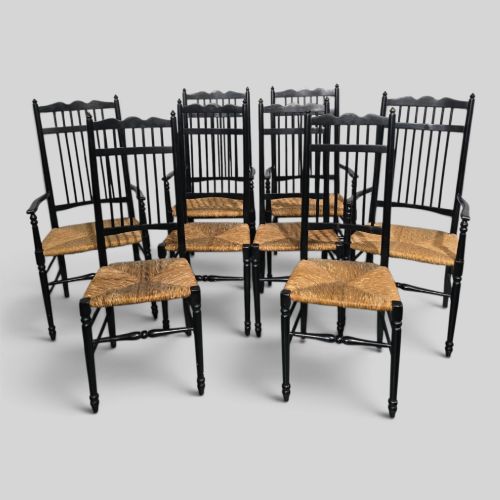
The seats themselves were woven tightly from natural river rush, wound around the seat rails to create a durable, springy platform. Some regional variations featured painted finishes or added details such as hoof feet and brass banding.
The inventory combines single chairs, matched sets of six or eight, and specialised forms such as child high chairs and rocking benches.
What Varies in Quality
The distinction between ordinary utility seating and finer examples rests upon the harmony of proportions, the integrity of the original turned framing, and the tightness of the rush weaving. Regional character, such as regional ladder-back turnings or distinctive spindle arrangements, also elevates certain pieces above standard workshop output.
Preservation of original surfaces, including early paint or an untouched historic patina on the bare wood, commands greater interest among collectors. Chairs retaining their original twisted rush seats without modern re-weaving represent a higher standard of survival.
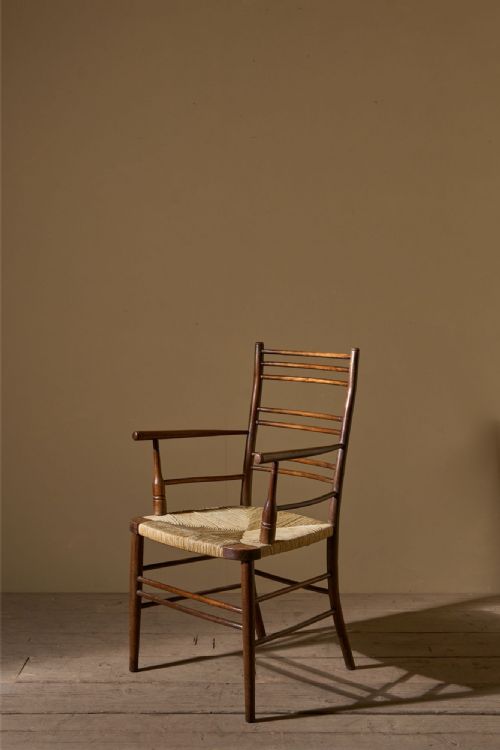
Philip Clissett·E W Godwin
The Rush Seated Country Chair Glossary
- Rush
- Dried marsh grass utilised for weaving traditional chair seats. It provides a flexible yet durable seating surface that wears to a smooth golden tone over decades of use.
- Ladder back
- A chair back featuring multiple horizontal wooden slats between the upright posts. This regional form appears frequently in English and continental vernacular seating.
- Spindle back
- A chair construction incorporating a series of slender turned wooden uprights supporting the backrest. It offers lightweight strength characteristic of nineteenth-century country production.
- Carver
- An armchair designed to sit at the head of a dining table or serve as a fireside seat. These pieces typically feature supportive arms integrated into the framing.
- Harlequin set
- A collection of dining chairs that share similar forms, periods, or materials while differing slightly in individual detail. Such groupings naturally accumulated in country houses over time.
Rush Seated Country Chair: Frequently Asked Questions
Can I use these chairs daily?
These robust vernacular chairs were built for generations of daily domestic use and remain entirely practical for modern dining. Their sturdy timber frames accommodate regular sitting without difficulty.
Ensure chairs sit level on modern flooring to avoid putting uneven strain on antique joints. Periodic checks of the frame tightness will maintain their stability.
What is a harlequin set?
A harlequin set is a gathering of chairs that share a general style, period, or material but vary in subtle details. Country households often acquired seating gradually over many years rather than purchasing large uniform sets at once.
This assembled character brings a collected, authentic aesthetic to a dining room. Matching silhouettes unify the group despite individual differences in turning or timber.
How do I date a country chair?
Dating relies on examining tool marks, timber selection, turning profiles, and construction methods. Earlier eighteenth-century examples often display heavier framing and distinct regional vernacular quirks compared to later nineteenth-century production.
Wear patterns and surface patination further indicate age. Comparing the joinery and design against documented regional types helps narrow the period of manufacture.