


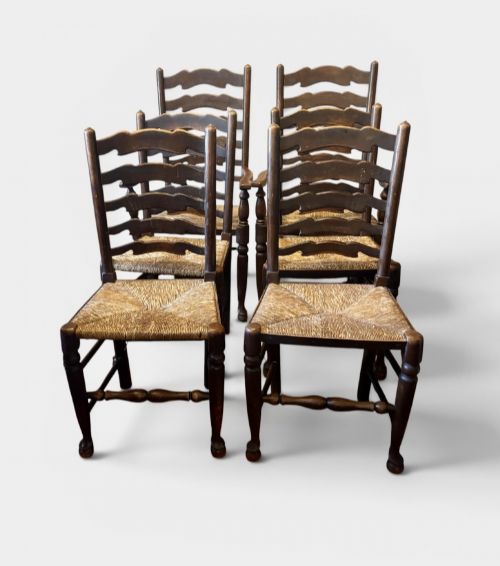

Woven Rush Chair
A woven rush chair brings organic texture and vernacular craftsmanship into a room, spanning centuries of country and workshop design.
Woven Rush Chair
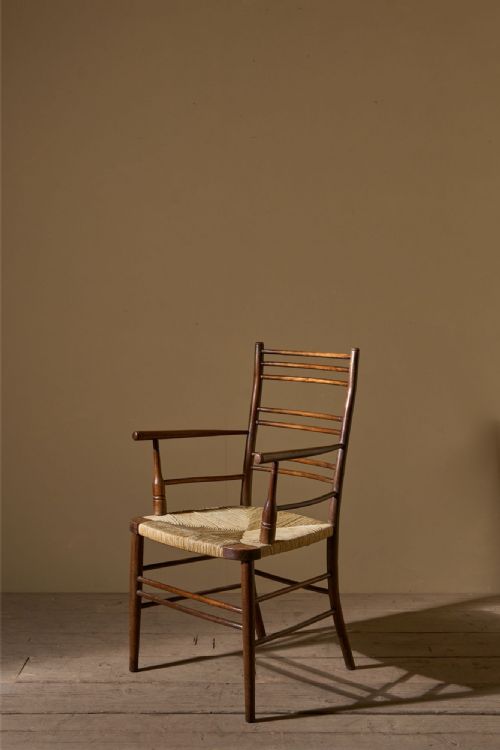
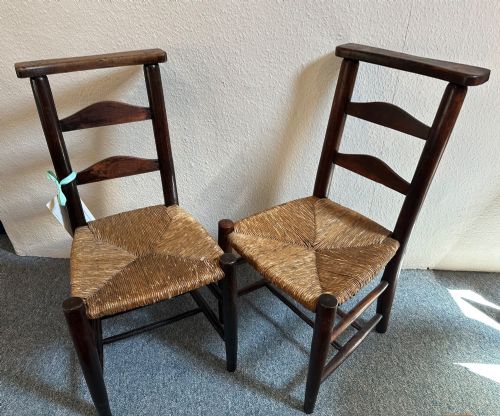
A woven rush chair embodies traditional seating forms built for daily utility rather than formal display. When searching for a woven rush chair, buyers encounter everything from simple farmhouse single seats to sophisticated Arts and Crafts library chairs.
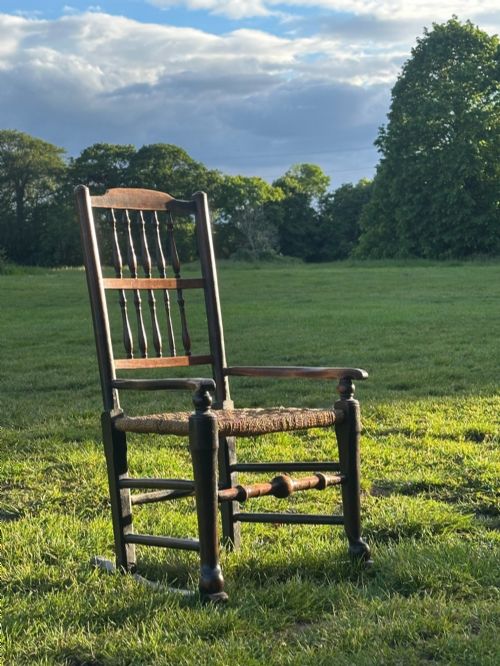
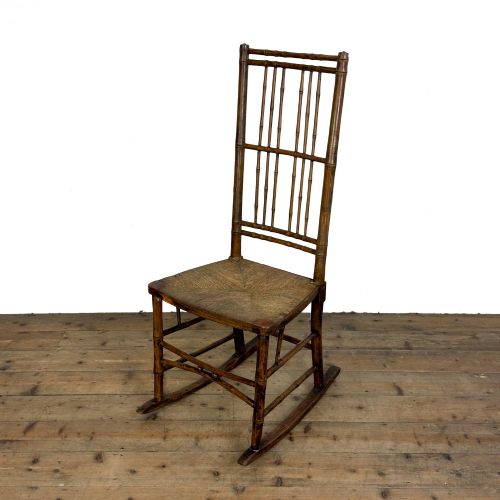
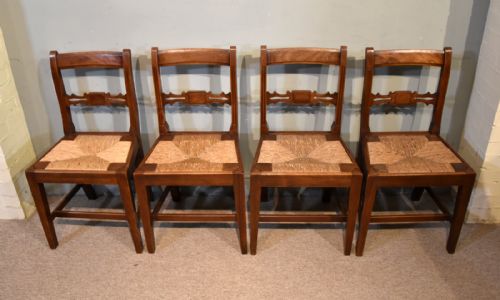
The varieties on this page range from 18th century Lancashire rocking chairs to 1930s studio pieces and larger sets of dining chairs. Regional vernacular styles such as Orkney chairs and ladderbacks appear alongside English country and French provincial designs.
How They Were Made
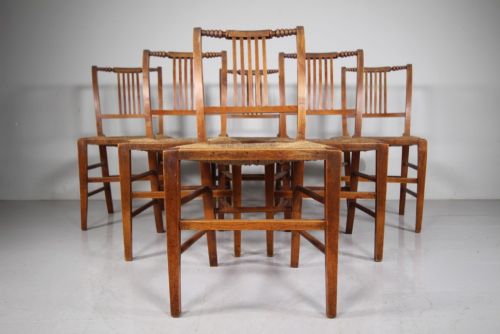
Frames rely on native hardwoods including elm, oak, ash, beech, fruitwood, and cherrywood, shaped through traditional turning, steam bending, and joinery. Artisans construct ladderbacks, spindlebacks, and solid frames designed to hold tension against the woven seating.
Seats employ natural rush or plaited straw, twisted and tightly hand-woven over the wooden rungs to create a durable, springy surface. This flexible plant fibre accommodates body weight while maintaining structural resilience over decades of use.
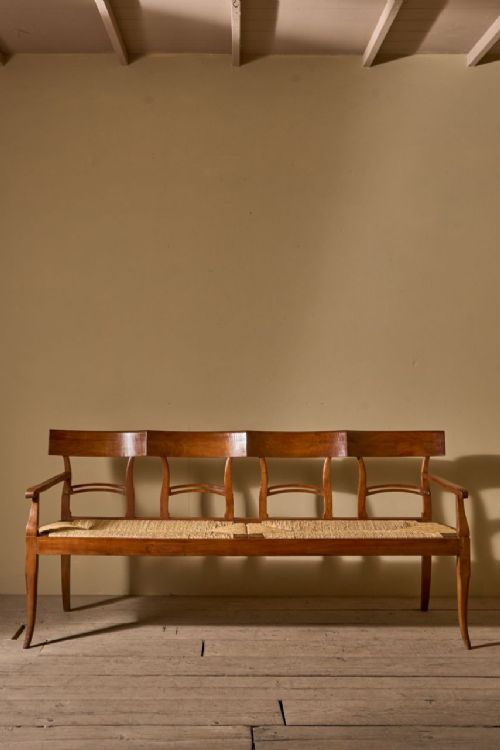
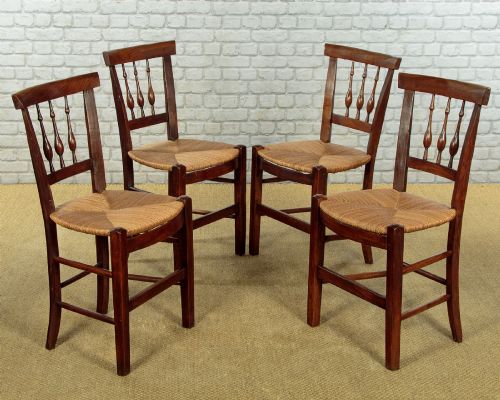
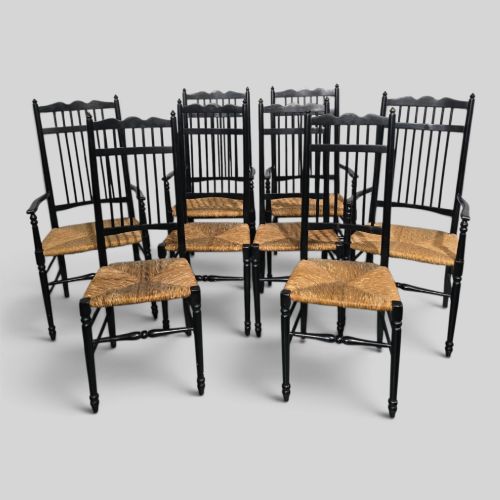
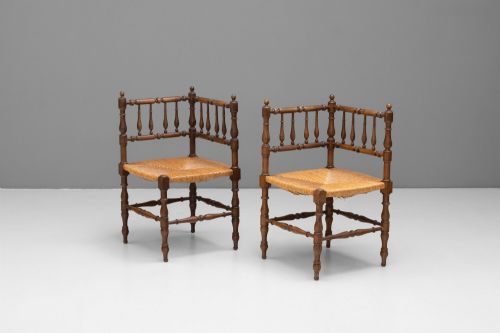
The selection includes dining chairs, armchairs, rocking chairs, benches, corner chairs, and child-sized high chairs from various British regions.
What Varies in Quality
Quality rests upon the integrity of the timber frame and the tightness of the rush weaving. Original, unbroken woven rush seats command greater interest than later replacements, reflecting careful historical preservation.
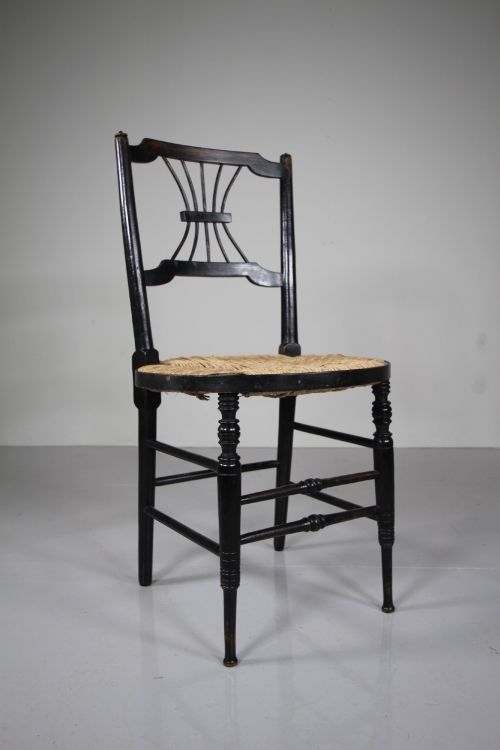
Maker attribution and regional provenance elevate certain pieces, moving items from anonymous farmhouse utility to documented workshops associated with designers like William Morris, E W Godwin, or Liberty of London.
William Morris·Liberty and Co·Morris and Co·St Ives Studio·Edward Gardener
The Woven Rush Chair Glossary
- Rush
- A wetland plant material harvested, dried, and twisted into cords for hand-weaving flexible, durable chair seats. This traditional material gives the seating its characteristic resilient texture.
- Ladderback
- A chair style featuring horizontal slats set between the rear upright posts. This structural form provides sturdy back support in vernacular country seating.
- Orkney Chair
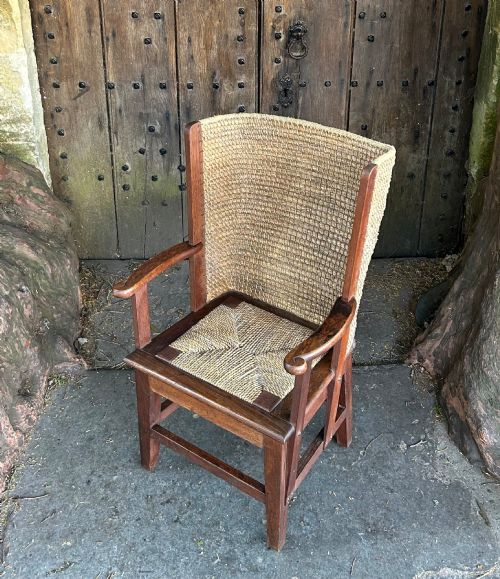
- A distinctive regional seating form featuring a high, woven straw or rush back designed to protect the occupant from draughts. These pieces often incorporate a low wooden base and built-in under-seat storage compartments.
- Súgán
- An Irish term for a twisted straw or hay rope used as seating material. This traditional cordage serves a similar practical function to rush.
- Vernacular
- Architecture and furniture design rooted in local traditions, native materials, and practical utility rather than academic style. These objects reflect regional building methods passed through generations of local makers.
Woven Rush Chair: Frequently Asked Questions
How do I care for a rush seat?
Keep woven rush seats dry and clean them gently with a soft brush to remove dust. Avoid excess moisture, which can weaken the natural plant fibres over time.
Maintain stable indoor humidity levels to prevent the dried rush from becoming brittle or cracking. A light application of specialised wax can protect the wooden frame without touching the woven seat.
Are these chairs comfortable for daily use?
Most antique woven rush chairs provide firm, supportive seating through their springy natural cord construction. Dining chairs and armchairs suit everyday sitting when paired with appropriate table heights.
Rocking chairs and low lounge chairs offer relaxed seating postures developed for reading or resting. The woven material yields slightly to the body, making them surprisingly comfortable without cushions.
How do I distinguish regional styles?
Look at the turning of the wood, the height of the back, and the specific framing techniques used by local joiners. Lancashire and Cheshire chairs often feature distinctive ash turnings and rocker rails.
Orkney chairs stand apart through their massive oatmeal-backed straw hoods, while Dales chairs show slender spindle work. Regional variations reflect the specific woods and seating traditions available to makers in those localities.
Did Arts and Crafts makers invent these chairs?
No, Arts and Crafts designers revived and reinterpreted centuries-old vernacular seating traditions rather than inventing them. Makers like William Morris drew inspiration from simple farmhouse ladderbacks when creating their own workshop lines.
This movement elevated humble country craftsmanship into fashionable aesthetic dining and armchairs. They combined traditional rush seating with simplified structural forms that celebrated honest construction.