



18th Century Rush Chair
An 18th century rush chair brings tactile country craftsmanship and durable seating into a room.
18th Century Rush Chair
An 18th century rush chair is a traditional piece of vernacular seating designed for practical daily use in period homes. These chairs bridge the gap between simple rustic utility and refined regional cabinet making.
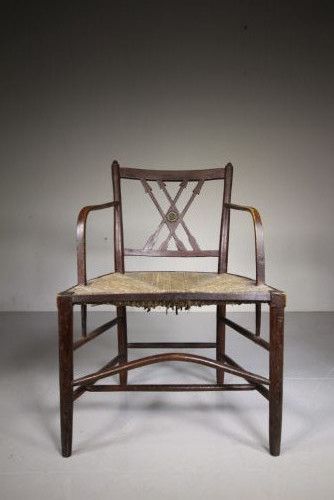
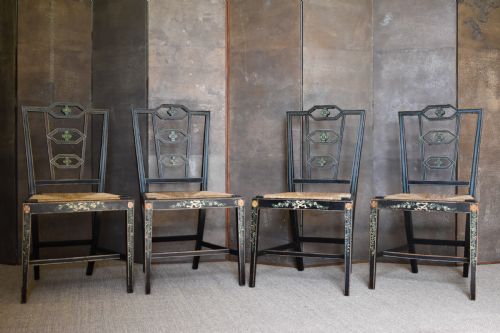
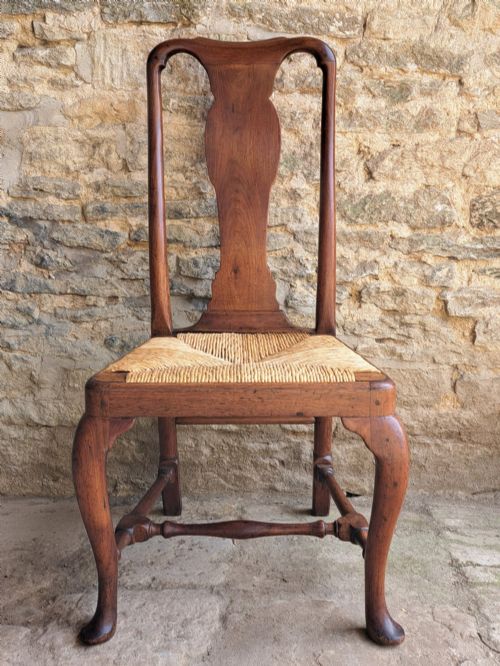
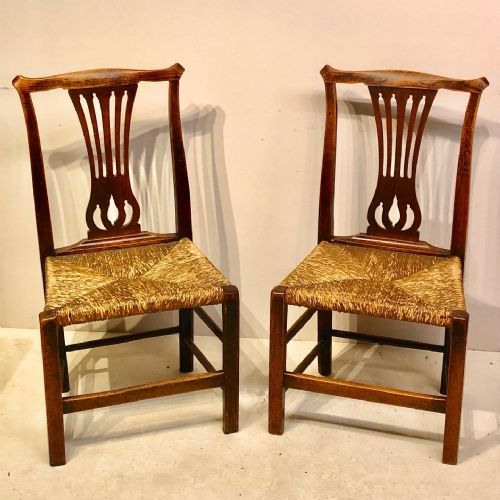
You are most likely to encounter elm, oak, and ash examples featuring spindle backs, ladder backs, or corner designs. Many survive in painted finishes or with their original woven rush seats intact.
The selection ranges from single dining chairs and pairs to sets of four or eight, alongside occasional armchairs, children's seating, and rocking chairs. Origins span Georgian country workshops, particularly in northern regions and Lancashire.
How they were made
Local timbers such as elm, oak, ash, and walnut formed the robust frames, shaped by country turners and joiners using traditional green woodworking techniques. Turned spindles and ladder backs provided lightweight strength to the structural framework.
Seats were hand-woven using natural marsh rush, tightly twisted and wrapped around the seat rails to create a resilient, springy surface. Some specialised examples incorporated decorative painted surfaces or brass banding for added distinction.
Several diminutive children's armchairs survive, proving that 18th century toddlers also required proper seating.
What varies in quality
The degree of original survival heavily influences the standing of a piece, from untouched painted surfaces to later restorations. Timber selection also matters, as well-figured elm or quarter-sawn oak displays greater character.
Structural integrity relies on the tightness of the original joints and the firmness of the rush weaving. Regional touches, such as sophisticated Lancashire turnings or unusual corner formats, elevate the standing of individual chairs.
The 18th Century Rush Chair Glossary
- Rush seat
- A seating surface woven from dried marsh rush over a wooden frame. This material provides a flexible and durable platform that was standard in country seating.
- Spindle back
- A chair back constructed with vertical turned wooden rods. These slender members distribute weight effectively while keeping the frame light.
- Ladder back
- A backrest formed by horizontal arched slats positioned between two upright posts. This design was widely utilised in regional vernacular seating.
- Corner chair
- A square-form seat set on a diagonal with a curved backrest and a front leg placed centrally. These pieces fit neatly into room angles.
- Vernacular furniture
- Domestic objects made by local tradesmen following regional traditions rather than metropolitan high styles. These items prioritize practical utility and local materials.
18th Century Rush Chair: Frequently Asked Questions
How do I care for a rush seat?
Keep woven rush seats dry and away from direct heat sources to prevent the natural fibres from becoming brittle.
Clean gently with a soft brush and avoid excessive moisture during maintenance.
Are these chairs comfortable for daily use?
The woven rush provides a surprisingly resilient and supportive surface that yields slightly to the body.
Upright ladder backs and spindle backs encourage a proper posture suited for dining or desk work.
How can I tell a regional style?
Regional characteristics appear in the specific turning patterns of spindles and the choice of local timber, such as Lancashire elm or northern oak.
Country makers adapted standard forms to suit local workshop practices and available materials.
Did these chairs originally have paint?
Many country pieces received protective or decorative coats of paint during their working lives, sometimes layered over decades.
Surviving early paint finishes add considerable historical character to the timber frame.