


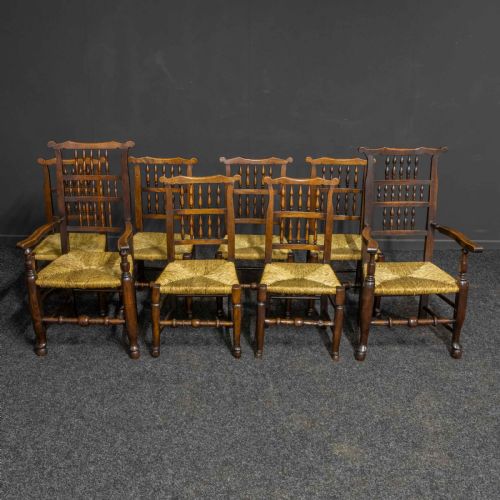


Antique Spindleback Chair
These antique spindleback chair examples offer traditional seating built from solid timber with slender turned spindles.
Antique Spindleback Chair
An antique spindleback chair provides functional seating constructed with a ladder or stick-back frame composed of multiple turned vertical spindles. These forms appear predominantly within English country vernacular traditions, reflecting regional domestic output from domestic workshops.
Most pieces seen here originate from the eighteenth and nineteenth centuries, spanning Georgian, Victorian, and Edwardian periods. Dining chairs and armchairs emerge frequently in sets, pairs, or individual formats across these eras.
Makers utilised native hardwoods like elm, ash, and oak alongside mahogany for later interpretations, pairing wooden frames with traditional rush seats or fabric upholstery.
How they were made
Joiners and chairmakers constructed these frames using native timbers such as elm, ash, and oak, often turning individual spindles on a lathe. Seats were shaped from solid timber or woven tightly from natural rush.
Construction relied upon traditional jointing methods, securing turned legs and uprights directly into solid wooden seats or stout underframes without modern fasteners.
Recorded styles range from Georgian Country and Victorian Country to Edwardian and standard English vernacular forms.
What varies in quality
The sophistication of the turning on the spindles and uprights distinguishes standard regional output from more refined urban or regional commission pieces. Uniformity across a matched set of dining chairs indicates greater workshop skill.
The choice of primary timber and the integrity of the original rush seat or timber base influence the overall integrity of the construction. Solid elm seats showing deep figuring represent higher traditional standards.
The Antique Spindleback Chair Glossary
- Spindle
- A slender, cylindrical turned wooden rod used to form the backrest or support the frame. These elements give the chair type its defining visual rhythm.
- Rush
- Dried marsh grass woven tightly to create a flexible, durable seating surface. This material appears frequently on country dining chairs.
- Elm
- A tough, fibrous native hardwood valued for its resistance to splitting, commonly used for solid chair seats.
- Vernacular
- Unpretentious furniture made locally to serve everyday domestic needs rather than following strict high-style court fashions.
- Lancashire
- A northern English regional style associated with sturdy spindleback seating featuring multiple tiers of back spindles.
Antique Spindleback Chair: Frequently Asked Questions
What periods do these chairs come from?
The available pieces span the eighteenth, nineteenth, and early twentieth centuries, covering Georgian, Victorian, and Edwardian eras. Earlier examples often reflect regional English country craftsmanship.
Dates recorded in the evidence range from mid-eighteenth-century items up to pieces made around nineteen hundred in mahogany.
Are these chairs sold in sets?
Yes, many listings comprise matching groups of six or eight dining chairs alongside individual armchairs and pairs. Sets allow buyers to furnish a traditional dining table uniformly.
Single armchairs and smaller pairs also appear regularly for use in hallways or bedrooms.
What materials were used?
Makers constructed the frames primarily from native English timbers including elm, ash, oak, and occasionally mahogany. Seats were built from solid wood or woven from natural rush.
Some later or more formal variations include fabric upholstery on the seating area rather than traditional woven rush.
How do I identify a Lancashire style?
Lancashire chairs typically feature characteristic arrangements of turned vertical spindles within the backrest designed for domestic utility. They often incorporate elm timber and rush seating.
Regional variations of this type appear across both eighteenth and nineteenth-century inventory records.