



Country Cottage Seating
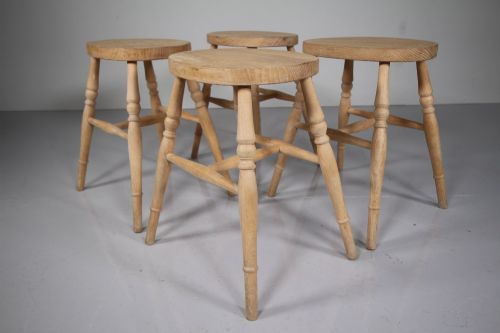
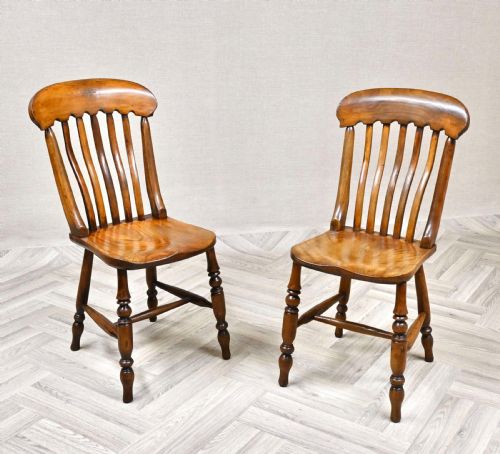
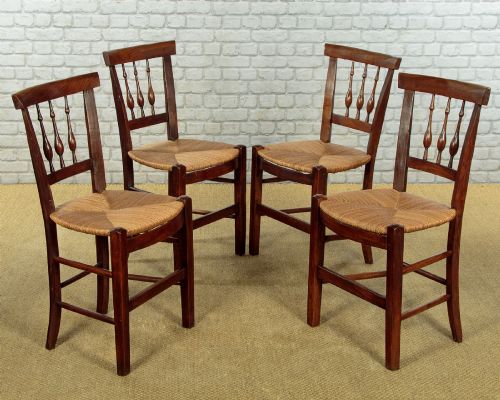
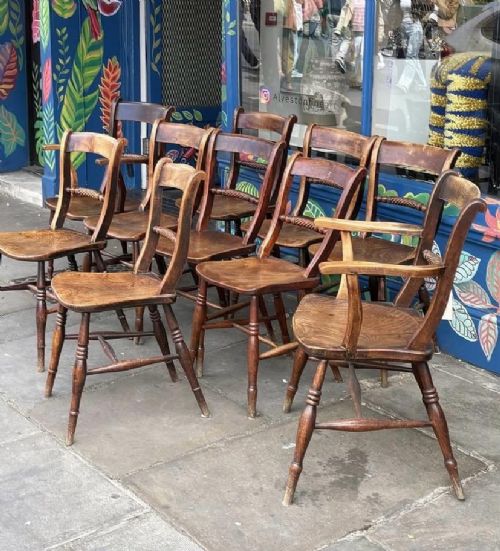
Country cottage seating brings unpretentious domestic history into daily use through sturdy wooden dining chairs, settles and stools.
Country Cottage Seating
Country cottage seating encompasses utilitarian wooden dining chairs, benches, settles and stools from the eighteenth, nineteenth and early twentieth centuries. These forms reflect the honest functional requirements of rural homes, farmhouses and cottages across Britain and Ireland.
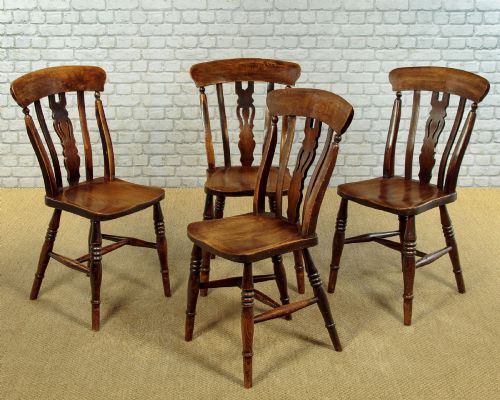
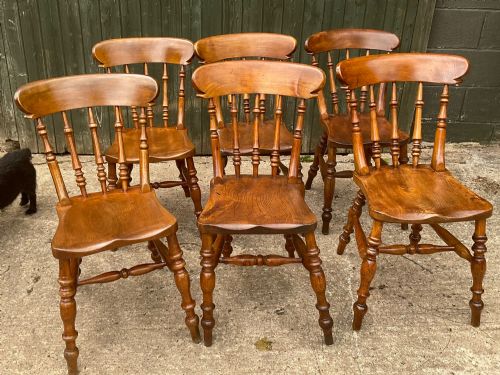
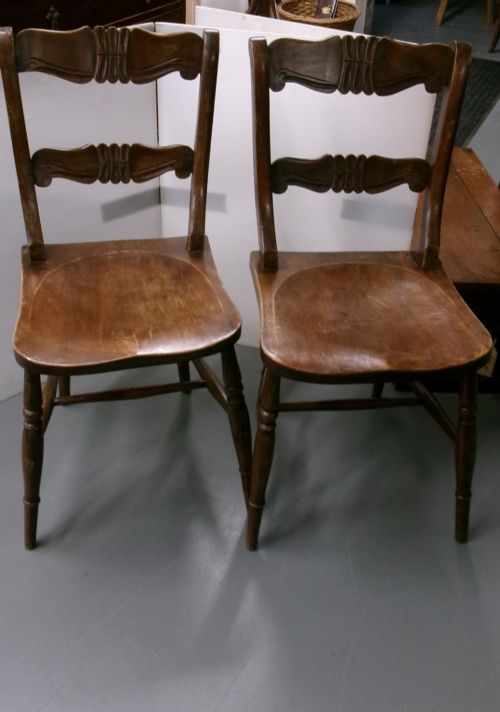
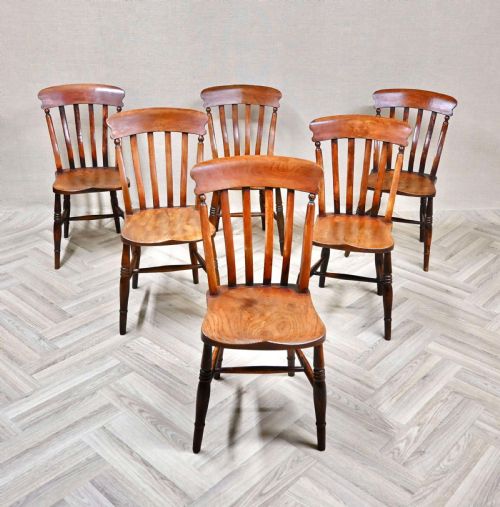
Buyers meet nineteenth-century windsor, ladderback and spindle-back chairs most frequently on this page. These often appear in matched or harlequin sets alongside single elm, ash or beech armchairs and settles.
Materials and construction
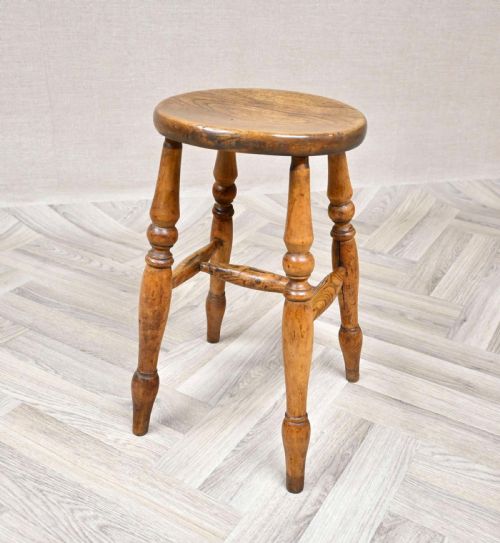
Maker construction relies on native timbers such as elm, beech, ash and oak selected for strength and flexibility. Seats are formed from solid carved wood or woven from rush and plaited straw.
Joinery techniques combine turned wooden spindles and legs wedged directly into solid seats or frames. Surfaces frequently retain original painted finishes, scumble glaze or deep patination built up through decades of domestic handling.
A delicate watercolour painting of an old garden seat preserves the quiet charm of rural furniture even when made of paper.
Quality factors
Quality rests upon the integrity of the original timber frame and the retention of honest surface patination. Original painted finishes and scumble effects distinguish superior vernacular items from stripped examples.
The survival of matched or larger sets elevates certain dining chairs and stools. Structural cohesiveness across a group indicates workshop consistency rather than later assembly.
Worksop Allsop·Ormskirk
The Country Cottage Seating Glossary
- Windsor chair
- A chair built with a solid wooden seat into which the legs and back spindles are separately tenoned. These traditional seats form a major component of vernacular domestic furniture.
- Settle bench
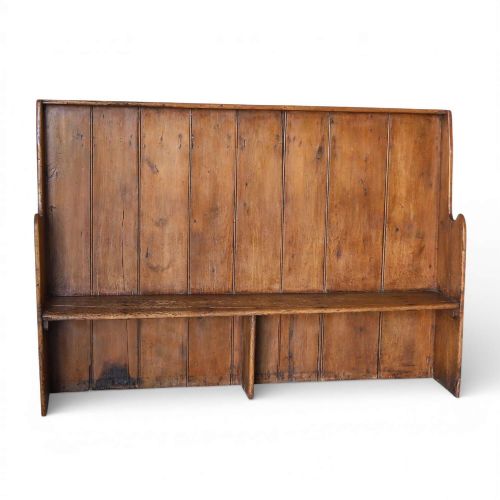
- A high-backed wooden bench often featuring solid arms and a storage box beneath the seat. They were designed to block draughts in farmhouse kitchens and halls.
- Scumbled finish
- A decorative surface treatment applied to imitate the grain of finer woods or to create mottled patterns using opaque and translucent paint layers. Victorian makers utilised this technique extensively on cottage furniture.
- Rush seat
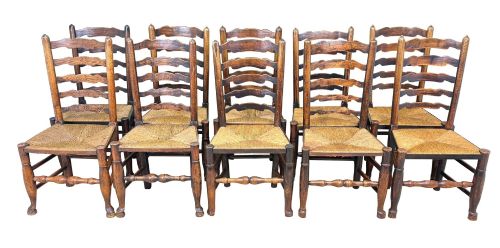
- A seating surface woven from dried marsh rushes twisted around a wooden framework. This traditional method provides a resilient and comfortable seat for dining chairs.
- Lathback
- A chair back constructed with horizontal wooden slats or laths secured between vertical uprights. This design appears frequently on nineteenth-century kitchen and cottage seating.
Country Cottage Seating: Frequently Asked Questions
What defines country cottage seating?
Country cottage seating comprises utilitarian wooden chairs, settles and stools produced for domestic use in rural properties. These pieces span the eighteenth to early twentieth centuries and rely on native hardwoods like elm and ash.
Designs prioritise utility and comfort over ornamental display. The category includes Windsor chairs, ladderbacks, rush-seat dining chairs and settles.
How do I care for antique wooden chairs?
Antique wooden seating requires stable indoor humidity away from direct heat sources and sunlight to prevent timber shrinkage. Regular dusting with a dry cloth protects the historic surface patination.
Rush seats benefit from gentle cleaning and should be kept dry to maintain the natural fibres. Avoid applying modern chemical polishes that can soften old painted or waxed finishes.
How were rush seats made?
Rush seating involves twisting dried marsh grasses into strong cords and weaving them tightly around a wooden seat frame. Artisans created supportive patterns that gave elasticity to the seat.
Over decades of use, these woven surfaces acquire smoothness and darken in tone. Surviving rush work demonstrates traditional rural craftsmanship.