

Vernacular Elm Chairs
Vernacular elm chairs are honest country seating built by regional hands, bringing tactile warmth and sturdy utility to any interior.
Vernacular Elm Chairs
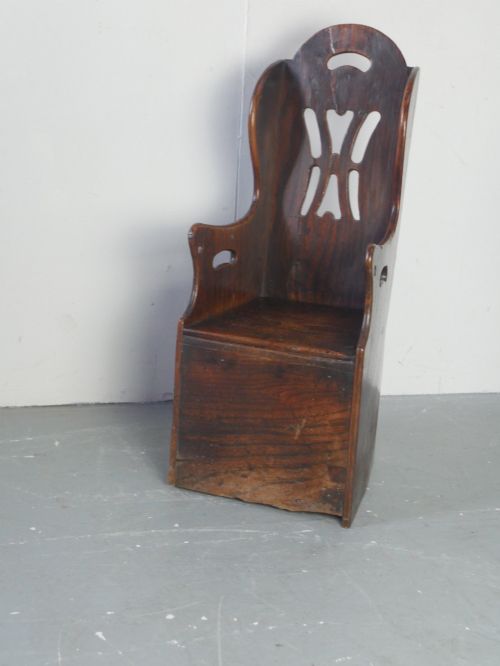
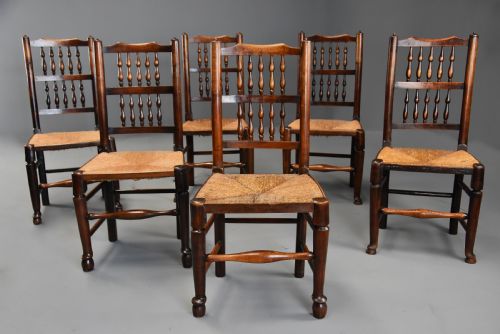
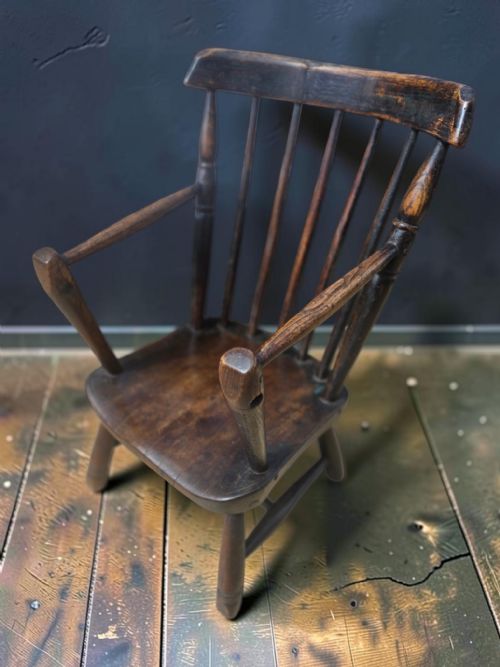
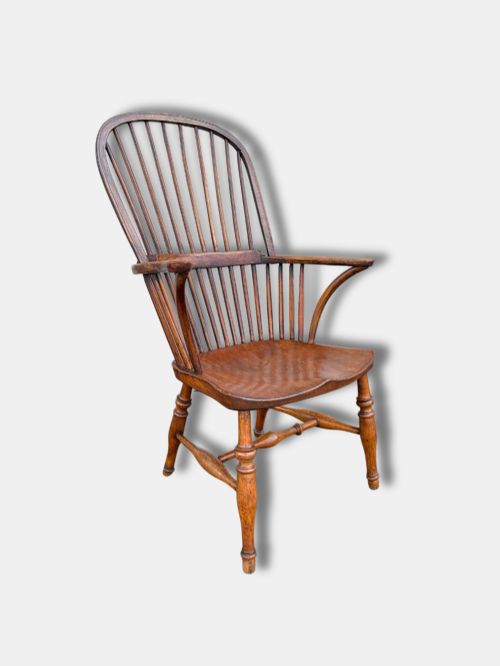
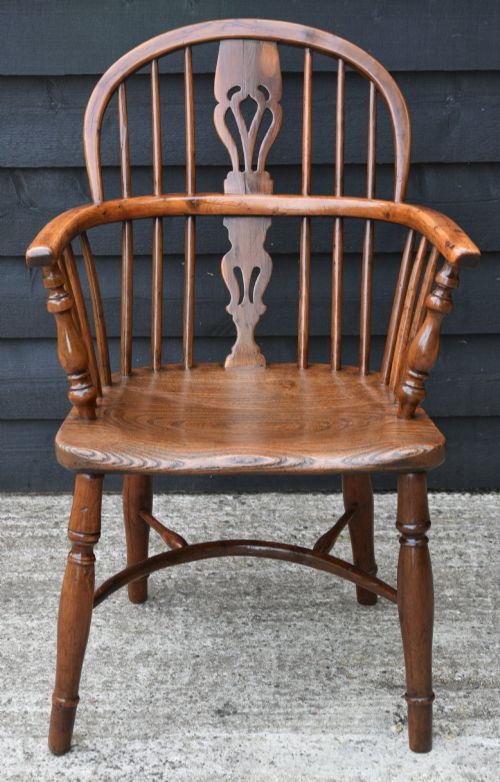
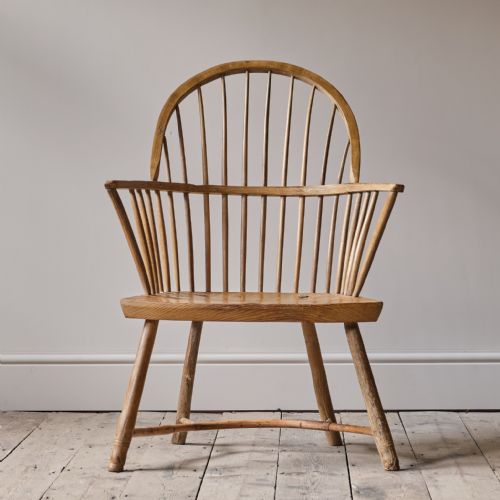
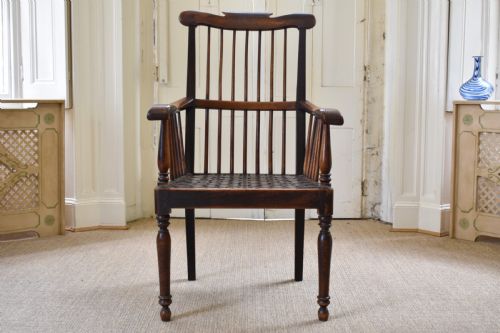
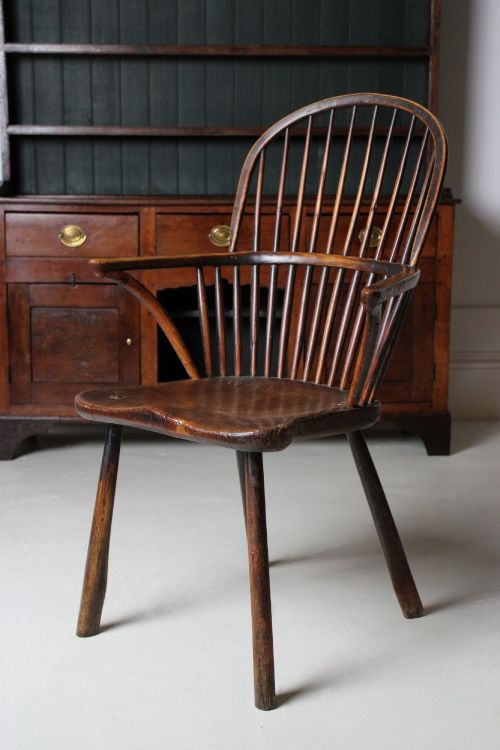
When you search for vernacular elm chairs, you are looking at domestic seating shaped by local traditions rather than London fashion. The examples you meet on this page span the eighteenth and nineteenth centuries, appearing as single armchairs, sets of dining chairs, and smaller children's seats.
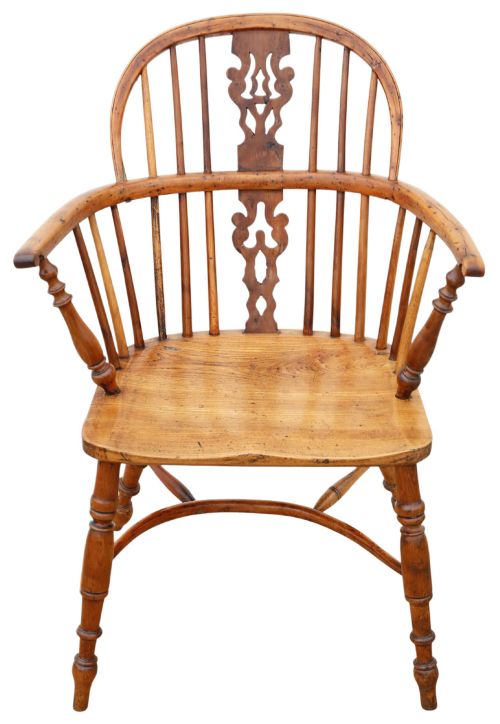
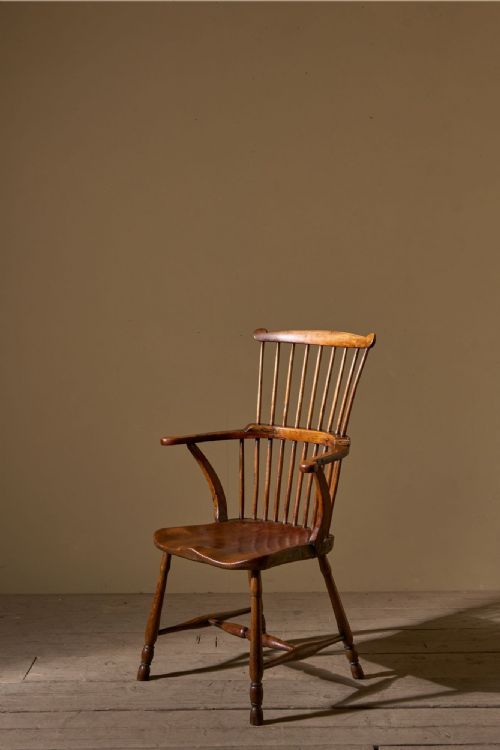
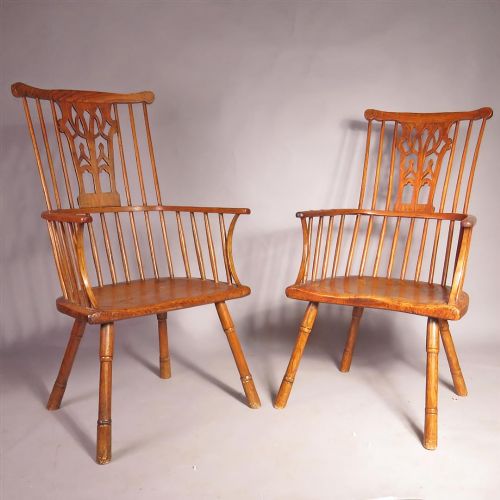
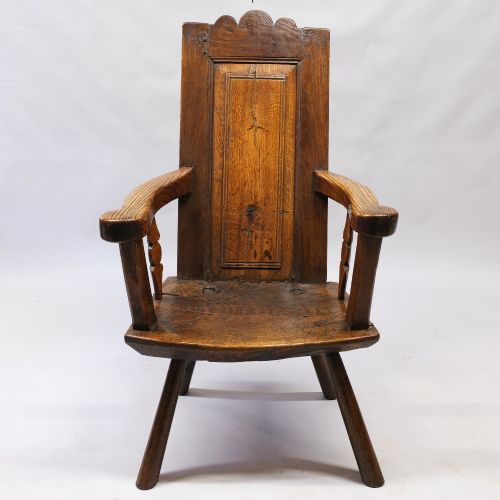
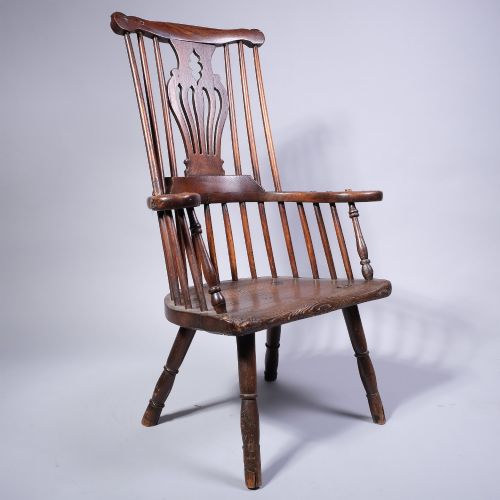
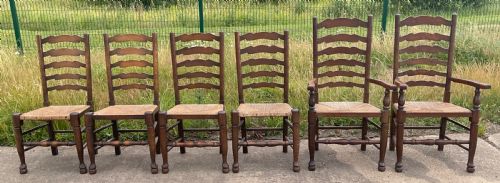
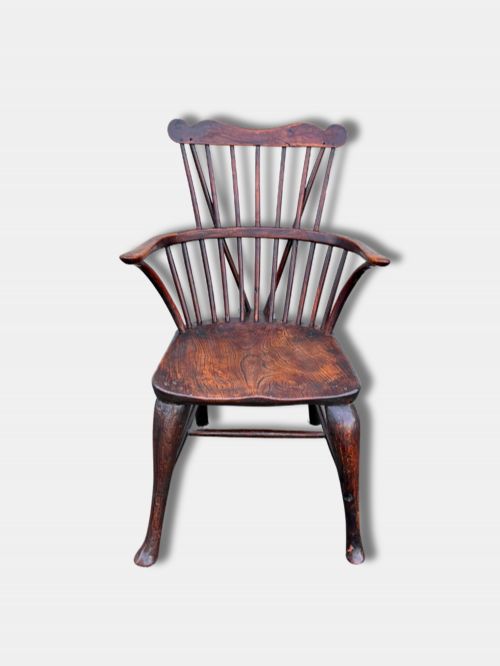
The dominant forms are Windsor and stick back chairs, often combining an elm seat with ash, beech, or yew components. You will also find panel-backed chairs, ladderbacks, and comb backs rooted in regional English styles from the Thames Valley to the West Country and Lancashire.
How They Were Made
These chairs rely on a sensible combination of native timbers chosen for their specific physical properties. Solid elm provides a split-resistant, deeply grained seat, while ash or yew supplies the tensile strength needed for slender spindles and steam-bent hoops.
Joinery is direct and functional, utilising wedged tenons and shaved components rather than complex cabinetmaking. Seats are typically saddled or deeply scooped from a single thick slab of elm to offer comfort without upholstery.
Even the smallest household members needed proper seating, as shown by the miniature child's high chairs tucked among the full-sized armchairs.
What Varies in Quality
Quality in these pieces rests upon the harmony of the timber selection and the retention of original surface character. Chairs that retain deep patination and crisp tool marks from the bodger's drawknife sit comfortably above examples stripped down or aggressively sanded.
Proportion and structural integrity dictate the upper tiers of the range, where balanced undercarriages and well-turned legs support daily use. Lesser examples often suffer from mismatched replacement spindles or poorly executed repairs to the armbows and seat joints.
Fred Walker Rockley
The Vernacular Elm Chairs Glossary
- Windsor chair
- A chair built with a heavy solid wooden seat into which the legs and back spindles are separately inserted. This construction method creates a sturdy, rigid frame without a traditional central carcass.
- Comb back
- A Windsor chair variation where the tall back sticks rise into a horizontal crest rail resembling the teeth of a comb. This style offers a distinct silhouette often found in eighteenth-century regional seating.
- Spindle back
- A chair featuring a series of turned vertical wooden rods forming the back support. These rods distribute weight evenly while keeping the chair light.
- Penny seat
- A saddle-shaped wooden seat featuring a circular depression carved into the upper surface. This term derives from the shape resembling a large old penny coin.
- Patina
- The deep surface sheen and rich colour developed by timber through decades of handling, light, and polishing. It marks the visual proof of age.
Vernacular Elm Chairs: Frequently Asked Questions
How do I care for an elm seat?
Keep wooden chairs away from direct heat sources and sudden humidity shifts to prevent the thick elm planks from splitting.
Feed the timber occasionally with a traditional wax polish to maintain the surface and preserve the dry patina.
Are these chairs comfortable to sit on?
The saddle-shaped wooden seats are carved to fit the body, offering surprising support without needing modern foam padding.
Adding a simple loose cushion can make them suitable for prolonged dining or desk use.
How can I tell an eighteenth century chair?
Earlier chairs often display deeper tool marks, thicker plank seats, and simpler, heavier undercarriage turnings.
Construction details such as wedge-tenon joints passing completely through the seat also point towards earlier rural production.
Can I mix different styles around a table?
Country seating naturally accommodates variation, allowing you to pair stick backs with comb backs or low backs.
Matching the general timber tones and overall height creates a cohesive dining arrangement while highlighting individual character.