
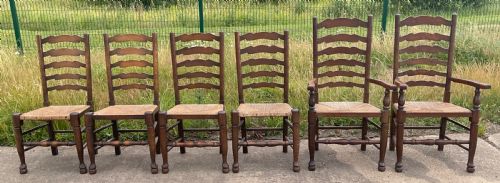


Elm Ladderback Dining Chairs
Elm ladderback dining chairs bring honest vernacular craft and durable provincial character to any interior scheme.
Elm Ladderback Dining Chairs
When you search for elm ladderback dining chairs, you are looking at utilitarian seating born from English country traditions. These chairs serve everyday domestic life with robust construction and unpretentious form. They appear frequently in sets of various sizes or as pairs.
The pieces on this page span several centuries, reaching from the eighteenth century through the Victorian era and into the twentieth. You will encounter styles described as Georgian Country, Victorian Country, Arts and Crafts, and general English country vernacular. Armchairs and carvers join standard dining chairs to complete larger suites.
Elm provides the primary material for frames and seats, often paired with rush, beech, ash, or oak. Some examples feature woven rush seating, while others accommodate fabric, leather, or solid wood panels. The horizontal slats forming the backrest give the type its defining name.
How they were made
Maker workshops relied on native timbers such as elm for its tough, interlocking grain which resists splitting under heavy use. Beech and ash frequently form structural components like turned legs and stretchers, while oak appears in heavier framework.
Seats are constructed from woven rush or solid timber boards set within sturdy wooden frames. Horizontal ladder slats are tenoned into the upright rear posts, creating a flexible yet resilient back support suited to long hours at a table.
Materials recorded in these listings include elm, rush, beech, ash, oak, fabric, leather, and brass across periods from the eighteenth to the twentieth century.
What varies in quality
Quality rests upon the elegance of the slat proportions and the rhythm of the turnings on the uprights and legs. Earlier eighteenth-century examples display more fluid, hand-carved contours in the back rails compared to later provincial production.
The integrity of the timber and the tightness of the joinery dictate the longevity of each chair. Original rush seating or well-matched timber replacements command greater respect among collectors than heavily altered frames.
The Elm Ladderback Dining Chairs Glossary
- Ladderback
- A chair back composed of multiple horizontal curved slats set between two upright posts. This traditional form offers comfortable lumbar support.
- Rush
- Dried marsh grass woven tightly into a durable seating surface. It appears frequently on country dining chairs.
- Carver
- An armchair designed to sit at the head of a dining table. These pieces often feature extended arms supported by turned posts.
- Vernacular
- Everyday objects made by local craftspeople using regional materials. These pieces prioritize utility over academic architectural styles.
- Spindle back
- A chair back featuring numerous slender vertical turned rods rather than horizontal slats. This variation shares origins with traditional country seating.
Elm Ladderback Dining Chairs: Frequently Asked Questions
How do I date an elm ladderback chair?
Dating relies on observing construction methods, timber patination, and the contour of the ladder slats. Earlier eighteenth-century pieces often show softer hand-tooled surfaces and broader proportions.
Later Victorian and twentieth-century versions tend to have more uniform machine turnings and crisper edges.
Are these chairs comfortable for daily dining?
These chairs are designed for upright posture during meals and long sittings around a table. The curved horizontal slats provide natural support to the back.
Rush seats and wooden panels offer firm support that adapts well to everyday use.
Can I mix different sets of ladderback chairs?
Mixing similar country vernacular chairs is a traditional way to seat larger gatherings around a farmhouse table. Look for common elements like elm frames or ladder slat profiles to maintain visual harmony.
Matching heights and arm styles helps keep the arrangement balanced.
What maintenance do rush seats require?
Rush seating benefits from occasional light dusting with a soft brush and protection from excessive moisture. Keeping humidity stable prevents the natural fibres from becoming brittle over time.
Avoid using harsh liquid cleaners on the woven surface.