


Red Fabric Seat Chair
A red fabric seat chair brings warmth and traditional textile colour into a room, spanning periods from the Georgian era through to the nineteen thirties.
Red Fabric Seat Chair
A red fabric seat chair encompasses a wide variety of domestic seating forms, from sets of dining chairs to individual library armchairs and bedroom chairs. The selection ranges across the nineteenth century, the Regency and Victorian periods, Edwardian pieces, and items from nineteen twenty and nineteen thirty.
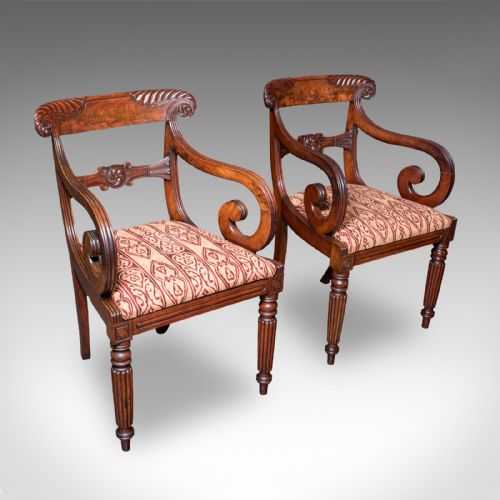
Buyers will encounter formal walnut and mahogany dining chairs, carved occasional chairs, and upholstered armchairs featuring red textile upholstery. Forms include pairs of elbow chairs, sets of six or eight dining chairs, side chairs, and piano stools.
Origins span English country houses, Scottish workshops, and French boudoirs, demonstrating diverse regional cabinet-making traditions. The common thread is the combination of a wooden frame with a red fabric seat or full upholstery.
How they were made
Timbers such as mahogany, walnut, oak, and rosewood form the structural framework of these chairs, shaped by hand-carving and joinery techniques. Brass details and scroll carvings appear on specific pieces, whilst wood and textile upholstery complete the construction.
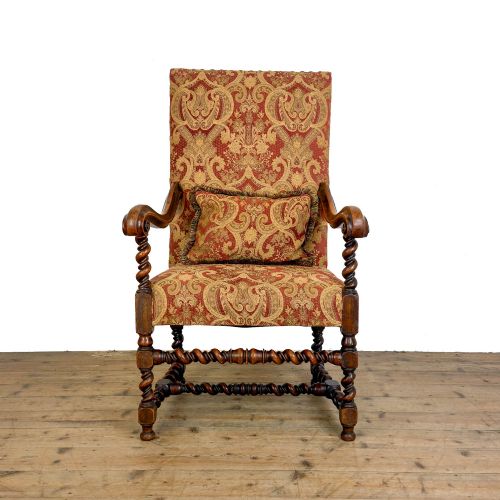
Upholstery methods utilise traditional fabric and padding secured to wooden frames, often featuring button backs or wing back designs. Craftspeople employed turning, scroll carving, and cabriole leg formation to achieve the distinct styles of each period.
Listings feature seating in mahogany, walnut, oak, and rosewood, paired with fabric upholstery across the nineteenth and twentieth centuries.
What varies in quality
The standard of timber selection and the depth of hand-carving distinguish finer pieces from simpler utility seating. Carved details like scroll work and cabriole legs reflect the skill invested in the wooden framework.
The choice of upholstery fabric and the precision of the padding work influence the overall finish. Matched sets of dining chairs demonstrate greater consistency in timber grain and carving execution than assembled groups.
Gillows·Howard and Sons
The Red Fabric Seat Chair Glossary
- Elbow chair
- A chair with arms, typically used in a morning room or reception space. These provide additional comfort compared to standard side chairs.
- Cabriole leg
- A furniture leg that curves out and then in, resembling the leg of an animal. This design feature is common on walnut and mahogany seating from various periods.
- Button back
- An upholstery style where depressions are formed in the padding by stitching buttons at regular intervals. This technique adds texture and secures the internal stuffing.
- Spindleback
- A chair back constructed with a series of thin, turned wooden rods or spindles. This style appears frequently in Edwardian seating.
- Balloon back
- A rounded, oval-shaped chair back resembling a balloon, popular during the Victorian era. It provides ergonomic support while presenting a graceful silhouette.
Red Fabric Seat Chair: Frequently Asked Questions
How do I date a red fabric seat chair?
Dating relies on identifying the prevailing timber, stylistic cues, and construction methods characteristic of periods like Regency, Victorian, or Edwardian. Details such as leg shape and carved ornament often point to a specific decade.
Examining the underside and joinery yields further clues regarding the manufacturing era and workshop origin.
Are these chairs suitable for daily dining use?
Many sets of dining chairs and elbow chairs from the nineteenth century remain sturdy enough for regular use. Ensuring the wooden joints and upholstery foundations are secure is essential for everyday practicality.
Placing antique seating in appropriate indoor environments helps preserve the timber and fabric over time.
What is the difference between a side chair and an elbow chair?
Side chairs are built without arms and were traditionally arranged around a dining table or placed against walls. Elbow chairs feature armrests and offer a more substantial seating option for reception rooms.
Both types frequently share matching carved wooden frames when produced as part of a larger suite.
How should I care for antique red fabric upholstery?
Protecting textile upholstery from direct sunlight prevents the red dye from fading prematurely. Gentle vacuuming with a soft brush attachment removes surface dust without damaging the weave.
Professional cleaning is recommended for antique fabrics to maintain the integrity of the material.