

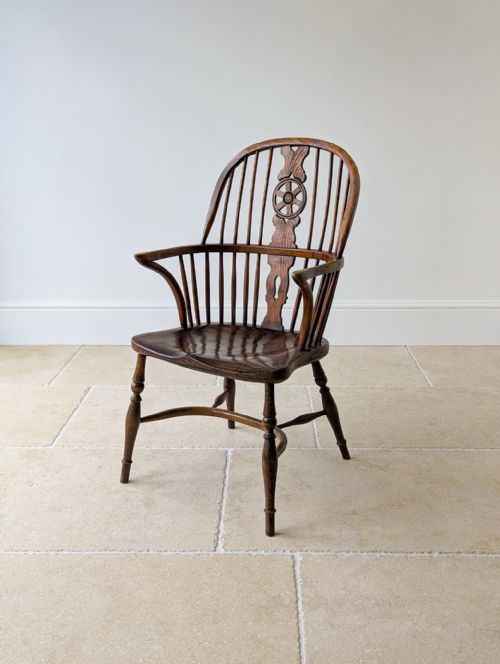
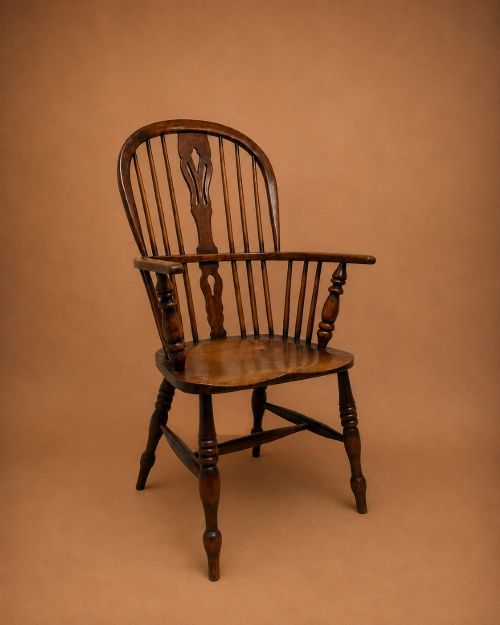
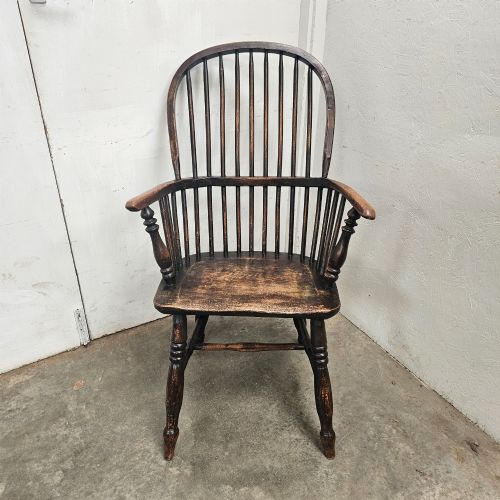
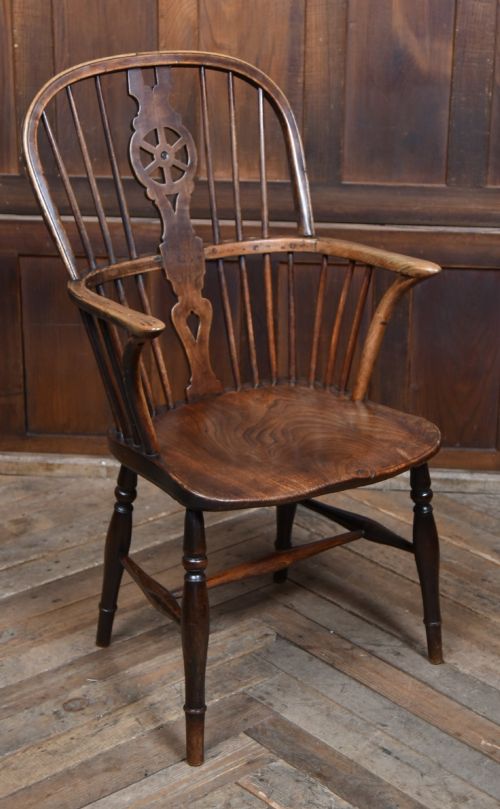
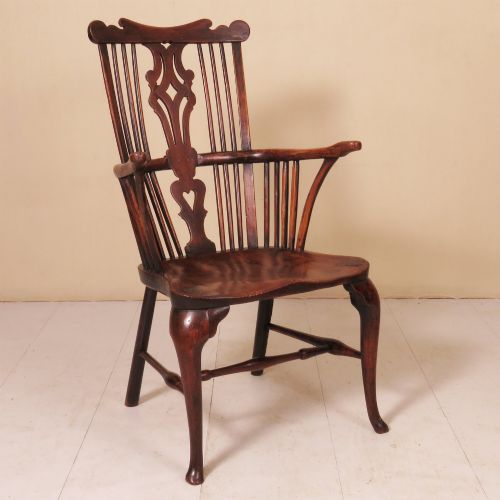
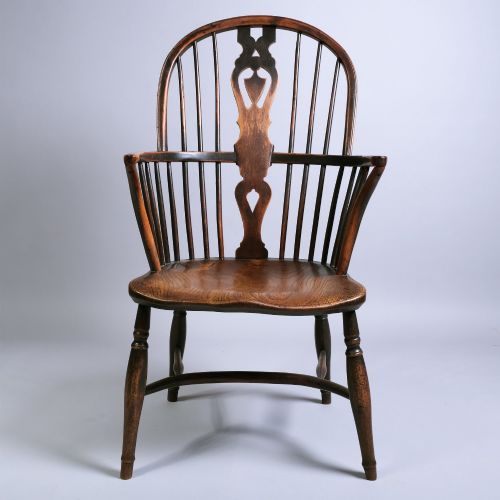
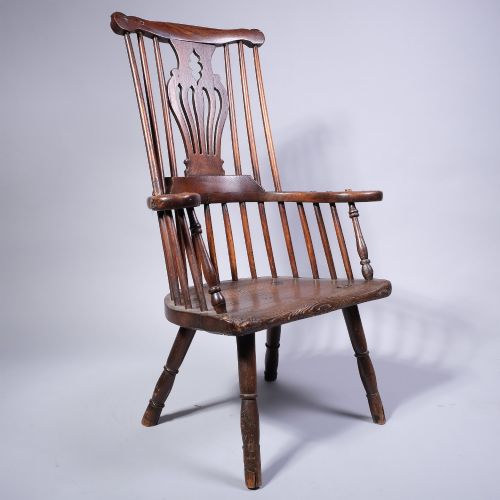
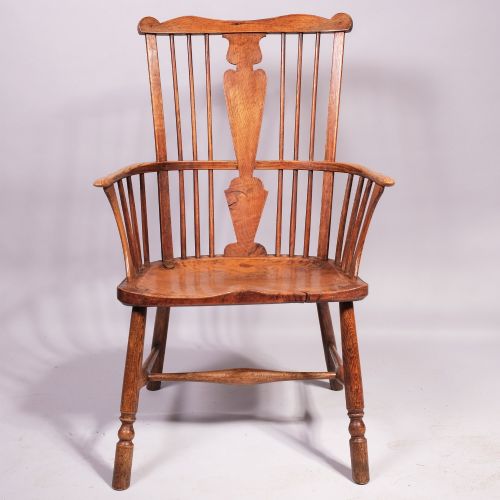
Ash Wood Armchair
An ash wood armchair brings sturdy country character to a room, offering the robust comfort of traditional vernacular seating.
Ash Wood Armchair
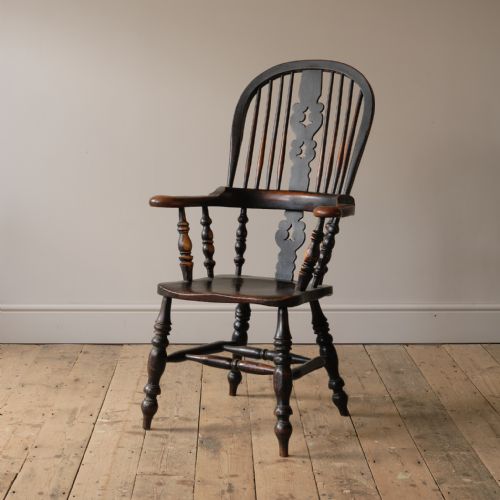
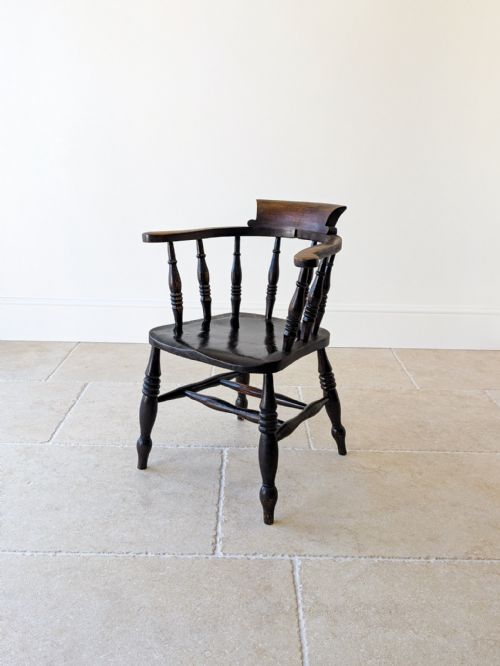
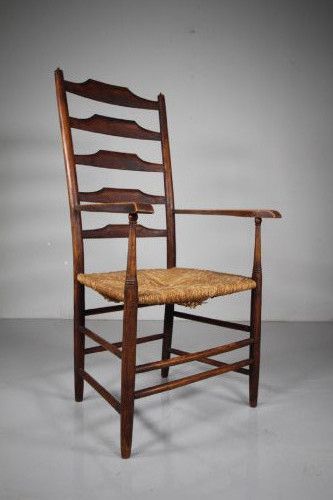
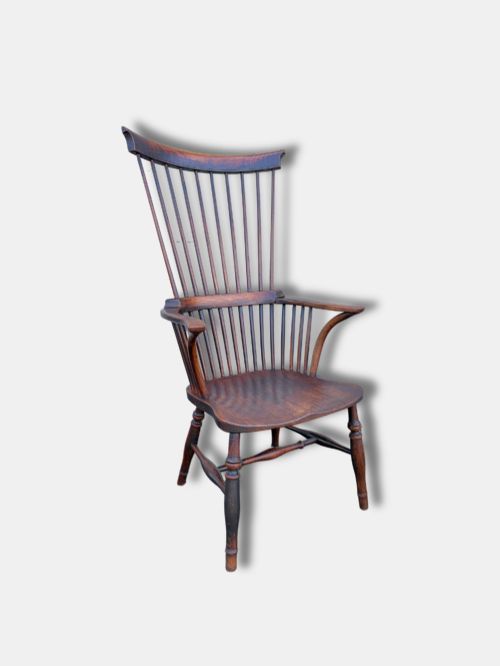
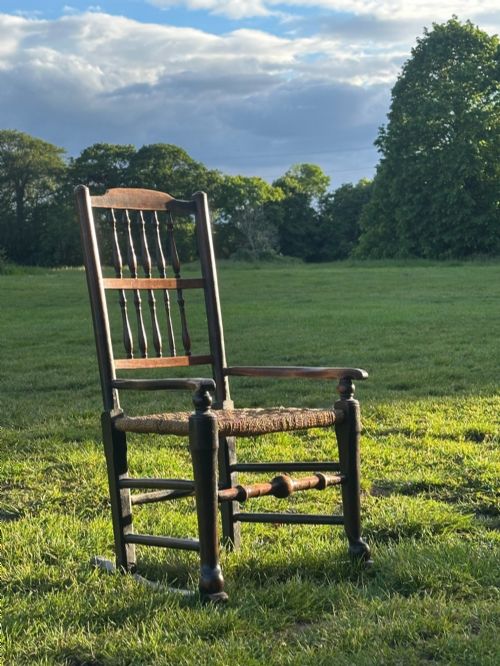
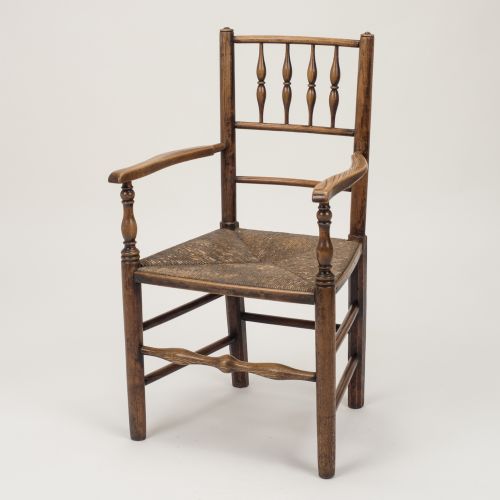
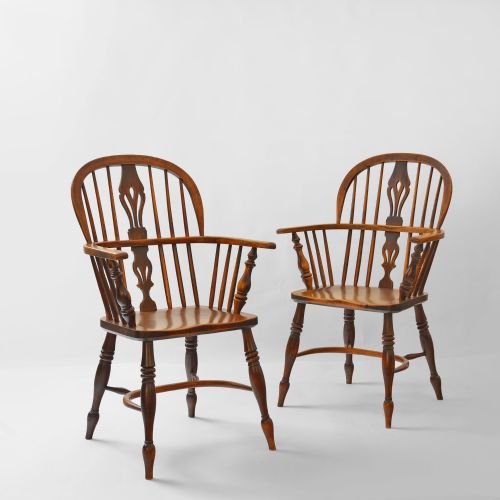
When searching for an ash wood armchair, buyers encounter a diverse selection of traditional seating rooted in English country craftsmanship. These pieces span the 18th and 19th centuries, taking forms such as Windsor chairs, ladderbacks, and captain's chairs.
The specimens on this page are predominantly vernacular designs intended for everyday use in farmhouses, kitchens, and cottages. They combine sturdy wooden frames with seats shaped for comfort, reflecting the practical needs of rural makers.
How they were made
Maker-joiners constructed these armchairs by combining contrasting native timbers, typically pairing ash frames with elm seats and occasionally incorporating fruitwood or yew. Ash provided strength and flexibility for bentwood components like hoops and bows, while elm offered a tough, interlocking grain for solid plank seats.
Construction techniques relied on traditional green woodworking and spindle-turning, often securing components with wedged tenon joints. Seats frequently featured carved depressions for comfort, complemented by turned legs, spindles, and steam-bent arms.
Listings feature ash combined with elm, rush, and yew in traditional forms including Windsor, ladderback, and captain's chairs.
What varies in quality
The standard of an ash wood armchair rests on the fluidity of its bentwood bows and the proportion of its turned spindles. Superior examples display balanced architecture where the grain follows the natural curve of the wood.
Surface preservation and structural integrity distinguish finer specimens from heavily restored ones. Original timber patination, minimal replacement parts, and retained wedges in the undercarriage indicate superior survival.
Philip Clissett·Duncan McKellar·Fred Walker
The Ash Wood Armchair Glossary
- Windsor chair
- A chair built with a heavy wooden seat into which the legs and back spindles are separately socketed. This form relies on a stout plank base for stability.
- Comb back
- A Windsor chair design where the central vertical spindles extend upward to support a horizontal top rail resembling a traditional hair comb. It provides a distinct profile for high-backed seating.
- Vernacular furniture
- Domestic pieces made by local regional craftsmen rather than urban cabinetmakers. These items prioritise utility and local material availability over fashionable trends.
- Rush seat
- A seating surface woven from dried marsh rushes around a wooden frame. This technique yields a textured, supportive platform found on many traditional ladderback chairs.
Ash Wood Armchair: Frequently Asked Questions
How do I care for an ash wood armchair?
Keep the timber away from direct heat sources and sudden humidity changes to prevent the wood from drying out or splitting.
Apply a microcrystalline wax periodically to nourish the surface and maintain the natural patina built up over generations of use.
What is the difference between a Windsor and a ladderback?
Windsor chairs feature a solid wooden seat with spindles socketed directly into it, often incorporating bentwood elements for the arms and back.
Ladderbacks utilise a post-and-rung frame construction supporting horizontal slats across the back, frequently paired with woven rush seating.
Where were these country armchairs originally used?
These chairs served utilitarian roles in farmhouses, cottages, and provincial kitchens across rural regions. Their robust construction suited daily domestic life and demanding workspaces.
Over time, they transitioned from practical furniture to decorative items appreciated for regional character and traditional craftsmanship.
How can I tell an 18th-century chair from a 19th-century one?
Earlier 18th-century pieces often display more primitive construction methods, deeper timber patination, and vernacular regional traits unique to local turners.
Nineteenth-century examples frequently show more standardised lathe work and greater uniformity in spindle shaping while retaining traditional materials.