

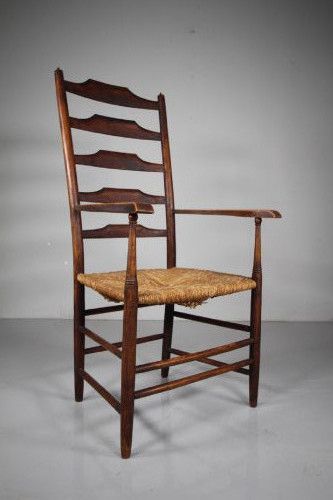
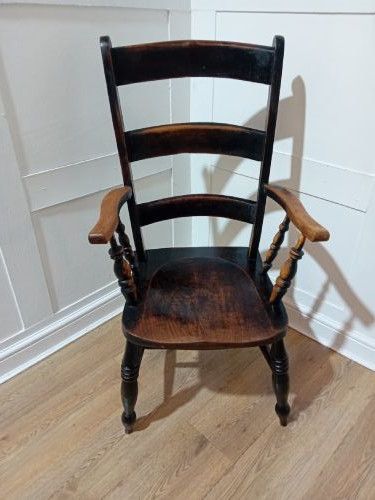


Victorian Ladder Back Armchair
These pieces are victorian ladder back armchair examples offering sturdy vernacular comfort and honest timber construction for everyday rooms.
Victorian Ladder Back Armchair
A victorian ladder back armchair brings traditional country craftsmanship directly into the home through practical seating forms. These chairs appear in various regional guises across the nineteenth century, including Thames Valley designs, Lancashire spindle back farmhouse styles, and simple elm or ash rocking variants.
Most examples found on this page date from the mid to late nineteenth century, spanning periods like the eighteen seventies and eighteen nineties. Buyers frequently encounter sturdy ash, elm, and oak frames paired with woven rush seats, reflecting traditional English country vernacular production methods.
Beyond standard sitting chairs, the selection extends to childs rocking chairs and larger kitchen dining carvers. These utilitarian seating forms developed through rural cottage industries to provide reliable, hardwearing support for domestic life.
How they were made
Country chairmakers built these frames using locally available native hardwoods such as ash, elm, oak, and beech. Craftsmen shaped the uprights and horizontal slats by hand or on simple lathes, selecting tough timbers that could withstand daily strain without splitting.
Seats were traditionally woven from natural rush to create a flexible, supportive platform suspended within the wooden frame. Joinery relied on pegged mortise and tenon joints, allowing the organic materials to expand and contract naturally with household humidity changes.
Victorian Ladder Back Armchair Retail Price Guide 2026
Typical asking prices for victorian ladder back armchair among the pieces listed under this phrase on Sellingantiques today, from the lower quarter to the upper quarter. They describe what is for sale here now, not the wider market.
Some chairs arrived in sets that included oversized carvers alongside standard dining seats, ensuring the head of the house sat highest.
What varies in quality
Quality depends upon the integrity of the original timber frame and the tightness of the rush weaving. Better examples retain their original surface finishes and patination rather than later sanding or thick modern varnishes that obscure the wood grain.
Proportion and careful balancing of the turned rungs separate standard utility seating from finer workshop pieces. Subtle refinements in the curvature of the ladder slats and the turning of the arm supports indicate superior regional craftsmanship.
Philip Clissett
The Victorian Ladder Back Armchair Glossary
- Ladder back
- A chair style featuring multiple horizontal wooden slats between the upright rear posts, resembling the rungs of a ladder. This construction method distributes weight evenly across the backrest while keeping the frame lightweight.
- Rush seat
- A woven seating surface made from dried wetland rushes twisted into cords. This traditional material yields slightly under the user and breathes well during extended sitting.
- Vernacular furniture
- Domestic objects made by local tradesmen using regional traditions rather than following strict metropolitan design books. These pieces prioritize practical utility and locally sourced materials.
- Spindle back
- A variation featuring numerous thin vertical turned wooden rods instead of horizontal slats. This construction lightens the backrest while providing flexible support.
Victorian Ladder Back Armchair: Frequently Asked Questions
What is a ladder back armchair?
A ladder back armchair is a traditional seat featuring horizontal slats across the backrest and supporting arms on either side. These chairs evolved from vernacular country seating traditions.
Craftsmen built them primarily for everyday utility in farmhouses and cottages, combining sturdy wooden frames with woven rush seats.
How do I care for a rush seat?
Rush seats require dry indoor environments and gentle cleaning with a soft brush to remove dust. Avoid excess water, which causes the natural plant fibres to rot and snap.
Applying a light, infrequent mist of water can sometimes help prevent very old rush from becoming brittle in dry heated rooms.
Are these chairs comfortable for daily use?
Most of these armchairs provide upright support suited for dining, reading, or desk work rather than deep lounging. The woven rush yields slightly to the body, making them surprisingly forgiving.
Adding a simple loose cushion can adjust the seat height and soften the timber frame for extended sitting.
How can I tell the age of an ash chair?
Age is determined by tool marks, timber shrinkage patterns, and the method of construction in the joints. Hand-turned components often display slight irregularities unique to pole lathes.
Wear patterns on the footrests and arm supports also build up gradually over decades of continuous household use.