



Nineteenth Century Rush Chair
A nineteenth century rush chair brings tactile organic texture and honest vernacular form into a room.
Nineteenth Century Rush Chair
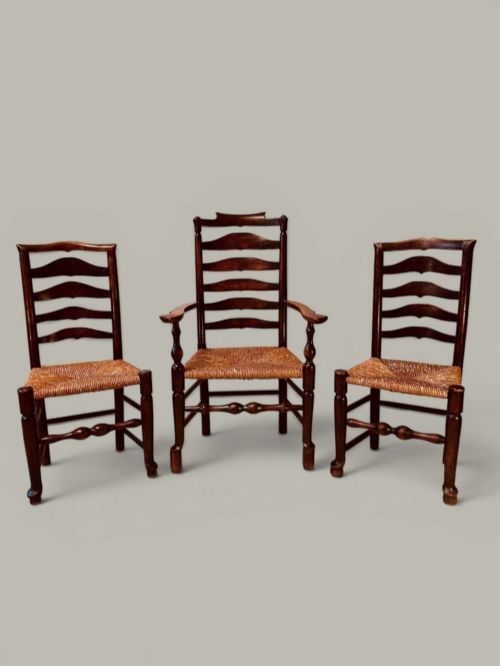
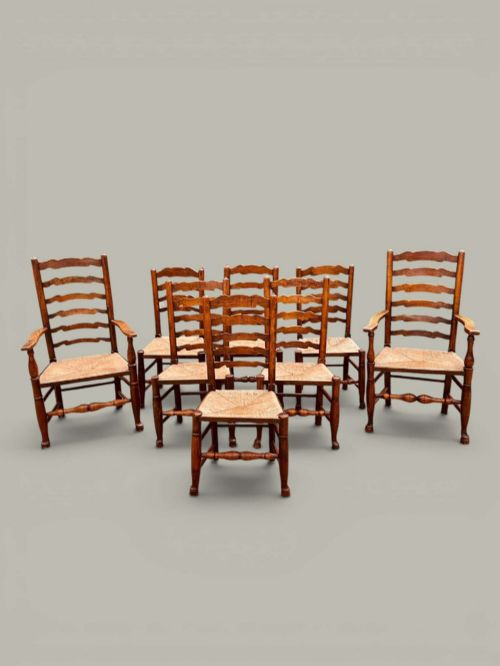
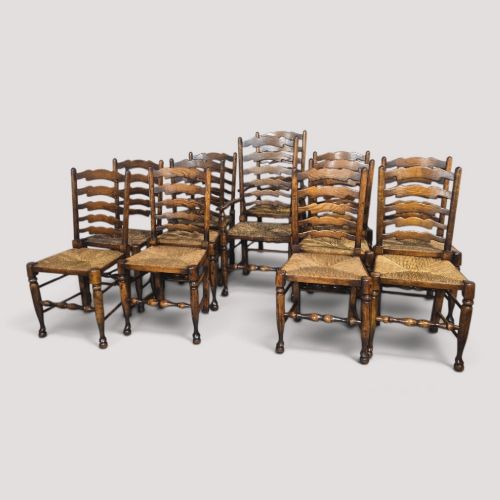
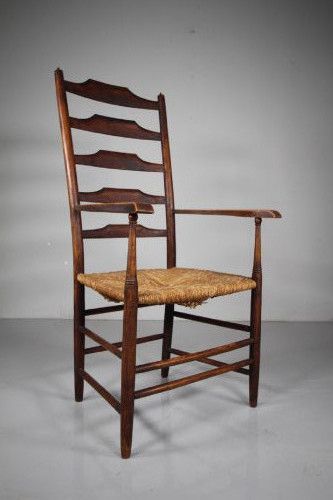
A nineteenth century rush chair encompasses practical seating forms rooted in regional traditions, spanning sets of dining chairs, single side chairs, armchairs, and rocking chairs. When you search for a nineteenth century rush chair, you encounter examples shaped by English country vernacular, Arts and Crafts ideals, and Regency country tastes.
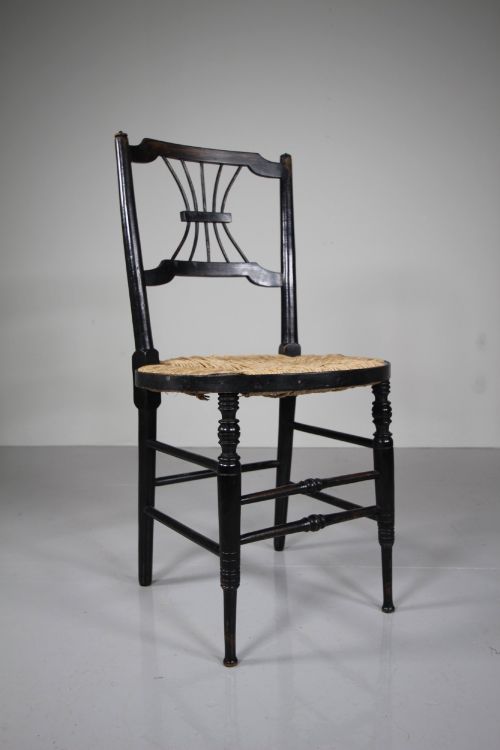
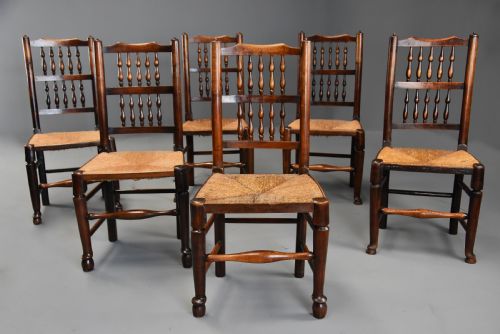
The most frequently met forms on this page include spindle back chairs in ash and elm, alongside painted faux bamboo and fruitwood variations. Makers such as Philip Clissett and William Morris represent the elevated design paths these vernacular seats took during the period.
Materials and construction
Makers utilised native hardwoods like ash, elm, alder, and fruitwood for frames, turning spindles and shaping solid seats to receive woven rush. Ebonised beech and painted finishes also appear, showing how regional workshops adapted fashionable surfaces for domestic use.
Natural rush forms the woven seating platforms, offering a resilient surface that flexes with the sitter. Joinery relies on traditional turning and pegging techniques suited to the vernacular workshop rather than urban cabinet-making.
Nineteenth Century Rush Chair Retail Price Guide 2026
Typical asking prices for nineteenth century rush chair among the pieces listed under this phrase on Sellingantiques today, from the lower quarter to the upper quarter. They describe what is for sale here now, not the wider market.
Rocking chairs included here invite nineteenth century relaxation, proving that ancestors valued a comfortable afternoon sit just as much as we do.
Assessing quality and character
Quality rests in the harmony of the timber framing and the crispness of the turned components, such as spindles and legs. Sets that retain their original paint or display a deep, honest patina command greater appreciation than altered or heavily refinished examples.
The integrity of the rush weave and the firmness of the frame joints dictate the durability of the piece. Distinctive regional attributions or documented maker links elevate certain armchairs and dining sets above standard vernacular production.
William Morris·Philip Clissett·E W Godwin
The Nineteenth Century Rush Chair Glossary
- Rush
- Dried marsh grass woven into cord and hand-plaited to form resilient seat pads. It provides a natural, textured surface characteristic of country seating.
- Spindle back
- A chair construction featuring slender turned wooden uprights supporting the backrest. This method lightened the frame while maintaining structural strength.
- Vernacular
- Objects designed by local craftsmen using traditional regional methods and materials rather than academic architectural styles. These pieces reflect the practical needs of their original communities.
- Patina
- The surface sheen and colour developed by wood through age, handling, and wax polishing over generations. It indicates genuine age and use.
- Faux bamboo
- Wood turned and painted to imitate natural bamboo stems. This decorative technique enjoyed popularity during the Regency period.
Nineteenth Century Rush Chair: Frequently Asked Questions
Are rush seats strong enough for daily use?
Natural rush woven over a sturdy wooden frame offers surprising resilience and flexibility for everyday sitting. Traditional materials distribute weight evenly across the plaited cords.
Protecting the weave from excessive moisture and sharp objects ensures these seats remain functional parts of a modern home.
How do I spot a genuine nineteenth century piece?
Examine the timber framing for tool marks, hand-turned spindle irregularities, and natural wear patterns that align with domestic use. Native hardwoods like ash and elm display grain characteristics typical of period vernacular production.
Attributions or maker associations help verify provenance, though unsigned country chairs rely on construction methods and material age for dating.
Can I mix these chairs with modern dining tables?
Vernacular seating introduces organic warmth and textural contrast when paired with contemporary or mid-century dining tables. Their slender spindle backs keep sightlines open in smaller dining spaces.
Matching a mismatched set of single chairs around a central table creates an eclectic, collected interior look.
How should I clean a painted finish?
Dust painted wood surfaces gently with a soft, dry cloth to prevent the accumulation of grit. Avoid harsh chemical cleaners or excess water that might damage original pigments.
Preserving original paint preserves the historic character and visual appeal of Regency and country pieces.