

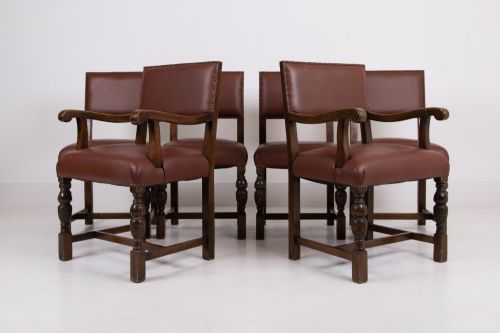
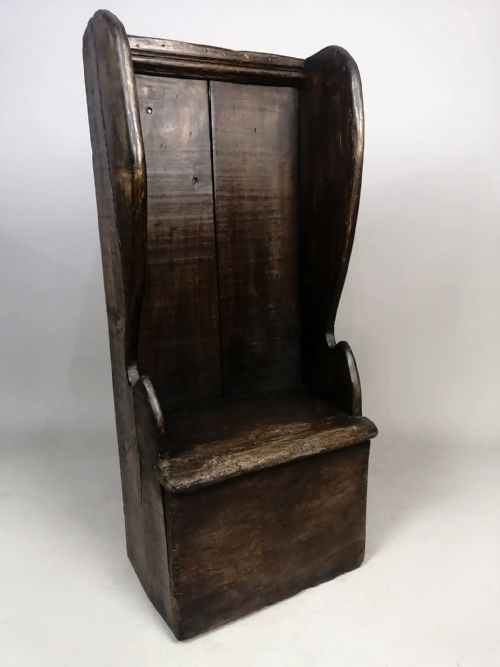
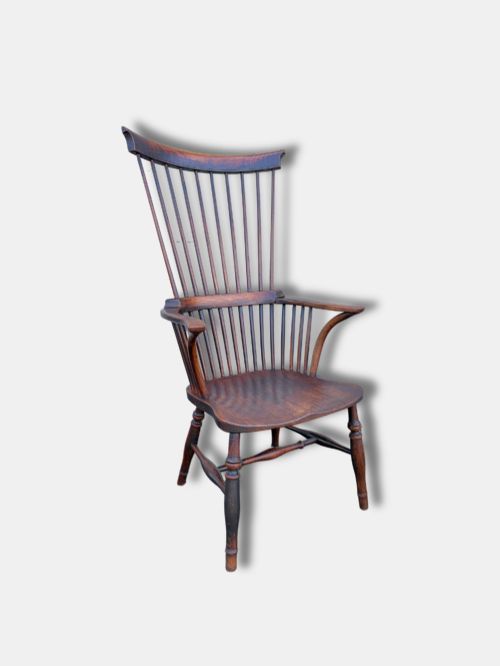
Dark Wood Country Armchair
A dark wood country armchair brings honest craftsmanship and tactile timber warmth into a room through vernacular seating forms shaped by regional tradition.
Dark Wood Country Armchair
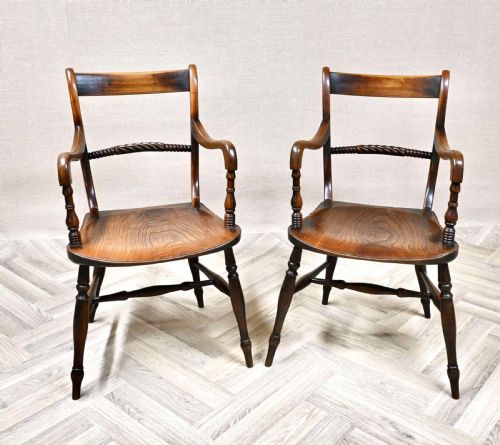
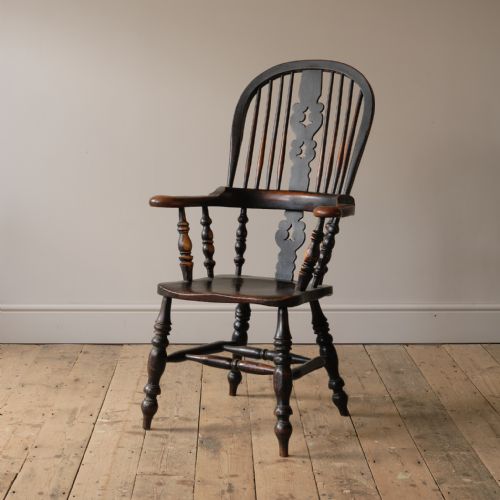
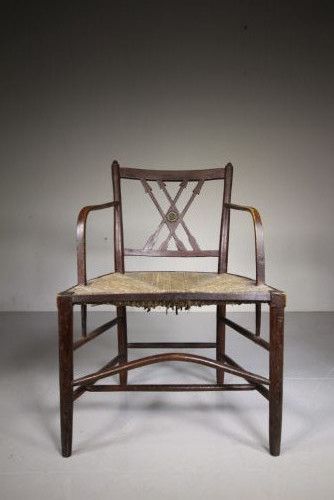
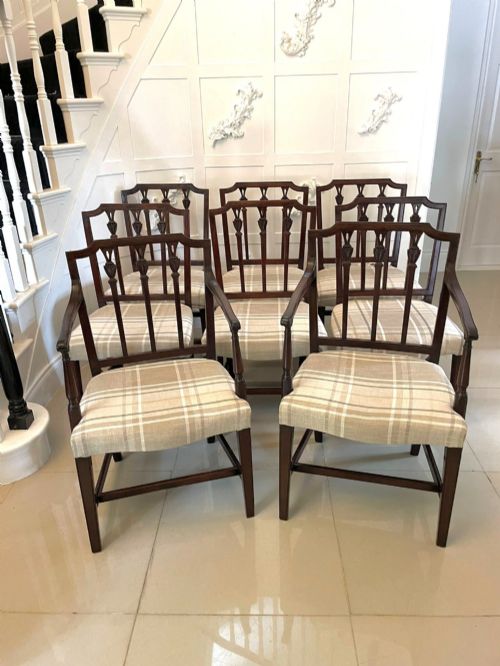
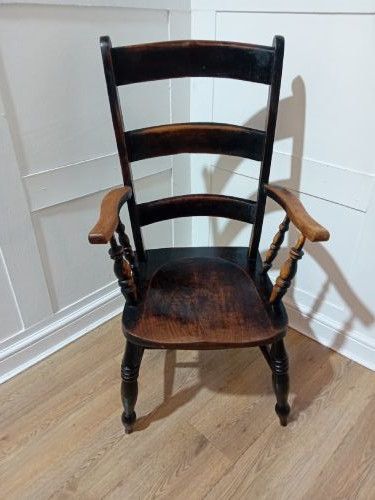
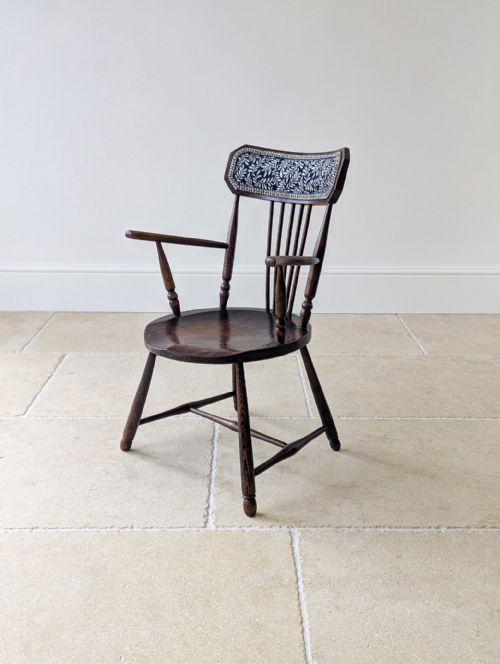
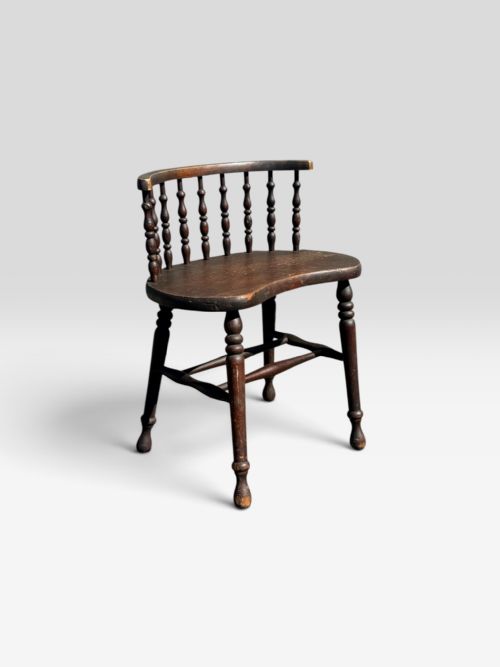
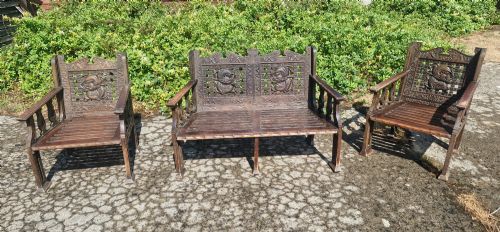
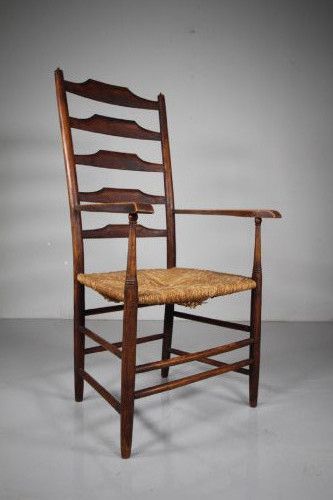
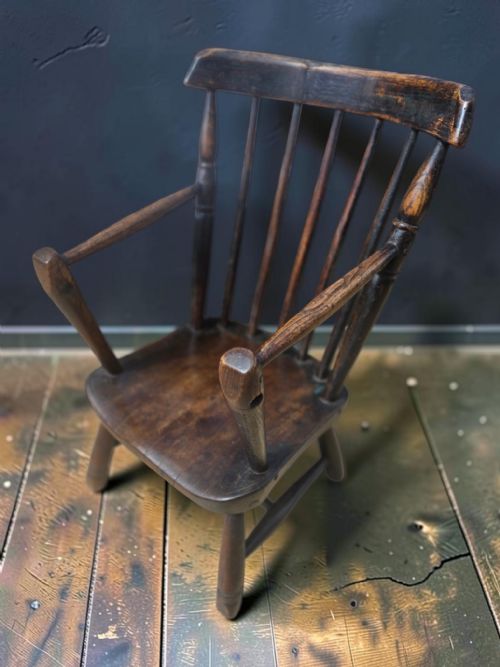
A dark wood country armchair encompasses robust regional seating designed for utility and comfort, drawing on centuries of local vernacular tradition. When exploring this selection, a buyer encounters substantial Windsor chairs, ladder-backs, and low-slung lambing chairs spanning the eighteenth and nineteenth centuries.
The regional origins of these seats stretch across English localities such as the Thames Valley, Lakeland, and the West Country. Makers utilised native hardwoods available in their immediate landscape, producing honest seating forms that range from rustic children's chairs to broad-armed Windsor seating.
Materials and Construction
Makers constructed these regional armchairs using a combination of dense native timbers, pairing elm seats with ash or beech spindles and legs. This hybrid method ensured that the seat board resisted splitting while the turned components provided structural rigidity.
Joinery relied on traditional pegging and wedged tenons rather than metal fasteners, allowing the timber components to move naturally with seasonal humidity changes. Surfaces were often finished with plain wax, oil, or historical paint, preserving the rich grain of the wood over generations of use.
Dark Wood Country Armchair Retail Price Guide 2026
Typical asking prices for dark wood country armchair among the pieces listed under this phrase on Sellingantiques today, from the lower quarter to the upper quarter. They describe what is for sale here now, not the wider market.
Craftsmen utilised local hardwoods because heavy native timber resisted tipping when sitters leaned back near farmhouse hearths.
Evaluating the Seating
Quality in these rural armchairs rests upon the purity of timber selection and the retention of original surface patination. Examples fashioned from figured yew or dense elm carry greater visual depth than those built from simpler stained woods.
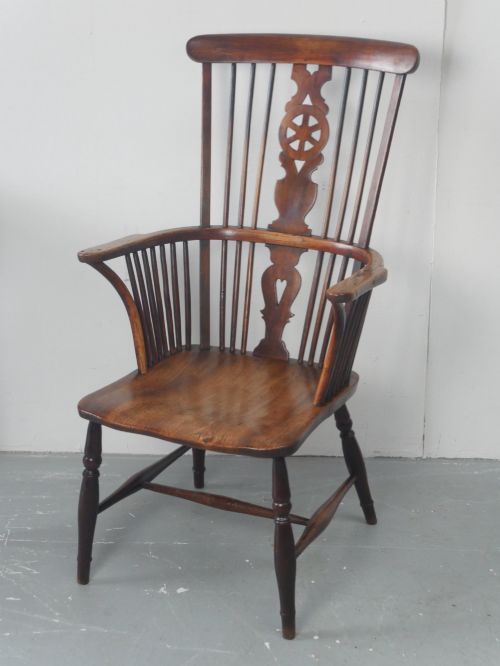
The crispness of spindle turnings and the balanced proportions of the comb or wheel back distinguish superior workshop output from utilitarian production. Retaining an untouched surface finish with natural wear elevates the historical integrity of the piece.
Philip Clissett·Mellier And Co
The Dark Wood Country Armchair Glossary
- Windsor chair
- A wooden armchair featuring a solid carved saddle seat into which the legs and back spindles are directly socketed. These sturdy seats developed distinct regional back patterns such as wheel-backs and comb-backs.
- Comb-back
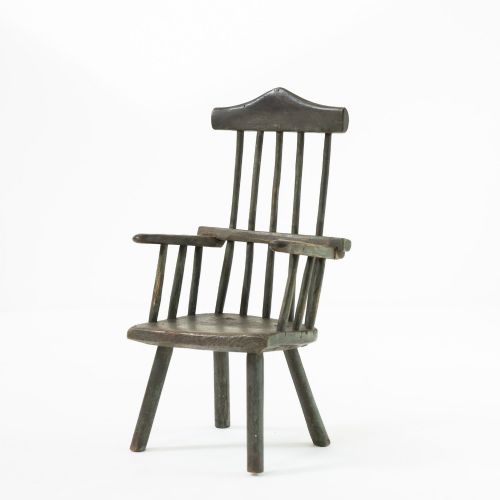
- A Windsor chair design where the central vertical spindles rise to form a horizontal top rail resembling an antique hair comb. This construction offers solid head and shoulder support.
- Lambing chair
- A hooded or high-backed vernacular armchair historically designed to shield the sitter from draughts in farmhouse hearths. They frequently incorporate enclosed lower sides and a solid wooden seat.
- Vernacular
- Objects built by local craftsmen using traditional regional methods and available materials rather than following high-style academic design. These pieces reflect the practical needs of their immediate community.
- Barback
- A seating variant featuring a horizontal wooden splat shaped like a carriage bar across the backrest. This form appears frequently in nineteenth-century tavern and kitchen chairs.
Dark Wood Country Armchair: Frequently Asked Questions
What defines a country armchair?
A country armchair is a vernacular seating piece built by regional craftsmen using native timbers like elm, ash, and beech. These chairs prioritise functional comfort and sturdy construction over formal stylistic conventions.
They often display local regional traits in their spindle turning and back designs, connecting them directly to the English countryside workshops where they originated.
How do I care for antique timber?
Maintain these wooden surfaces by applying a microcrystalline wax sparingly and buffing gently with a soft cloth. Avoid placing seating near direct heat sources or in fluctuating humidity to prevent timber shrinkage.
Regular gentle dusting preserves the natural patina built up on the wood over centuries of domestic handling.
Where were Windsor chairs made?
Windsor chairs were produced across various English regions, with notable production centres in the Thames Valley, Yorkshire, and the West Country. Regional turners utilised local woods available in their immediate woodlands.
Local timber preferences often dictate the specific appearance, combining elm seats with ash or beech framing.
Are these chairs comfortable for daily use?
Most country armchairs were designed for domestic utility, featuring sculpted saddle seats carved to fit the human form. Their robust wooden construction provides solid lumbar support during regular seating.
Adding a loose antique textile cushion can enhance comfort while respecting the historical character of the timber seat.
How do I identify eighteenth-century examples?
Eighteenth-century examples display deeply dished solid elm seats, thicker spindle wear patterns, and organic tool marks left by drawknives and adzes. Their joinery relies on pegged tenons and hand-turned components without modern industrial fasteners.
The overall proportions and timber shrinkage patterns also offer strong indicators of early construction age.