


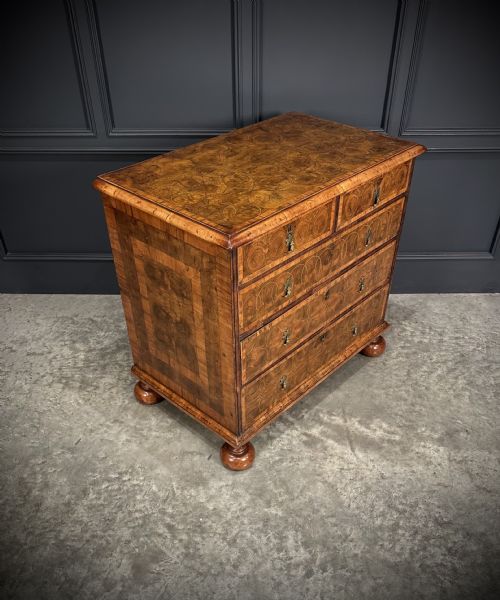


Antique Laburnum Furniture
Antique laburnum furniture consists of dense, figured timber objects built for domestic service, prized for their rich concentric growth patterns.
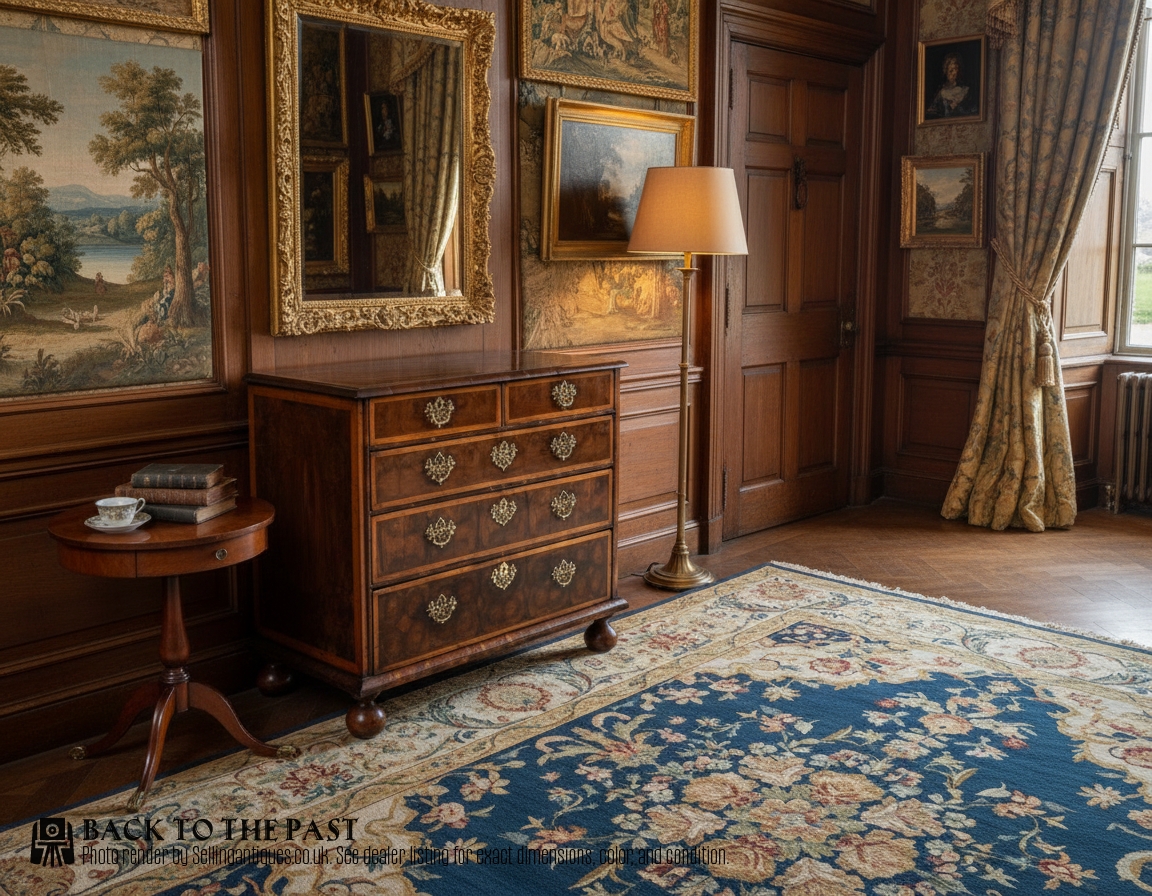
Antique Laburnum Furniture
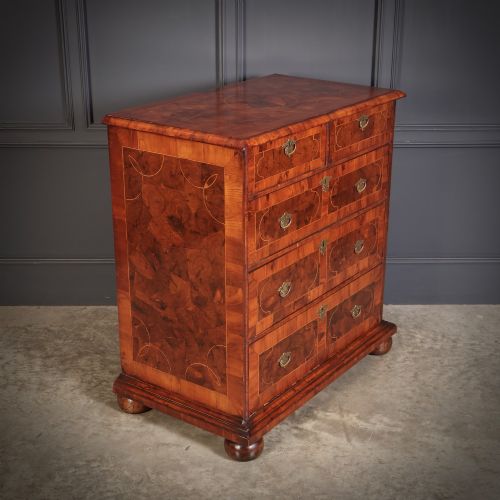
Antique laburnum furniture comprises timber pieces shaped from a wood known for its striking circular grain patterns, most frequently encountered as chests of drawers and armchairs. These items appear across the seventeenth, eighteenth, and nineteenth centuries, spanning vernacular country forms and formal William and Mary designs.
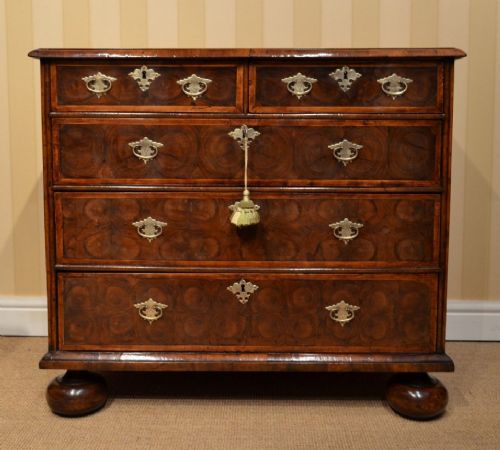
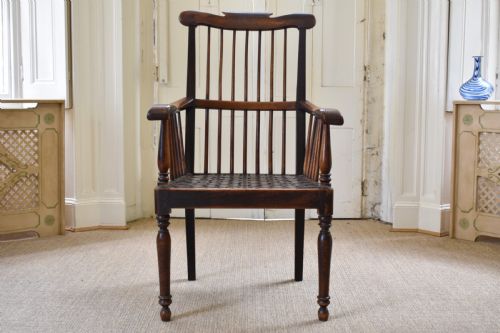
The seventeenth-century examples dominate the selection, heavily featuring intricate oyster veneers arranged in geometric patterns across drawer fronts. Buyers will also find nineteenth-century vernacular and primitive Windsor armchairs that combine laburnum with elm, yew, and fruitwood.
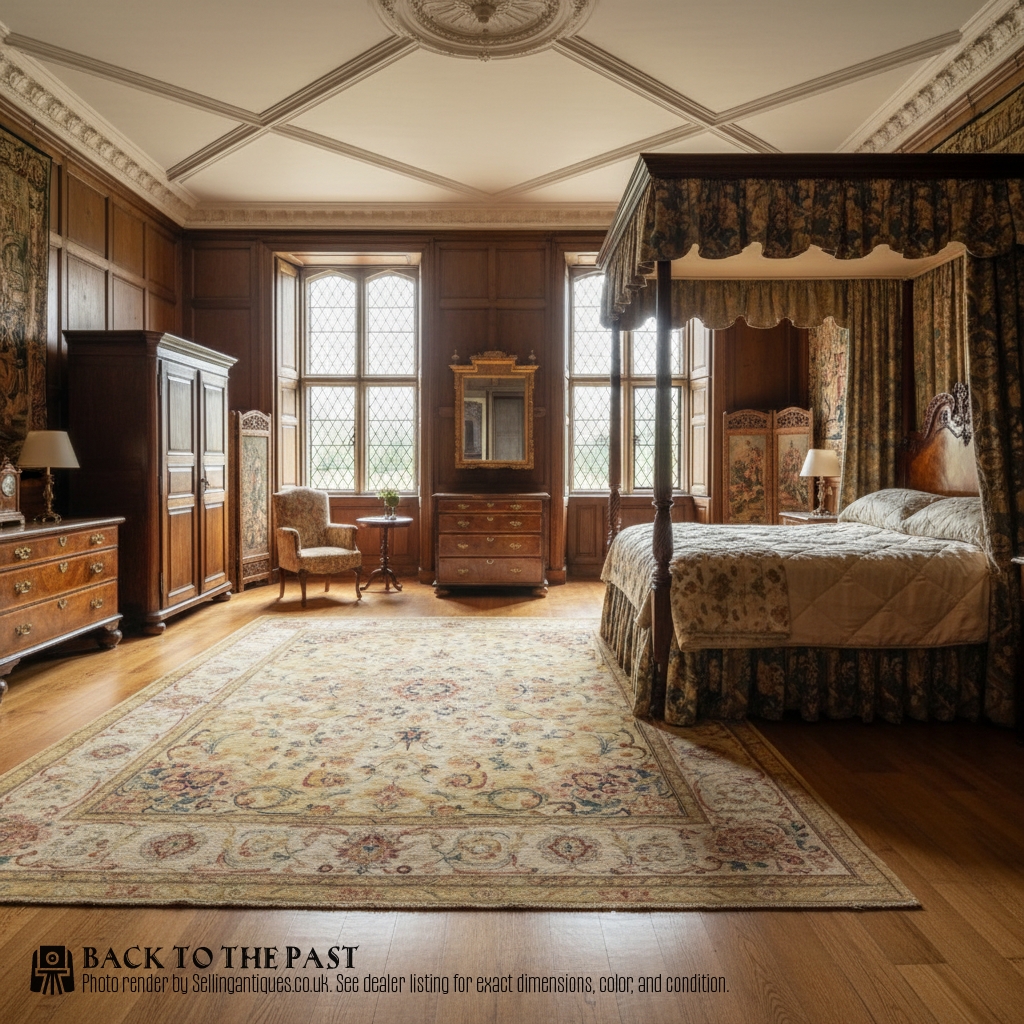
How antique laburnum furniture was made
Cabinetmakers utilised laburnum branches and small logs cross-cut into thin roundels known as oyster veneers, laying them out in complex patterns across secondary woods like walnut or oak. This technique required immense patience and precise hand-sawing to produce the characteristic circular motifs.
Country pieces relied on solid sections of laburnum combined with elm, boxwood, and fruitwood, shaped into vernacular Windsor armchairs using traditional turning and steaming methods. Brass handles and escutcheons were frequently added to the drawer fronts of formal seventeenth-century chests.
Antique Laburnum Furniture Retail Price Guide 2026
Typical asking prices for laburnum furniture among the pieces listed under this phrase on Sellingantiques today, from the lower quarter to the upper quarter. They describe what is for sale here now, not the wider market.
Cabinetmakers turned modest garden tree branches into prized furniture by slicing them into oysters, proving that small timber holds immense decorative potential.
What varies in quality
The visual strength of the timber grain separates standard pieces from the finest works, as deeply figured oyster veneers demand superior log selection and meticulous matching. The complexity of the geometric arrangement across drawer surfaces dictates the visual success of the piece.
The integrity of the underlying construction and the survival of the original secondary timbers, such as oak and walnut, define the standing of a chest of drawers. In vernacular armchairs, the harmonious combination of contrasting woods like laburnum, elm, and yew determines the quality of the build.
The Antique Laburnum Furniture Glossary
- Oyster veneer
- Thin circular slices cut across branches or small logs to display the concentric growth rings of the timber. This technique creates a patterned surface resembling oysters when arranged across a drawer front.
- Vernacular
- Objects made by regional craftsmen for local use rather than high-style metropolitan workshops. These pieces often employ native timbers such as elm and laburnum.
- Windsor armchair
- A wooden seating form featuring a solid carved saddle seat into which the legs and back spindles are wedged directly. Laburnum is frequently utilised alongside yew and elm in these builds.
- Chest on stand
- A case of drawers raised upon an integrated or matching base with legs. This form elevates the primary storage compartment off the floor.
- William and Mary
- A design style spanning the late seventeenth and early eighteenth centuries characterised by geometric veneering and brass drop handles. Much of the laburnum oyster furniture dates from this distinct period.
Antique Laburnum Furniture: Frequently Asked Questions
What is laburnum wood?
Laburnum is a dense, hard wood derived from a small tree, known for its contrasting dark heartwood and pale yellow sapwood. When cross-cut, it produces intricate circular figures.
Cabinetmakers valued this timber for decorative veneering rather than structural framing, applying thin sections to larger carcases.
How do I care for oyster veneer?
Oyster veneered surfaces require stable indoor humidity levels and protection from direct sunlight to prevent the timber from shrinking or cracking. Gentle dusting with a dry cloth preserves the polished finish.
Avoid placing these items near radiators or heat sources which can cause the delicate cross-cut veneers to lift from the backing.
What periods do these pieces date from?
The pieces span from the seventeenth century through to the early twentieth century, with a heavy concentration of formal veneered items originating in the seventeen-hundreds. Vernacular country armchairs largely date to the nineteenth century.
William and Mary stylistic influences appear prominently among the earlier case furniture.
Were these pieces used for storage?
Chests of drawers and chests on stand provided secure storage for garments, linens, and personal valuables in domestic chambers. The multiple drawers allowed for sorted organisation of household goods.
Armchairs offered seating in parlours and provincial homes, combining structural hardwoods for daily support.