

William Mary Chest Drawers
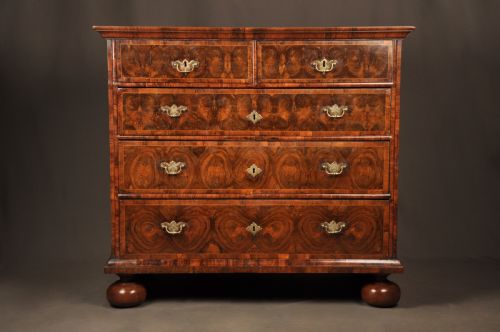
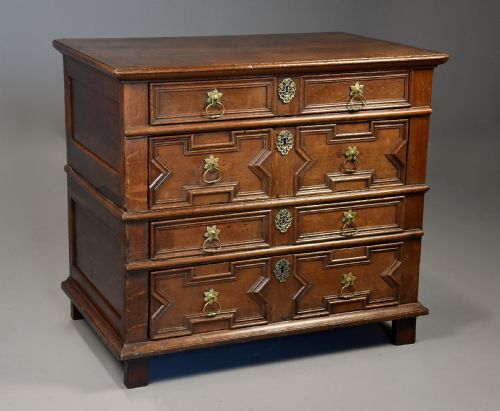
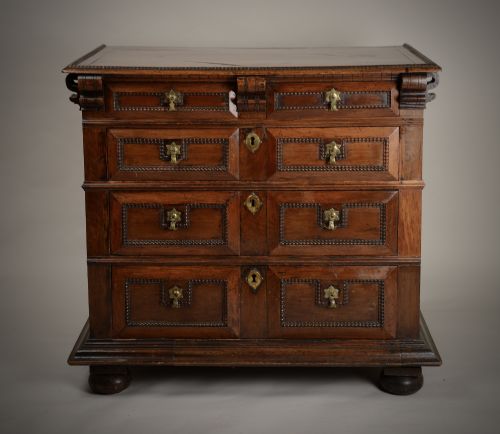
When searching for a william mary chest drawers, buyers encounter late seventeenth and early eighteenth-century forms crafted for elite domestic interiors.
William Mary Chest Drawers
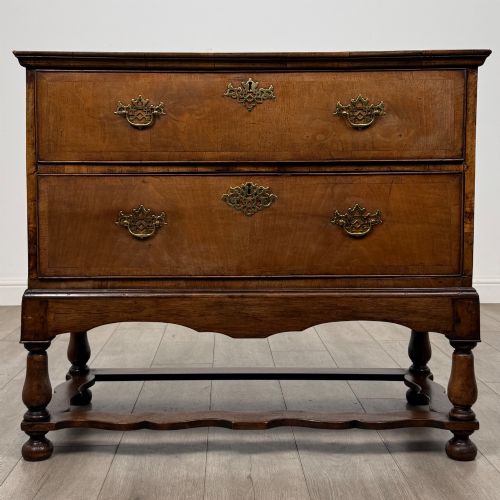
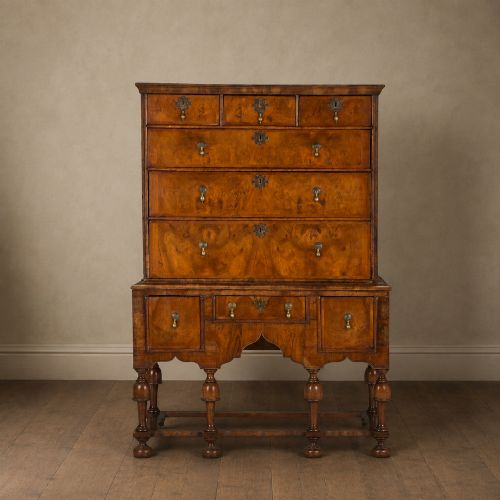
The william mary chest drawers category encompasses case furniture originating predominantly from the late seventeenth century, alongside related examples from the Queen Anne and early Georgian periods. Buyers routinely encounter standard multi-drawer chests, tall chests on stands, lowboys, and cabinets on chests.
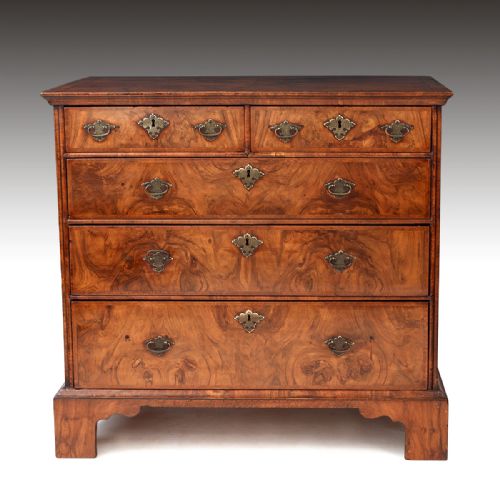
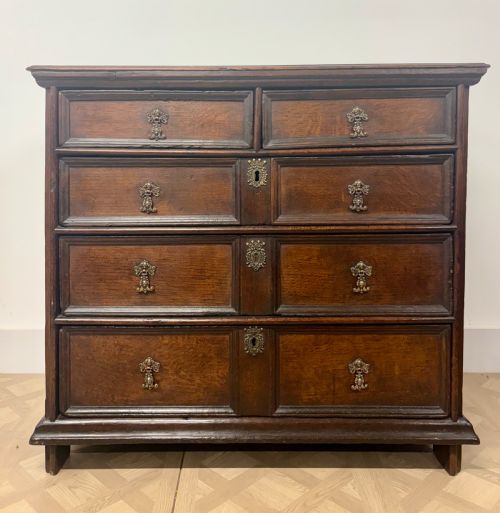
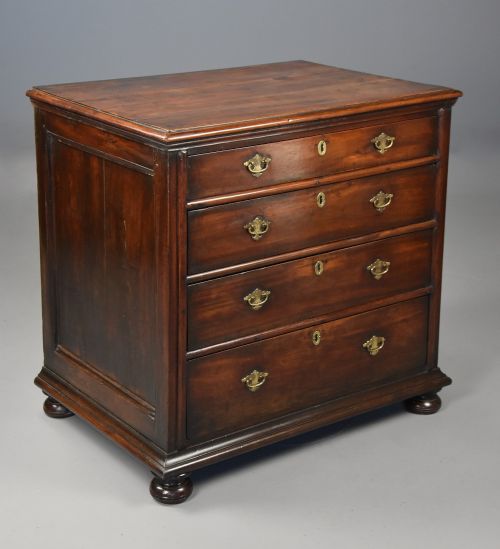
Surviving examples span oak, walnut, and mixed timbers, frequently taking the form of two-part chests constructed with multiple internal drawers. Regional pieces often utilise solid oak, whereas high-status commissions employ walnut veneers and decorative marquetry panels.
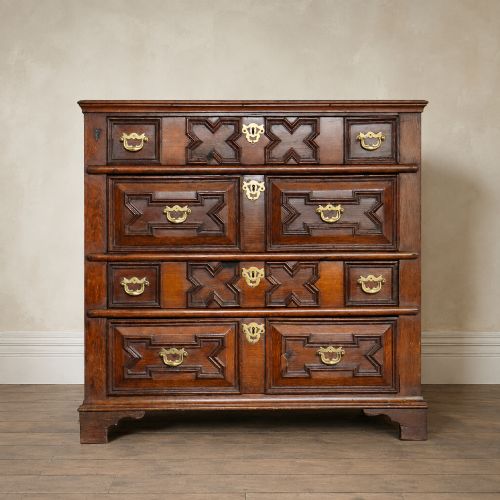
Many items date between sixteen-ninety and seventeen-ten, displaying characteristic raised mouldings, geometric drawer fronts, and inverted cup or trumpet turnings on stand bases.
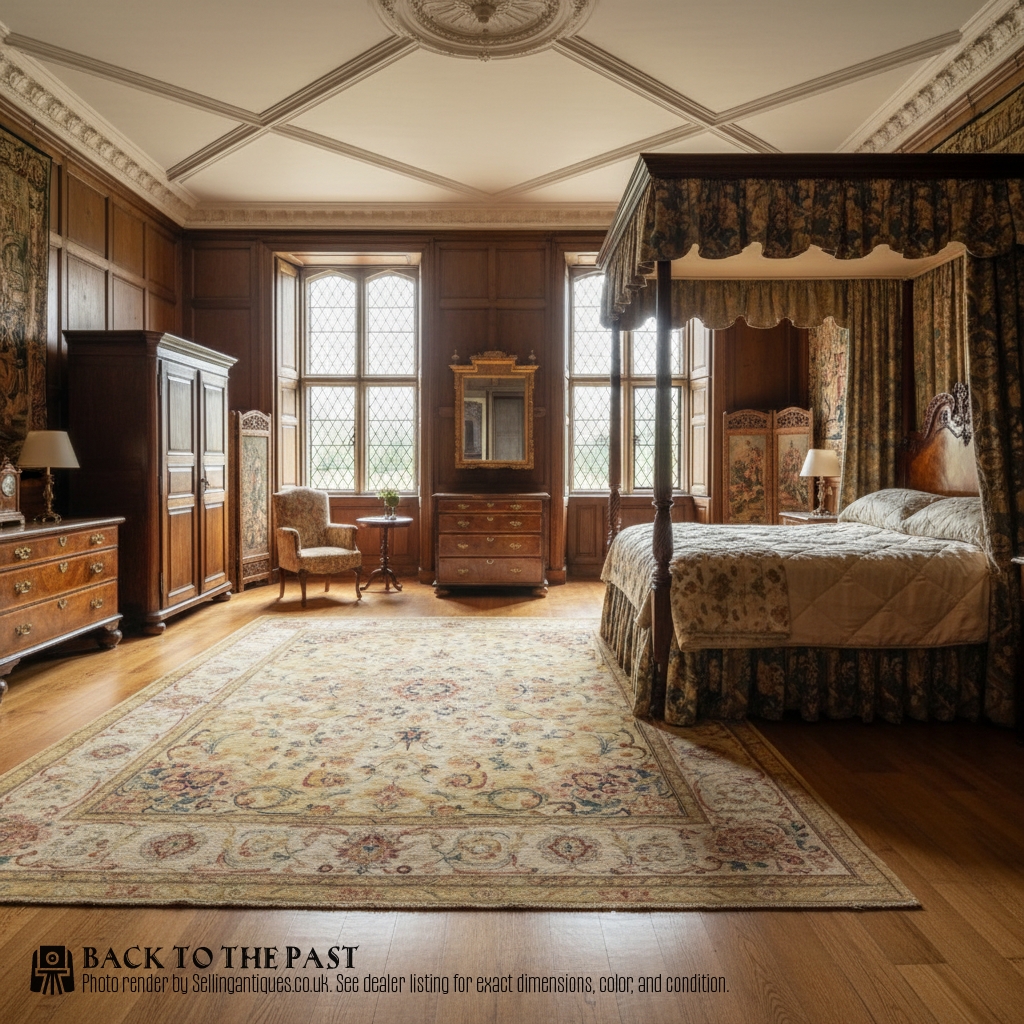
Materials and Construction
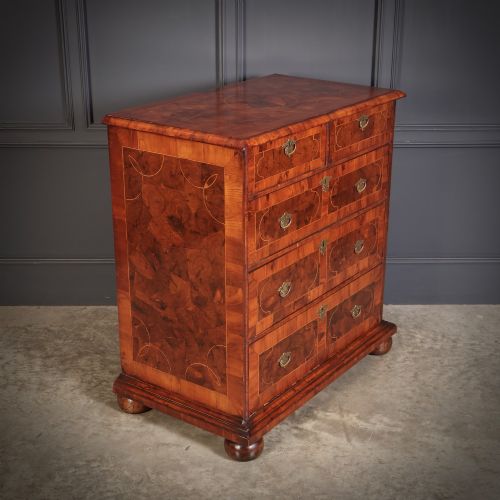
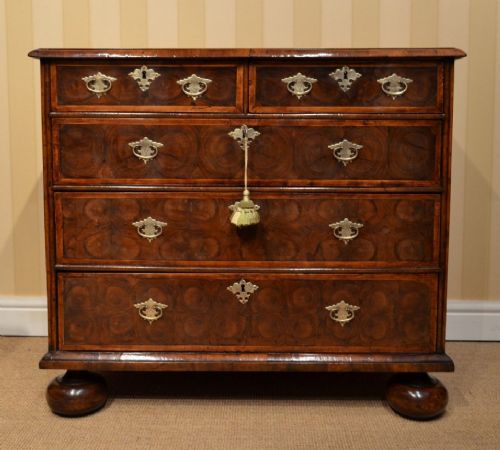
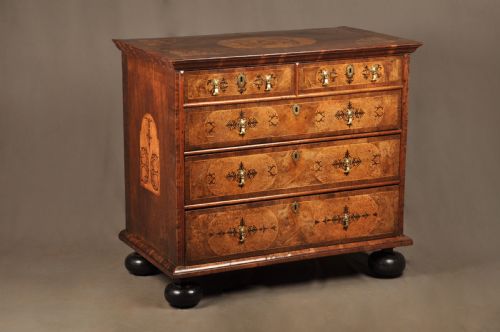
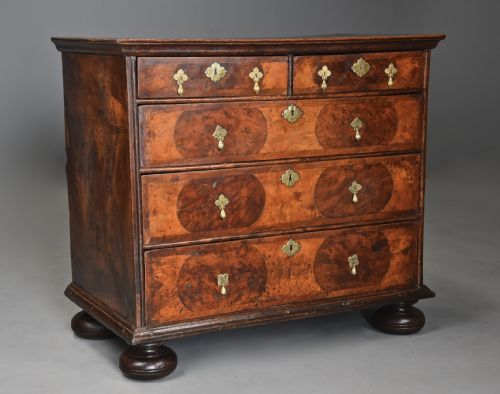
Cabinetmakers utilised native oak and fruitwoods for structural carcases, applying figured veneers of walnut, olive, laburnum, and yew to primary display surfaces. Oyster veneering involved cross-cutting small branch wood to produce circular roundels arranged in intricate geometric patterns across the drawer fronts.
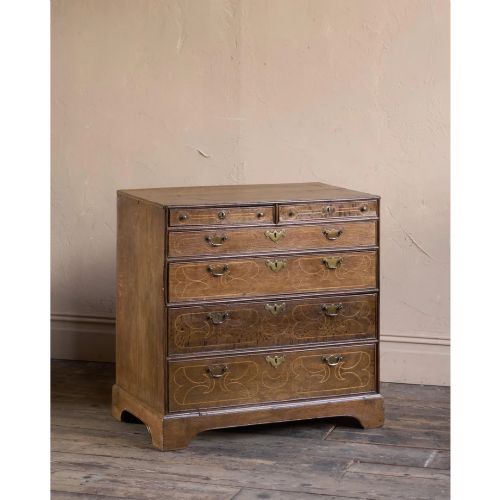
Surface decoration frequently incorporated marquetry and arabesque inlay executed in various fruitwoods and maple. Drawers relied on hand-cut dovetail joints and operated within moulded surrounds, supported by early drop handles fixed through the drawer faces.
William Mary Chest Drawers Retail Price Guide 2026
Typical asking prices for william mary chest drawers among the pieces listed under this phrase on Sellingantiques today, from the lower quarter to the upper quarter. They describe what is for sale here now, not the wider market.
Branch wood sliced thin to mimic oysters brought underwater charm into seventeenth-century bedrooms.
Quality and Preservation
Evaluation depends upon the integrity of the timber surfaces, the crispness of geometric mouldings, and the survival of original veneering. Pieces retaining their matching stands or original drop handles command greater regard from collectors.
The complexity of decorative work, such as seaweed marquetry or intricate oyster parquetry, distinguishes standard functional storage from elite cabinetmaking of the period.
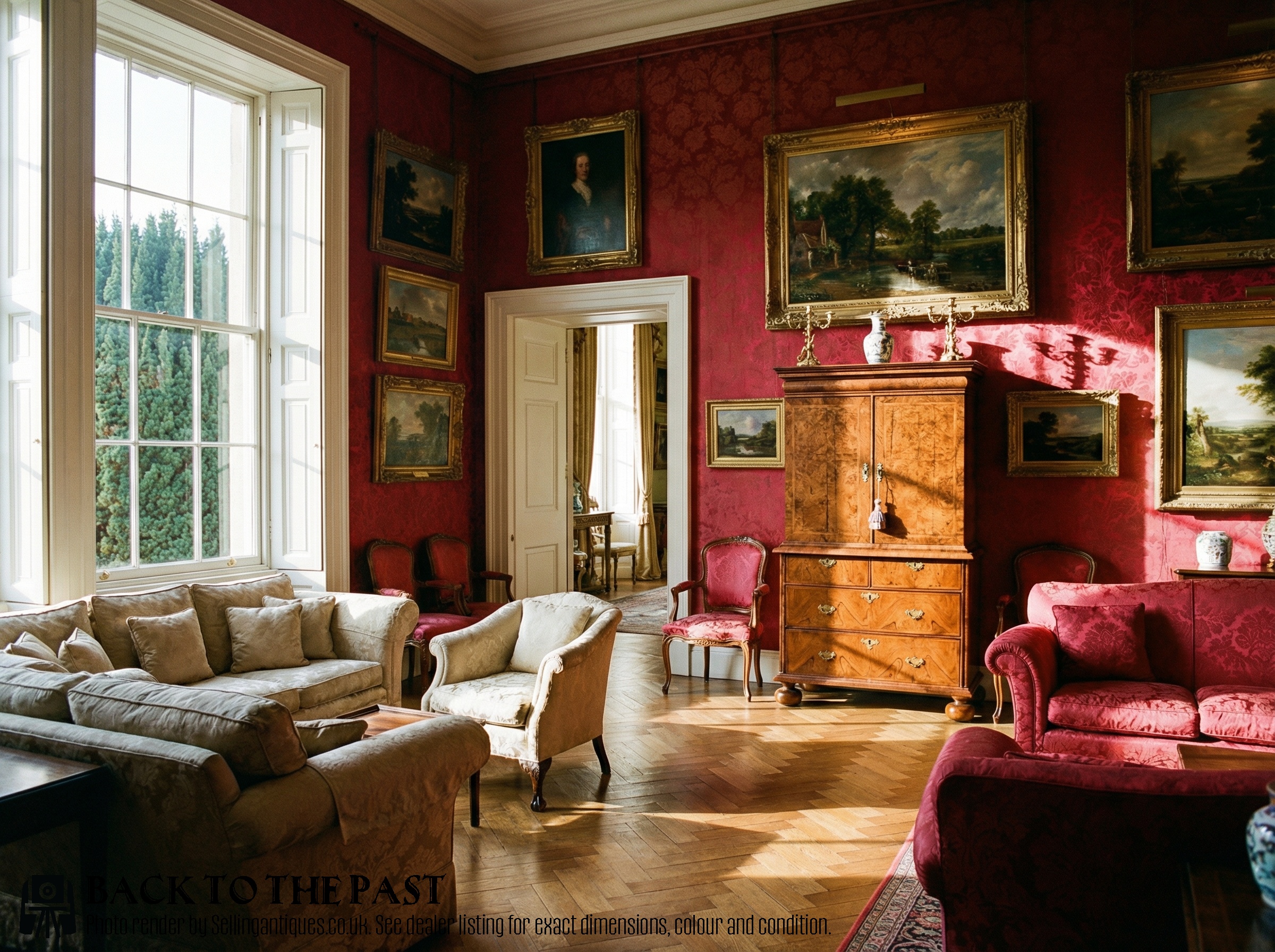
Shoolbred and Co
The William Mary Chest Drawers Glossary
- Oyster veneering
- The practice of slicing small branches transversely to create circular or oval wooden discs arranged in repetitive patterns. This technique defined late seventeenth-century decorative surfaces.
- Marquetry
- The art of forming decorative patterns by fitting together thin veneers of different coloured woods. Examples include floral designs and arabesque motifs.
- Chest on stand
- A two-part case piece featuring an upper section of drawers resting upon a separate frame with legs. These forms often incorporate inverted cup turnings.
- Geometric moulding
- Raised wooden strips applied to drawer fronts and carcase faces in symmetrical geometric configurations. This detail is characteristic of late seventeenth-century oak furniture.
- Lowboy
- A small table with drawers, often designed as a dressing table or side table. Many share the leg turnings and timber choices found on contemporary chests on stands.
William Mary Chest Drawers: Frequently Asked Questions
How do I date a William and Mary chest?
Dating relies upon examining construction methods, timber choices, and hardware styles. Hand-cut dovetails, oyster veneers, and geometric mouldings typically point to the late seventeenth or early eighteenth century.
Later revival pieces from the Victorian era or early twentieth century often employ machine-sawn timbers and differ in internal construction.
Were these chests made in sections?
Many larger examples were constructed as two separate parts to facilitate transport within multi-storey buildings. The upper chest section rested securely upon a lower base or stand.
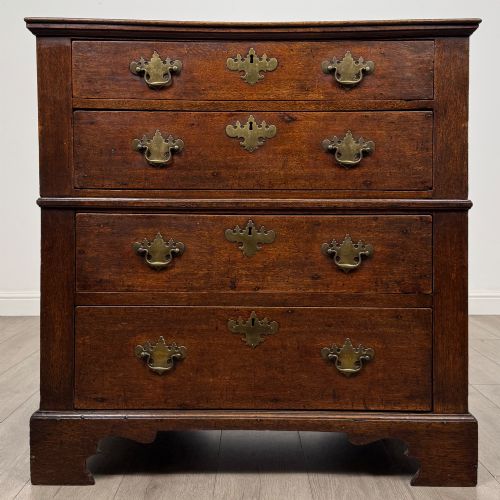
Smaller chests were built as single carcases, sometimes raised on integrated bracket feet or elevated stands.
How do I care for walnut veneer?
Walnut veneer requires stable indoor humidity and protection from direct sunlight to prevent timber shrinkage and lifting. Regular dusting with a dry cloth maintains the polished surface.
Avoid placing these pieces near heat sources or applying modern liquid polishes.