

Late 17th Century Furniture
Late 17th century furniture brings substantial oak, walnut and figured veneers into a room, offering historic utility and rich surface depth.
Late 17th Century Furniture
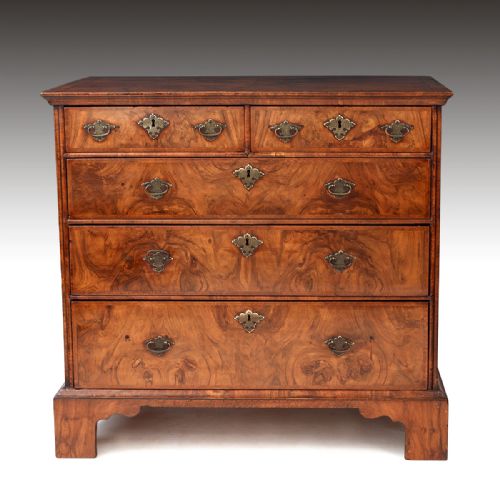
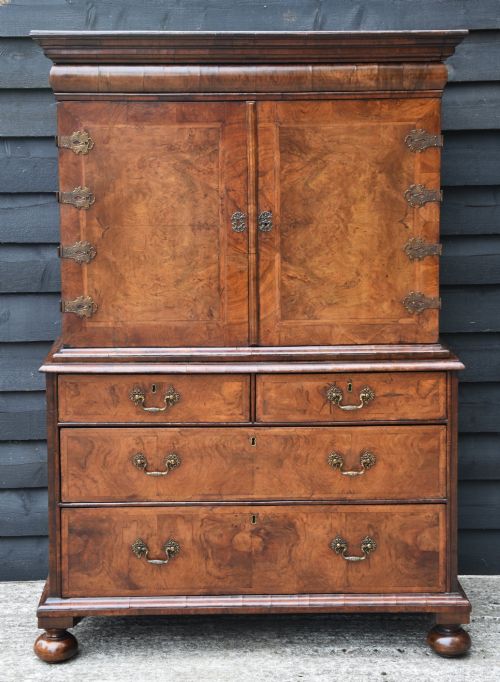
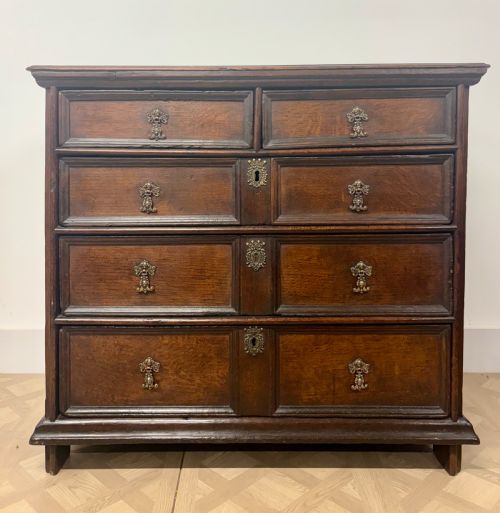
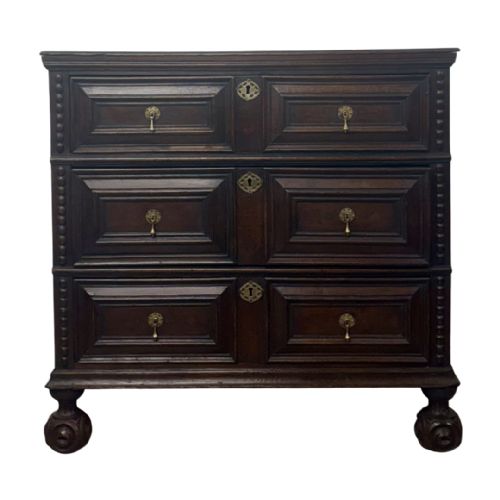
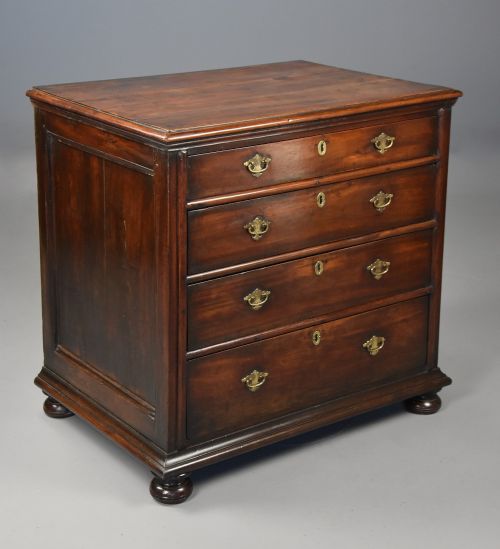
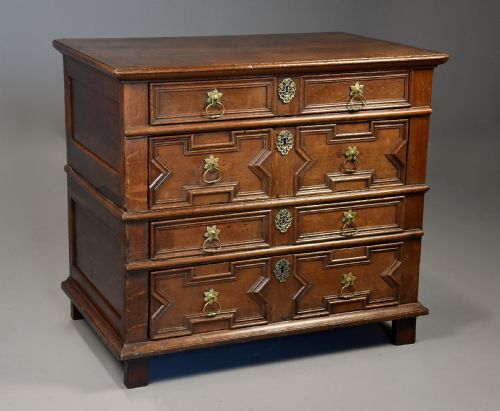
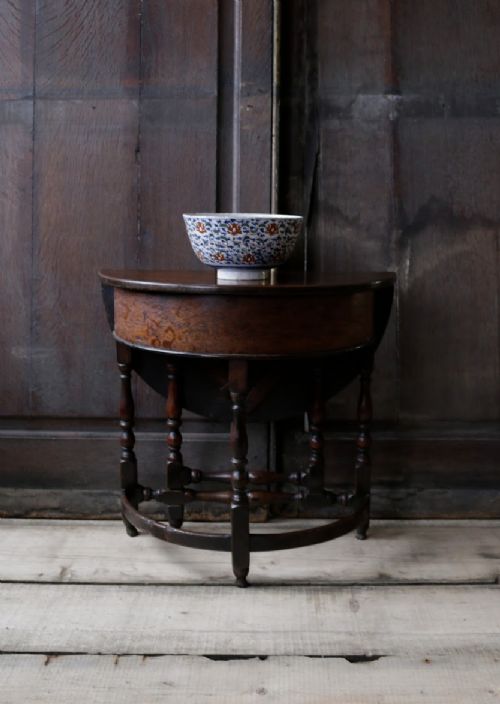
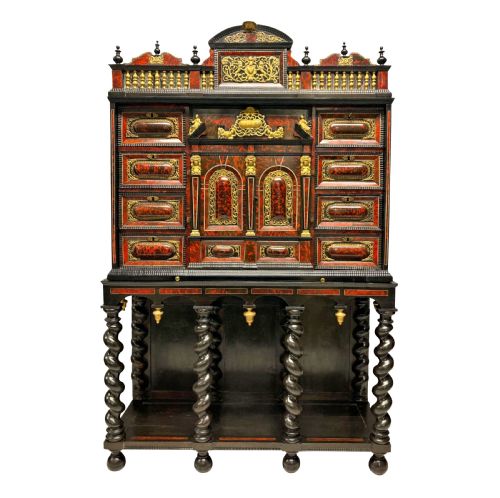
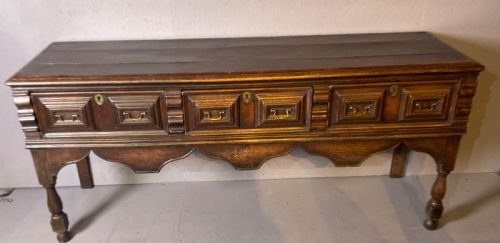
When you search for late 17th century furniture, you encounter sturdy utilitarian forms and refined reception pieces made during the reigns of Charles II and William and Mary. These items include chests of drawers, gateleg tables, side tables, court cupboards, cabinets on chests and various seating forms from armchairs to side chairs.
Oak predominates among the vernacular pieces, while walnut and exotic veneers define the high-style items produced under continental influence. You are most likely to meet oak chests of drawers and gateleg tables on this page, alongside walnut cabinets and side tables reflecting William and Mary designs.
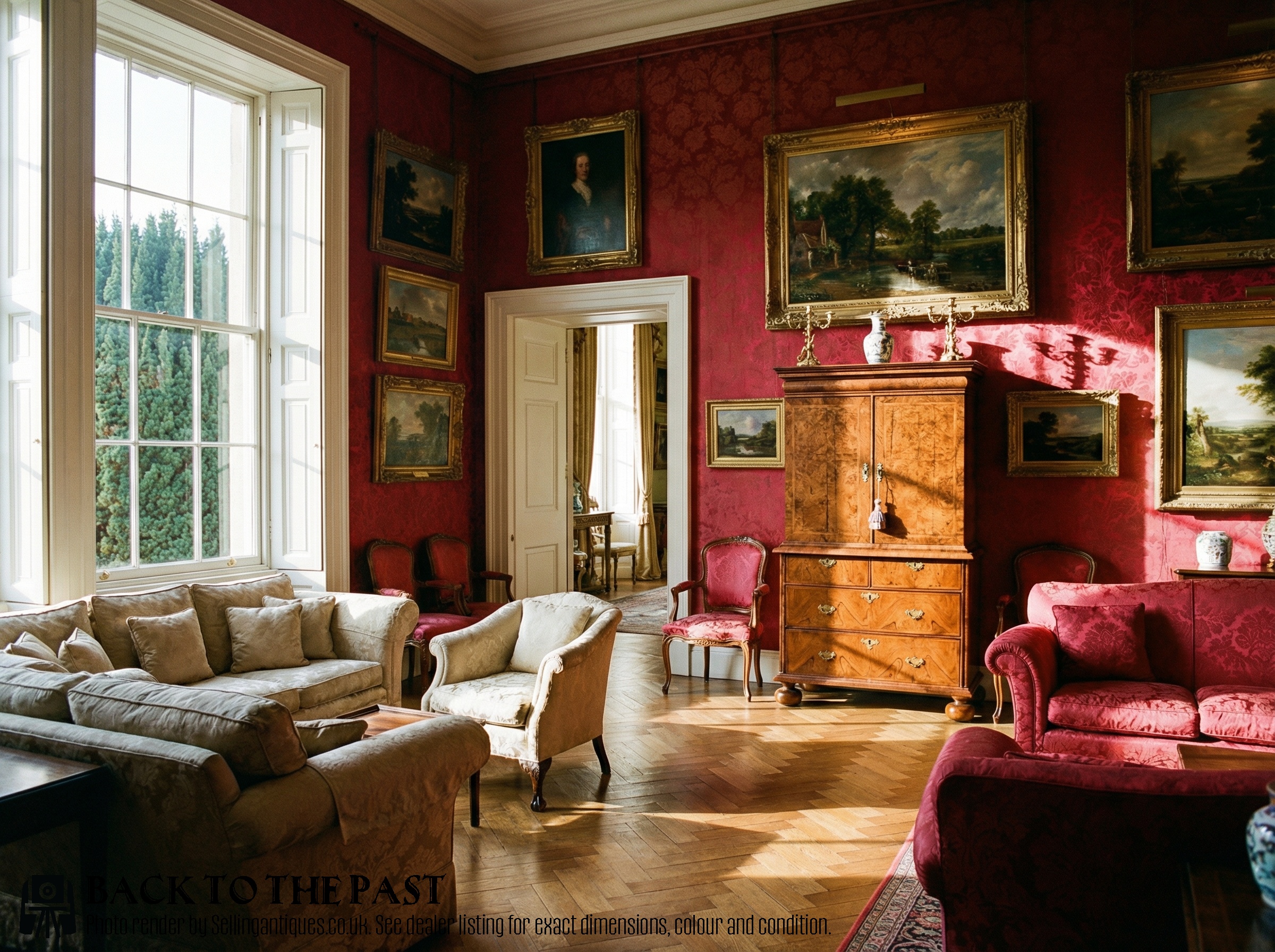
What varies in quality
The degree of surface preservation and timber selection dictates the distinction between standard domestic items and exceptional examples. Walnut and exotic veneers show considerable variation depending on the intricacy of the marquetry and the retention of original polish.
Proportion and domestic scale influence desirability, particularly in gateleg tables and chests of drawers where smaller dimensions alter the visual balance. The integrity of original brass hardware and the crispness of carved mouldings separate simpler vernacular output from ambitious metropolitan workshops.
Late 17th Century Furniture Retail Price Guide 2026
Typical asking prices for late 17th century furniture among the pieces listed under this phrase on Sellingantiques today, from the lower quarter to the upper quarter. They describe what is for sale here now, not the wider market.
Octagonal commode stools and bacon settles offer a glimpse into the surprisingly specific domestic seating arrangements of seventeenth-century life.
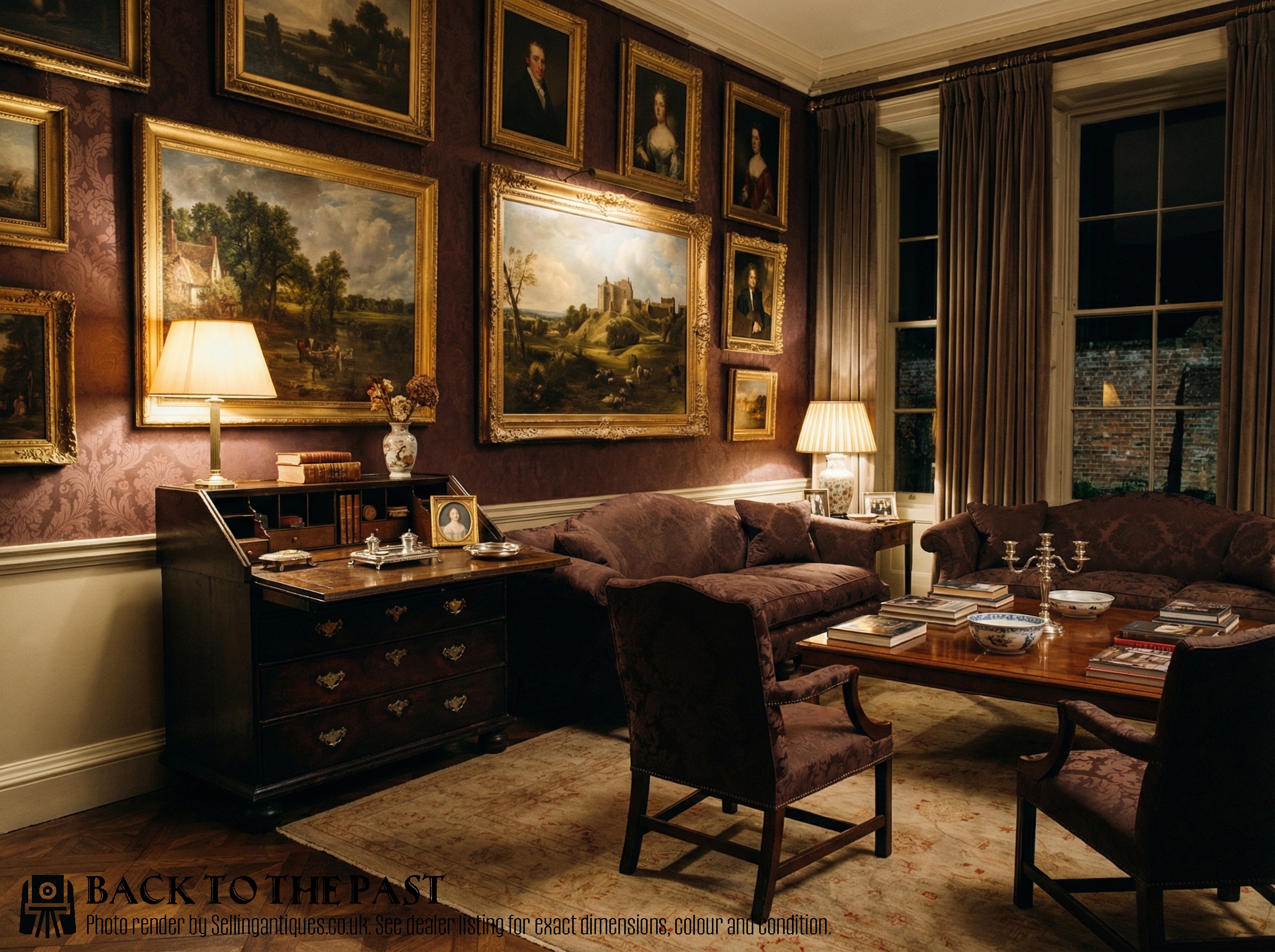
The Late 17th Century Furniture Glossary
- Oyster veneer
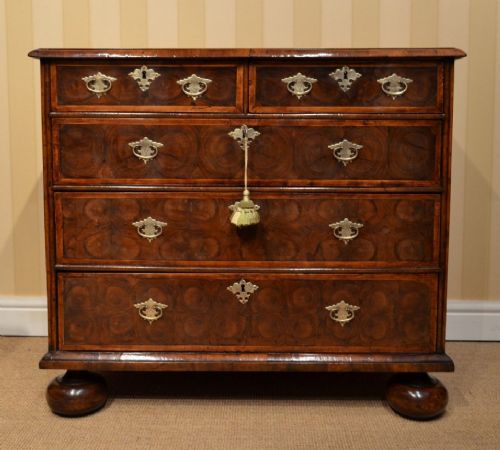
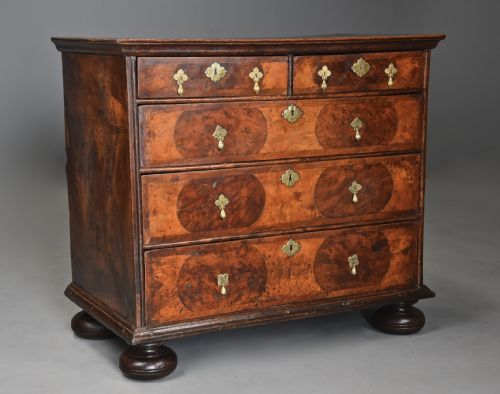
- Thin circular slices cut transversely from small branches or roots to create an undulating, mottled pattern on furniture surfaces. This decorative technique appeared frequently on William and Mary walnut and laburnum pieces.
- Gateleg table
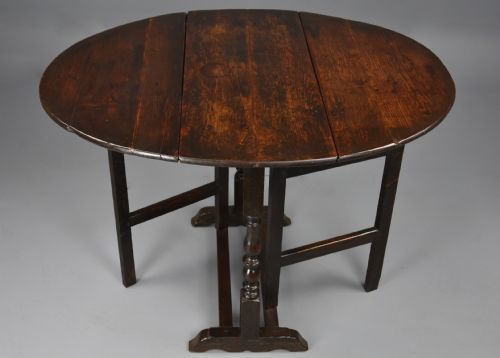
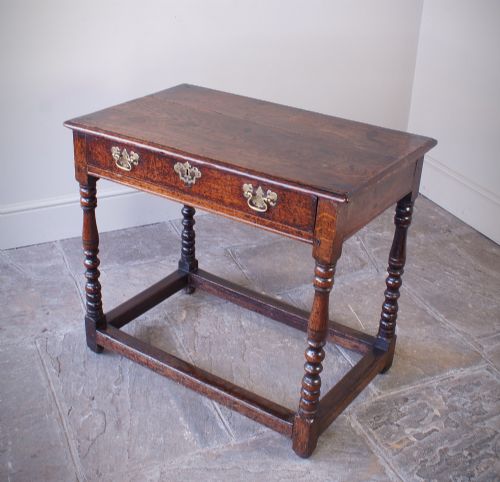
- A drop-leaf table supported by hinged legs that swing out to hold the leaves in position. These versatile tables served dining and general household functions in late seventeenth-century interiors.
- Court cupboard
- A heavy oak storage piece featuring enclosed lower sections and an upper tier supported by carved pillars. These monumental items anchored the main rooms of substantial houses.
- Marquetry
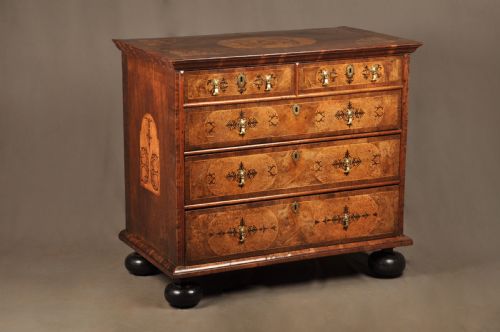
- Inlaid patterns formed by fitting together contrasting veneers of wood, bone or metal to create pictorial or geometric designs. Craftsmen applied this technique to cabinet fronts and tabletops.
- Escritoire
- A writing cabinet featuring a fall-front flap that opens to reveal an arrangement of internal drawers and pigeonholes. These walnut and veneered forms emerged to accommodate private correspondence.
Late 17th Century Furniture: Frequently Asked Questions
How do I identify William and Mary furniture?
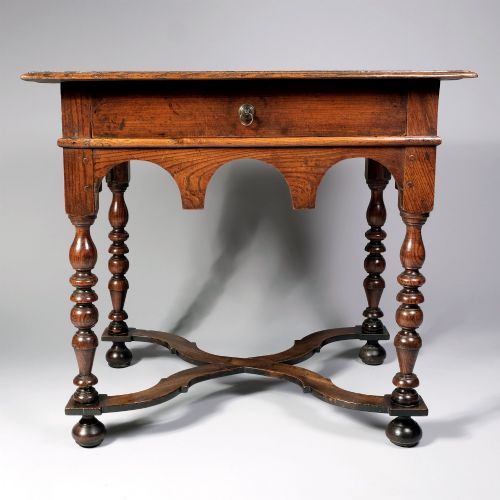
William and Mary pieces often display intricate veneer work like oyster cutting, seaweed marquetry and trumpet-turned legs connected by shaped stretchers. Walnut became the dominant timber, replacing much of the earlier reliance on solid oak.
These items frequently exhibit a lighter, more symmetrical aesthetic influenced by Dutch design following the 1688 revolution. Look for architectural cornices on cabinets and chests on stands.
Where were oak gateleg tables used?
Gateleg tables functioned as flexible dining or side tables in seventeenth-century homes, easily folded down and placed against a wall when floor space was required. Their sturdy oak construction handled daily domestic life.
Smaller proportions made them adaptable for parlour or chamber use. They represented practical furniture for eating, working or general household tasks.
What is an oyster veneer?
Oyster veneering involves slicing small branches or roots across the grain to produce small, circular or oval pieces with concentric growth rings resembling oyster shells. Cabinetmakers laid these closely together in geometric arrangements.
This technique highlighted the natural figuring of timbers such as walnut, olive, laburnum and Yew. It added texture and pattern to flat surfaces on chests and tables.
How should I care for walnut furniture?
Walnut and veneered surfaces require stable indoor humidity and protection from direct sunlight to prevent timber shrinkage and veneer lifting. Regular dusting with a dry cloth maintains the surface without chemical build-up.
Occasional application of appropriate wax feeds the old polish and preserves the patina. Avoid placing pieces near heat sources or damp environments.