



William and Mary Bureau
A william and mary bureau is a sloping-front writing cabinet from the late seventeenth century designed for correspondence and storage.
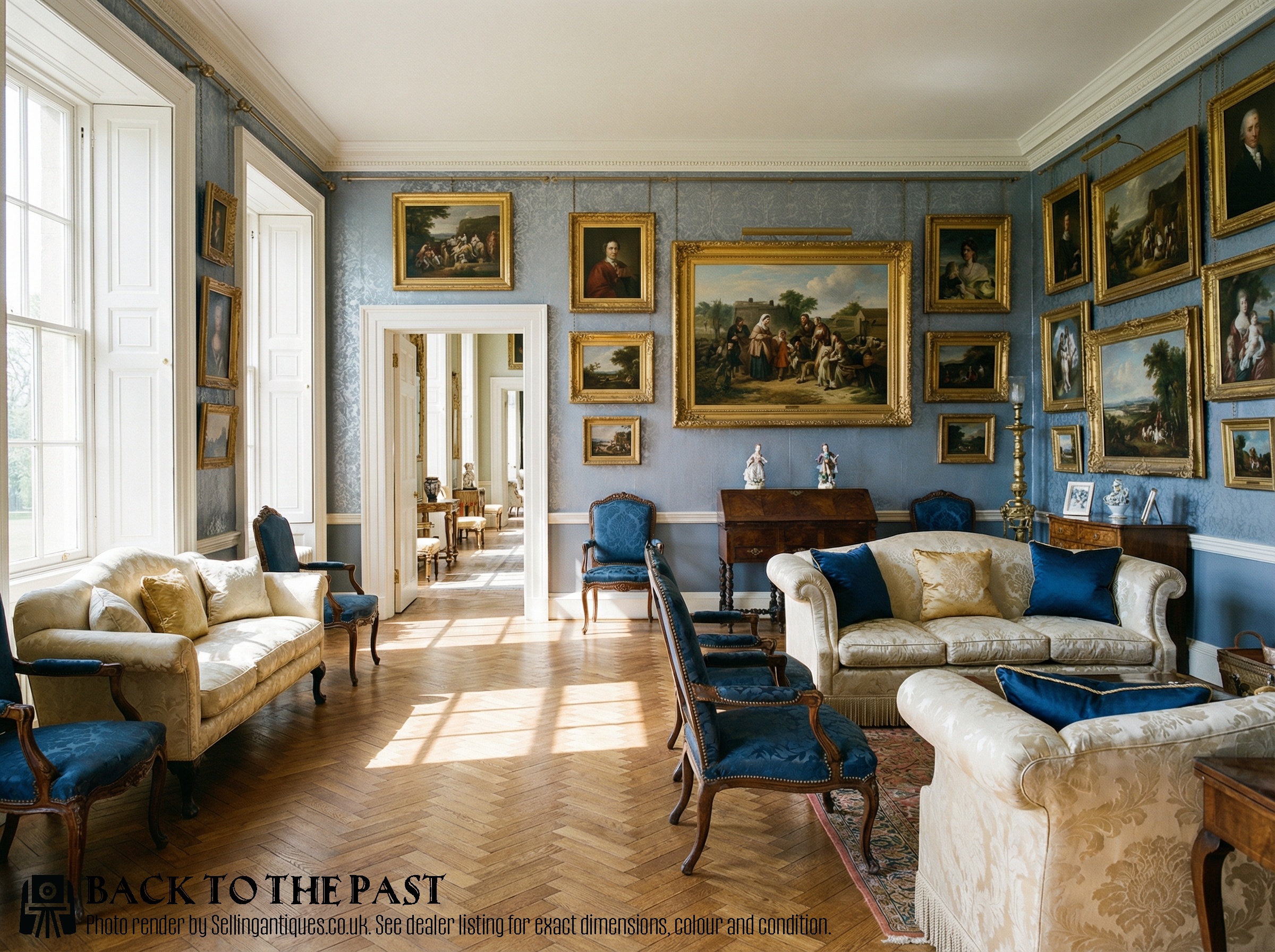
William and Mary Bureau
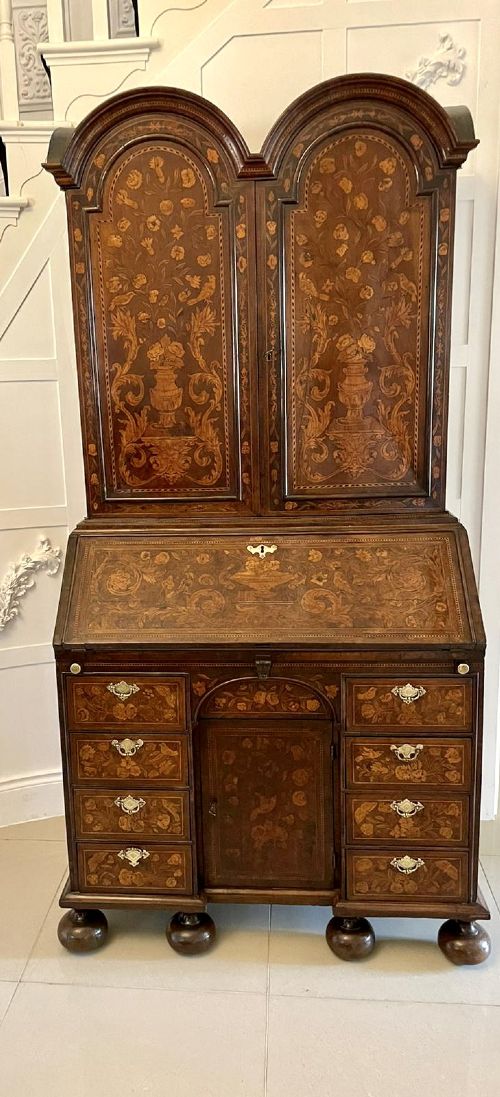
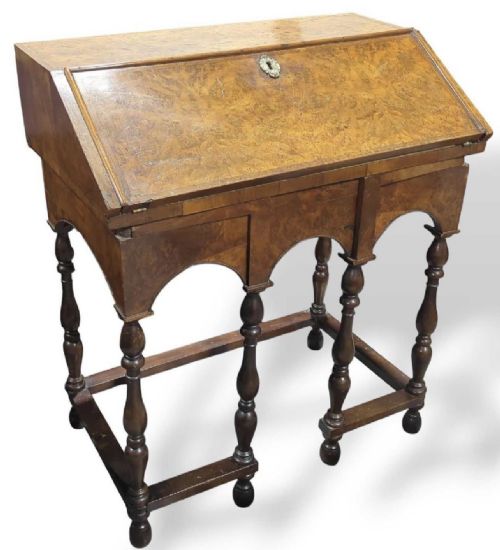
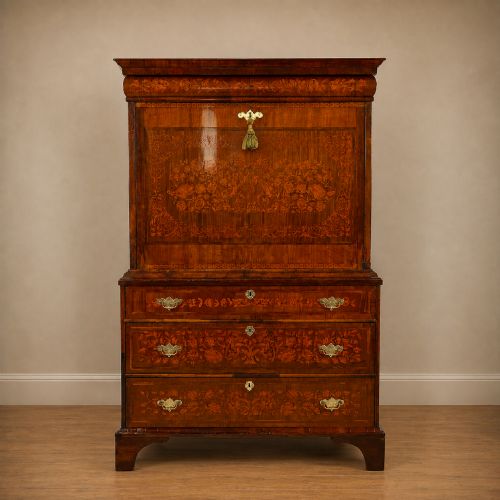
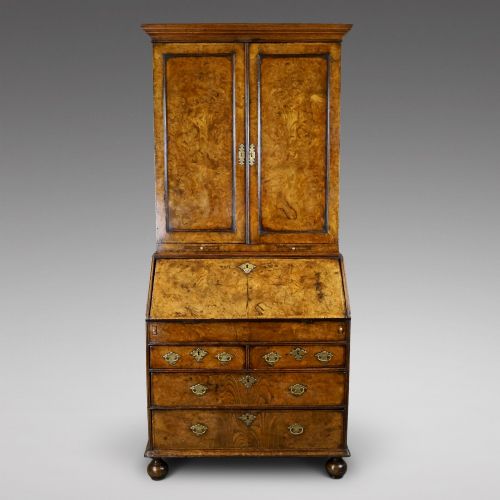
A william and mary bureau appears in forms ranging from compact table-top models and slant-front writing desks to towering bureau bookcases and cabinets on chests. These pieces originate primarily from the late seventeenth and early eighteenth centuries, though revival versions emerge in later periods.
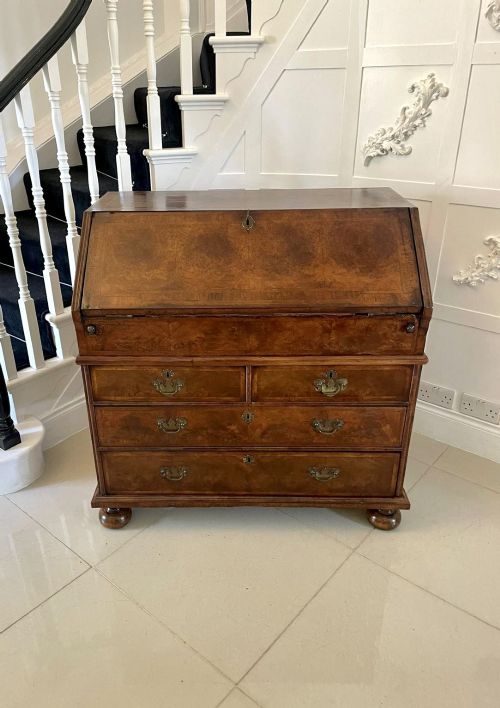
The layout typically combines a hinged fall-front writing flap with an arrangement of internal pigeonholes and small drawers above larger exterior drawers. Many examples stand on bracket feet or supportive bases, while taller variants divide into distinct upper and lower sections.
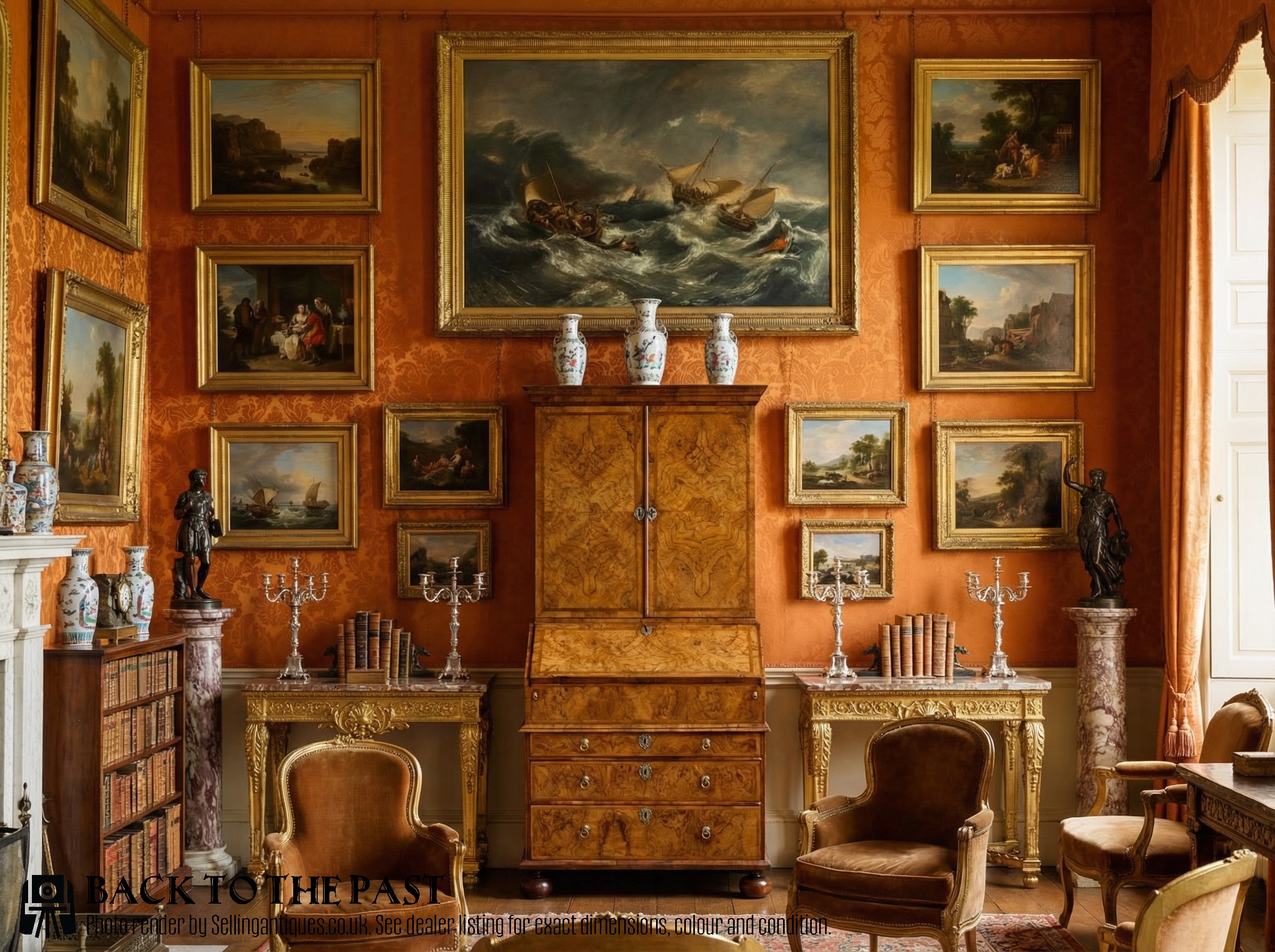
Materials and construction
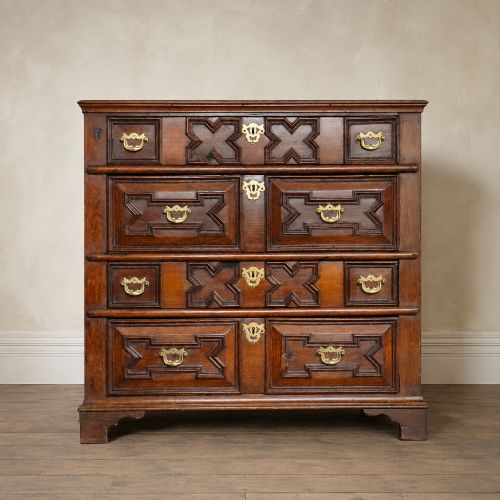
Cabinetmakers select dense timbers including oak, walnut, burr walnut, and fruitwood, often applying decorative veneers and marquetry inlay across primary surfaces. Herringbone banding and geometric mouldings add textural depth to the exterior panels.
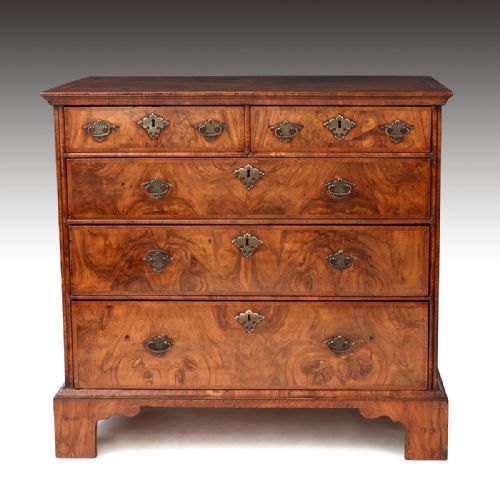
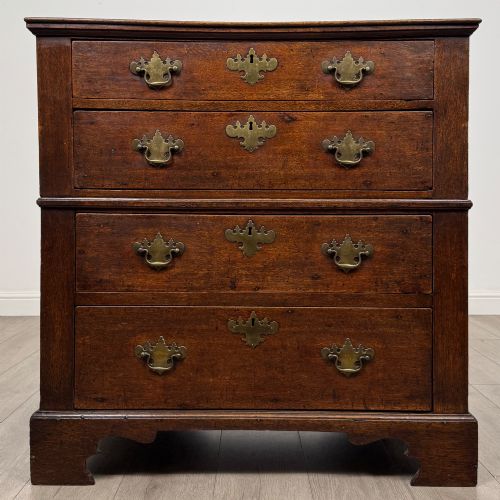
Brass drop handles and escutcheons secure the drawers, while glass doors appear on upper bookcase sections. Internal compartments require meticulous miniature joinery for secret compartments and small drawer boxes.
William and Mary Bureau Retail Price Guide 2026
Typical asking prices for william and mary bureau among the pieces listed under this phrase on Sellingantiques today, from the lower quarter to the upper quarter. They describe what is for sale here now, not the wider market.
Secret drawers hidden behind dummy pigeonholes reward anyone curious enough to dismantle a seventeenth-century writing desk.
Evaluating quality
The sophistication of the surface decoration largely dictates the distinction between standard and exceptional pieces, particularly where intricate floral marquetry or matched burr walnut veneers cover the exterior. Figured grain selection and crispness in the inlaid banding reflect the original maker's skill.
Internal arrangement complexity separates simpler functional desks from elaborate cabinets with numerous concealed compartments and fitted stationery wells. The survival of original brass hardware and untouched timber patination adds further distinction.
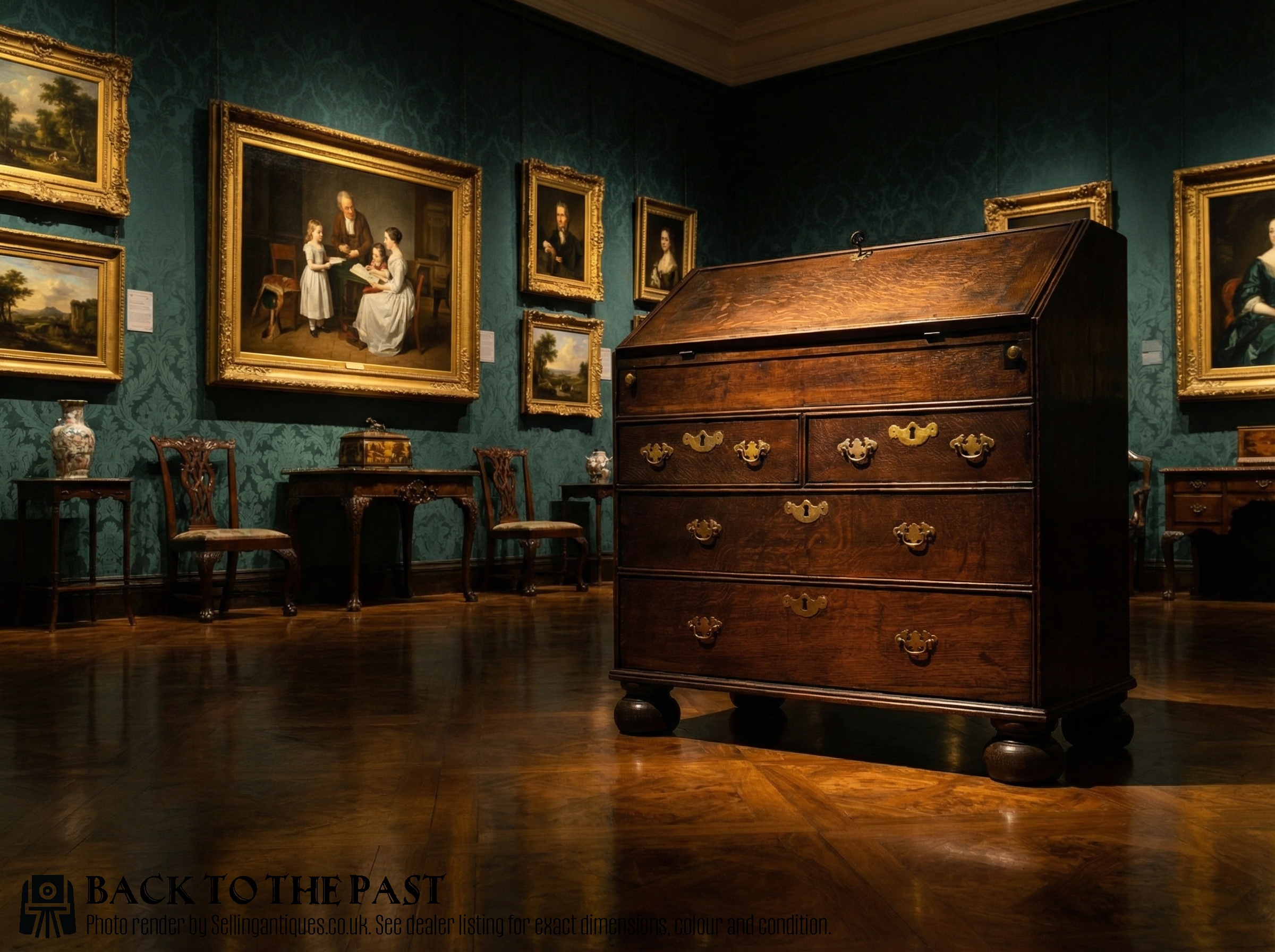
Coxed and Woster
The William and Mary Bureau Glossary
- Fall front
- A hinged writing flap that drops forward to create a horizontal desk surface. This panel conceals the interior drawers when closed.
- Bureau bookcase
- A combination furniture form featuring a writing desk base beneath an upper shelving or cabinet section with doors. These taller pieces provide substantial storage for both books and writing materials.
- Marquetry inlay
- Decorative patterns formed by fitting contrasting pieces of wood veneer into a prepared ground. Floral and geometric motifs appear frequently on seventeenth-century surfaces.
- Herringbone banding
- Narrow strips of veneer laid diagonally in a V-shaped repeating pattern to frame drawer fronts and borders. This technique enhances the visual definition of walnut panels.
- Escritoire
- An alternative term for a writing cabinet or desk used during the period. These items often feature a drop-front writing surface enclosed by a larger outer door or fall front.
William and Mary Bureau: Frequently Asked Questions
What is a william and mary bureau?
A william and mary bureau is a writing cabinet featuring a sloping fall-front lid that opens to reveal internal compartments and small drawers. These pieces date predominantly from the late seventeenth and early eighteenth centuries.
They combine functional writing space with drawer storage below, appearing in formats ranging from small table-top boxes to large double-dome bookcase cabinets.
How do you date a bureau?
Dating relies on examining the timber species, construction methods, hardware types, and decorative techniques like marquetry or herringbone banding. Seventeenth-century pieces typically show specific walnut or oak framing characteristics.
Revival pieces from later centuries often use machine-cut elements or different secondary woods that distinguish them from original period furniture.
Where were they used?
These desks served primarily in private libraries, reception rooms, and bedchambers of wealthy households for managing correspondence and personal accounts. The compartmentalised interiors kept writing materials and documents organised.
Larger bureau bookcases functioned as status objects where owners could display bound volumes alongside writing facilities.
What woods are used?
Cabinetmakers utilised native oak for earlier and simpler utilitarian pieces, while walnut became the predominant timber for fashionable items. Burr walnut and fruitwood veneers provided highly figured surfaces for decorative emphasis.
Inlays incorporate various contrasting timbers to create complex geometric and floral patterns across the primary carcase.