


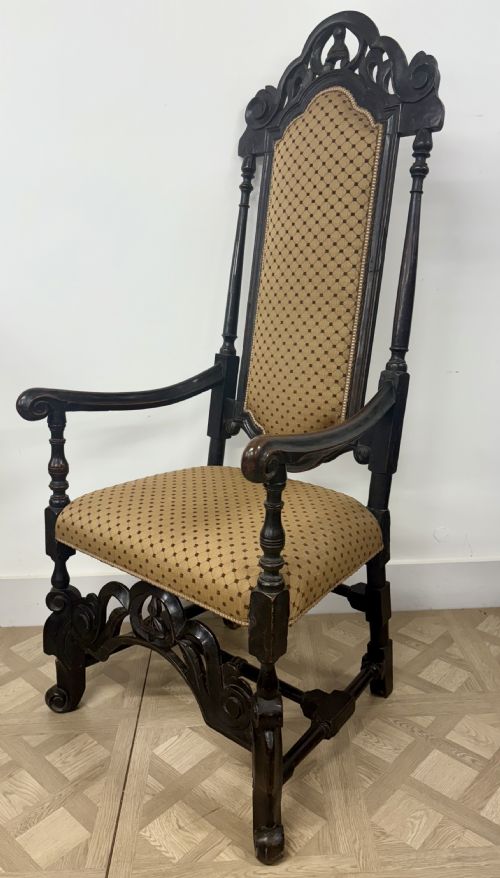
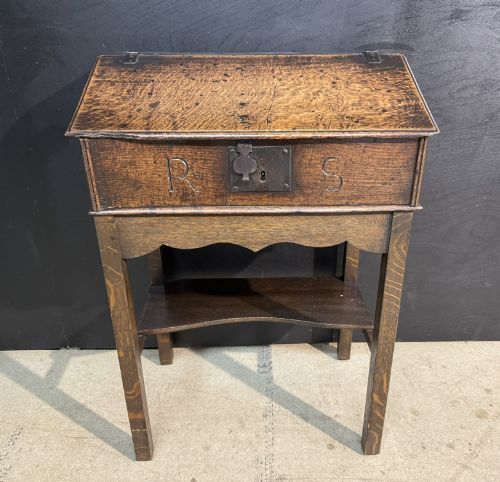
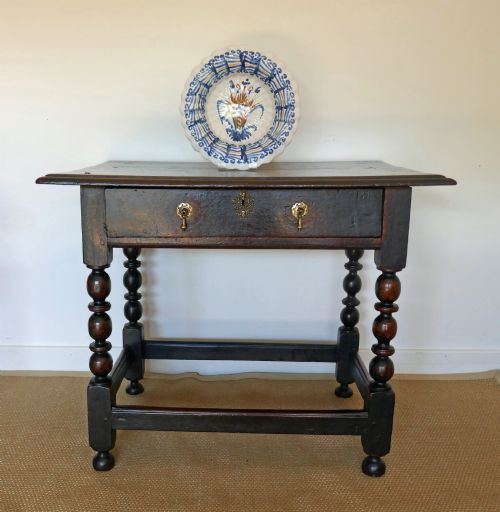
17th Century Desk
A 17th century desk brings tangible history into a room through honest joinery, timber patination and centuries of functional service.
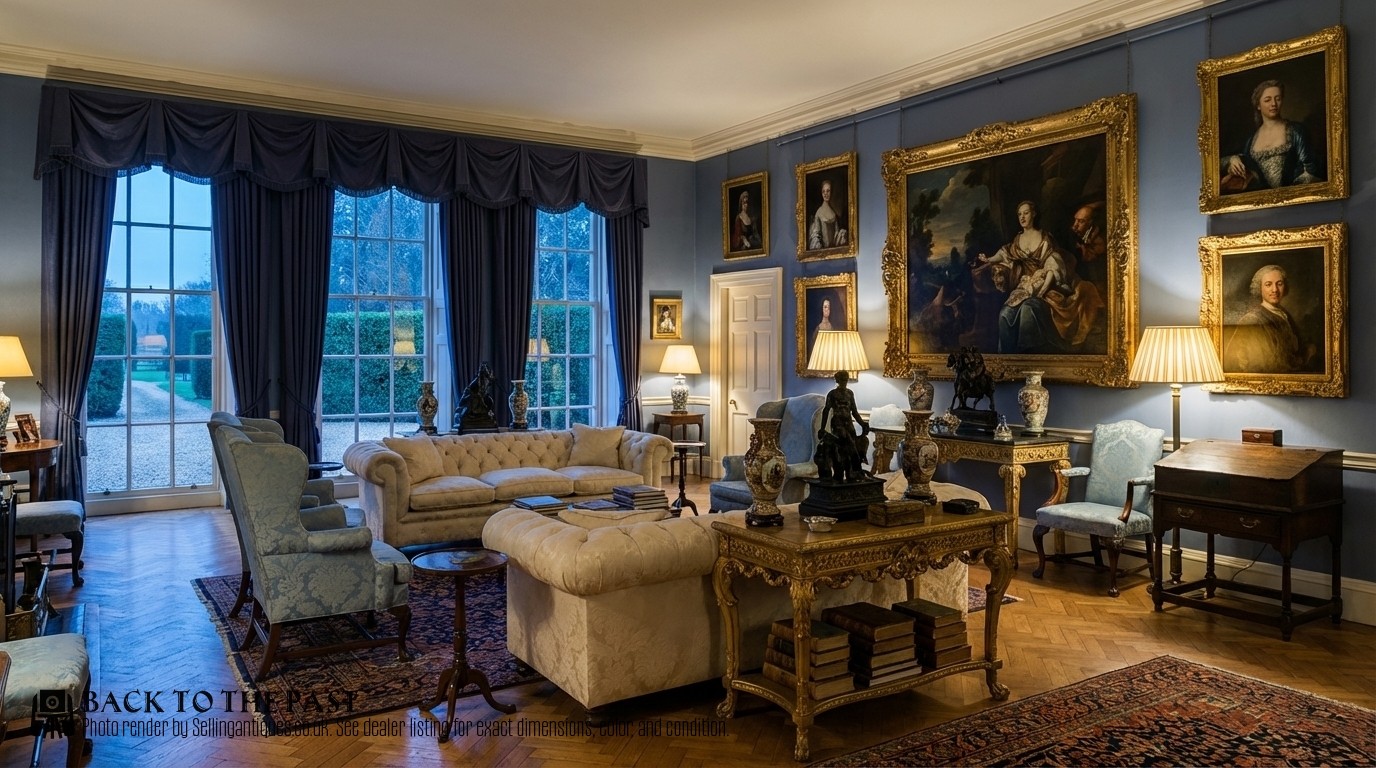
17th Century Desk
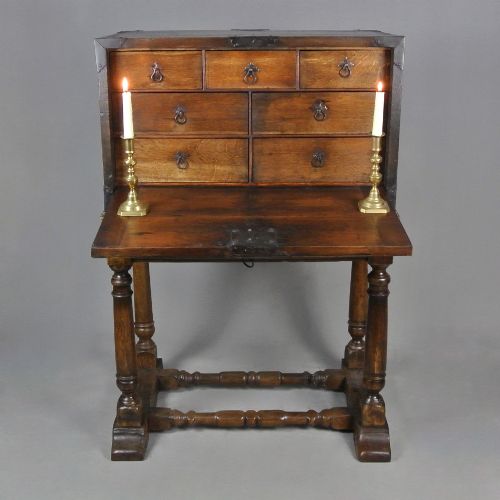
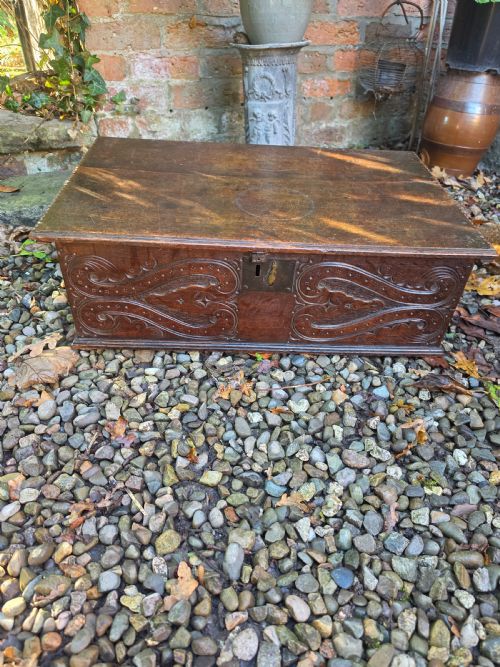
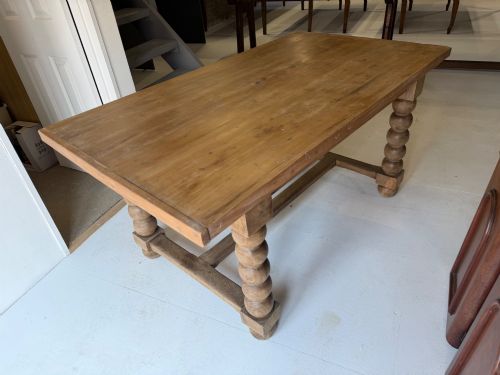
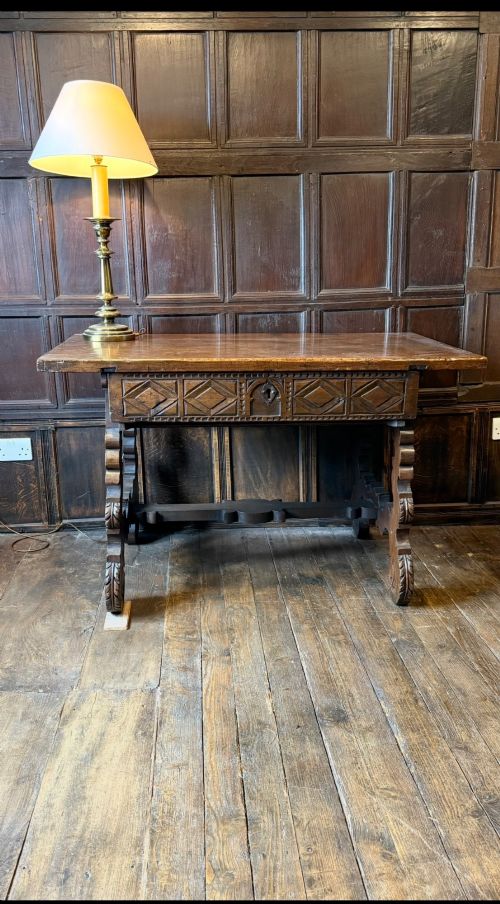
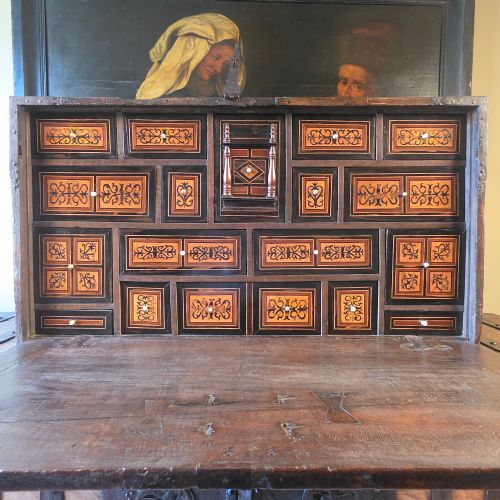
When you search for a 17th century desk, you encounter various forms ranging from portable oak Bible boxes and slope-front writing boxes to substantial walnut bureaus and Spanish bargueño cabinets on stands. These pieces reflect a period when writing surfaces were frequently modular or adapted from table boxes and chests rather than built as fixed architectural furniture.
The material record on this page leans heavily toward solid English oak and European walnut, often complemented by intricate marquetry, burr elm, or tortoiseshell detailing. Many surviving examples began life as deed boxes, safe boxes, or table-top writing slopes before evolving into the dedicated bureaus seen toward the end of the 1600s.
Origin plays a defining role in appearance, with English oak pieces displaying robust framing and carved panels, whilst continental examples in walnut or ebonised woods incorporate elaborate drop-front doors, intricate internal drawers, and gilt bronze mounts. Buyers frequently encounter pieces retaining original complex steel locks, iron handles, and deep historical patination.
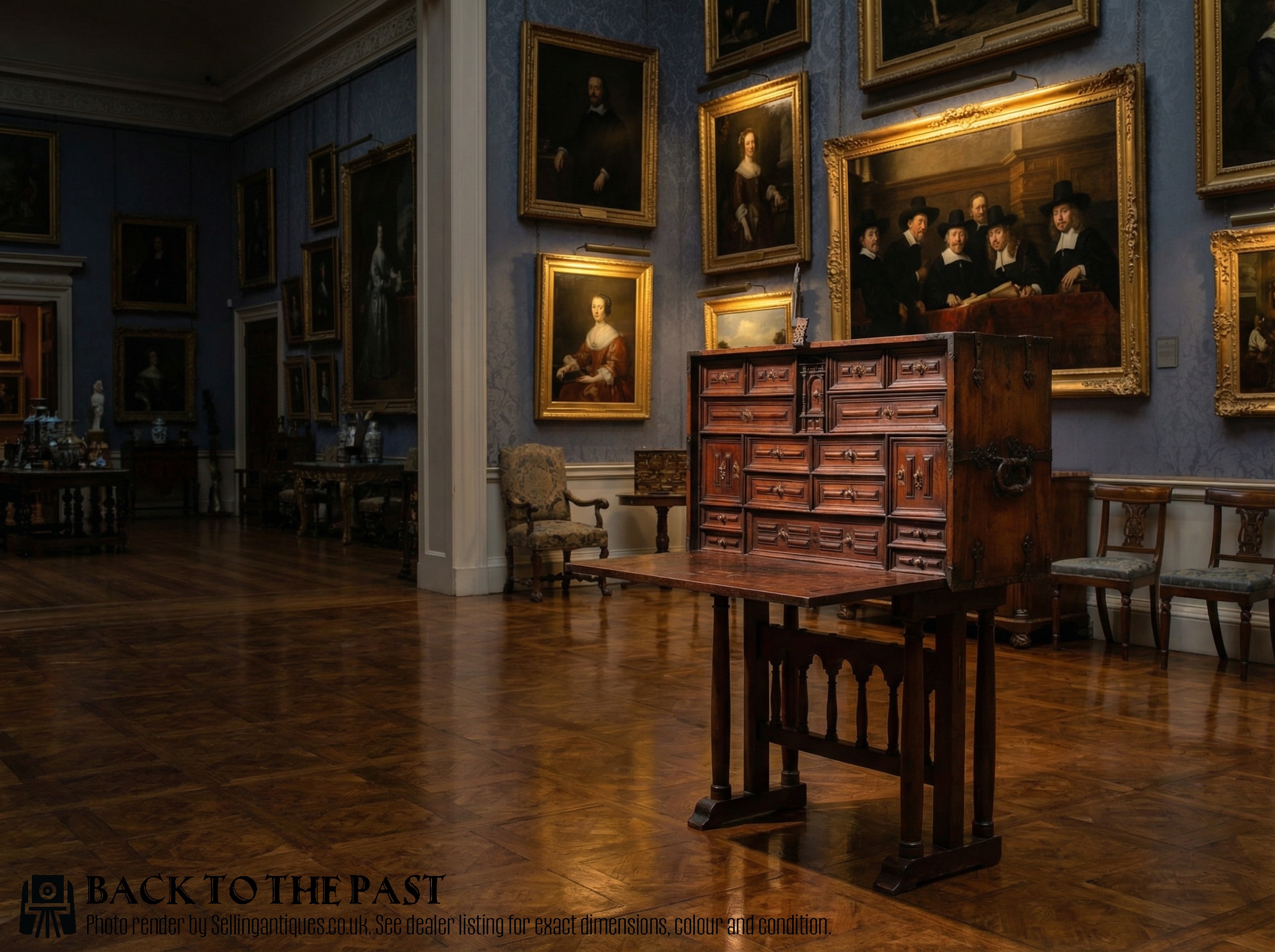
Materials and construction methods
Joiners relied primarily on solid oak and walnut, constructing carcases using pegged mortise and tenon joints designed to accommodate the natural seasonal movement of timber without fracturing the structure. Bureau and desk box lids were hinged with iron straps or complex internal mechanisms secured by heavy steel locks.
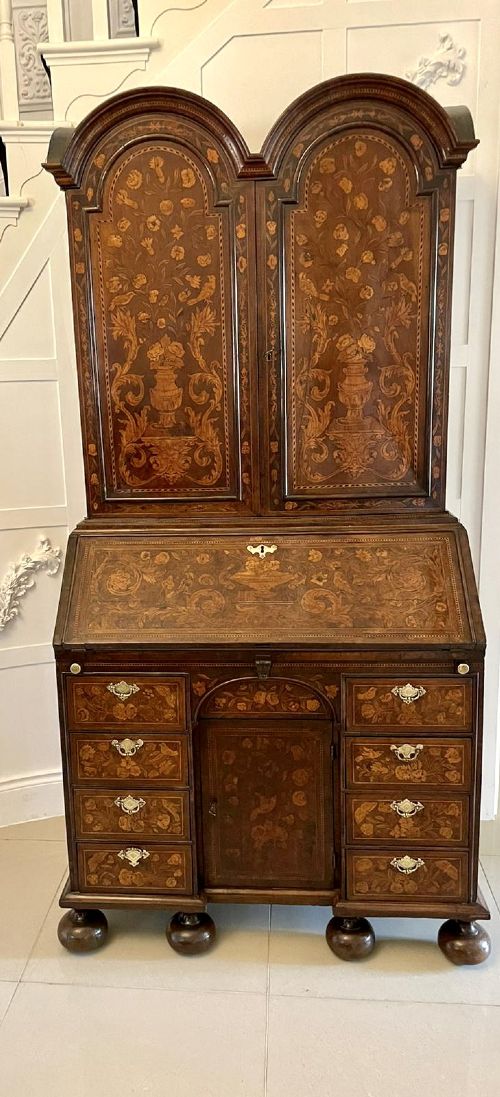
Surface ornamentation involved contrasting veneers such as burr elm, boxwood inlay, and marquetry patterns applied to secondary pine or oak foundations, particularly on continental European and late Stuart pieces. Hardware was hand-forged from iron or cast in bronze, anchoring the heavy timber lids and drop fronts securely in place.
17th Century Desk Retail Price Guide 2026
Typical asking prices for 17th century desk among the pieces listed under this phrase on Sellingantiques today, from the lower quarter to the upper quarter. They describe what is for sale here now, not the wider market.
Listings feature oak, walnut, and Spanish Baroque cabinets alongside elm bureau bookcases.
Assessing quality and authenticity
The integrity of the timber surfaces and the degree of original hardware separation mark the difference between standard utilitarian boxes and exceptional writing furniture. Pieces retaining their original complex steel locks, internal drawer configurations, and untouched patination carry greater historical coherence.
Construction subtlety distinguishes regional workshops, seen in the precision of dovetails on internal desk compartments, the depth of hand-carved mouldings, and the alignment of burr walnut or marquetry veneers. Alterations to stands, replaced hinges, or heavily stripped surfaces alter the original character of the piece.
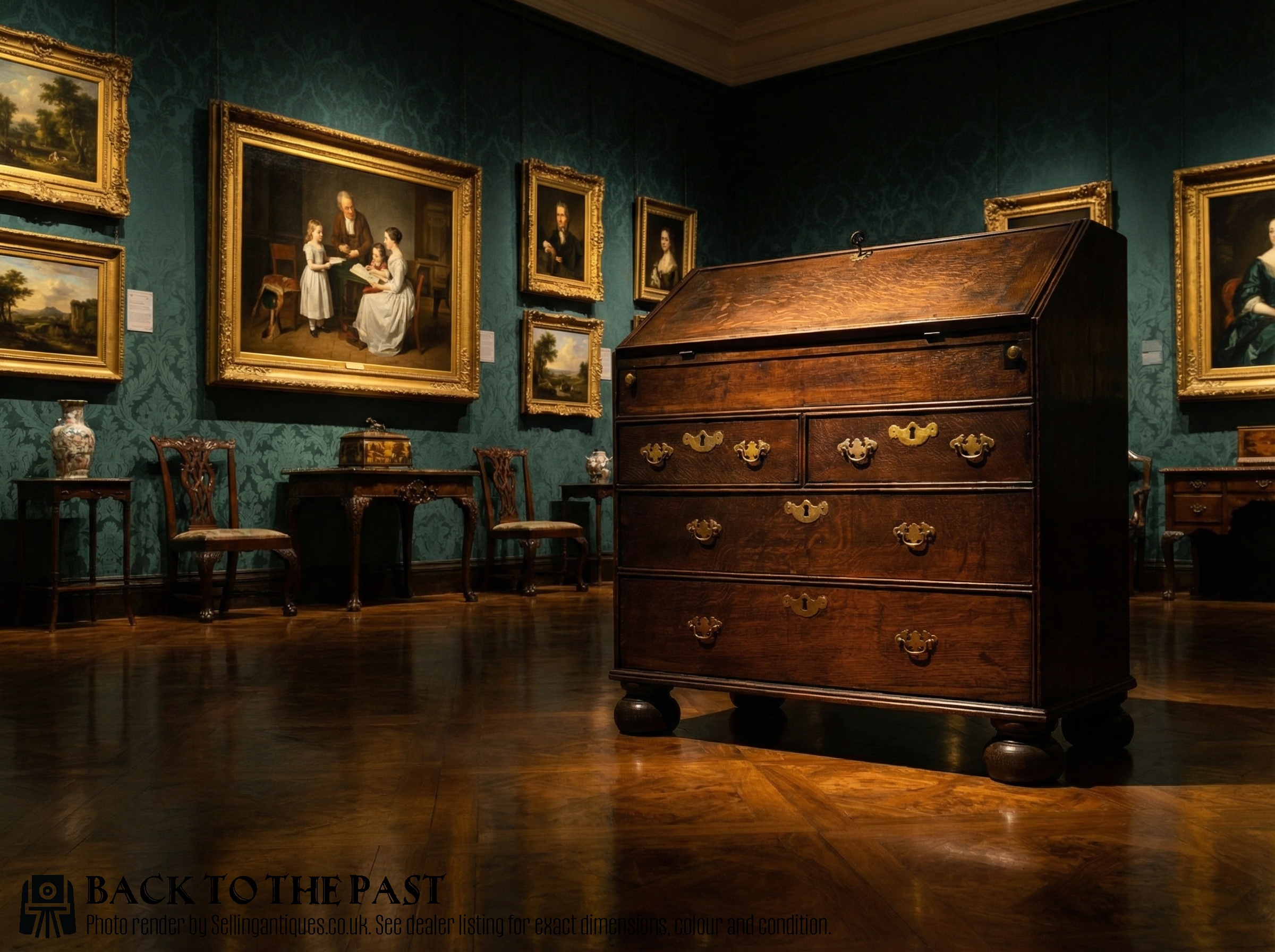
The 17th Century Desk Glossary
- Bargueño
- A traditional Spanish cabinet with a drop-front writing surface concealing numerous small drawers, typically set upon a decorative stand.
- Bible Box
- A small wooden chest with a sloping lid, originally made to hold household scriptures or documents, frequently used as an early portable writing desk.
- Escritoire
- A writing cabinet featuring a fall-front desk flap that conceals an arrangement of pigeonholes and small drawers.
- Marquetry
- The art of applying decorative veneer pieces of different woods, metals, or shell to form intricate geometric or floral patterns on a carcase.
- Patina
- The surface sheen and mellow colour developed on antique wood over centuries of handling, exposure to light, and waxing.
17th Century Desk: Frequently Asked Questions
How were early desk boxes used?
These portable wooden boxes served as secure storage for valuable documents, account books, and writing implements before dedicated writing furniture became common. Owners placed them on tables or tavern counters, opening the sloping lid to provide a slanted writing surface.
Inside, small compartments and hidden drawers kept inkwells, quills, and seals organised. Their robust construction and complex steel locks ensured sensitive papers remained protected from theft and moisture.
What is the difference between a desk box and a bureau?
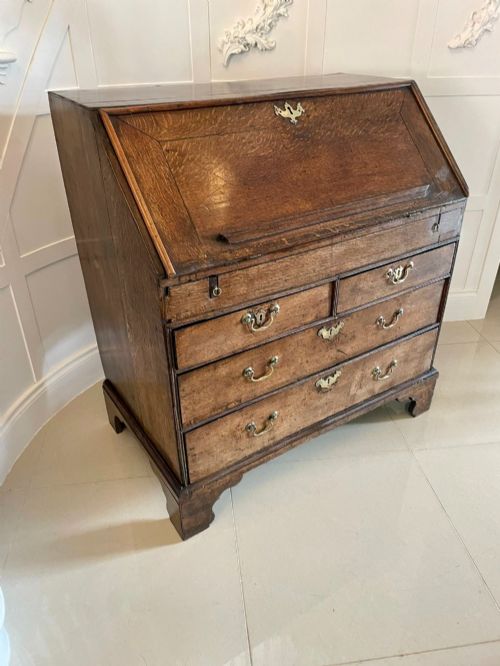
A desk box is a portable or table-top container featuring a sloping lid used for writing, while a bureau is a larger, self-contained piece of furniture featuring a built-in writing flap above a chest of drawers.
Desk boxes rely on tables or stands for support and date predominantly from the earlier decades of the seventeenth century. Bureaus appeared later as domestic spaces demanded permanent, integrated study furniture with extensive internal compartmentalisation.
How do I identify seventeenth-century oak furniture?
Seventeenth-century oak pieces display deep patination, hand-planed board surfaces, and traditional pegged joinery rather than machine-cut joints or modern screws. Tool marks left by pit saws and adzes remain visible on the unexposed interior panels and undersides.
Hardware such as wrought iron hinges and hand-forged lock plates further confirm period manufacture. The timber itself tends to be dense, heavy English oak with visible medullary rays.
Where should I place a seventeenth-century desk in my home?
These pieces suit quiet studies, living rooms, or hallways where fluctuating humidity and direct sunlight can be avoided to protect antique timber and veneers. Placing them away from heat sources prevents the solid oak or walnut panels from drying out and splitting.
Table-top boxes require a sturdy support surface of appropriate proportions, while larger bureaus and cabinets on stands anchor a room as freestanding focal points.