


Walnut Cabinet on Chest
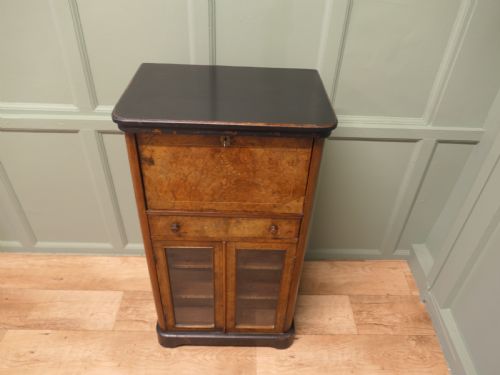
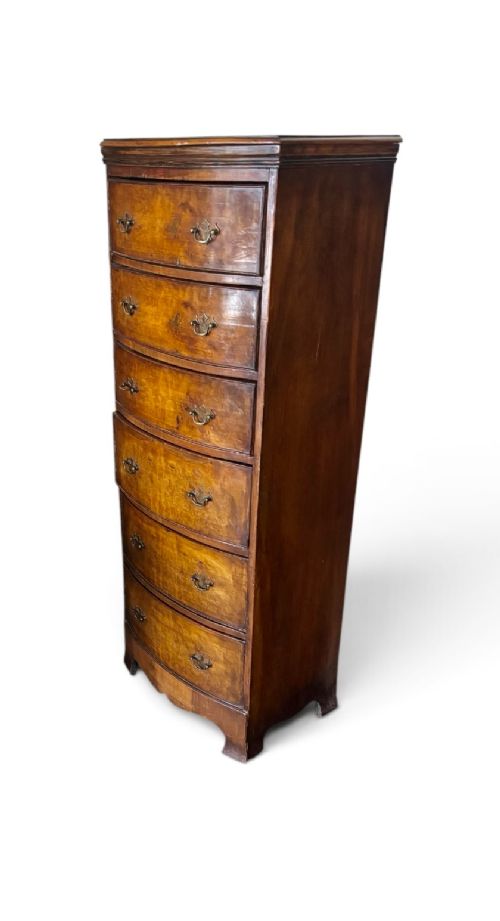
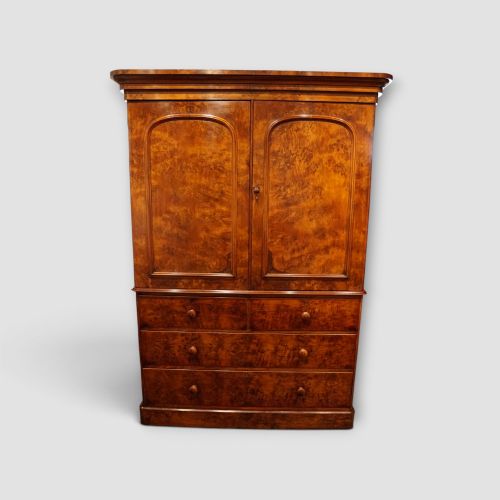
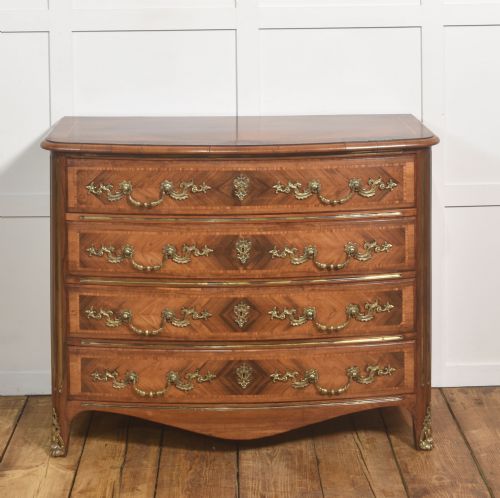
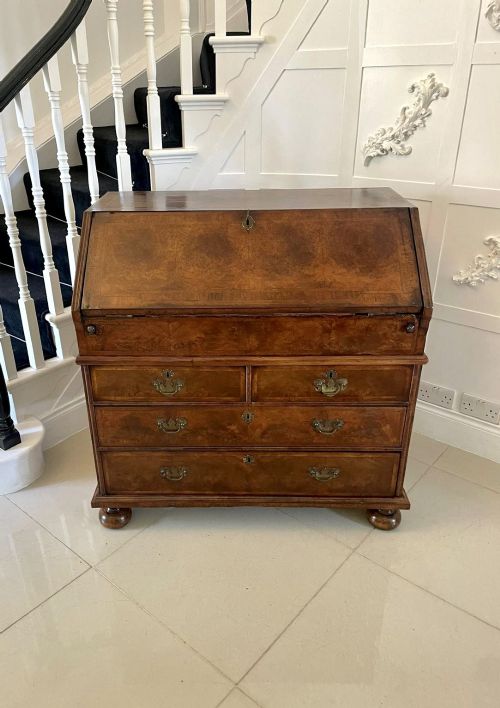
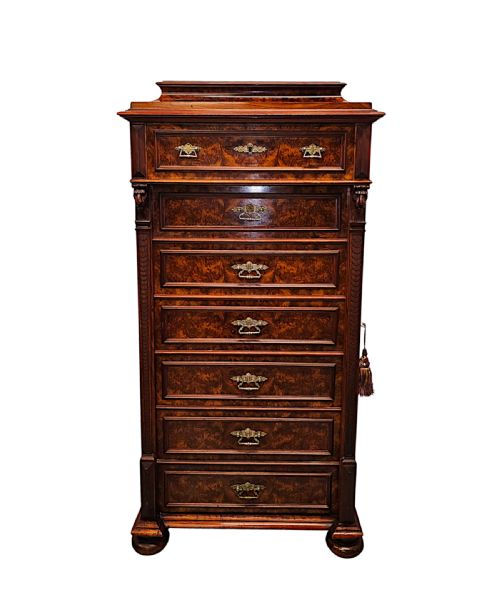
A walnut cabinet on chest delivers monumental presence and secretive storage, pairing upper display or document compartments with deep drawers.

Form and Period
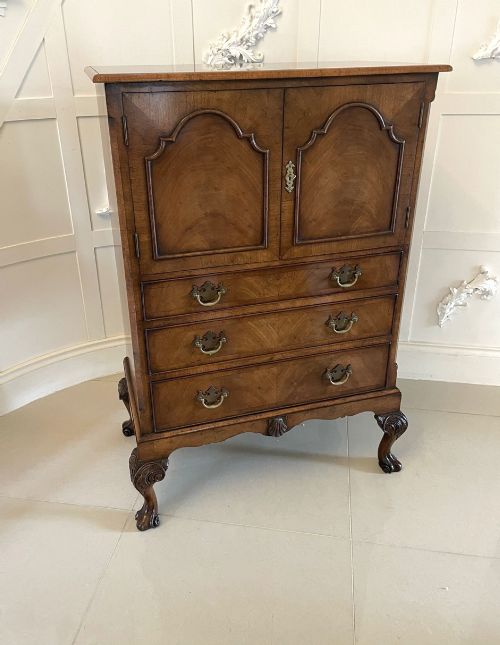
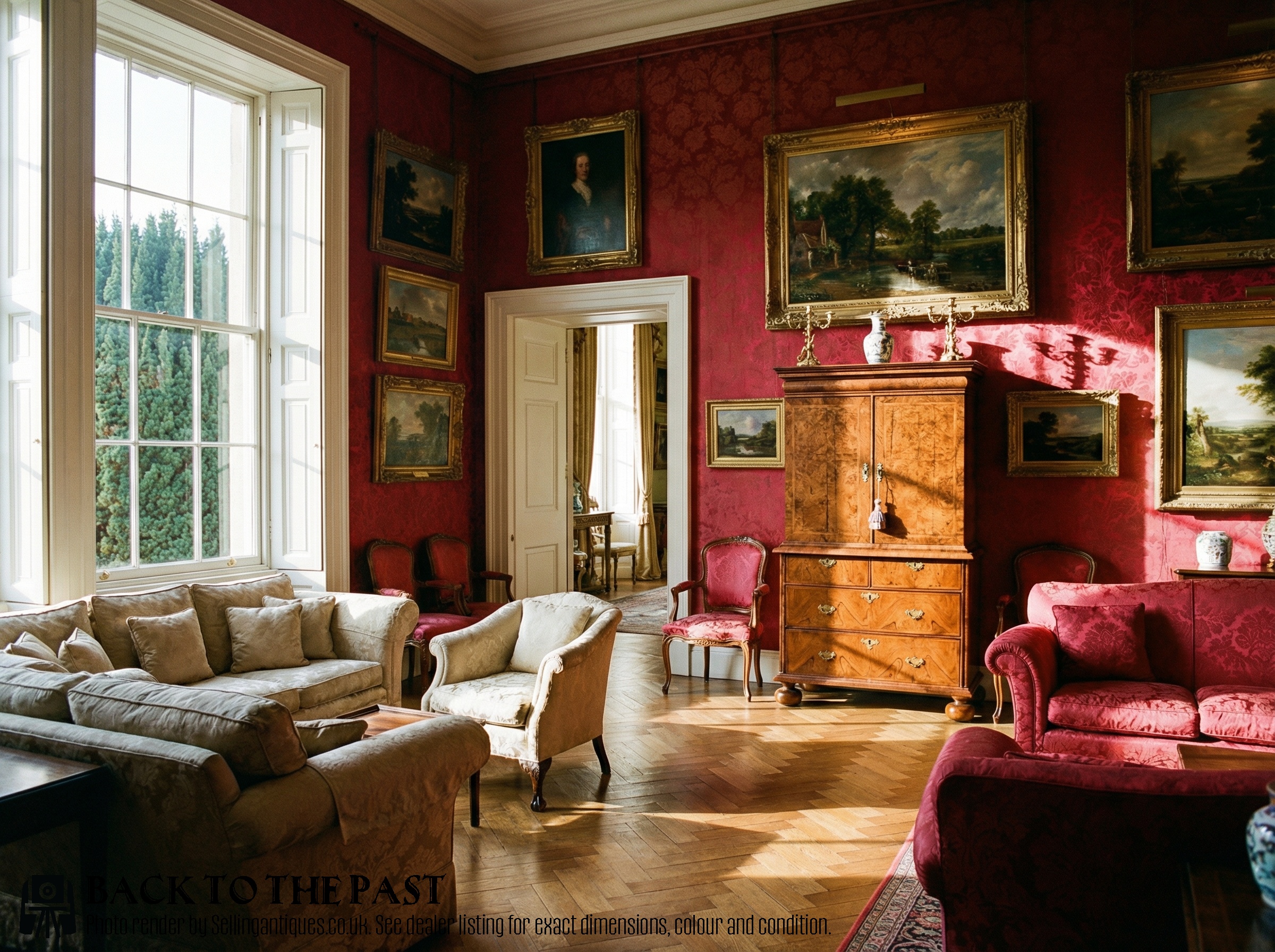
The walnut cabinet on chest stands as a commanding storage furniture piece, typically combining an upper enclosed section with a lower chest of drawers. Most examples encountered here stem from the seventeenth and eighteenth centuries, reflecting William and Mary, Queen Anne, and George I periods.
Makers divided these grand items into two structural tiers, allowing the upper carcass to sit securely upon the lower set of drawers. Buyers generally find architectural silhouettes dominated by rich timber grains and fitted interiors designed for ledgers, linen, or valuables.

Evaluating Construction
Quality rests upon the selection and matching of grain across the facade. Superior pieces display unbroken veneer symmetry on drawer fronts and doors, whereas lesser examples show mismatched timber sections.
Internal joinery reveals craftsmanship standards through hand-cut dovetailing in drawer construction and the integrity of secondary timbers. Originality of brass hardware and the stability of the upper and lower carcass connection also define the tier of the piece.
Retail Price Guide 2026
Typical UK retail prices for walnut cabinet on chest, calculated from the Sellingantiques database of over a million retail prices indexed since 2003. This retail price guide relies exclusively on Sellingantiques data; no external sources or auction records are used, so the figures do not describe the wider market.
Several early pieces conceal secret drawers behind dummy partitions, designed to outwit seventeenth-century house guests with inquisitive fingers.
Druce and Co·Epstein and Co·Heals of London
The Walnut Cabinet on Chest Glossary
- Burr Walnut
- A figured timber obtained from the gnarled growth knots of walnut trees. It yields intricate, swirling patterns highly prized for decorative veneer work.
- Marquetry
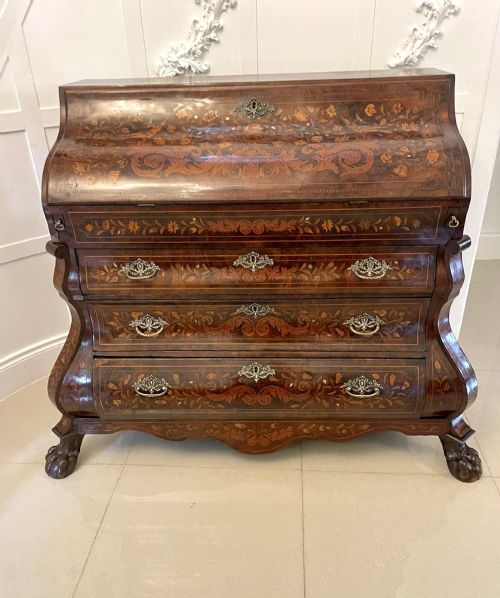
- The art of applying pieces of veneer to a structure to form decorative designs and pictures. Dutch examples frequently employ floral motifs in this technique.
- Carcase
- The foundational structural body of a piece of furniture before drawers, doors, and surface veneers are applied. It provides the essential skeleton for the cabinet.
- Escutcheon
- A flat plate of brass surrounding a keyhole. It protects the surrounding wood from wear caused by the insertion of keys.
Frequently Asked Questions
How do I distinguish William and Mary from George I pieces?
William and Mary examples often display more exuberant veneers, seaweed marquetry, and stands or bracket feet. George I pieces transition towards cleaner architectural lines and restrained walnut surfaces.
Drawer configurations and internal secret compartments also evolve between these decades, reflecting changing domestic requirements for storage.
What were these cabinets used for originally?
These tall pieces served as secure repositories for valuable documents, linens, clothing, and tableware. The upper section often concealed smaller drawers for papers or precious items.
Their imposing height kept important possessions away from damp floors and allowed households to lock away private papers in era-specific domestic spaces.
How should I care for walnut timber at home?
Keep walnut furniture away from direct sunlight and heat sources to prevent timber shrinkage and veneer lifting. Maintain stable room humidity and dust with a soft, dry cloth.
Avoid synthetic polishes and modern sprays, opting instead for traditional beeswax applied sparingly to nourish the historical finish.
Why do some cabinets feature marquetry?
Marquetry reflects continental taste, particularly Dutch influence, where floral and bird motifs were meticulously pieced together using various woods. British makers adopted these decorative techniques during the late seventeenth century.
Such ornamentation signaled wealth and sophisticated artistic awareness within elite domestic interiors.