
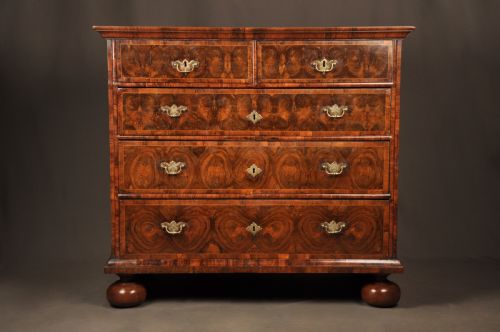

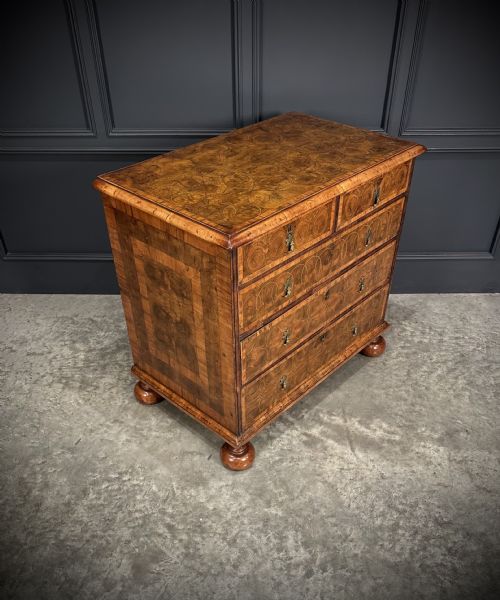


Oyster Veneer Chest
An oyster veneer chest brings together circular cross-section branch cuttings and seventeenth-century cabinet-making to create distinctive patterned drawer fronts.
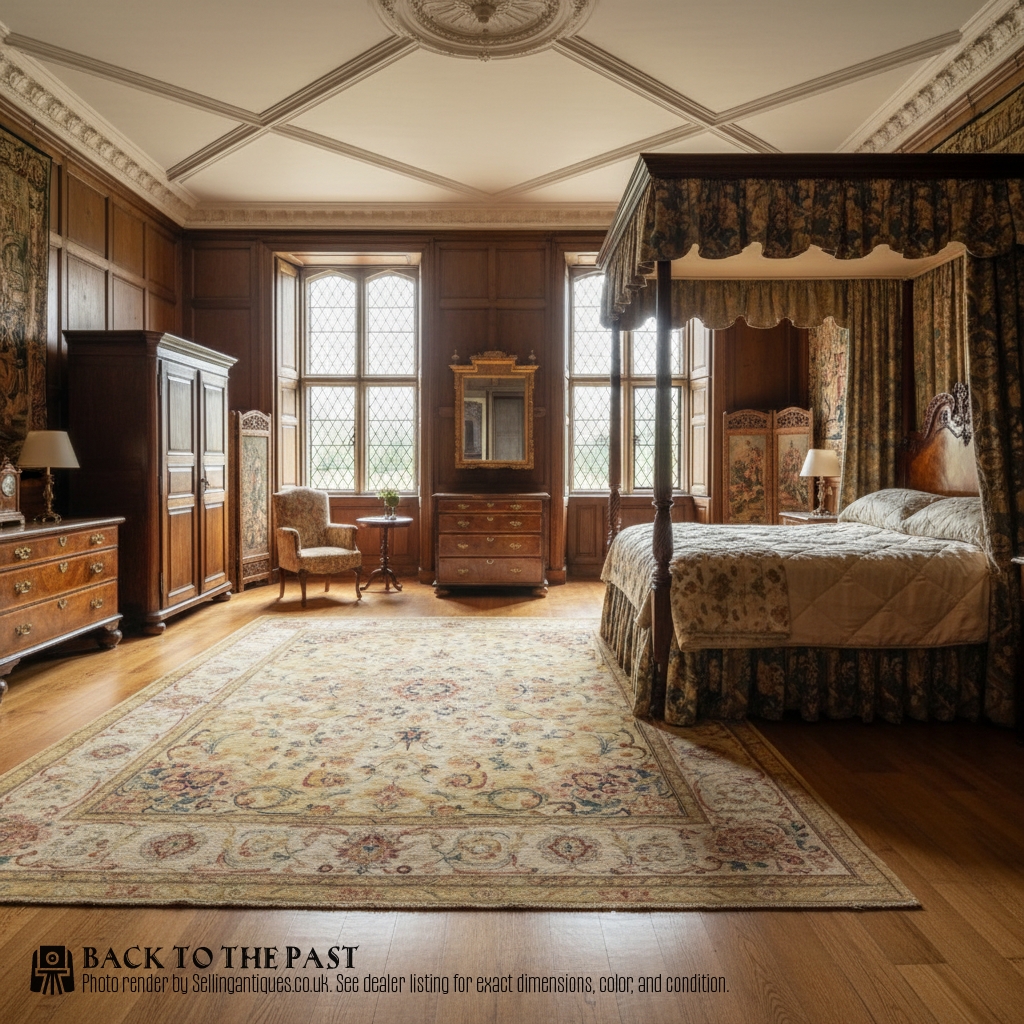
Oyster Veneer Chest
When you search for an oyster veneer chest, you encounter storage furniture primarily originating from the seventeenth century, particularly associated with the William and Mary period, alongside occasional later revivals from the 1920s. These pieces present timber surfaces patterned with circular grain motifs sliced from small branches or boughs.
The dominant forms on this page include chests of drawers, chests on stand, and cabinets on stand. Walnut, olive wood, kingwood, and laburnum provide the main ground timbers and decorative veneers for these storage items.
Examples range from compact sizes intended for smaller spaces to large case pieces raised on stands. The seventeenth-century items define the core of the selection, reflecting the early adoption of branch-wood slicing techniques in English and continental workshops.
How they were made
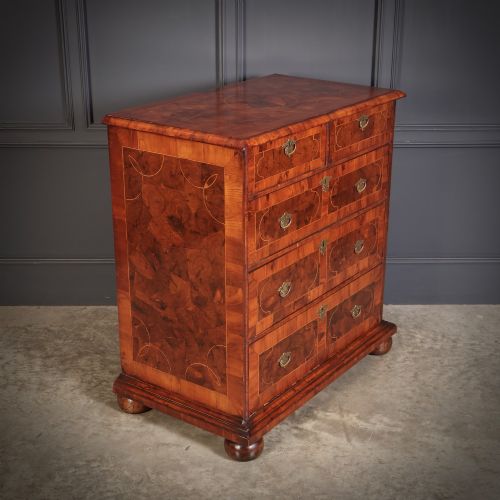
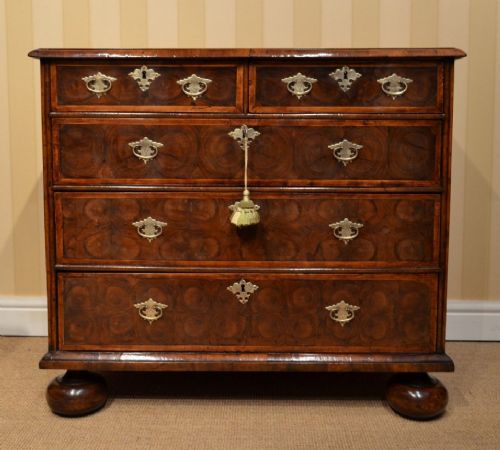
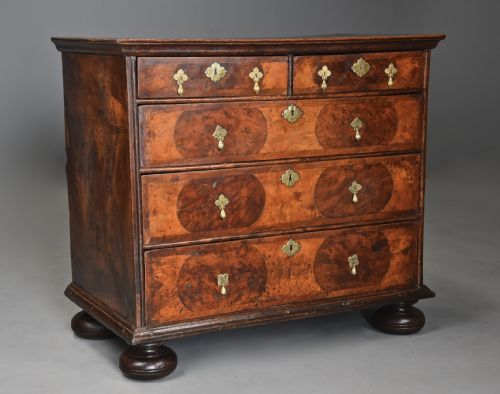
Cabinet-makers produced oyster veneers by cutting small branches or boughs diagonally across the grain to create circular or oval discs. These sections were then arranged closely together across drawer fronts and top panels to form intricate geometric patterns.
Workshops utilised oak and walnut as primary carcase timbers, applying the delicate veneers with animal glue and securing them with boxwood or marquetry stringing lines. Brass drop handles and escutcheons were fitted to the drawer faces to complete the construction.
Branch slices were named oysters because their stacked circular patterns resemble opened molluscs laid out on a fishmonger's slab.
What varies in quality
Quality in these pieces depends on the choice of timber and the precision of the veneer layout. Timbers such as olive wood, kingwood, and burr walnut display varied natural figuring that elevates the visual impact of the surface pattern.
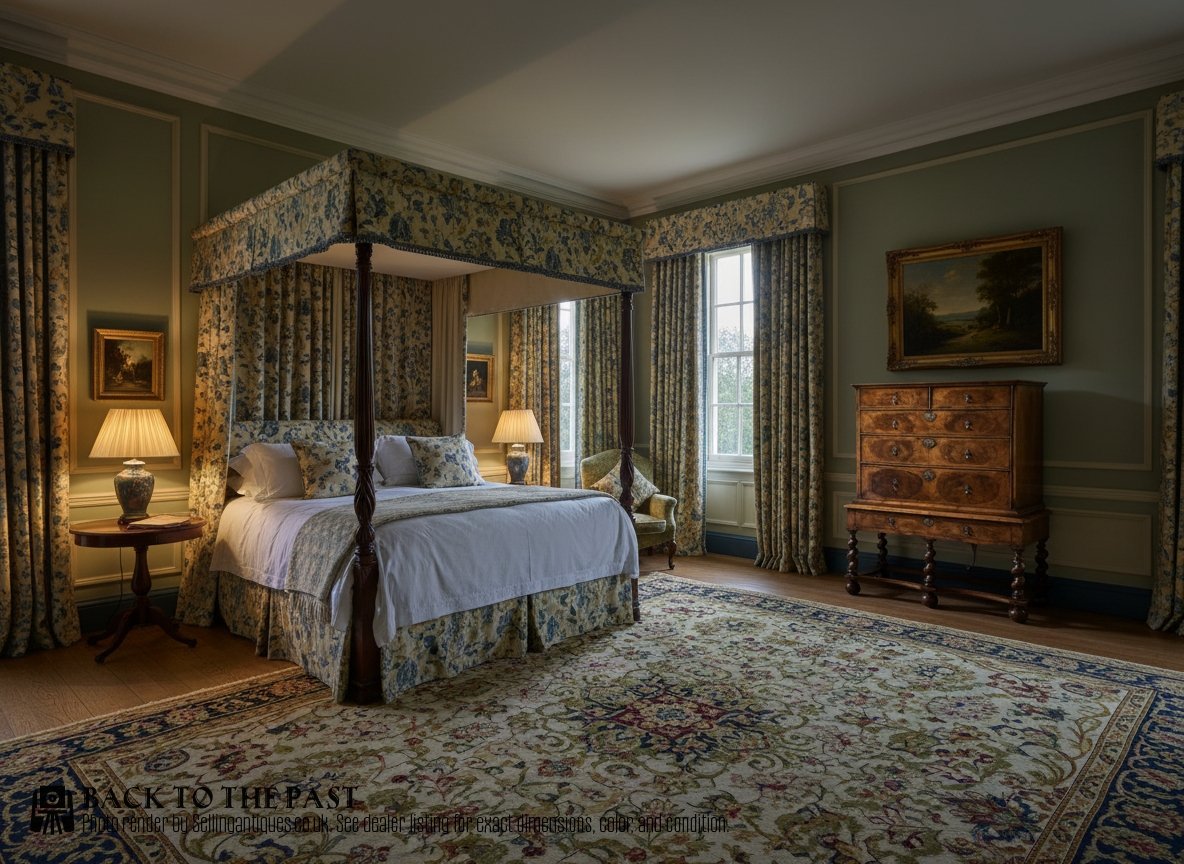
The sophistication of the underlying stand or support structure also distinguishes different examples. Chests raised on turned or spiral legs with integrated stretchers demonstrate more complex cabinet-making ambitions than standard box forms.
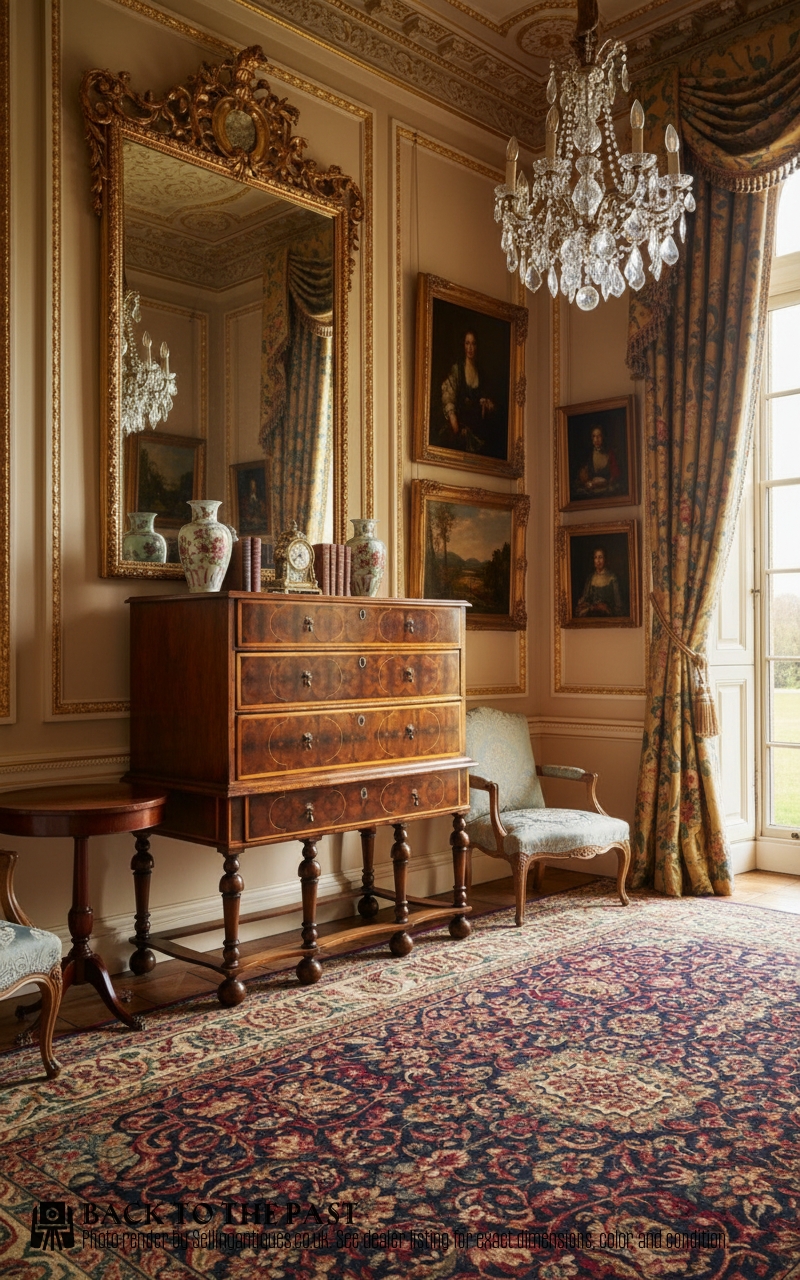
The Oyster Veneer Chest Glossary
- Oyster veneer
- A method of cutting small tree branches across the grain to produce small circular or oval wooden discs resembling oysters. These discs are arranged side by side to create patterned surfaces on furniture.
- Chest on stand
- A case piece consisting of a main storage section elevated on a separate framework of legs connected by stretchers. This form raises the primary drawers off the floor.
- Coffre forte
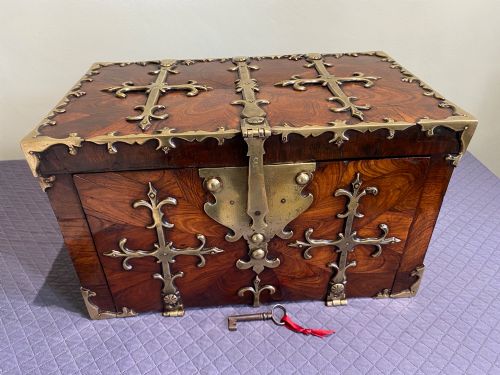
- A strong box or reinforced chest used for securing valuables and documents during the seventeenth and eighteenth centuries. These items often feature heavy locking mechanisms and banded ironwork.
- Marquetry
- The art of applying pieces of veneer to a structure to form decorative patterns and pictures. Makers combined various exotic and native woods to achieve contrasting tones.
- Stringing
- A narrow inlay of contrasting wood or light-coloured material set into grooves on drawer fronts or table tops. It defines the borders of veneered panels.
Oyster Veneer Chest: Frequently Asked Questions
What is an oyster veneer chest?
An oyster veneer chest is a wooden storage piece covered in circular wood slices cut across small branches. These pieces date mainly from the seventeenth century.
Cabinet-makers used walnut, olive, and laburnum to form patterned surfaces on drawer fronts and tops.
How do I date an oyster chest?
Dating relies on examining the carcase construction, timber species, and overall form such as chests on stand versus standard drawer units. Seventeenth-century pieces typically show specific jointing methods and distinct handle hardware.
Later revivals from the 1920s use similar techniques but exhibit different secondary woods and modern finishing traces.
How were these chests used?
These chests served as domestic storage for clothing, linens, and personal valuables in period bedchambers and parlours. Elevated versions kept contents away from damp floor levels.
Smaller boxes and cabinets on stand held precious items, documents, or tea collections.
How do I care for walnut veneer?
Walnut veneer requires stable indoor humidity levels and protection from direct sunlight to prevent timber movement and fading. Regular dusting with a dry cloth maintains the surface condition.
Applying traditional wax polish occasionally nourishes the historic wood without building up heavy residues.
What woods were used for veneer?
Walnut, olive wood, kingwood, laburnum, and yew supplied the decorative branch cuttings for these surfaces. Boxwood often provided contrasting stringing lines between the panels.
Oak served commonly as the primary carcase and drawer lining material beneath the decorative veneers.