
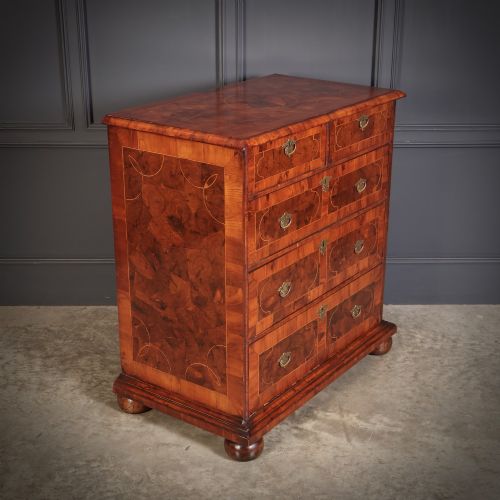
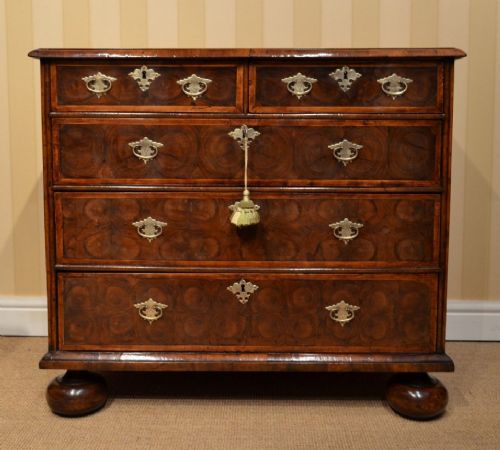

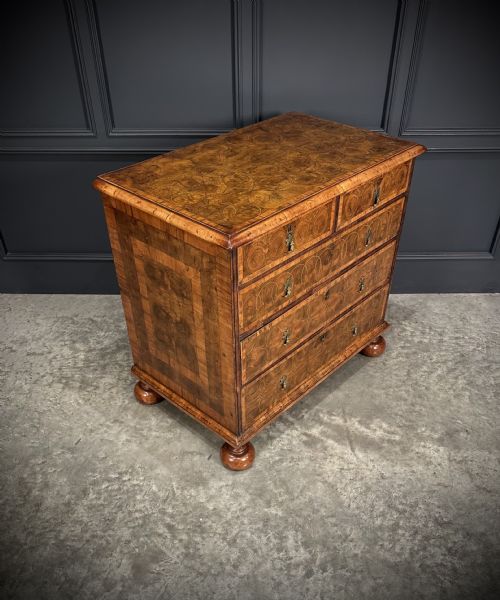


Oyster Laburnum Chest
An oyster laburnum chest brings the mesmerising concentric rings of branch-wood veneer into a room with striking seventeenth-century presence.
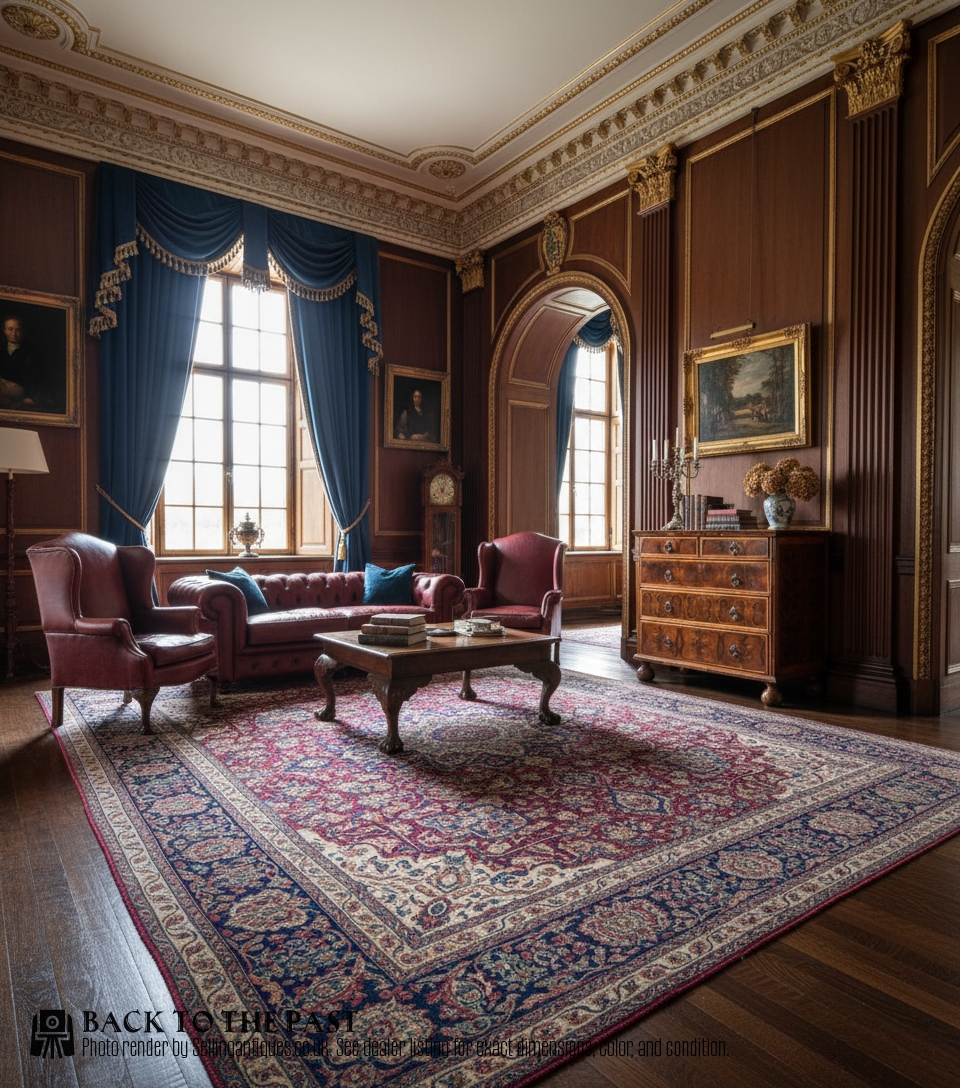
Oyster Laburnum Chest
An oyster laburnum chest presents timber sliced across the branch to reveal circular or oval patterns resembling oysters, arranged meticulously across the facade. These pieces span seventeenth-century origins, Georgian iterations, and later twentieth-century revivals.
The primary forms on this page include chests of drawers, chests on stand, and smaller decorative boxes or tea caddies. Most examples combine laburnum with walnut, oak, and boxwood stringing.
Buyers encounter period craftsmanship from the William and Mary era alongside later revivals from the nineteen-twenties. Each variation highlights the distinct grain patterns inherent to oyster veneering.
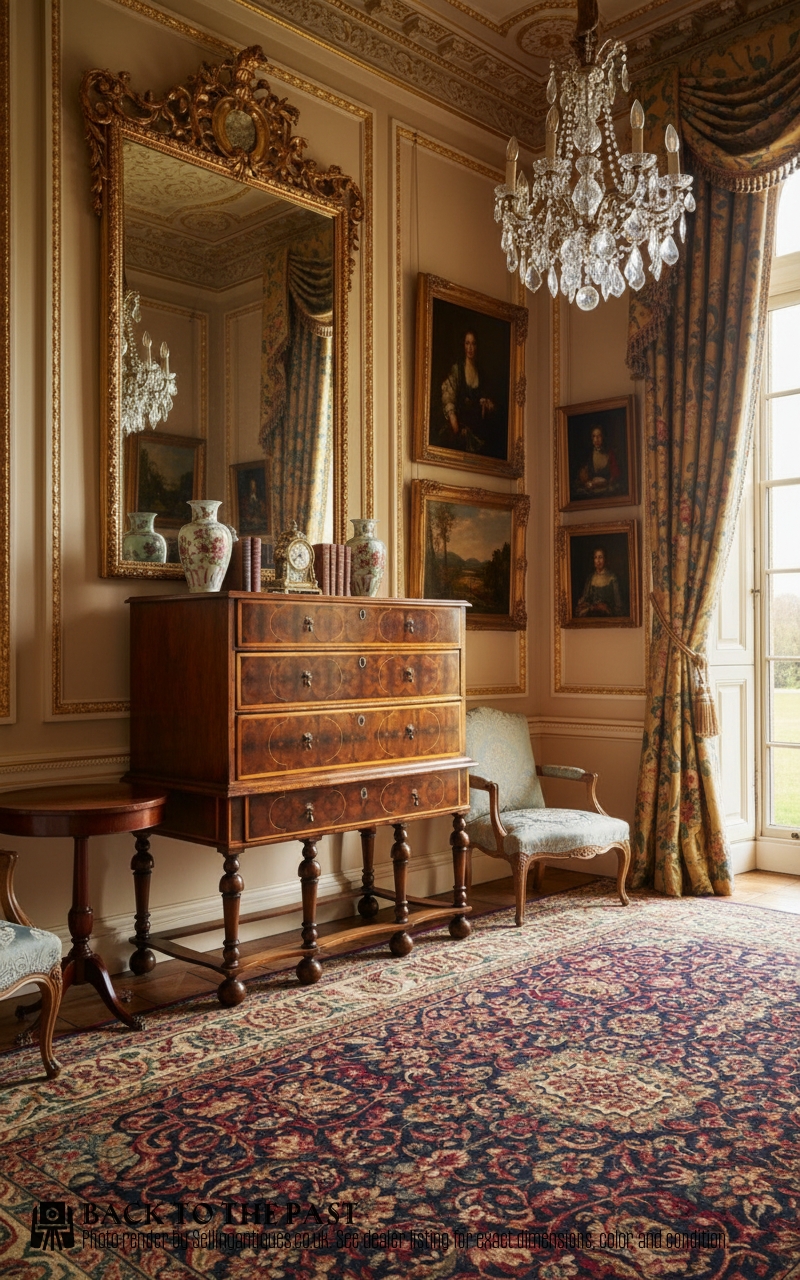
How they were made
Cabinet makers sliced small branches diagonally to produce thin circular discs of oyster veneer, which were then laid closely together over a timber carcase of oak or walnut. This demanding method required immense patience to cover large drawer fronts and surfaces without gaps.
Craftsmen often incorporated cross-banding in contrasting timbers such as boxwood or olivewood to frame the delicate oyster panels. Brass hardware, including drop handles and escutcheons, was then fitted to complement the rich figuring of the wood.
Current listings and historical archives feature seventeenth-century origins alongside nineteen-twenties revivals, utilising laburnum, walnut, oak, and brass.
What varies in quality
The visual impact depends entirely on the regularity and preservation of the circular veneer patterns across the drawer fronts and top. Superior examples maintain intact cross-banding and cohesive matching of the laburnum sections.
Underlying carcase construction and the choice of secondary woods such as oak or walnut influence the structural integrity of the piece over centuries. Proportion, original surface patination, and the retention of period stands or feet distinguish the finest specimens.
The Oyster Laburnum Chest Glossary
- Oyster veneer
- Thin slices of timber cut transversely across a branch or root to create circular and oval patterns resembling oyster shells. This decorative technique became exceptionally popular in late seventeenth-century English cabinet making.
- Cross-banding
- A border of veneer laid perpendicular to the grain of the main surface, often used to frame panels of oyster laburnum. It adds a refined linear contrast to the swirling patterns.
- Chest on stand
- A case piece elevated on a separate framework of legs connected by stretchers, lifting the main drawers off the floor. This form appeared frequently during the William and Mary period.
- Stringing
- Fine inlay lines of contrasting wood, such as boxwood, embedded into the surface to create delicate geometric borders. It highlights the edges of drawers and tabletops.
- William and Mary
- The design style spanning the late seventeenth and early turn of the eighteenth century, characterised by geometric veneering, trumpet legs, and flat stretchers.
Oyster Laburnum Chest: Frequently Asked Questions
How do I care for oyster veneer?
Keep the wood away from direct sunlight and sudden temperature changes to prevent the delicate circular veneers from lifting off the carcase. Feed the timber occasionally with appropriate wax to maintain the natural lustre of the laburnum.
Avoid excessive moisture and use dry cloths for dusting. Gentle maintenance preserves the historic surface patination for years to come.
How do I spot a revival piece?
Nineteen-twenties revival pieces often feature standardised internal construction methods and cleaner, less variable timber patination compared to seventeenth-century originals. Examining the secondary woods and underlying structure reveals the true age of the carcase.
Comparing hardware fixings and cut marks provides further clues to dating. Consultation with stylistic evidence helps separate early work from later craftsmanship.
Where should I place it?
A chest of drawers suits a hallway or bedroom where the patterned top surface and drawer fronts can be viewed from above. Smaller boxes and caddies find a natural home on desks or side tables.
Position the piece away from radiators to protect the historic glue and veneer work. Adequate ambient light allows the intricate grain of the laburnum to stand out.