
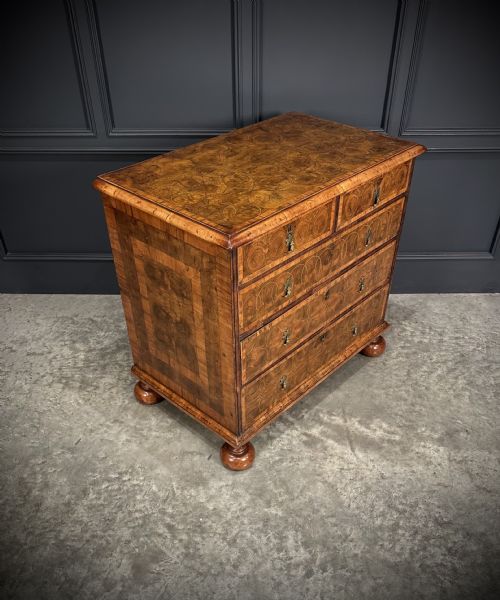


Antique Oyster Veneer Commode
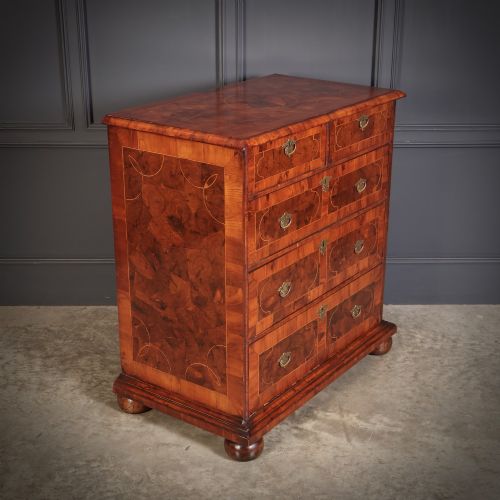
An antique oyster veneer commode is a masterclass in seventeenth-century timber work, offering concentric circles of figured wood that command any room.
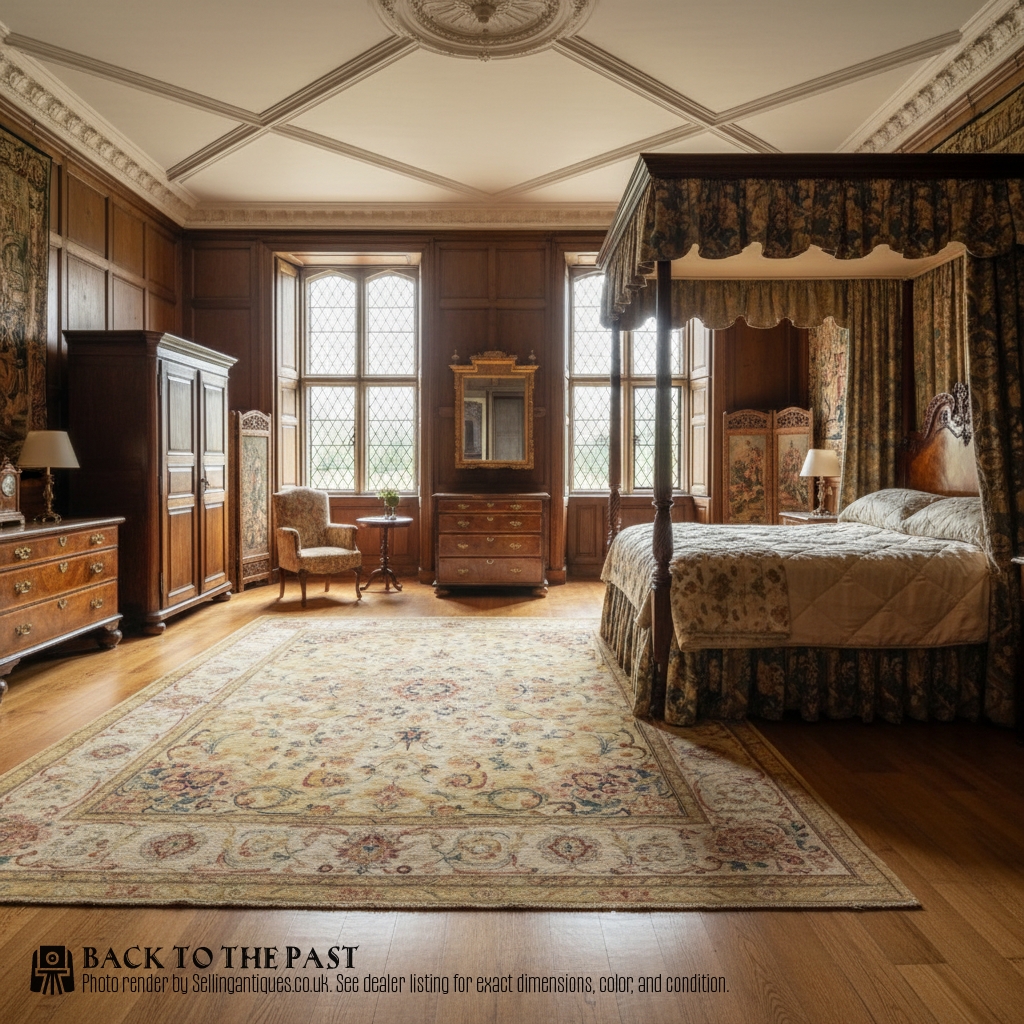
Antique Oyster Veneer Commode
When searching for an antique oyster veneer commode, a buyer looks at seventeenth-century and eighteen-hundred chests of drawers built during the William and Mary and Jacobean styles. These pieces function as low chests with multiple drawers designed to store garments or valuables in a formal chamber.
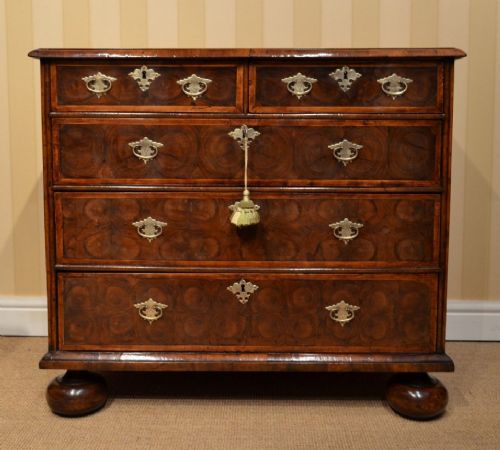
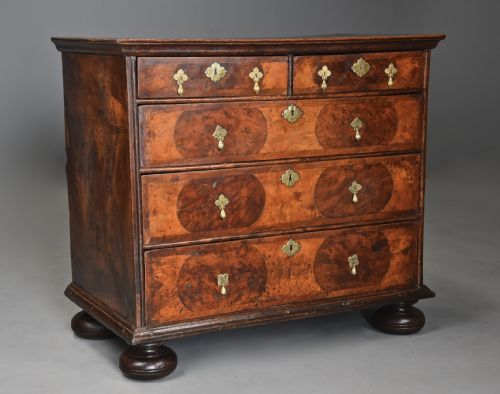
The versions most commonly met on this page date from the seventeenth century, often labelled as chests of drawers in walnut, olivewood, laburnum, and yew. They stand on sturdy carcases of oak, presenting flat fronts entirely covered in circular timber cuttings.
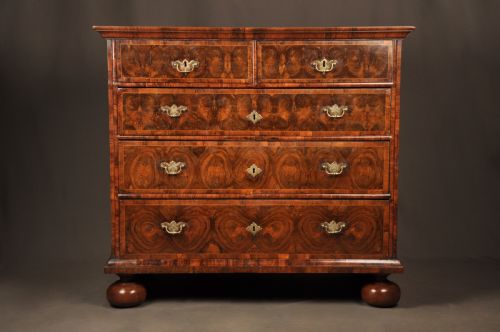
Makers of the period arranged these cross-grained discs in geometric patterns across the entire facade, sometimes accented with boxwood stringing or maple details. Such furniture anchors a traditional interior with deep historical weight and intense visual texture.
How They Were Made
Workshops utilised contrasting timbers like walnut, olivewood, laburnum, and yew to create varied tonal ripples across the drawer fronts and top surfaces. Brass drop handles and escutcheons were fixed directly to the veneered faces, securing the hardware without disturbing the overall wooden mosaic.
Branch slices were sometimes laid so densely that even the drawer sides received the circular wooden treatment.
What Varies in Quality
The finest examples display tightly packed, uniform oyster roundels with minimal filler between the cuts, showing disciplined geometry across the drawers. Lesser pieces reveal wider gaps, mismatched timber selections, or disjointed patterning that disrupts the natural flow of the grain.
Surface preservation dictates upper-tier status, where rich patination and untouched secondary woods like oak remain intact beneath centuries of polish. Heavy modern restoration or extensive replacement of the delicate circular veneers pulls down the desirability of a chest.
The Antique Oyster Veneer Commode Glossary
- Oyster veneer
- Slices of small branches cut transversely to expose circular growth rings resembling oyster shells. This technique defined late seventeenth-century English cabinetmaking.
- Commode
- A low chest of drawers used for storage in domestic chambers. The term applies broadly to multi-drawer case furniture from the period.
- William and Mary
- The design style spanning the late seventeenth and early turn of the century. It brought Dutch influences, rich marquetry, and intricate veneering to English furniture.
- Stringing
- Narrow inlaid lines of contrasting wood, such as boxwood, set into the surface. It frames the panels and highlights the borders of the chest.
- Patina
- The deep sheen and surface warmth developed by timber over centuries of handling and polishing. It marks genuine age and continuous use.
Antique Oyster Veneer Commode: Frequently Asked Questions
What is an oyster veneer commode?
An antique oyster veneer commode is a seventeenth-century chest of drawers decorated with transverse slices of small branches arranged in circular patterns.
These pieces showcase timber varieties like walnut, olivewood, and laburnum across the entire front and top.
How do I date these chests?
Dating relies on the construction methods, timber choices, and stylistic markers associated with the seventeenth century and the William and Mary period.
Original brass hardware mounts and secondary oak framing provide further clues to the exact decade of manufacture.
Where were these pieces used?
These chests served as primary storage furniture in important chambers, hallways, and formal bedchambers of seventeenth-century homes.
Their striking geometric wooden surfaces meant they functioned as display pieces as well as practical storage.
How do I care for oyster veneer?
Maintenance requires stable indoor humidity and temperature to prevent the delicate transverse wood slices from shrinking or lifting off the oak carcase.
Application of traditional wax polish maintains the timber moisture and preserves the natural patina without harsh chemical cleaners.