



Brass Escutcheon Chest
A brass escutcheon chest provides secure storage while displaying fine metalwork mounted on timber.
Brass Escutcheon Chest
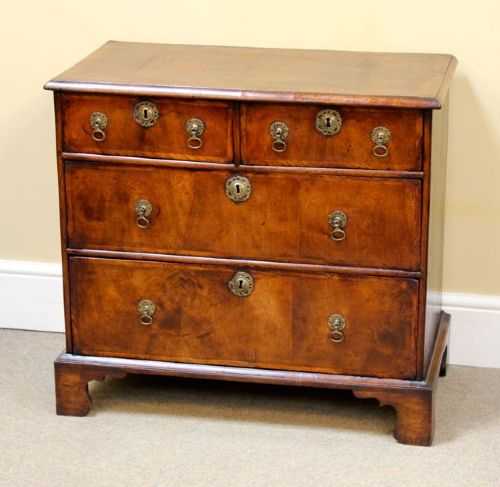
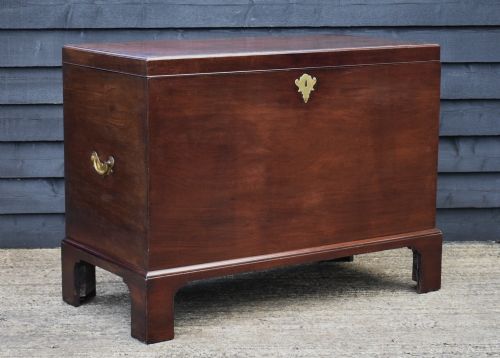
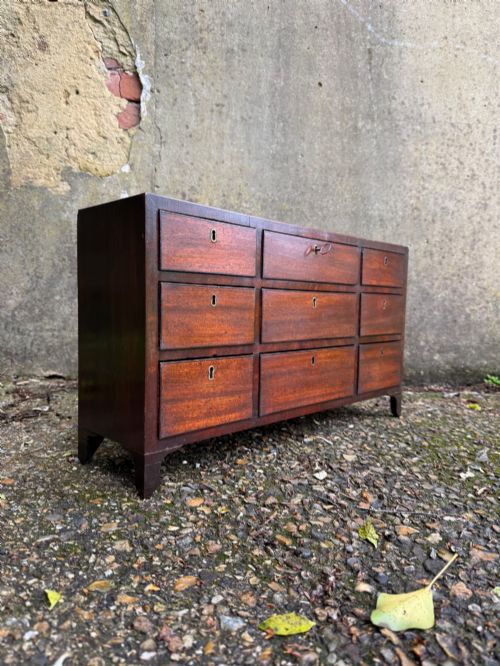
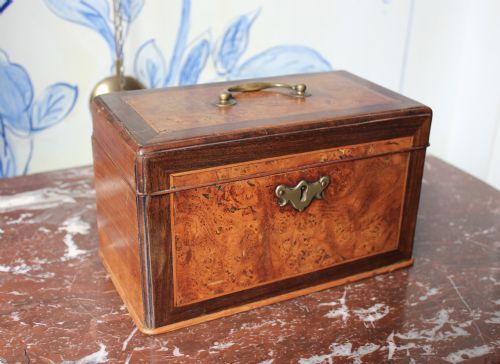
A brass escutcheon chest combines functional wooden storage with protective metal keyhole surrounds. The pieces collected under this search phrase span centuries and formats, ranging from compact tea caddies to large campaign chests and commodes.
Mahogany and walnut appear frequently across the periods, accompanied by regional variations in padouk, camphorwood, and rosewood. Buyers meeting these pieces on this page will encounter Georgian and Victorian designs alongside Dutch Colonial and Regency examples.
The objects serve multiple storage purposes, functioning as deed boxes, travel trunks, jewellery cabinets, and standard chests of drawers. Each item relies on brass mounts to secure structural corners and keyholes against heavy use.
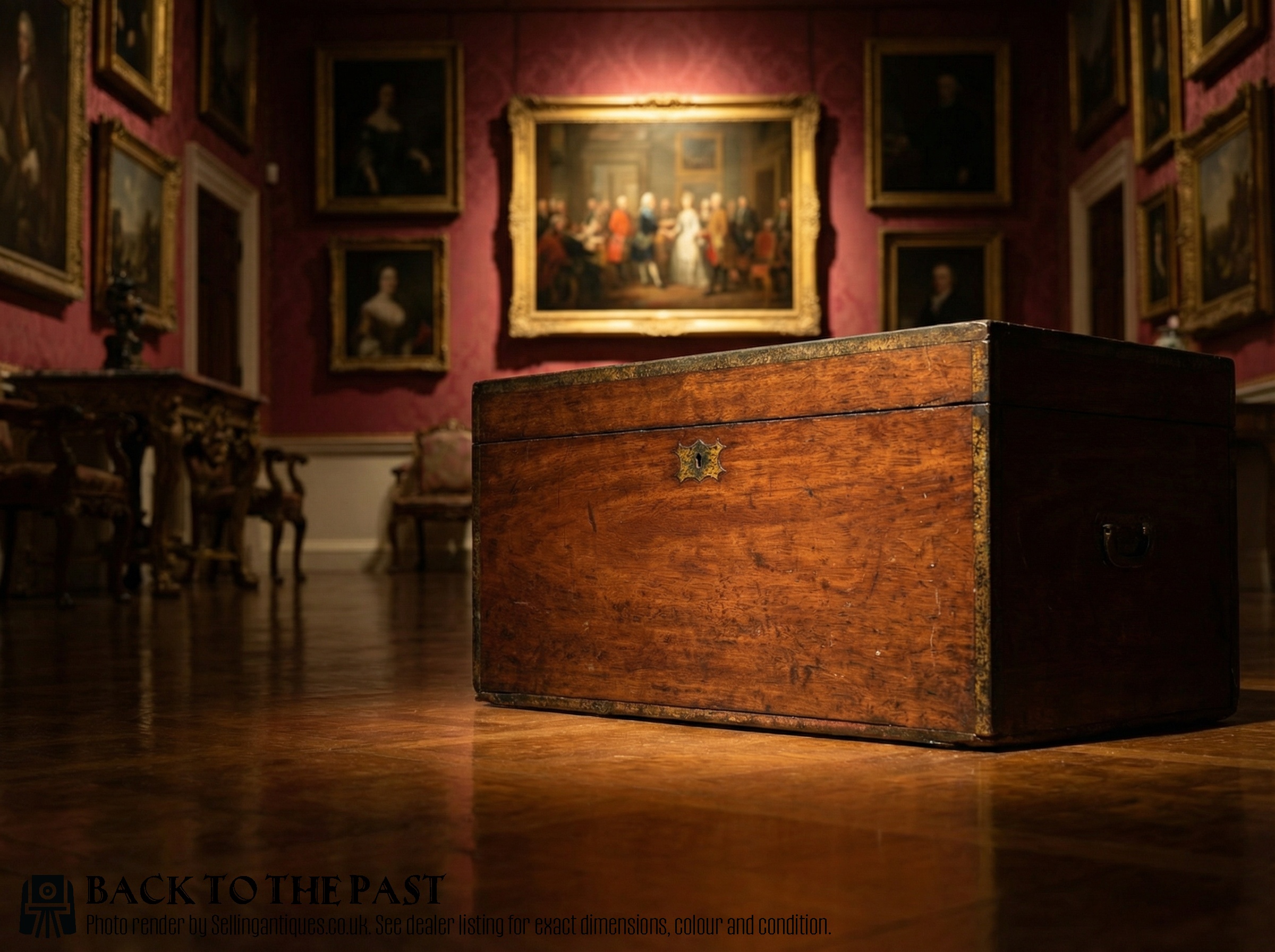
What varies in quality
Quality rests in the selection of timber grain, the precision of the brass fitting inlays, and the integrity of the original hardware. Superior examples display carefully matched veneers and robust internal partitioning rather than replacement components.
The execution of the joinery and the crispness of the brass casting distinguish standard utility items from finer bespoke commissions. Original mounts and well-preserved surface patination elevate the standing of any piece.
Brass Escutcheon Chest Retail Price Guide 2026
Typical asking prices for brass escutcheon chest among the pieces listed under this phrase on Sellingantiques today, from the lower quarter to the upper quarter. They describe what is for sale here now, not the wider market.
The object types grouped under this search range from miniature tea caddies and jewellery boxes to large sea chests and modular campaign furniture.
The Brass Escutcheon Chest Glossary
- Escutcheon
- A flat plate surrounding a keyhole that protects the surrounding wood from wear. On these chests, it is typically cast from brass.
- Campaign chest
- A modular storage trunk built in sections with recessed brass handles for military transport. These pieces dismantle easily for travel.
- Tea caddy
- A small lidded box designed for storing loose tea leaves, often featuring internal compartments and a locking brass escutcheon.
- Sarcophagus
- A monumental chest style featuring a rounded, tomb-like lid shape popular during the Regency period.
- Commode
- A decorative low chest of drawers or cabinet on legs, originating in French furniture design and adopted by British makers.
Brass Escutcheon Chest: Frequently Asked Questions
What is a brass escutcheon?
An escutcheon is the decorative and protective metal plate fixed around a keyhole. It prevents the key from repeatedly striking and wearing away the surrounding wood.
On these chests, brass escutcheons often match the corner brackets and carrying handles, adding functional structure to the design.
Were campaign chests used by the military?
Military officers utilised campaign chests during active service and travel because the segmented design allowed for manageable packing. Recessed brass handles and protective corner plates ensured the wood survived rough transport.
Many surviving examples retain the clever internal drawers and fitted writing surfaces characteristic of campaign furniture.
How do I care for mahogany and brass?
Maintain timber surfaces by applying a traditional wax polish occasionally to nourish the grain and preserve the natural patination. Avoid excessive moisture and direct sunlight to prevent the wood from warping.
Clean the brass mounts gently with a soft cloth without using harsh chemical abrasives that might strip the aged metal surface.
How do I distinguish Georgian from Victorian pieces?
Georgian furniture generally dates from the eighteenth and early nineteenth centuries, favouring restrained classical proportions and rich mahogany or walnut timbers. Victorian pieces, emerging later in the nineteenth century, often incorporate bolder decorative treatments and diverse woods like rosewood and camphorwood.
Examining the construction methods, secondary timbers, and hardware styles helps clarify the period of manufacture.