


Barley Twist Walnut Furniture
Barley twist walnut furniture brings turned spiral timbers and rich grain figures into period rooms.
Barley Twist Walnut Furniture
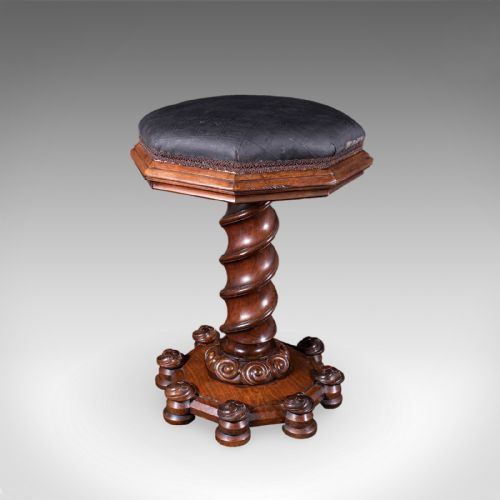
Barley twist walnut furniture encompasses multi-tiered whatnots, chests on stands, and occasional tables spanning the seventeenth to nineteenth centuries. These pieces combine turned spiral uprights with utilitarian forms designed for display and storage.
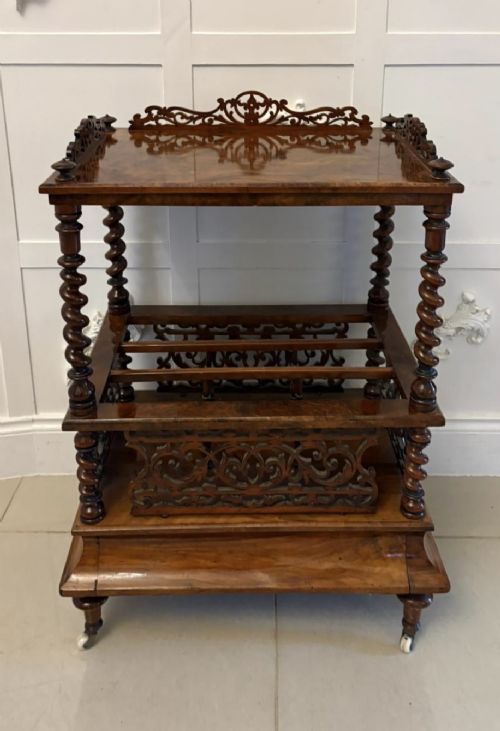
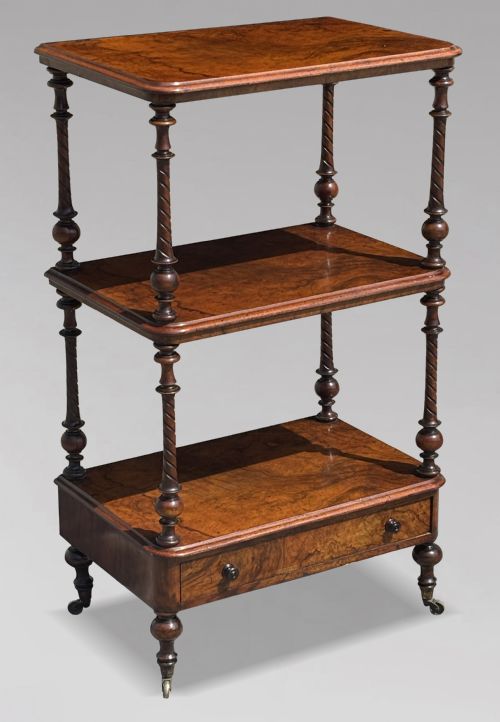
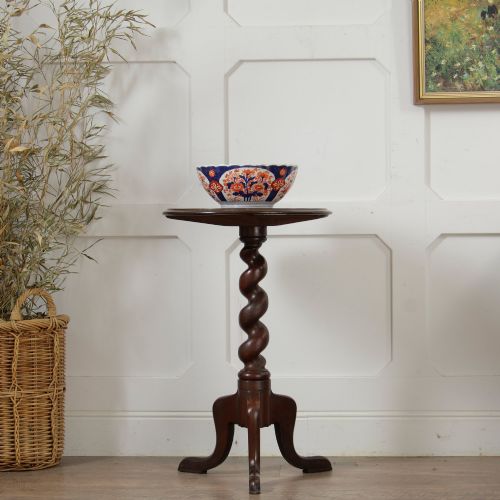
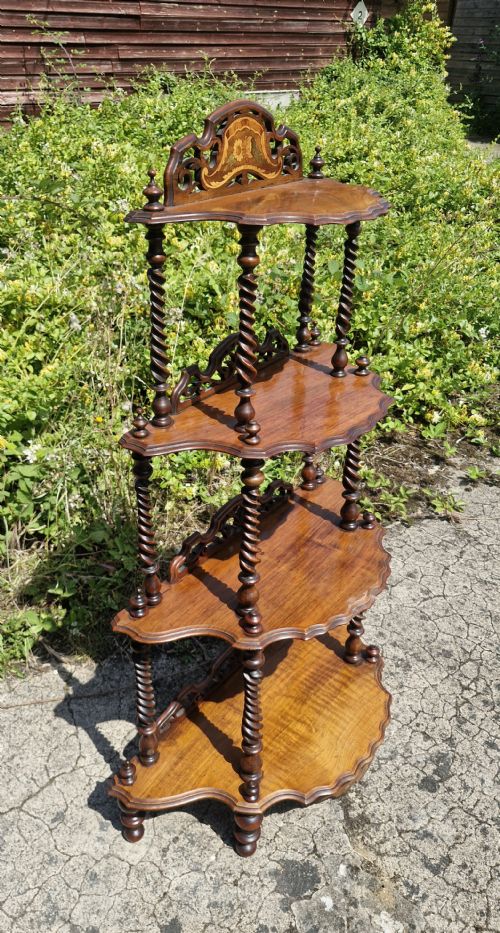
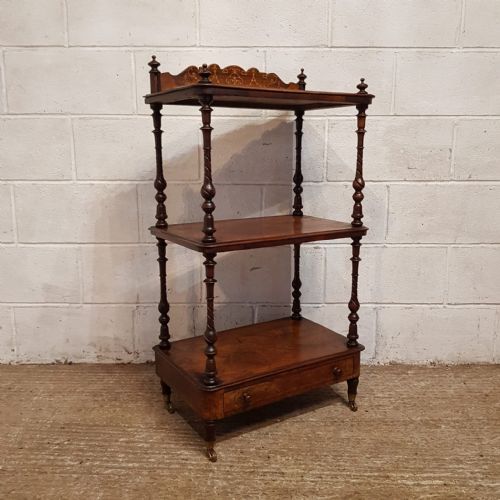
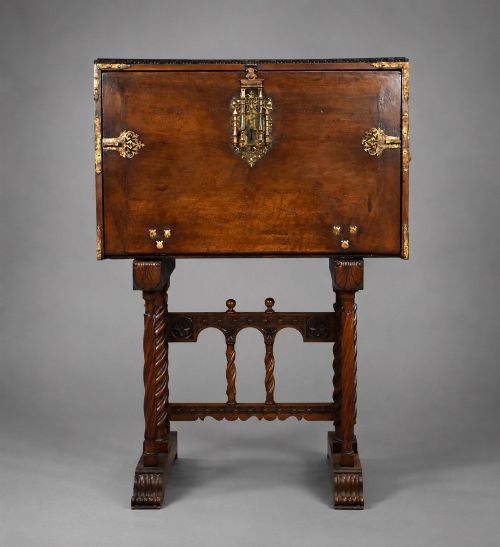
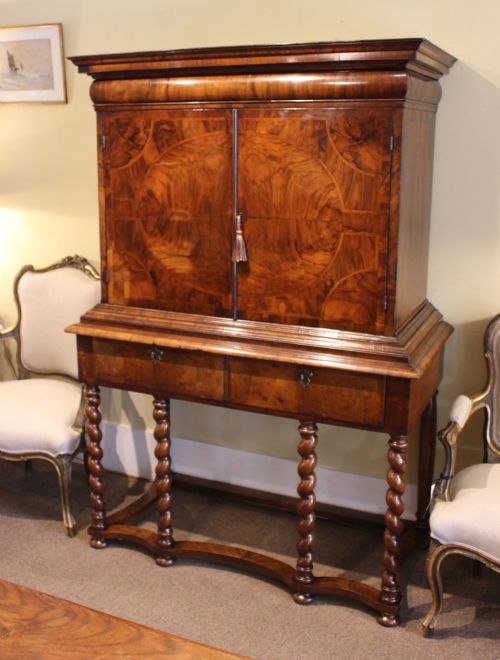
Victorian examples dominate the selection, frequently taking the form of multi-tiered corner whatnots, canterburys, and pedestal tables in figured burr walnut. Earlier seventeenth-century William and Mary or Charles II variants appear as cabinets on stands and side tables.
The objects serve specific domestic roles, from magazine racks and book shelving to display stands and writing desks. Walnut timber provides a dark, warm ground across these varied nineteenth-century and earlier forms.
Materials and construction
Carpenters utilised solid walnut and burr walnut veneer, applying intricate wood inlay and brass details to carcass structures. Secondary timbers such as oak occasionally appear in foundational framing and drawer linings.
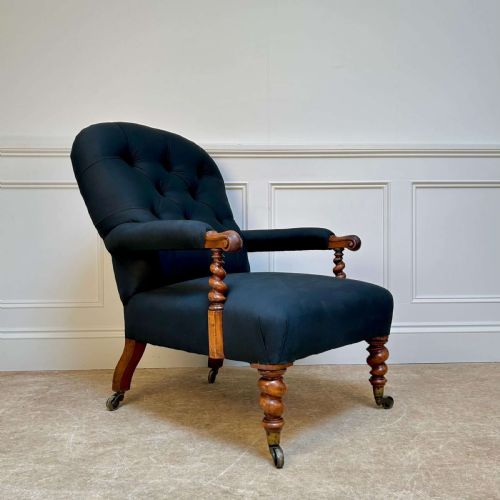
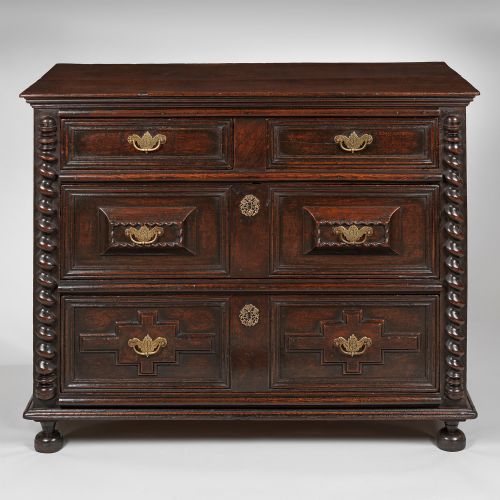
Turners shaped the characteristic spiral supports by hand or lathe, producing hollow or solid barley twists for uprights and table legs. French polishing or wax finishes highlight the varied figuring of the walnut grain.
Several whatnots feature hollow barley twist columns, proving that turners loved an interior puzzle as much as a decorative spiral.
Quality and craftsmanship
The choice of timber defines visual hierarchy, moving from plain walnut boards to highly figured burr veneers across table tops and cabinet doors. Skilled cabinet-making shows in the crispness of the spiral turning and the precise alignment of multi-tiered shelf supports.
Original brass hardware, sound structural joinery, and intact marquetry or inlay elevate individual pieces. Proportion and balance in complex forms like multi-tier whatnots distinguish standard production from finer workshop output.
Hindley & Sons·Holland & Sons·Howard & Sons·James Winter·Adriano Brambilla
The Barley Twist Walnut Furniture Glossary
- Barley twist
- A spiral turning resembling a twisted rope, used extensively for furniture legs and structural uprights. This decorative column style gained prominence in seventeenth-century English cabinet-making and returned during the Victorian revival.
- Whatnot
- An open shelving unit designed for displaying ornaments, books, or collections. These multi-tiered pieces often feature turned corner supports and finials.
- Canterbury
- A low stand partitioned for holding sheet music, magazines, or folios, usually fitted with carrying handles and castors. Victorian versions often incorporate barley twist divisions and drawer bases.
- Burr walnut
- A prized wood veneer obtained from walnut tree growths, displaying swirling, knotty grain patterns. Cabinet-makers used these figured sheets on primary display surfaces to create decorative contrast.
- Cabinet on stand
- A two-part form comprising an enclosed upper storage box set upon an elevated support frame with legs. This configuration highlights fine wood grain and decorative stretcher bases.
Barley Twist Walnut Furniture: Frequently Asked Questions
What is a barley twist leg?
A barley twist is a spiral column turned from solid timber, resembling a twisted rope or plant stem. It provides structural support while adding decorative movement to furniture.
Craftsmen shaped these spirals by hand or on early lathes during the seventeenth century, and the style reappeared frequently in Victorian revival pieces.
How do I identify burr walnut?
Burr walnut exhibits distinctive, highly figured grain patterns filled with swirling knots and circular eyes. It comes from excrescences on the tree where the grain grew in a deformed manner.
Cabinet-makers sliced this wood into thin veneers to cover flat surfaces like table tops and drawer fronts, creating striking decorative contrasts against plain timber.
Where were whatnots used?
Whatnots served as open display and storage units in Victorian drawing rooms and parlours. They held ornaments, ceramics, books, and small household collections.
Corner whatnots were specifically designed to utilise unused room angles, featuring multiple tiers supported by turned columns.
How do I care for antique walnut?
Antique walnut requires protection from direct sunlight, extreme temperature shifts, and excessive moisture to prevent wood splitting and veneer lifting. Regular dusting with a soft cloth maintains the finish.
Occasional application of appropriate wax polish nourishes the timber and preserves the natural lustre of the historical surface.