
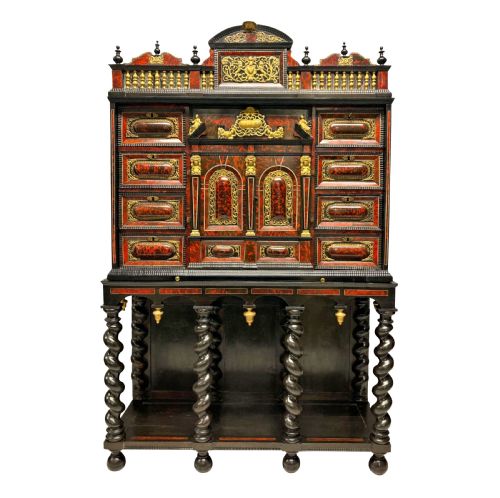


Barley Twist Chest on Stand
A barley twist chest on stand brings architectural presence and striking legwork into a room, combining storage with elevated form.
Barley Twist Chest on Stand
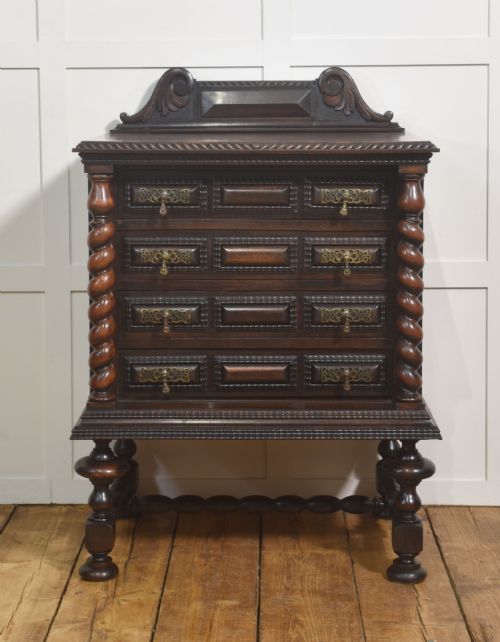
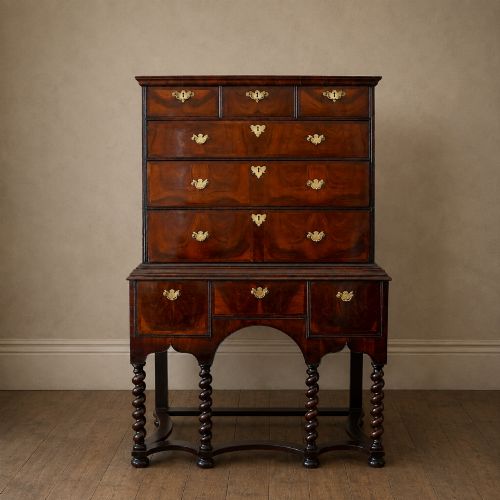
When you search for a barley twist chest on stand, you encounter pieces that elevate drawer storage upon an open stand, often defined by spiralling uprights. These works bridge the seventeenth and eighteenth centuries, though revival periods also appear among the offerings.
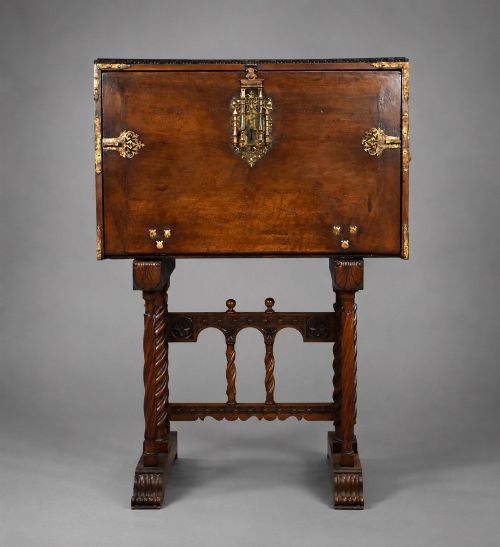
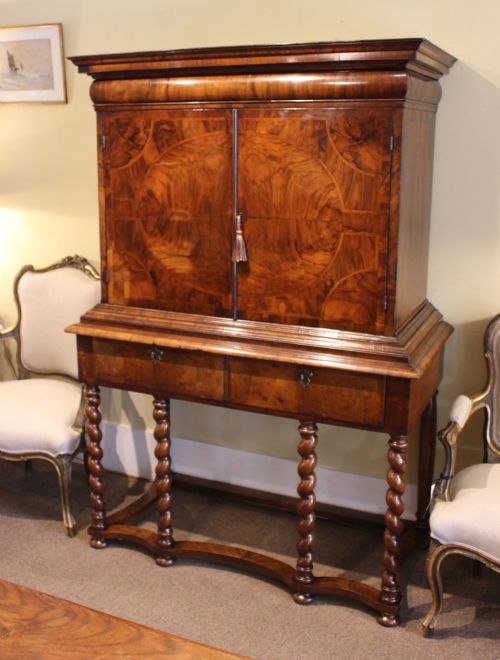
The dominant forms span walnut cabinets on stands, traditional chests of drawers, and architectural cabinets from Spanish, Flemish, and British origins. Walnut and burr walnut prevail, frequently paired with the characteristic turned legs of the William and Mary period.
Buyers most frequently meet walnut and burr walnut examples from the seventeen hundreds or the William and Mary era, alongside occasional nineteenth century revivals and Portuguese colonial variants. These pieces function simultaneously as focal points and practical storage vessels.
How they were made
Cabinet makers utilised dense hardwoods such as oak and walnut as structural carcases, applying figured burr walnut, kingwood, or rosewood veneers to primary surfaces. Ebonised wood and tortoiseshell also appear in more elaborate Flemish and Spanish workshops.
Turnery formed the defining legs and stretchers, shaping straight timber into spiralling barley twist columns on lathes. Brass drop handles, escutcheons, and occasionally iron hardware completed the drawer fronts and doors.
Some seventeenth century Flemish cabinets hid secret compartments behind miniature drawers where owners stashed love letters and small fortunes.
What varies in quality
Quality rests upon the choice and matching of veneers, particularly the grain symmetry of burr walnut or oyster laburnum across the drawer fronts. Finer examples display meticulous attention to carcass timber selection and secondary woods.
The crispness and proportion of the barley twist turnings distinguish superior stands from later replacements or heavier copies. Integration between the upper cabinet and the supporting stand reveals the maker's original intent and structural cohesion.
The Barley Twist Chest on Stand Glossary
- Barley twist
- A spiralling decorative turning resembling stalks of barley, frequently used on the legs and stretchers of seventeenth and eighteenth century stands.
- Carcass
- The main structural body or shell of a cabinet or chest upon which veneers and mouldings are applied.
- Bargueño
- A type of Spanish cabinet with numerous small drawers, often set upon a matching stand or table.
- Oyster veneer
- Circular cross-sections of branch wood laid in repeating patterns across a surface, creating an appearance resembling oyster shells.
- Escutcheon
- A protective plate surrounding a keyhole, usually fashioned from brass to complement the drawer hardware.
Barley Twist Chest on Stand: Frequently Asked Questions
What is a barley twist chest on stand?
It is a raised cabinet or set of drawers supported by spirally turned wooden legs, designed to hold valuables or textiles while standing clear of the floor.
These pieces combine the utility of a chest with the visual lightness of an elevated stand, originating primarily in the seventeenth and eighteenth centuries.
How were these cabinets used?
They served to store documents, writing materials, or small precious items behind locked doors or within multiple internal drawers.
The elevated height kept contents away from cold, damp floors while displaying the status and taste of the owner in principal rooms.
How do I date a walnut chest on stand?
Dating relies on examining construction methods, secondary timbers, handle types, and the specific style of the turned legs and mouldings.
Periods such as William and Mary or George I exhibit distinct joinery practices and veneer thicknesses that separate original pieces from later revivals.
Where should I place one at home?
They fit well in hallways, living rooms, or studies where their architectural fronts and elevated stands can be viewed without obstruction.
Ensure the room has stable humidity levels to protect the delicate walnut veneers and oyster laburnum surfaces from drying out.