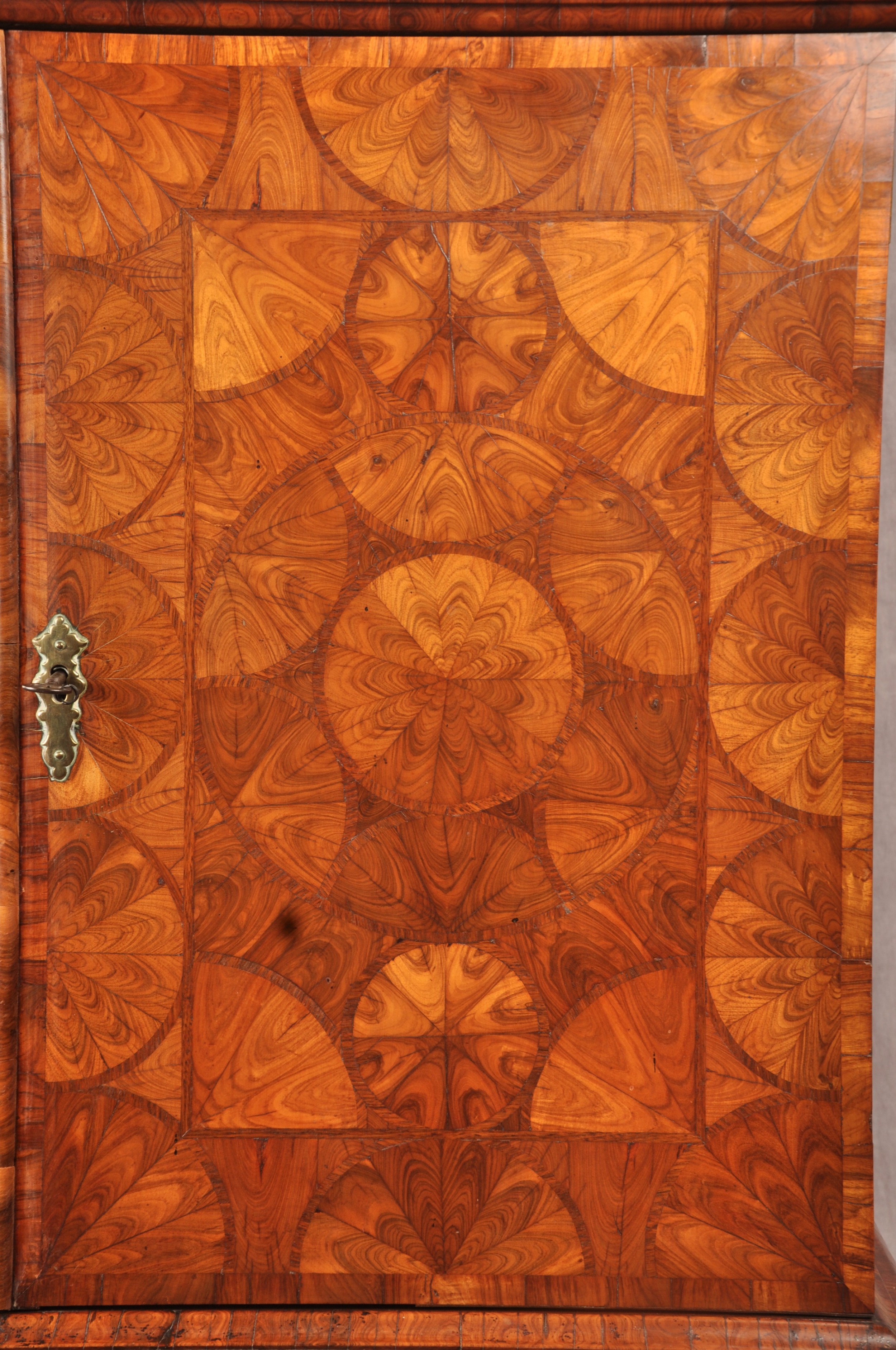
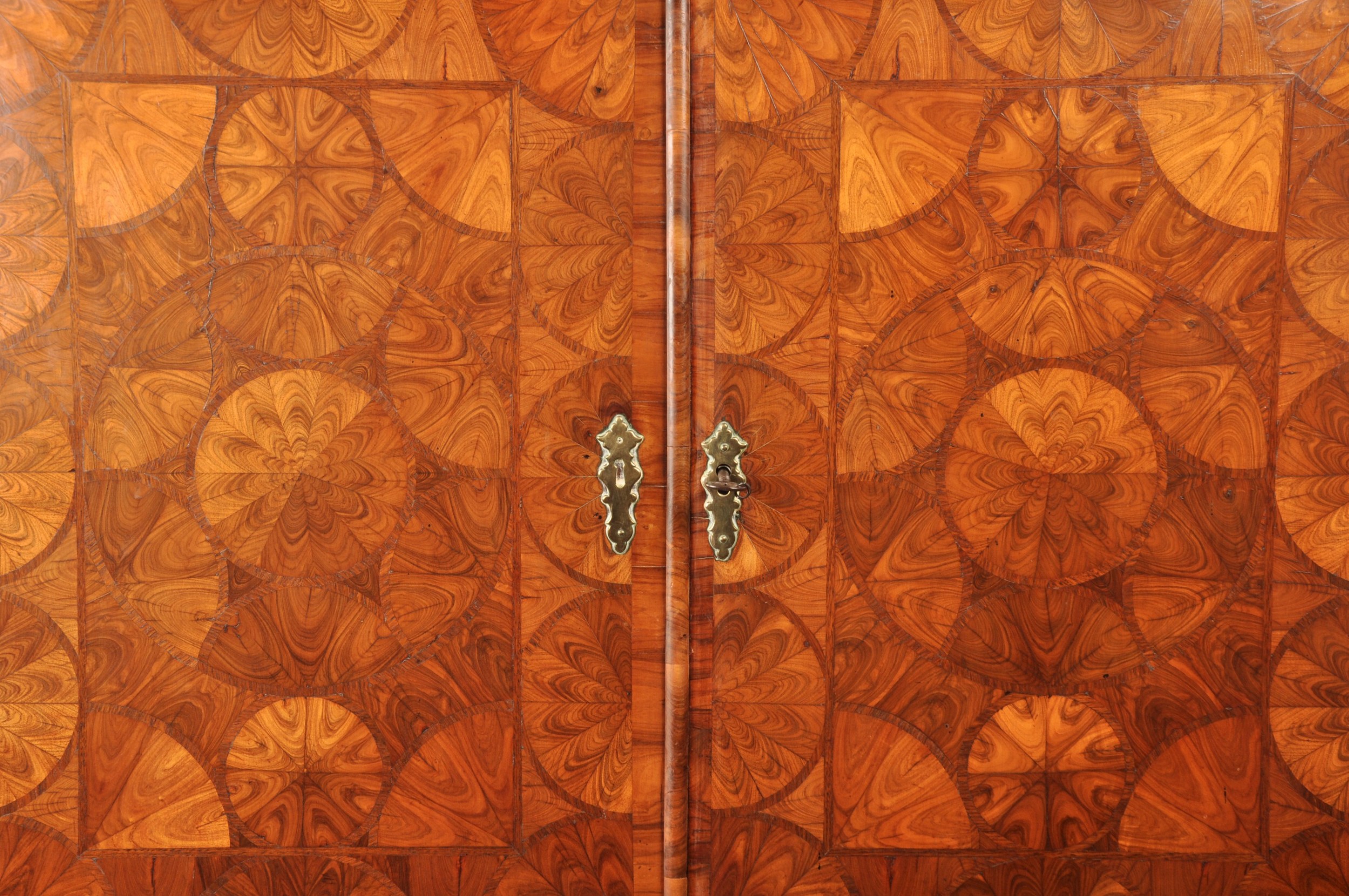
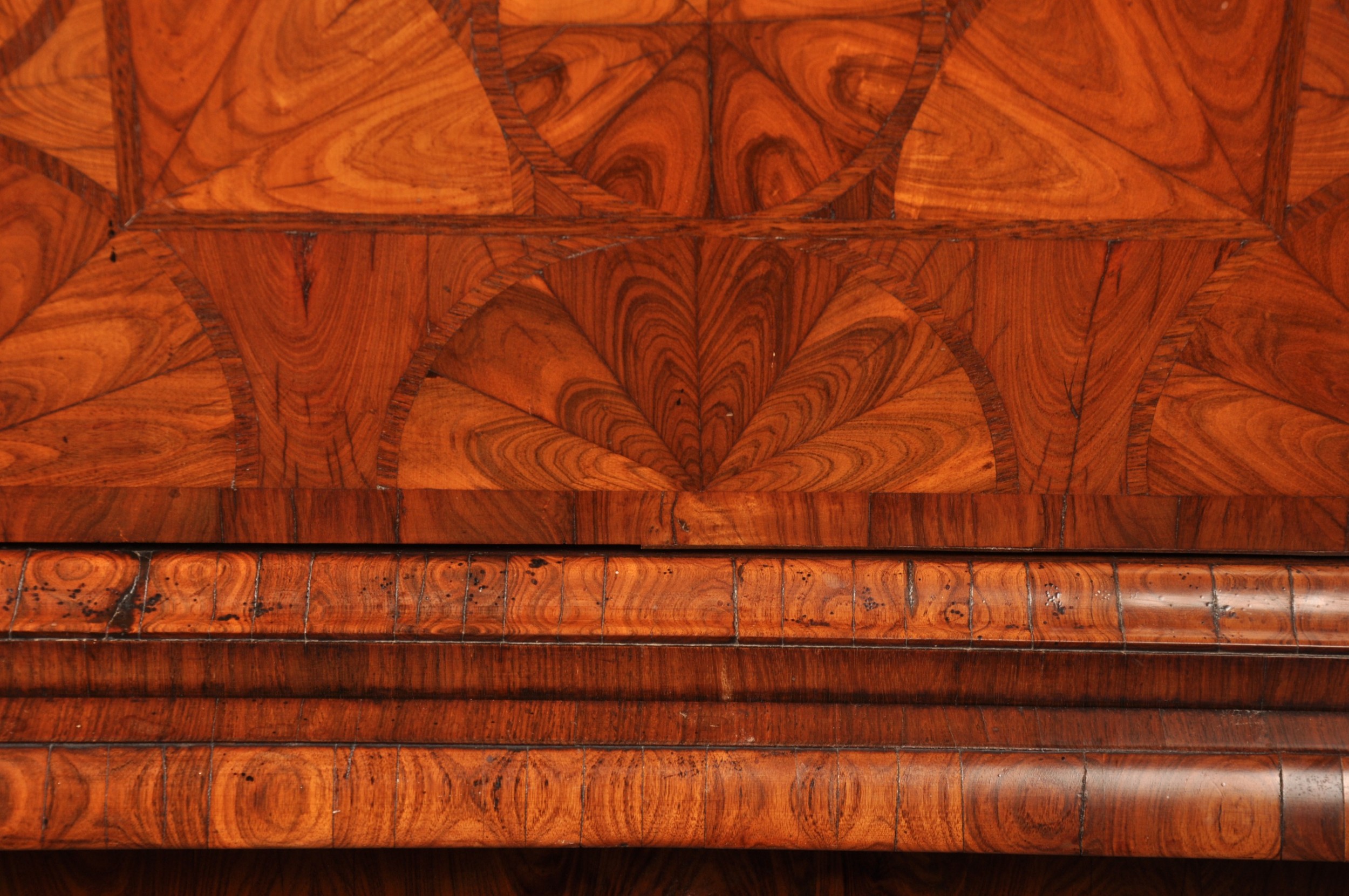
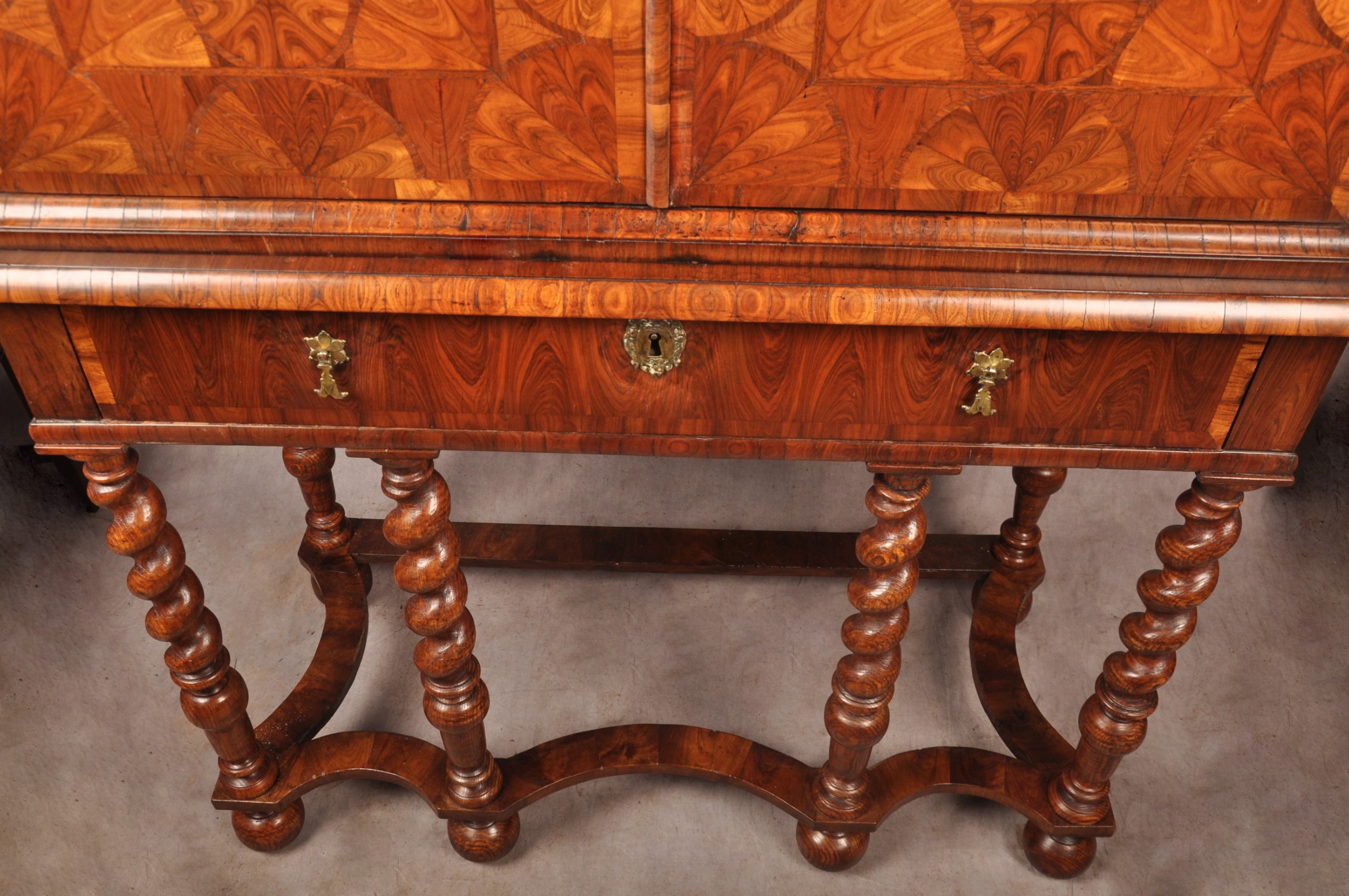
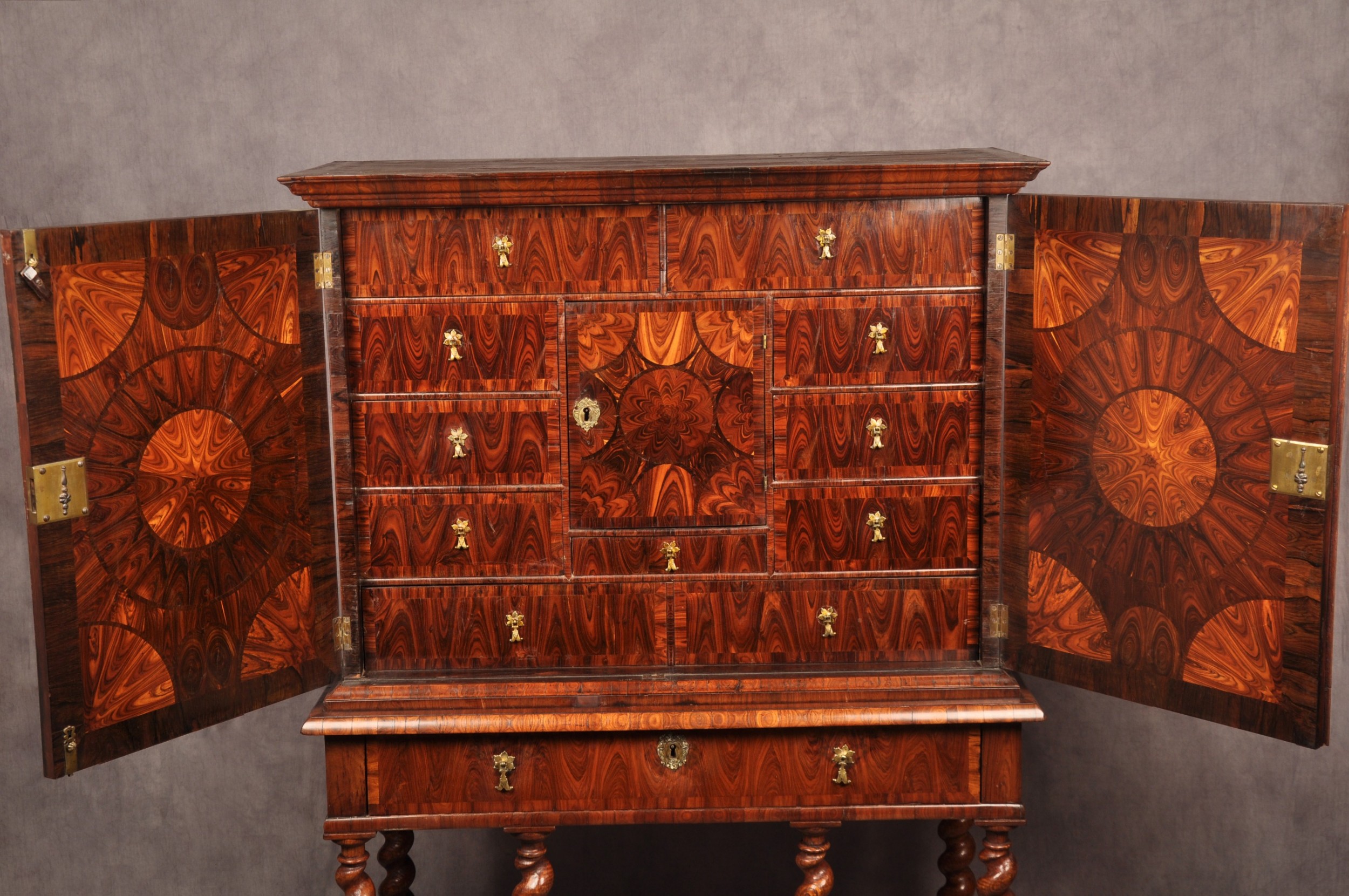
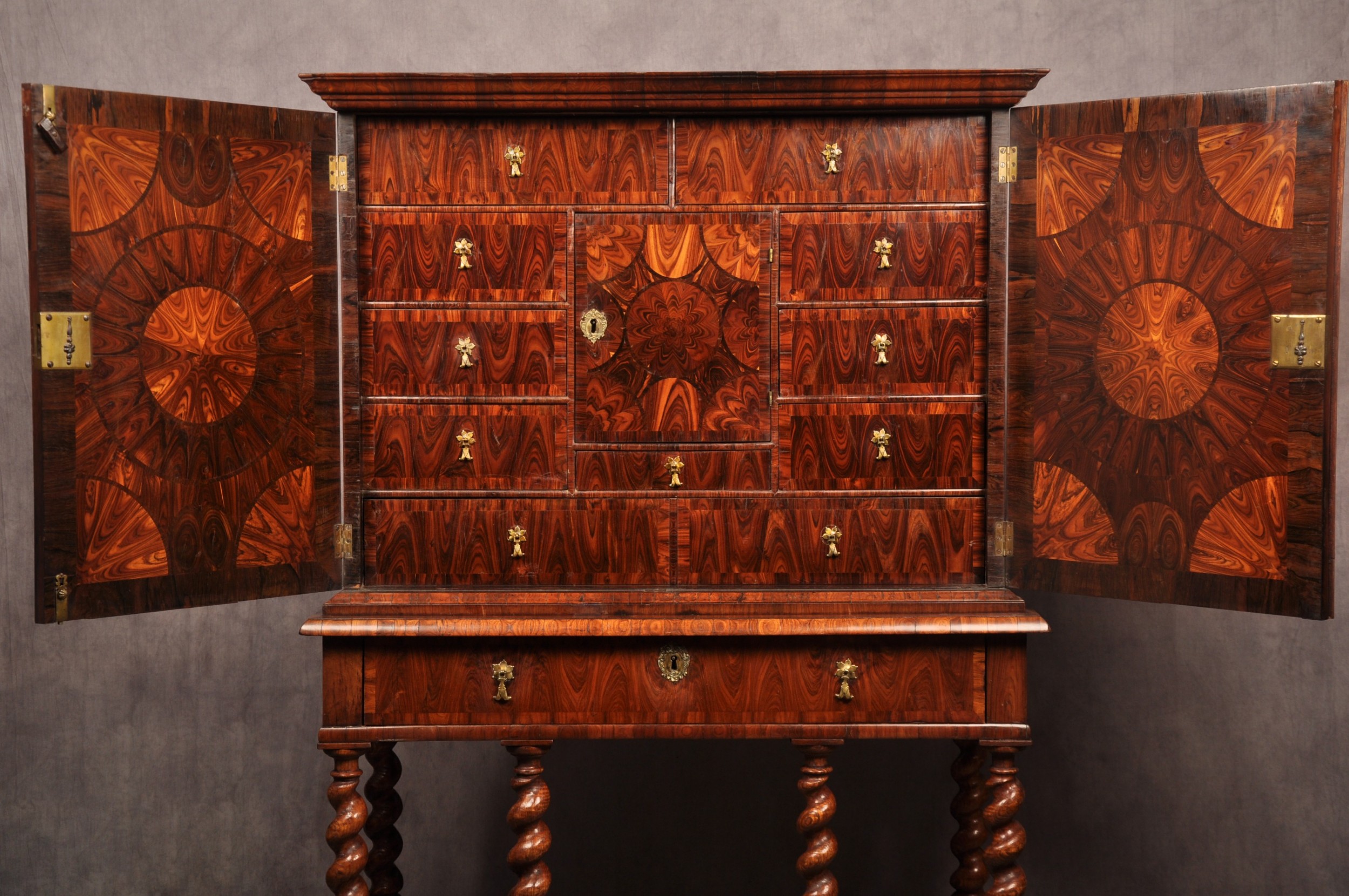
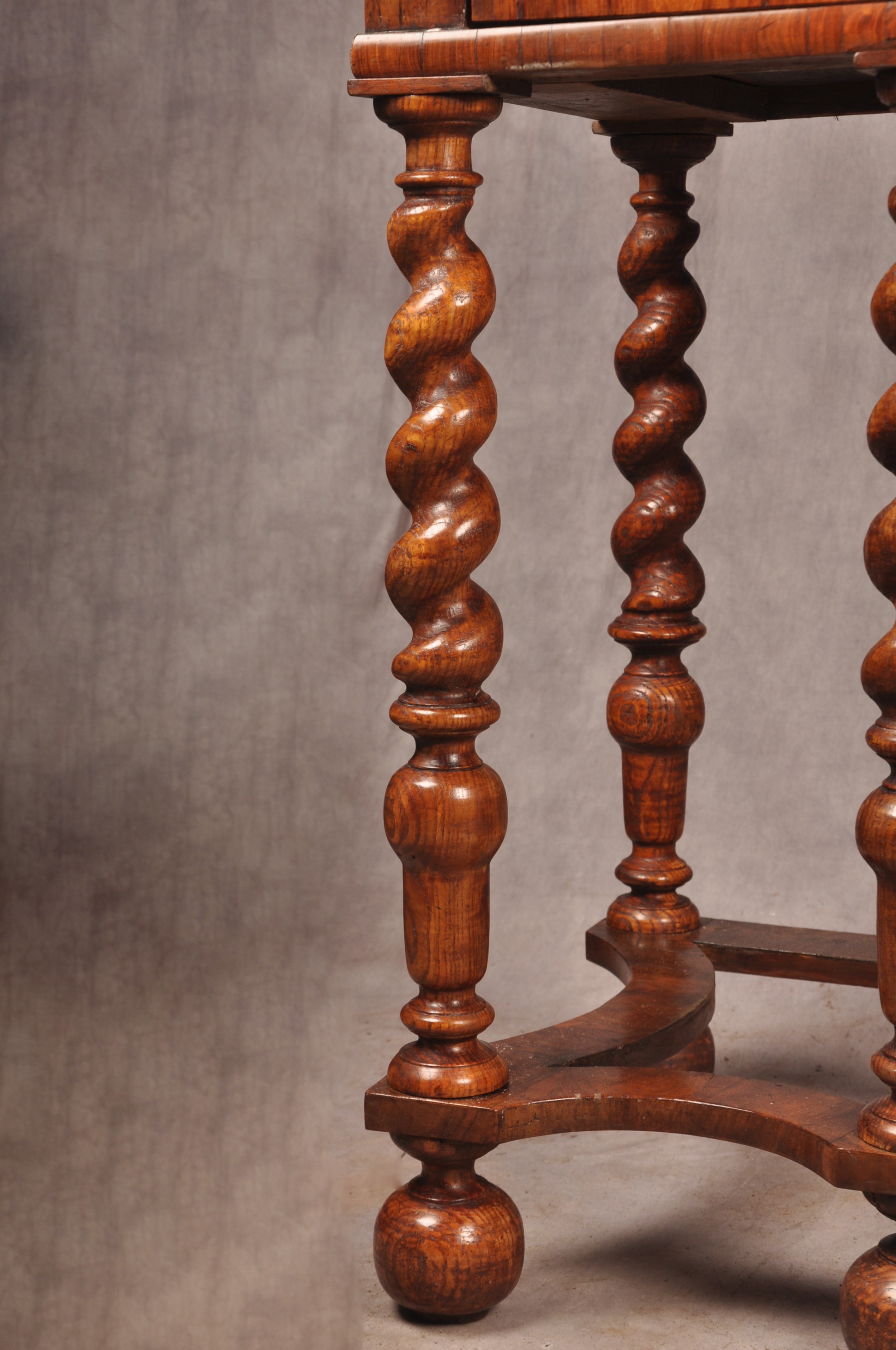
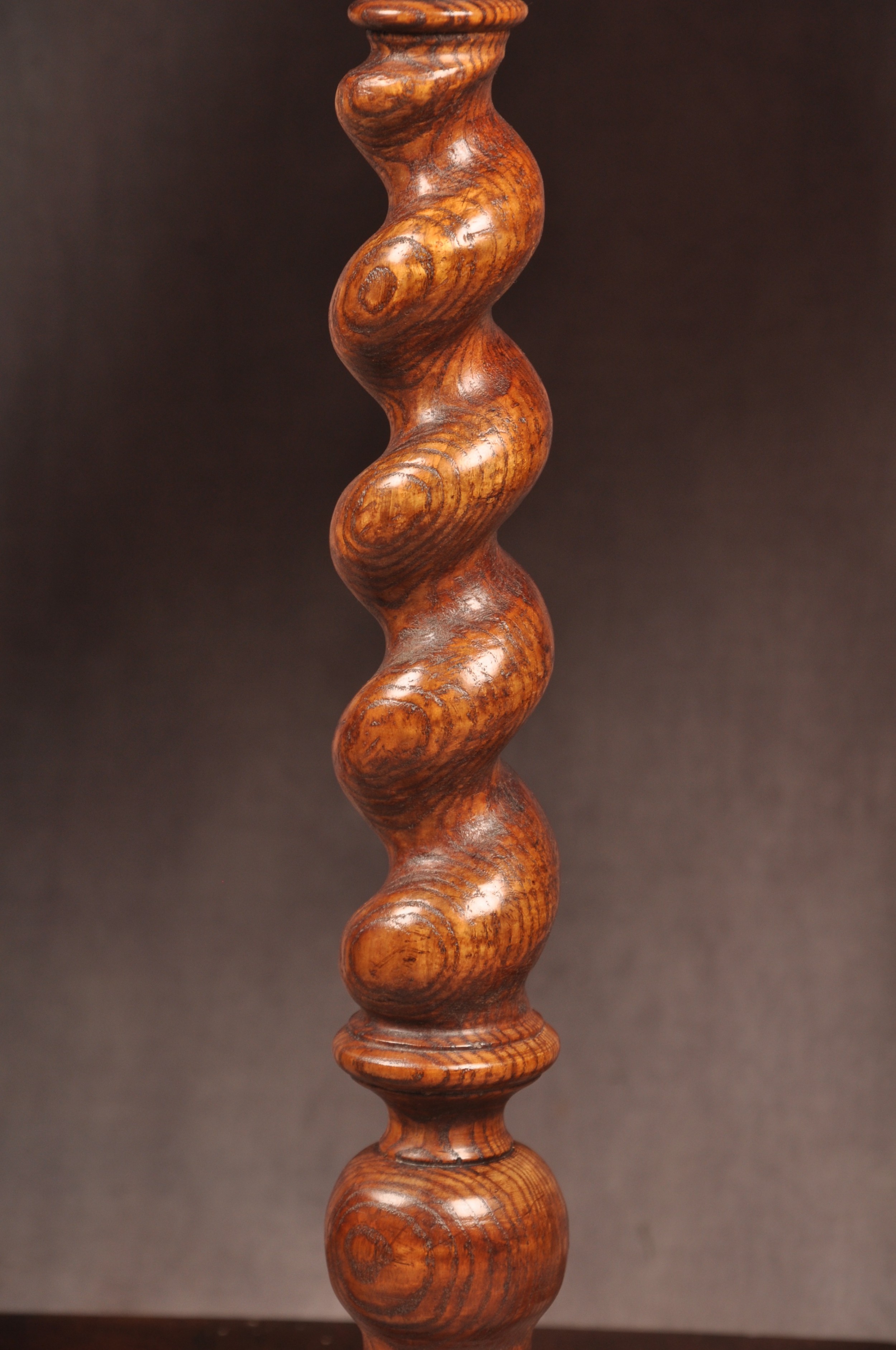
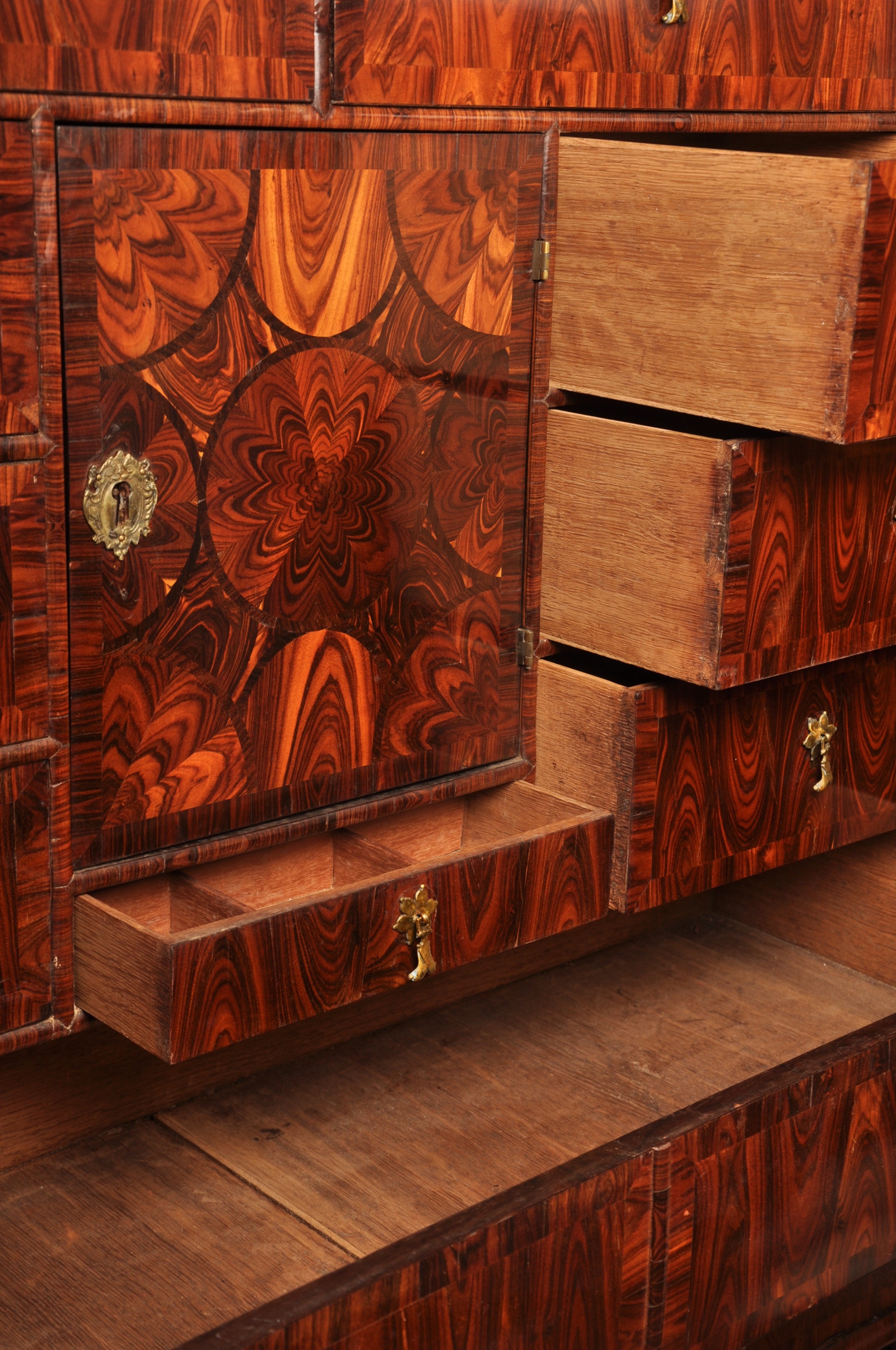
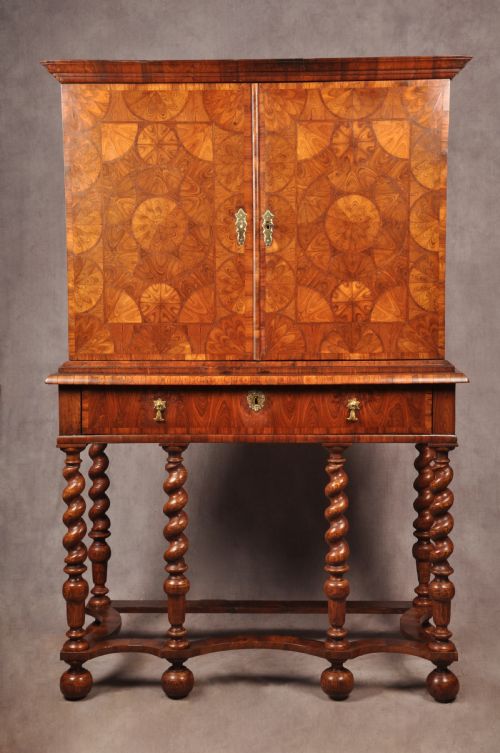
Holmes Antiques has dated this Kingwood Cabinet on Stand to the 17th Century.
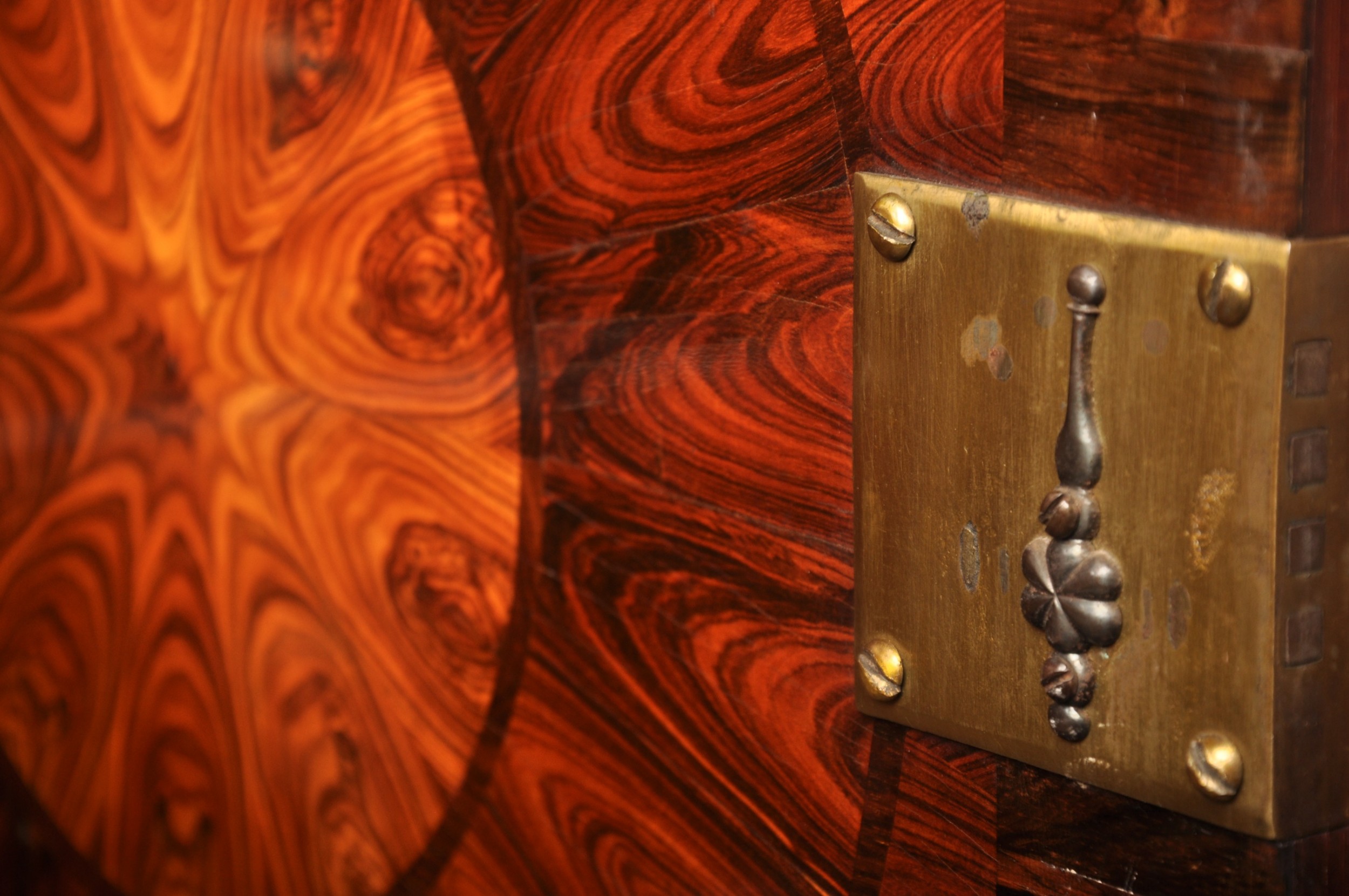
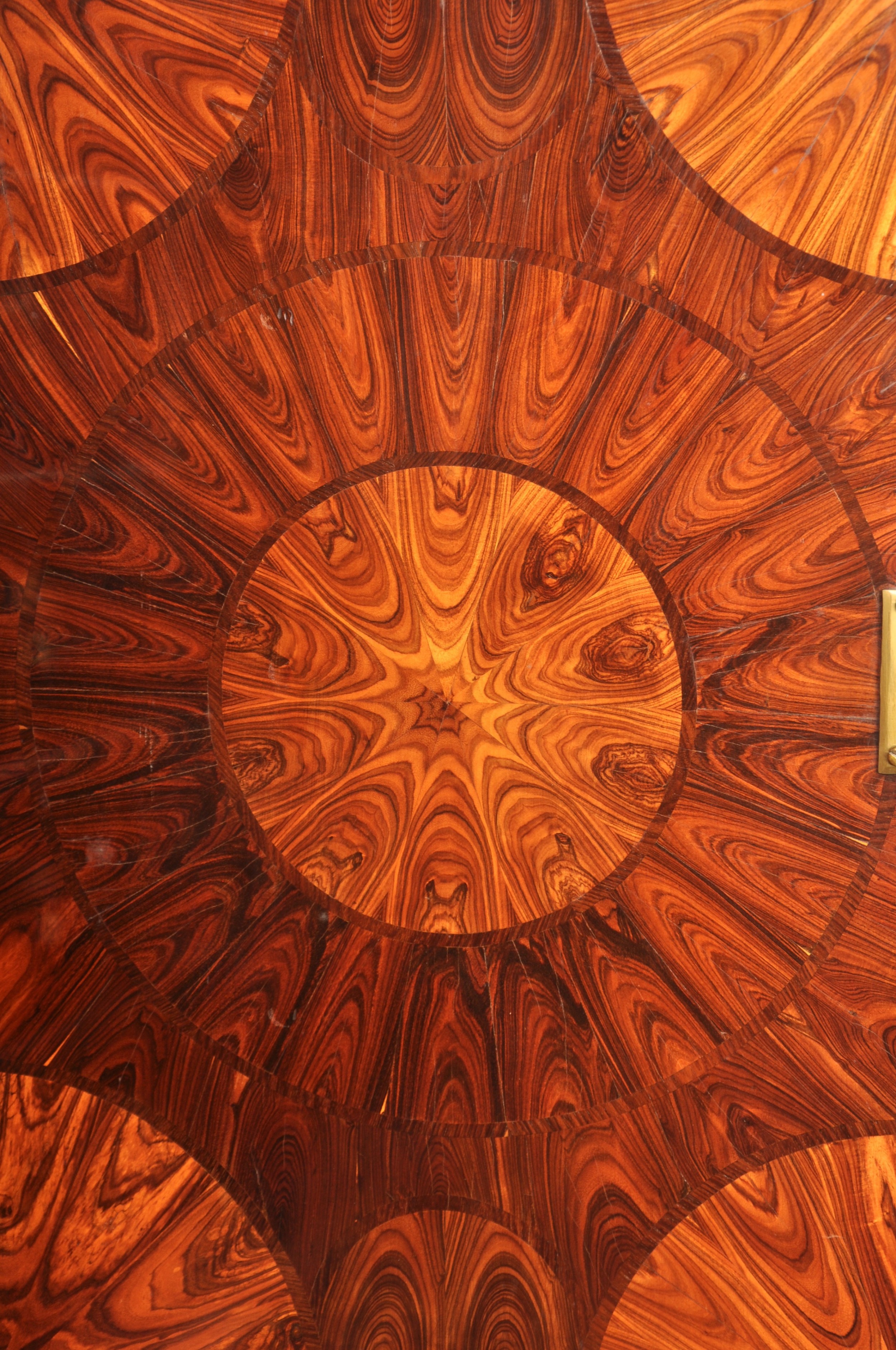
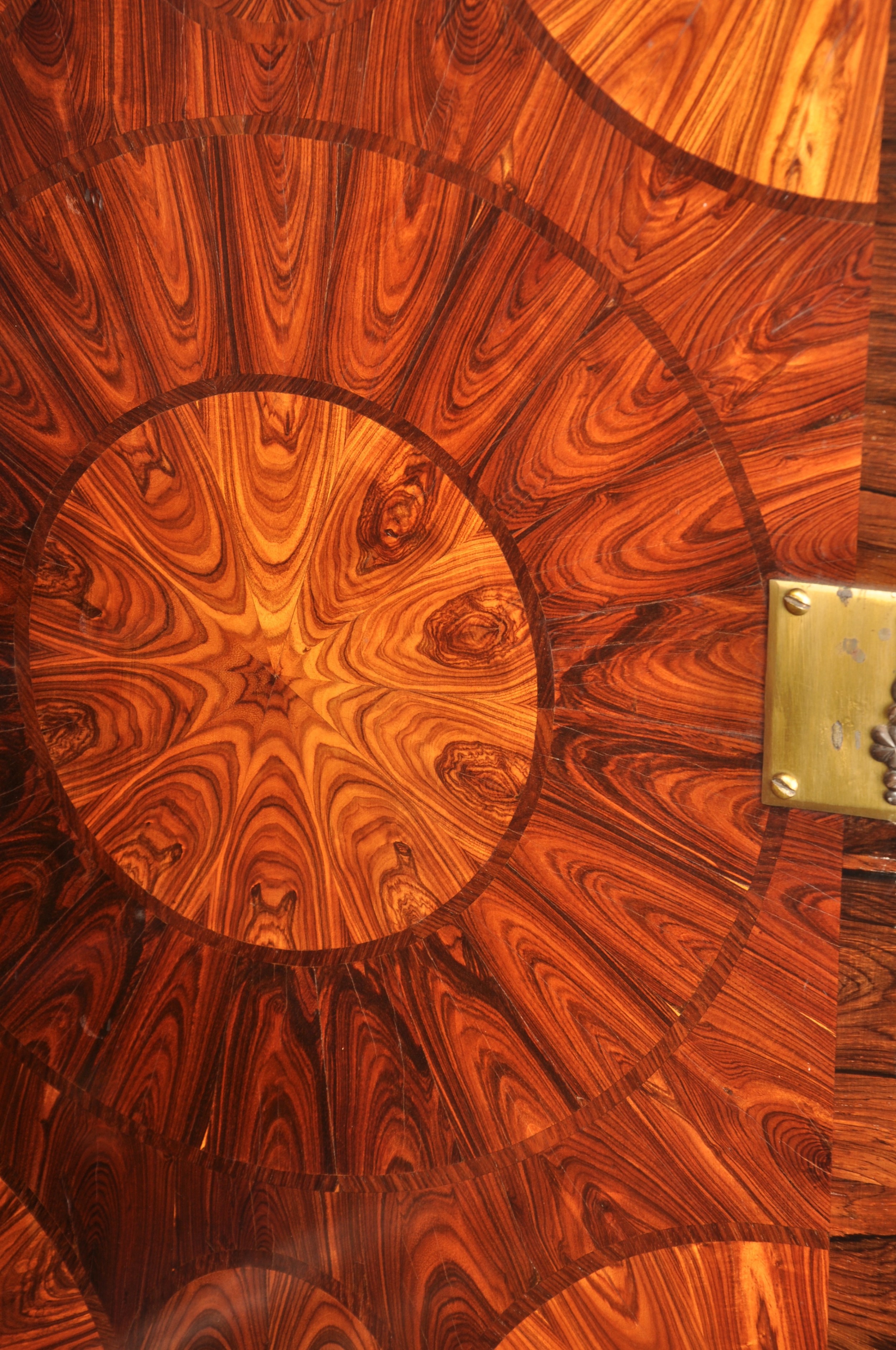
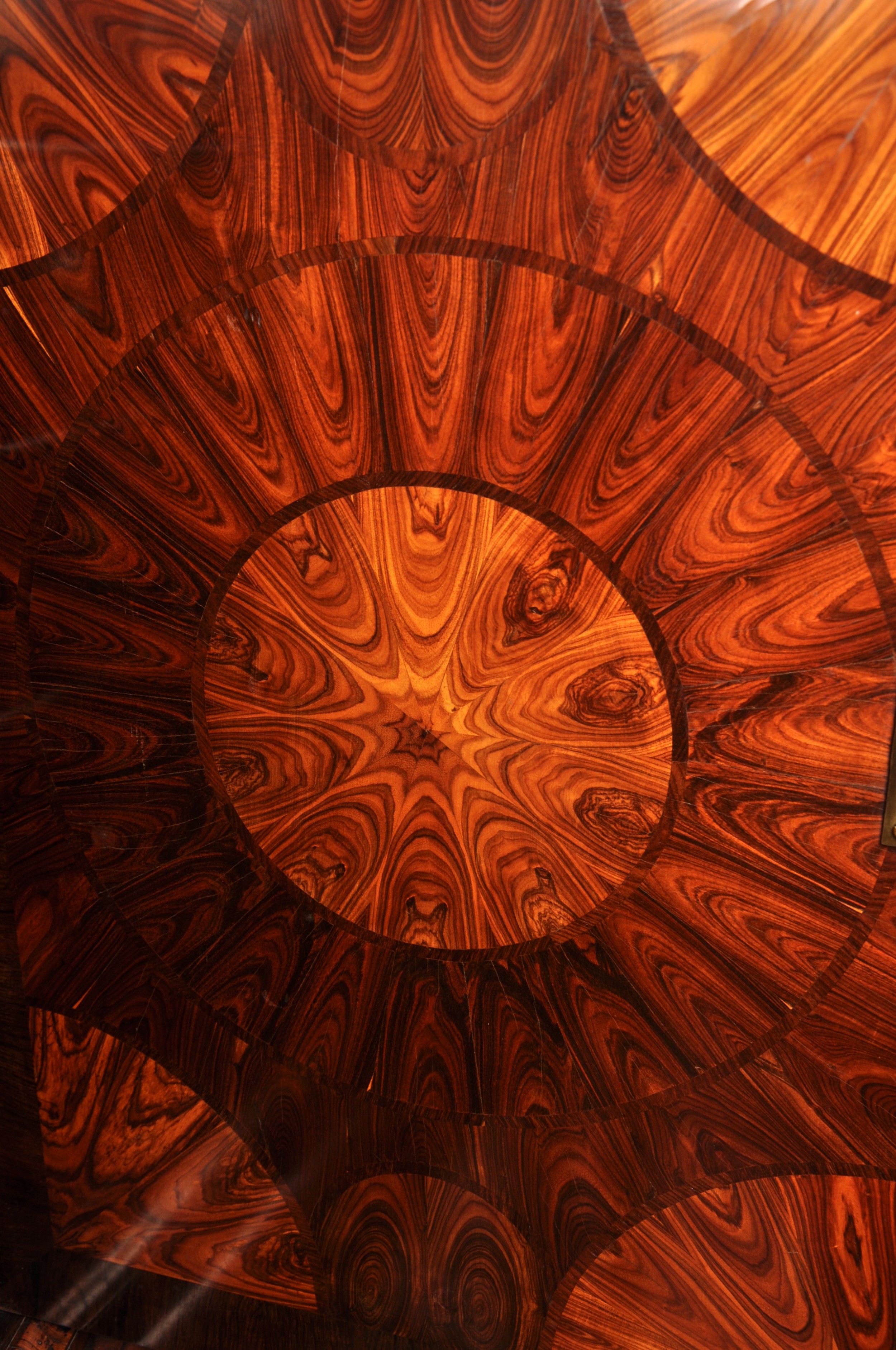
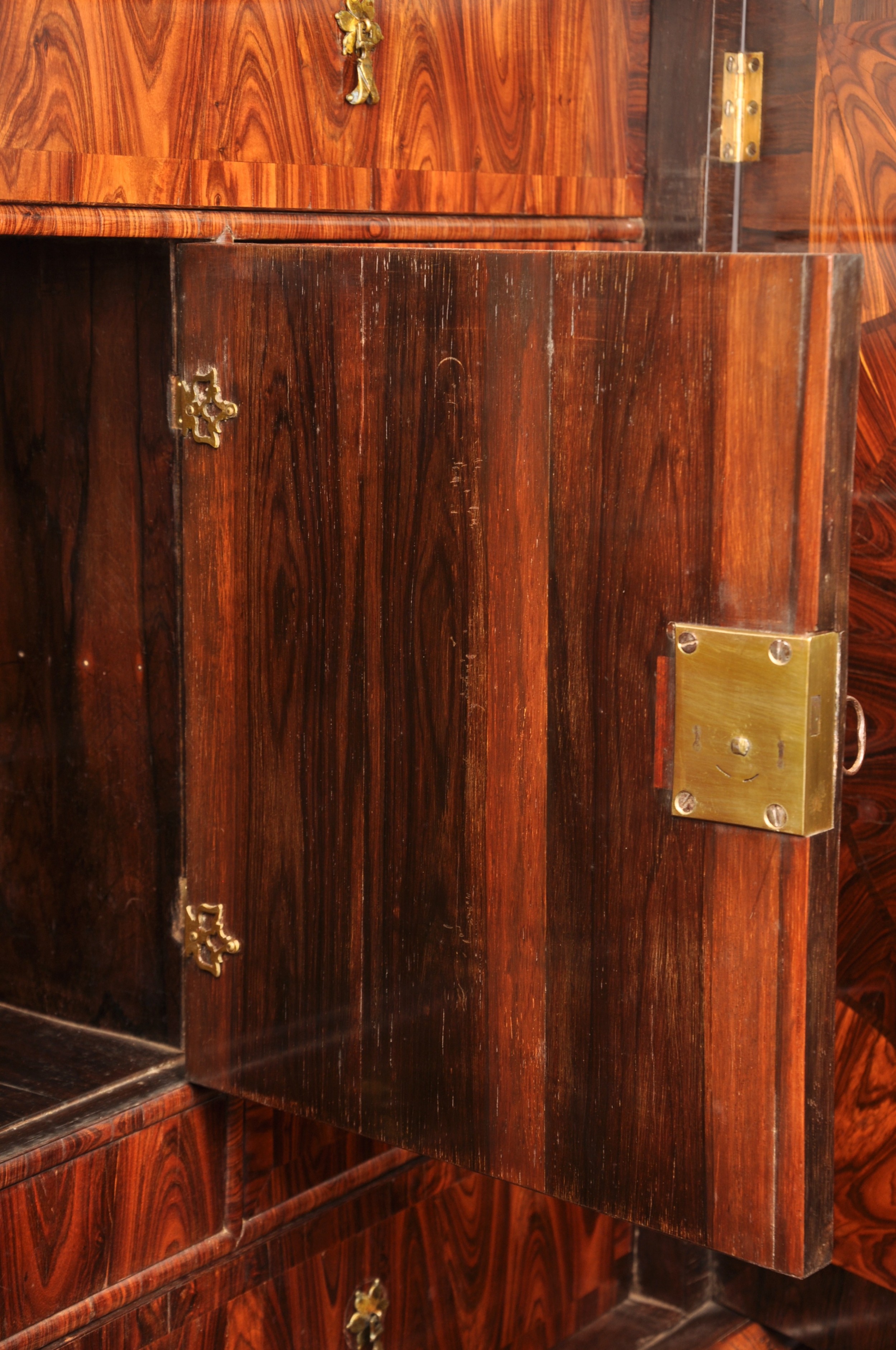
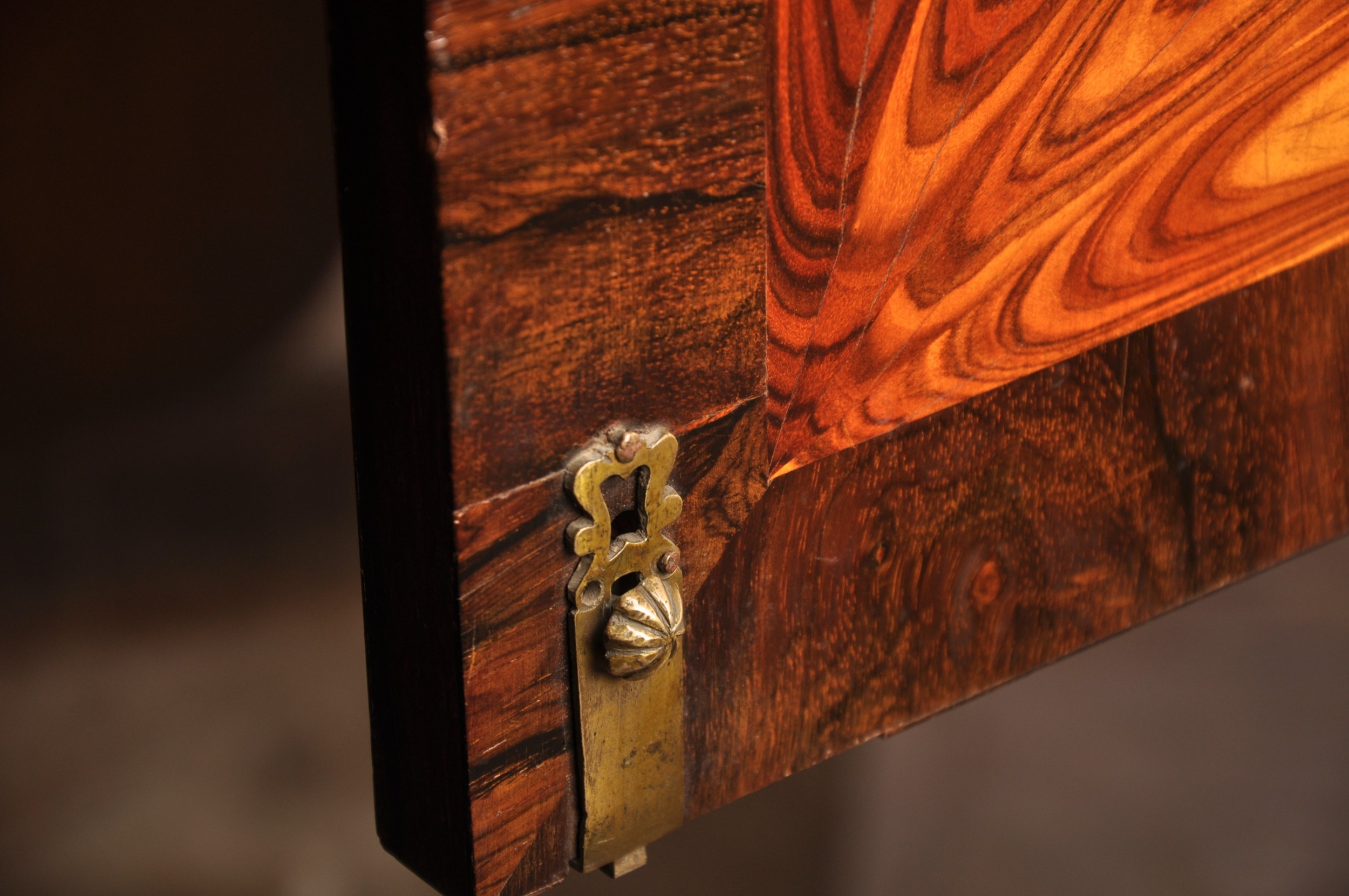
The interior doors fitted with original lock and fastenings open to reveal an outstanding interior that is an explosion of contrasting light and dark cuts of kingwood oysters. The use of rosewood that forms the cross banding to the edge of the doors and interior of the central door can also be seen on the ends of the piece. The work is consistent with other known examples of this type that in all likelihood originated in the workshop of Thomas Pistor.
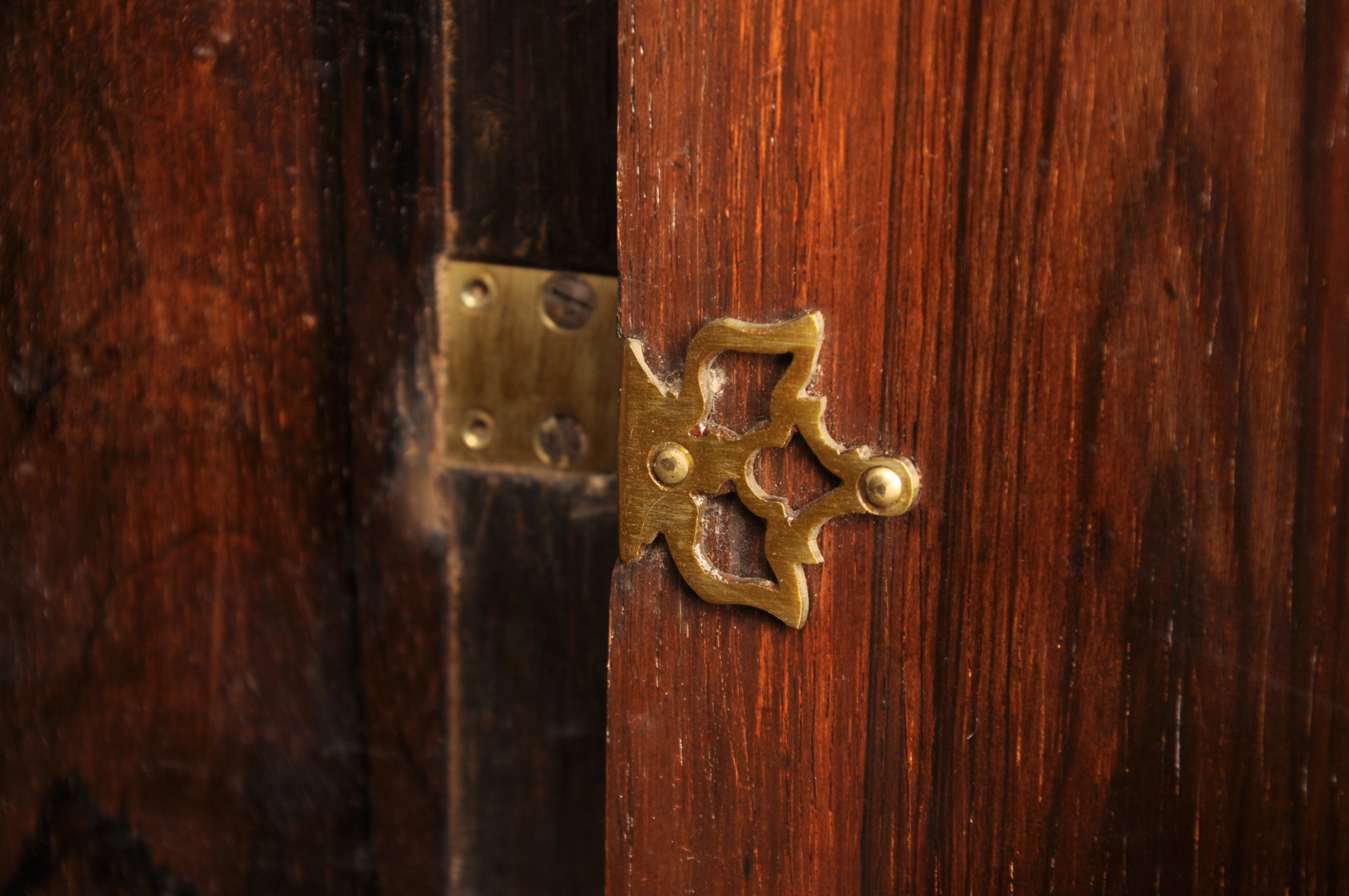
It is interesting to note that the section veneered in rosewood behind the interior door is almost identical to a kingwood Escritoire sold by W R Harvey Antiques, the pierced flower shaped brass hinges to the interior door are also a feature on both pieces.
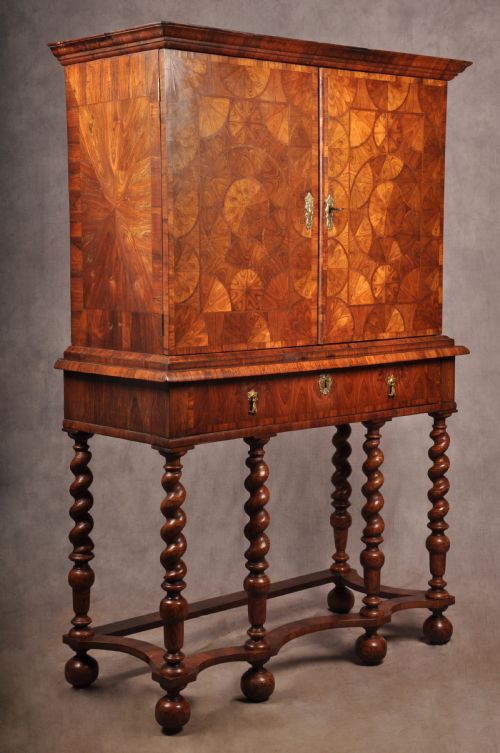
Kingwood was the most expensive wood of the 17th Century. Thanks to the fabulous work of the furniture historian Adam Bowett we know that Cabinets of this type were made by Thomas Pistor who is thought to be one of the most important makers of the period and who supplied furniture to Levens Hall and other fine houses.
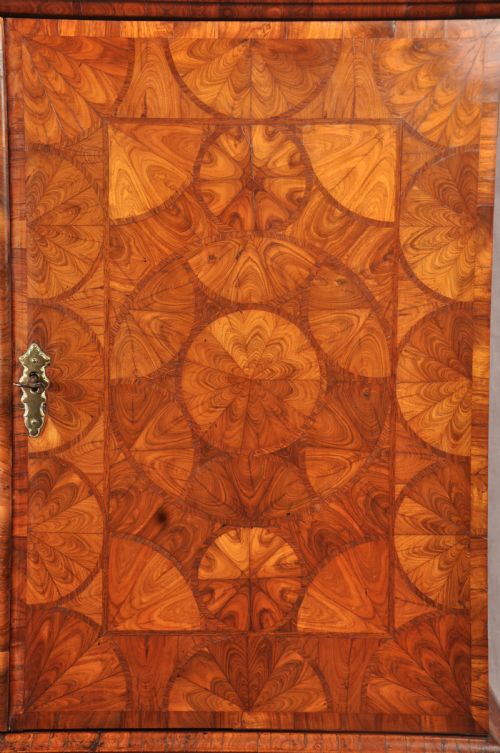
A kingwood escritoire inscribed: 'Mr Thomas Pistor, Ludgate Hill, London', formerly housed at Buxted Park, East Sussex. This escritoire is visible in a photograph of the drawing room at Buxted Park that formed part of a 1950 article in Country Life magazine. Such oyster veneering is also the dominant characteristic on two kingwood cabinets-on-chests offered by W.R. Harvey and Co. Antiques, as well as on another cabinet which featured in a sale in 2017 at The Pedestal, Moor Park.
Holmes Antiques has dated this Kingwood Cabinet on Stand to the 17th Century.
Leading experts on early english oak, walnut and mahogany furniture. Established in 1932.
You can view the stock and full dealer information on the Holmes Antiques Profile Page
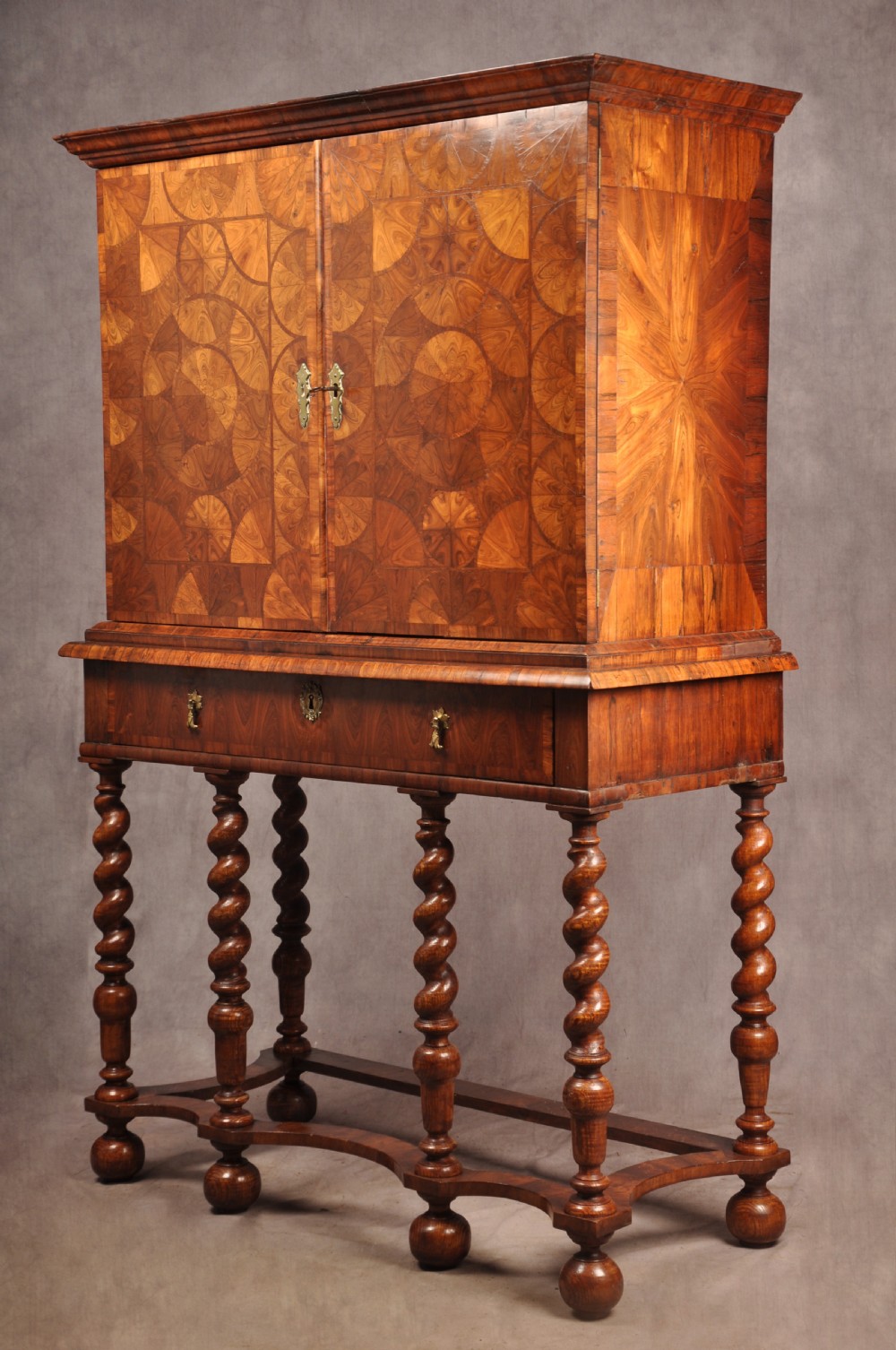

Important 17th Century Kingwood Cabinet on Stand