
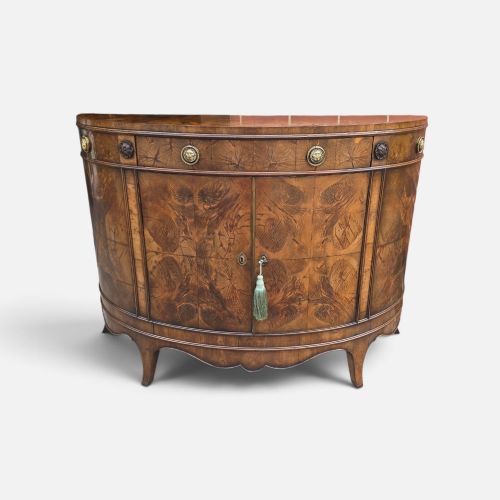


Oyster Veneer Cabinet
An oyster veneer cabinet brings circular wood patterns and seventeenth-century proportions into a room.
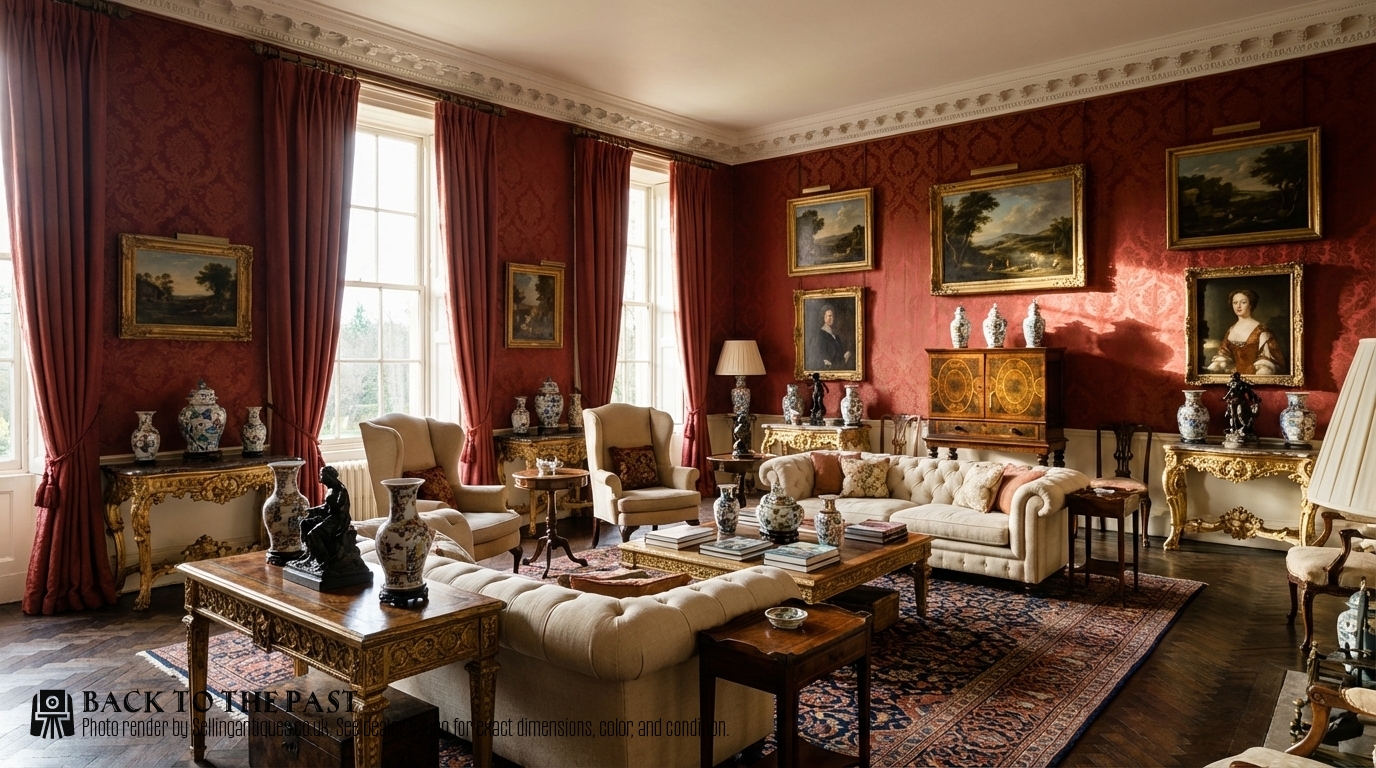
Oyster Veneer Cabinet
When you search for an oyster veneer cabinet, you encounter timber sliced across small branches to create circular cross-section motifs. These pieces span seventeenth-century origins through to twentieth-century revivals.
The dominant forms on this page include cabinets on stands, chests of drawers, and escritoires. Walnut and olive wood feature prominently among the examples recorded here.
Origins stretch from the seventeenth century and the William and Mary period up to revival pieces made around nineteen-ten and nineteen-twenty. Baroque design influences appear regularly across these cabinets and chests.
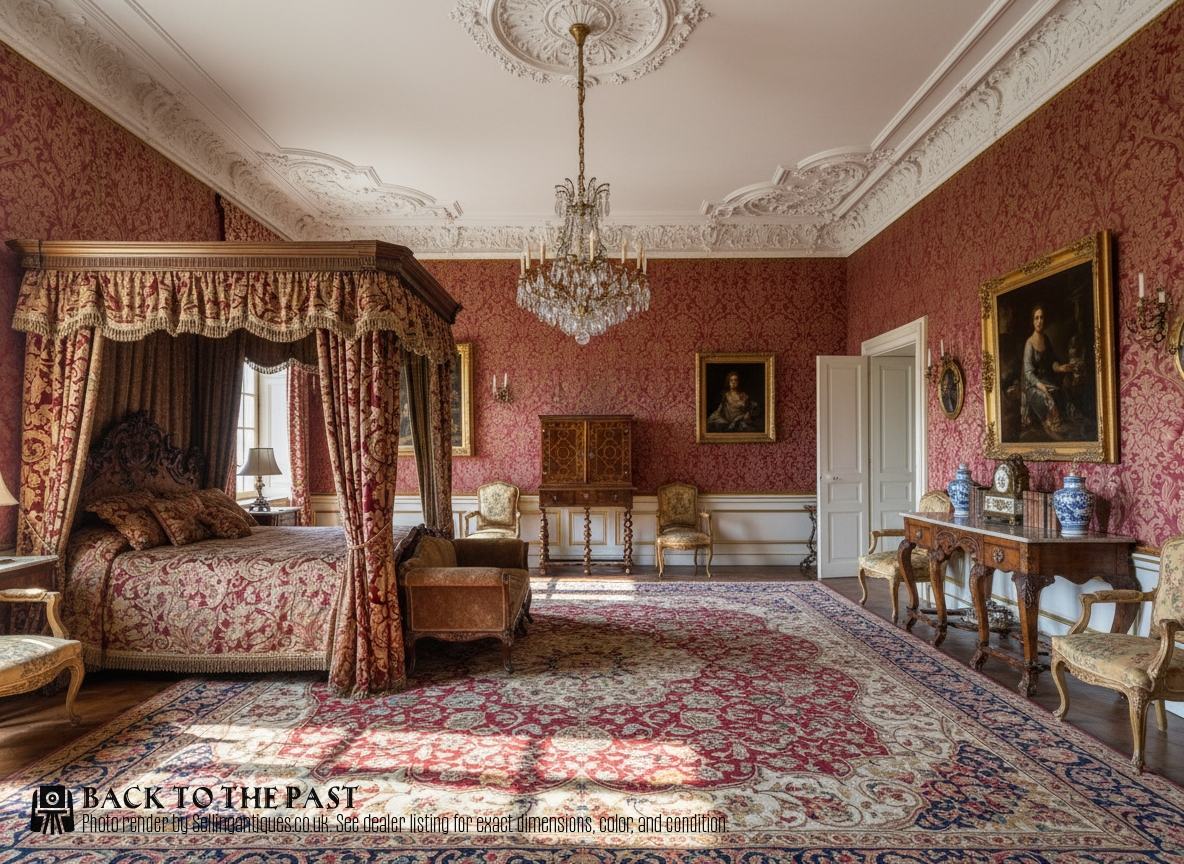
How they were made
Craftsmen sliced small branches diagonally to produce thin oval sections of walnut, olive wood, laburnum, and yew. These veneers were arranged meticulously across the surfaces of carcases made from oak and secondary timbers.
Inlayers integrated boxwood stringing and floral marquetry panels to frame the circular grain patterns. Brass hardware such as drop handles and escutcheons completed the construction of these cabinets and chests.
Oyster Veneer Cabinet Retail Price Guide 2026
Typical asking prices for oyster veneer cabinet among the pieces listed under this phrase on Sellingantiques today, from the lower quarter to the upper quarter. They describe what is for sale here now, not the wider market.
Listings feature seventeenth-century origins alongside nineteen-ten and nineteen-twenty revivals in walnut, olive wood, laburnum, and yew.
What varies in quality
Quality rests upon the precision of the veneer layout and the selection of timber figures. Uniformity in the circular grain patterns and the crispness of the surrounding boxwood stringing set finer examples apart.
The integrity of the underlying carcase and the harmony between the cabinet and its stand dictate the overall standard. Seventeenth-century originals display distinct construction methods compared to later revival pieces from the twentieth century.
The Oyster Veneer Cabinet Glossary
- Oyster veneer
- Timber sliced across the branch to produce circular or oval patterns resembling oyster shells. This technique defined surface decoration in the late seventeenth century.
- Escritoire
- A writing cabinet featuring a fall-front flap that conceals drawers and pigeonholes. These fitted compartments served correspondence needs.
- Marquetry
- Elaborate patterns formed by fitting together contrasting veneers of wood or other materials. Floral designs frequently embellished seventeenth-century cabinet doors.
- Stringing
- Thin inlay lines of contrasting wood used to create geometric borders. Boxwood was a common choice for this detailing.
- Carcase
- The main structural body of a piece of furniture before drawers, doors, and veneers are applied. Oak frequently formed this foundational frame.
Oyster Veneer Cabinet: Frequently Asked Questions
What is an oyster veneer?
An oyster veneer is a slice of wood cut across a small branch or root to show circular growth rings. These pieces are laid closely together to form decorative patterns on cabinet surfaces.
The technique creates distinctive undulating surface textures that catch the light from different angles. It became particularly popular during the seventeenth century.
How do I date an oyster cabinet?
Dating relies on examining the construction methods, secondary timbers, and overall proportions of the piece. Seventeenth-century originals differ structurally from early twentieth-century revival pieces.
Hardware styles, such as brass drop handles and hinges, also offer clues to the period of manufacture. Archival comparisons help confirm whether a piece dates to the seventeen-hundreds or nineteen-tens.
Are these cabinets on stands?
Many examples on this page are cabinets on stands or chests on stands. The upper cabinet section rests upon a separate base with legs.
This raised form was typical of the William and Mary period. It kept the contents away from damp floors and created a balanced architectural silhouette.
What woods were used?
Walnut and olive wood appear frequently in these listings. Craftsmen also utilised laburnum, yew wood, burr yew, and boxwood for contrasting details.
Oak served as the primary structural timber for the internal carcases. These various woods were chosen for their distinct grain patterns and colour variations.