
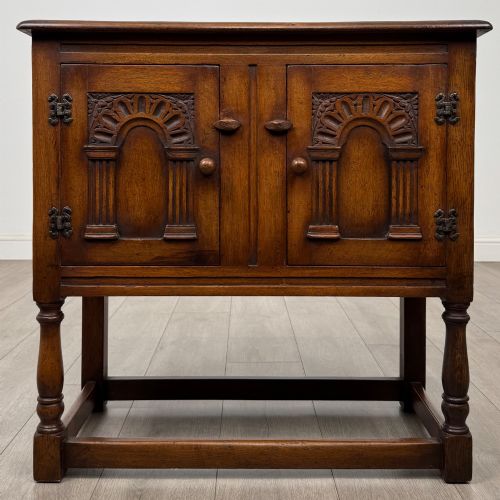
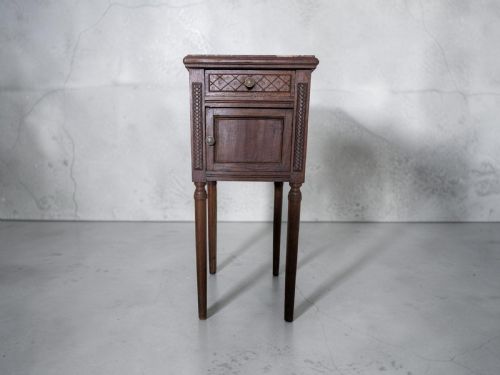
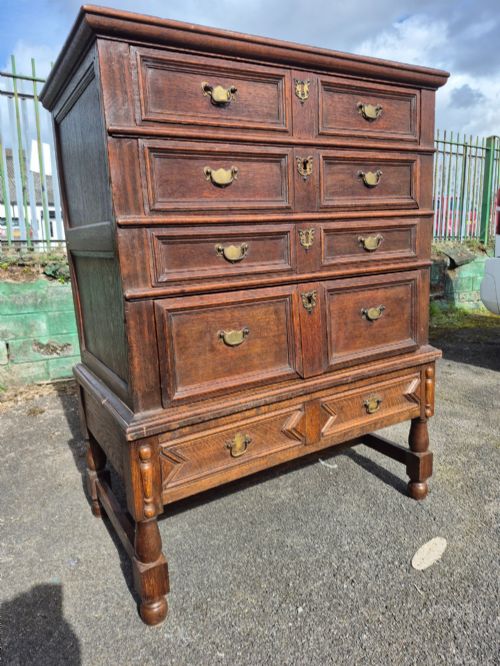
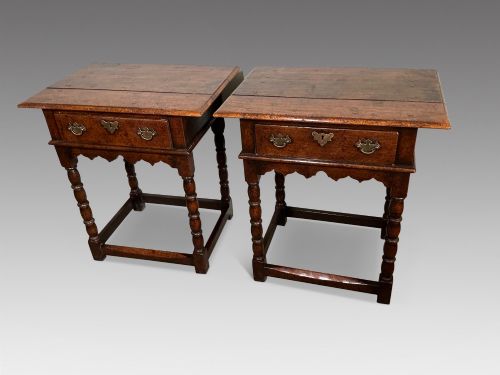
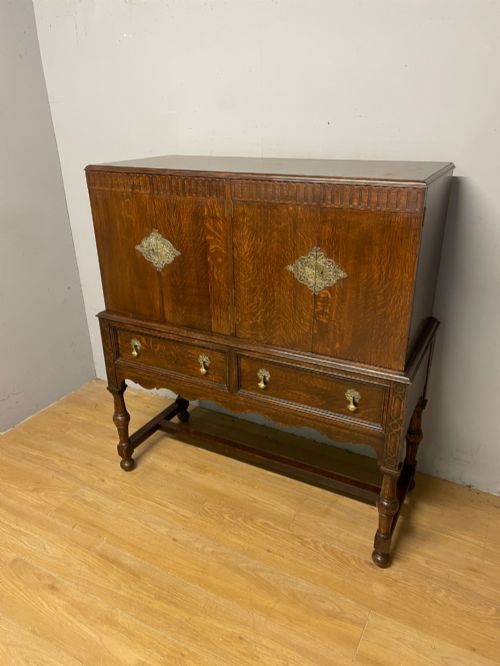
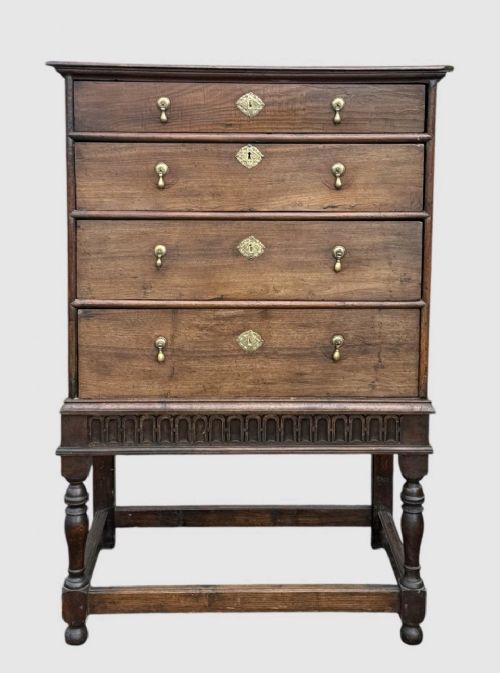


Carved Turned Leg Cabinet
A carved turned leg cabinet brings tactile weight to a room, offering sturdy storage anchored by sculptural underframes.
Carved Turned Leg Cabinet
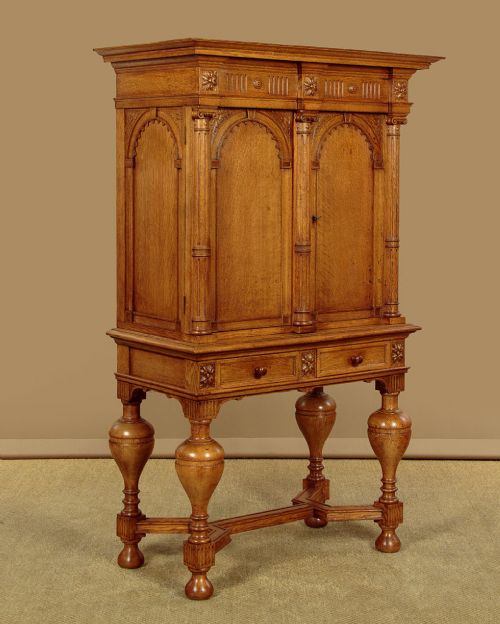
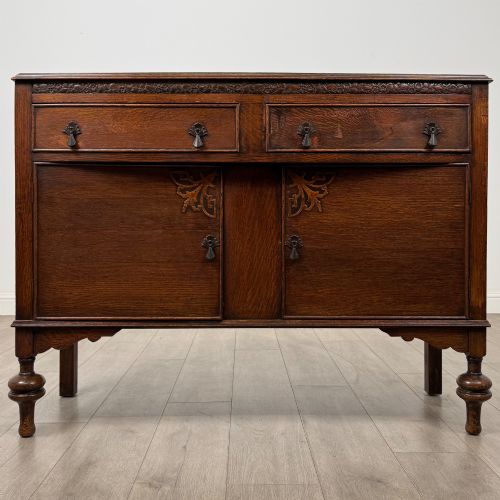
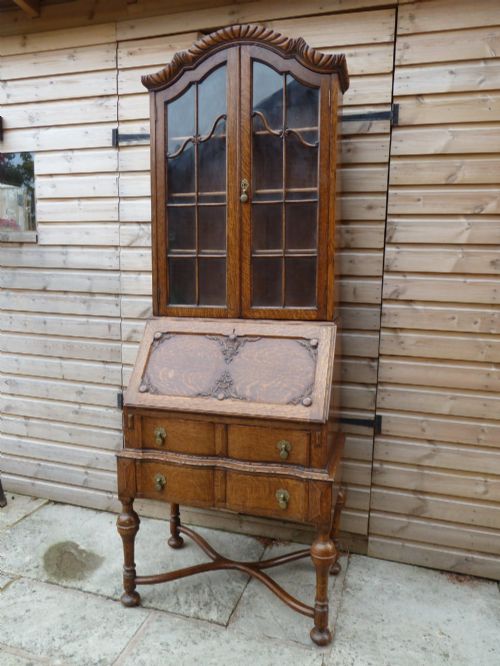
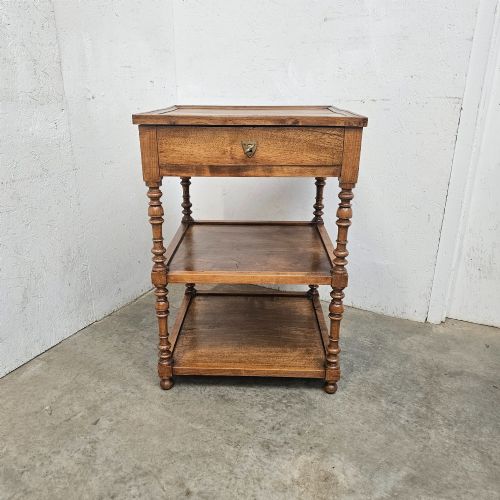
A carved turned leg cabinet combines enclosed storage with distinctively shaped lower supports, appearing across styles from seventeenth-century oak pieces to twentieth-century revivals. When you search for a carved turned leg cabinet, you encounter forms ranging from imposing cabinets on stand to bedside tables and sideboards.
Constructed across centuries, these items reflect enduring practical needs paired with decorative woodworking traditions. Pieces span multiple eras including the seventeenth century, the Georgian period, and twentieth-century revivals.
How they were made
Cabinet makers relied primarily on solid oak, walnut, and exotic olive wood veneers to build durable frames and striking surfaces. Oyster veneering, seen on seventeenth-century examples, involves slicing small branch sections to create intricate circular patterns across the wood.
Structural elements such as turned legs required precise lathe work, while panels and friezes received deep hand carving. Hardware in brass and iron added functional closure and contrast to the dark timber bodies.
The inventory bridges multiple eras, from seventeenth-century oak to twentieth-century Jacobean revival styles.
What varies in quality
The standard of a piece rests heavily on the depth and crispness of its hand carving and the symmetry of its turned legs. Superior examples show harmonious proportions between the upper cabinet body and the supporting base.
Timber selection and veneer matching dictate visual richness, distinguishing workshop pieces executed with care from simpler utilitarian items.
The Carved Turned Leg Cabinet Glossary
- Cabinet on stand
- A raised storage cupboard set upon an open frame with four or more legs. This form elevates the main compartment for easier access and display.
- Oyster veneer
- Circular wood slices cut obliquely from small branches to form repeating patterns. It creates a distinctive rippled surface reminiscent of oyster shells.
- Turned leg
- A wooden support shaped on a lathe by rotating the timber against cutting tools. This technique produces symmetrical columns, balls, and vase shapes.
- Bureau bookcase
- A writing desk with a sloping flap combined with upper shelving or enclosed storage. It serves multiple domestic functions within a single footprint.
Carved Turned Leg Cabinet: Frequently Asked Questions
How do I date an oak cabinet?
Dating an oak cabinet involves examining construction methods, timber characteristics, and decorative styles. Early pieces from the seventeenth century often display hand-split panels, pegged joints, and deep carved mouldings.
Later revival pieces from the twentieth century frequently utilise standardised fixings and machine-cut elements beneath a styled antique exterior. Comparing hardware and secondary woods helps confirm the era of manufacture.
Where were these cabinets used?
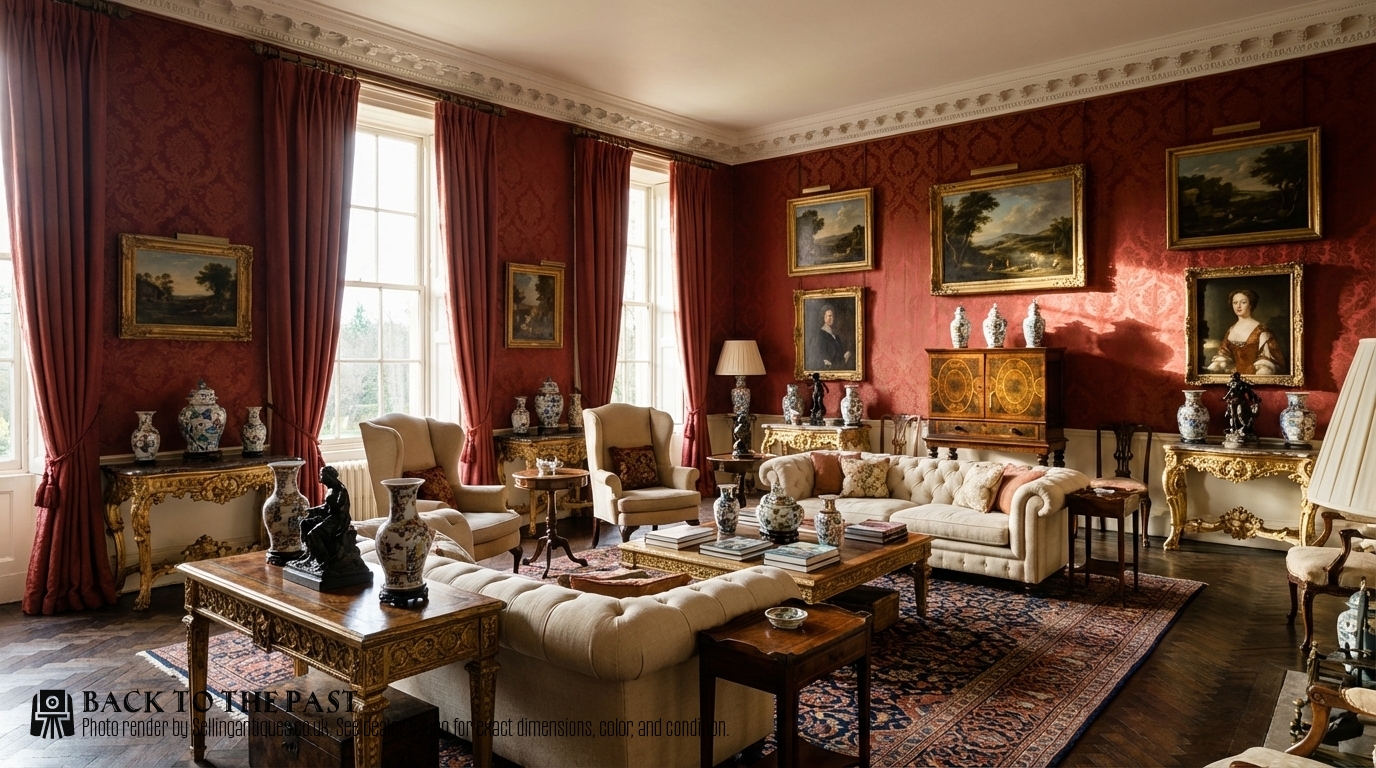
These cabinets found placement in principal rooms including parlours, dining halls, and bedchambers. Larger sideboards and dressers organised dining ware, while smaller bedside cabinets kept personal belongings close at hand.
Their robust timber construction allowed them to withstand heavy daily use in busy domestic environments. Over time, their roles shifted from utilitarian storage to prominent display furniture.
What is oyster veneer?
Oyster veneer is a decorative technique where small branches are sliced across the grain to produce small circular or oval pieces. These sections are arranged side by side to form rich, patterned surfaces across furniture doors and panels.
Popular during the seventeenth century, this method showcased the natural grain and colour variations of woods like olive and walnut. It required immense skill from the craftsman to fit each piece seamlessly.