


Oval Inlay Wooden Cabinet
These oval inlay wooden cabinet selections offer classic timber furniture ranging from seventeenth century olive wood to Edwardian satinwood and Georgian mahogany.
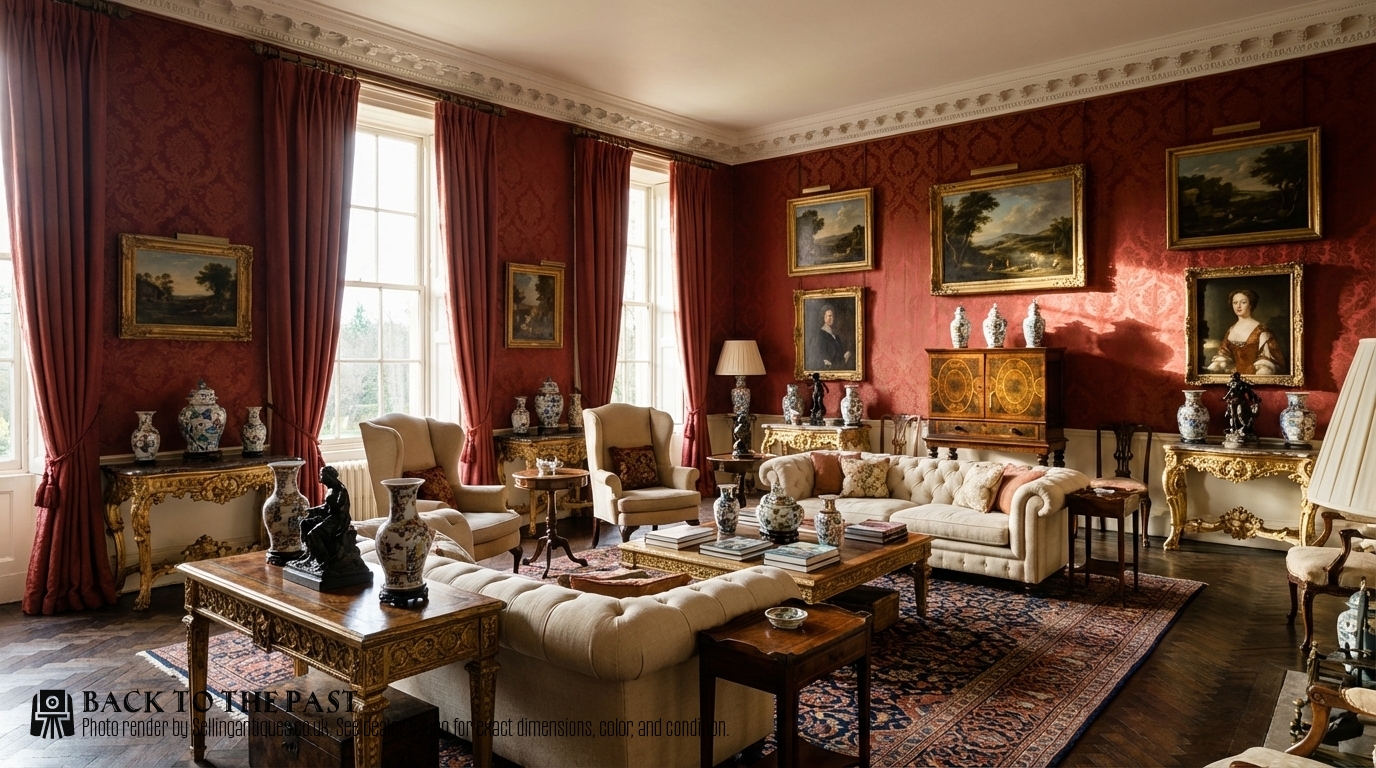
Oval Inlay Wooden Cabinet
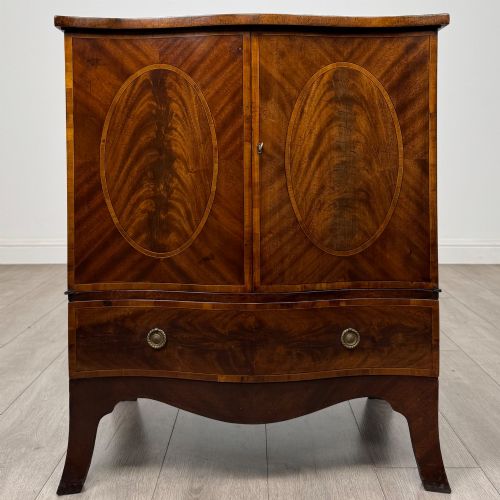
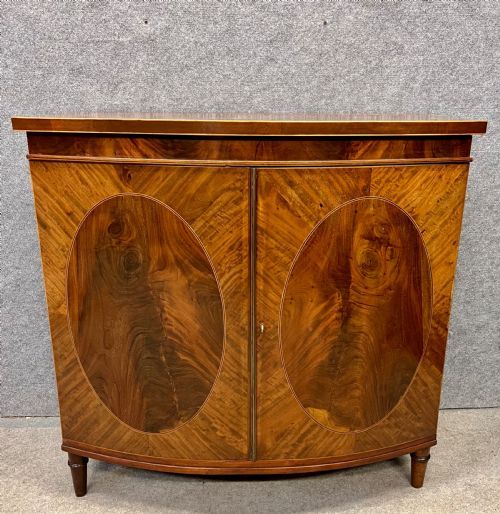
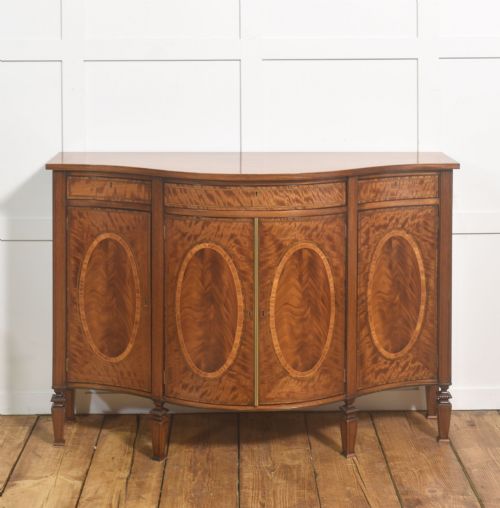
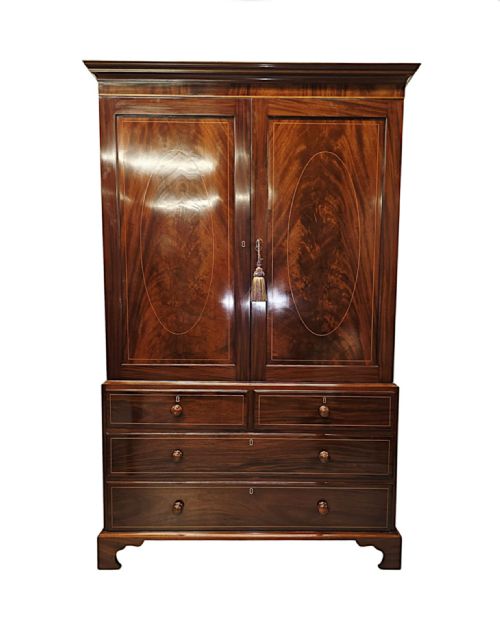
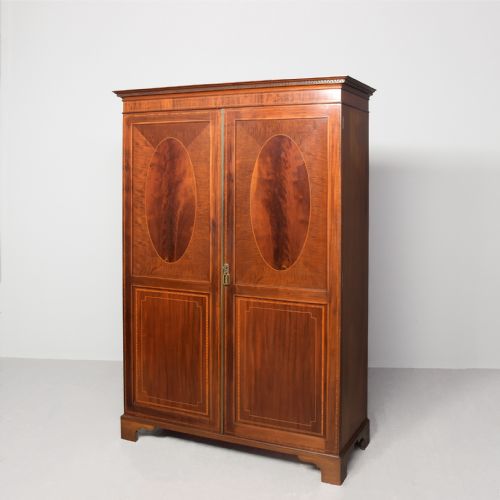
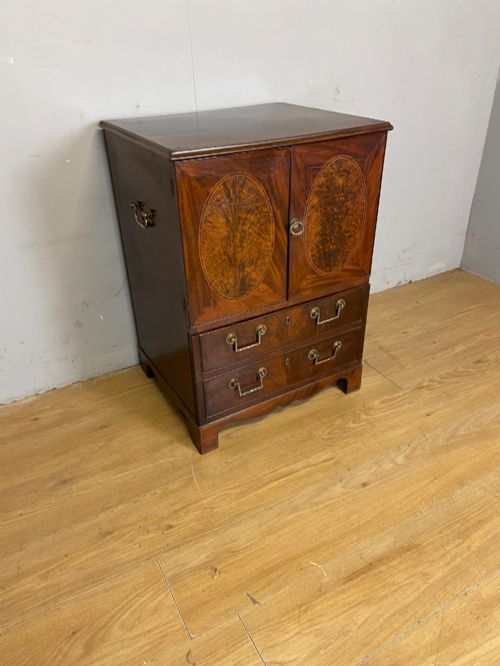
An oval inlay wooden cabinet brings together centuries of cabinet-making traditions, spanning from seventeenth century olive wood pieces up to twentieth century Edwardian and Sheraton revival examples. The selection on this page encompasses larger forms such as linen presses, wardrobes, and side cabinets, alongside smaller items like cellarettes and knife boxes.
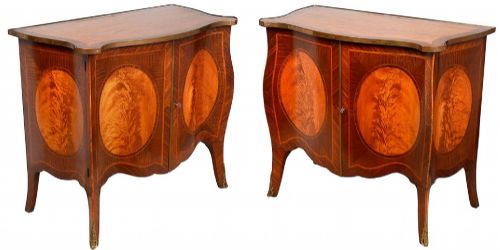
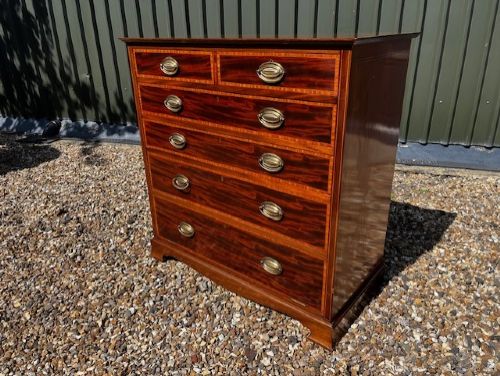
Buyers seeking an oval inlay wooden cabinet will frequently encounter Georgian and Edwardian designs finished in mahogany, satinwood, and harewood. These functional storage pieces range from tall chest formats and two-door wardrobes to serpentine sideboards and compact cabinets on stands.
How they were made
Construction relies heavily on solid timbers and applied veneers, with flame mahogany veneer and olive wood oyster veneer providing striking patterned surfaces. Workshops utilised boxwood and satinwood inlay to create contrasting decorative borders and central motifs upon the primary wood bodies.
Detailing often incorporates brass hardware such as handles and escutcheons to complement the woodwork. Joinery techniques varied from seventeenth century methods up to early twentieth century revival production, balancing structural rigidity with decorative marquetry.
Some nineteenth century cellarettes doubled as drinks storage, keeping fine vintages close at hand for thirsty Georgian gentlemen.
What varies in quality
The standard of timber selection and veneer matching defines the visual hierarchy among these cabinets, where figured grains and cohesive wood choices elevate the piece. Precision in the boxwood and satinwood inlay work, showing tight joints and crisp botanical or geometric lines, marks the difference between standard workshop output and superior craftsmanship.
Proportion and the preservation of original brass fittings or surface patination dictate desirability. Pieces maintaining their native finish without heavy restoration display the natural ageing of mahogany, olive wood, and harewood more honestly.
The Oval Inlay Wooden Cabinet Glossary
- Inlay
- A decorative technique where pieces of contrasting timber, such as satinwood or boxwood, are inserted into recessed cavities of a primary wood surface to form patterns.
- Veneer
- A thin layer of finely figured wood, such as flame mahogany or olive wood, applied over a structurally stable secondary timber base.
- Linen Press
- A tall storage furniture piece traditionally utilised for folding and storing household linens, typically featuring upper cupboard doors and lower drawer sections.
- Serpentine
- A furniture front or surface design characterised by a curving contour that swells outward in the centre and recesses near the ends.
- Oyster Veneer
- Circular slices cut transversely from smaller branches or roots of timber, producing an interlocking oyster-shell pattern across the surface.
Oval Inlay Wooden Cabinet: Frequently Asked Questions
How do I date a wooden cabinet?
Dating relies on observing the primary woods used, such as seventeenth century olive wood or Edwardian satinwood, alongside construction methods and stylistic cues.
Revival periods like the Sheraton revival often mimic earlier Georgian aesthetics, meaning secondary indicators such as hardware and internal timber framing help confirm the actual period of manufacture.
What is satinwood inlay?
Satinwood inlay involves setting pale, yellow-toned satinwood into darker primary timbers like mahogany to form contrasting decorative borders and panels.
This technique gained significant popularity during the Georgian and Edwardian eras, particularly within Sheraton and Sheraton revival design vocabularies.
Where were linen presses used?
Linen presses served a practical storage function in bedrooms and dressing rooms of large country houses and town residences alike.
Their substantial height and deep internal shelving made them ideal for storing household textiles, garments, and folded linens safely away from dust.
How should I care for antique veneer?
Antique veneer requires stable environmental conditions away from direct heat sources and excessive moisture to prevent warping and lifting.
Regular dusting with a dry, soft cloth preserves the polished surface of flame mahogany and oyster veneer without risking damage to historic finishes.