

Parquetry Cabinet
A parquetry cabinet brings together geometric wood veneers and disciplined craftsmanship, offering a structured surface pattern that elevates formal rooms.
Parquetry Cabinet
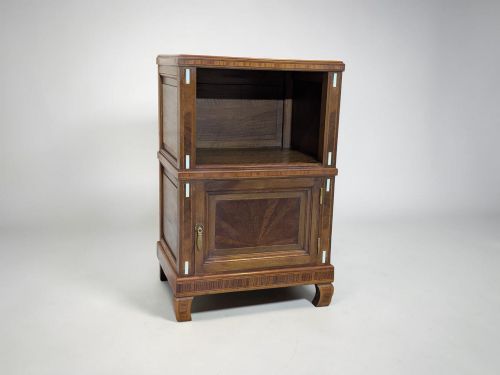
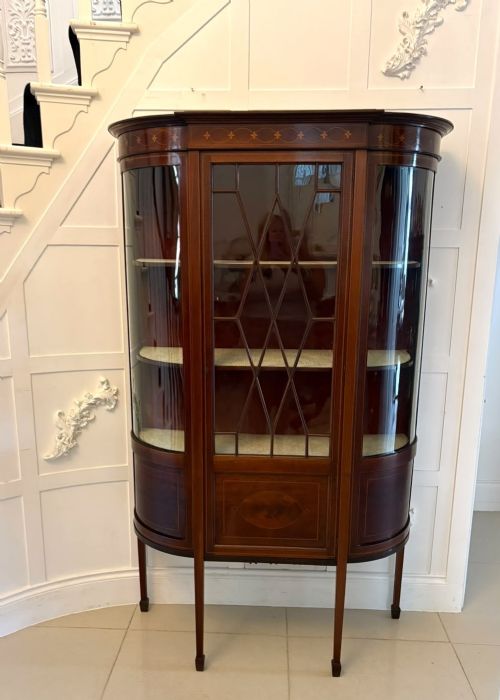
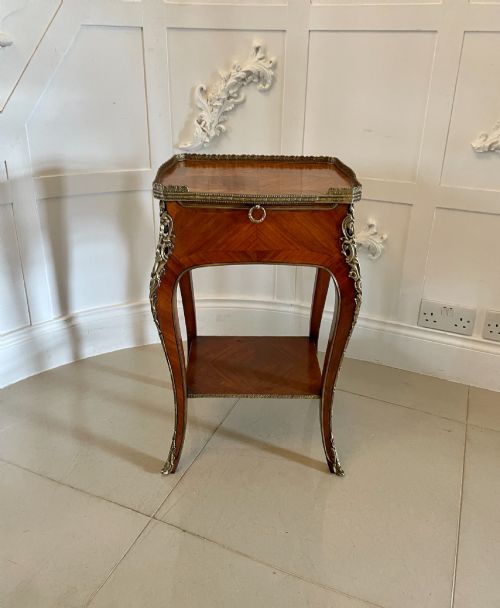
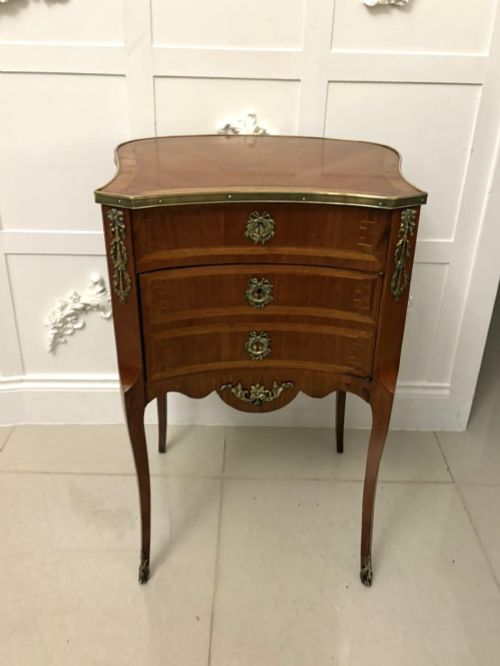
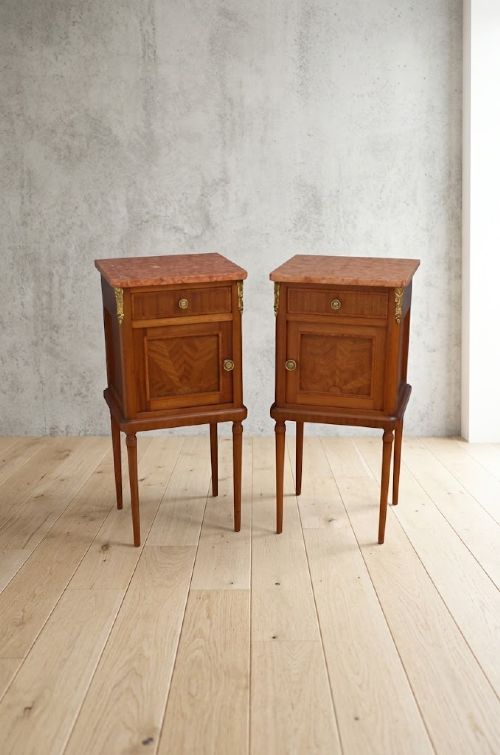
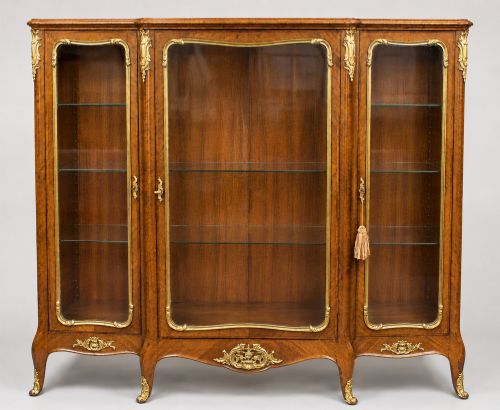
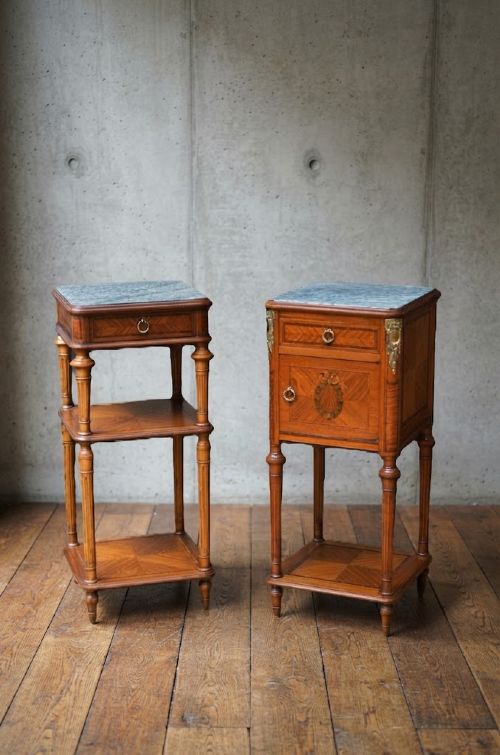
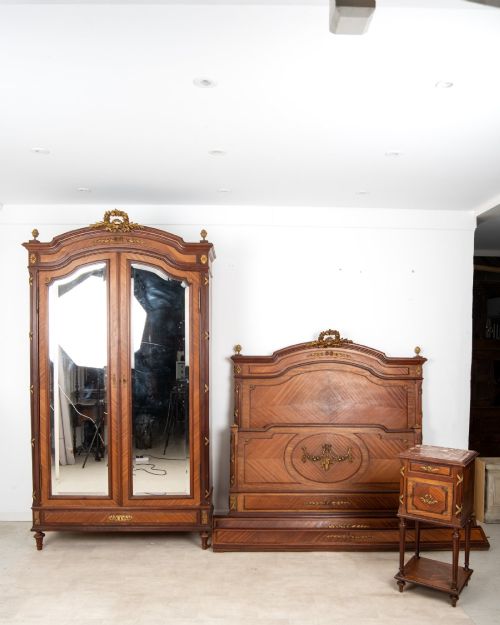
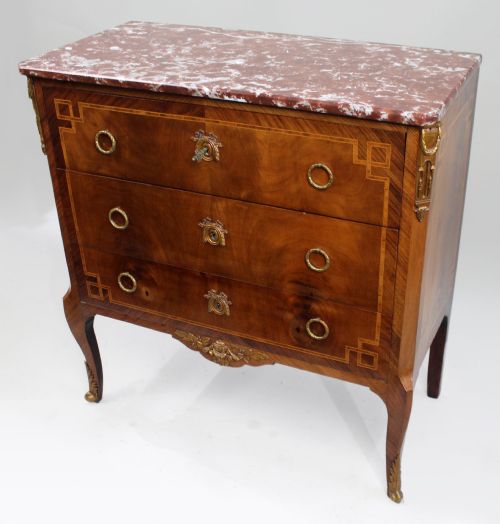
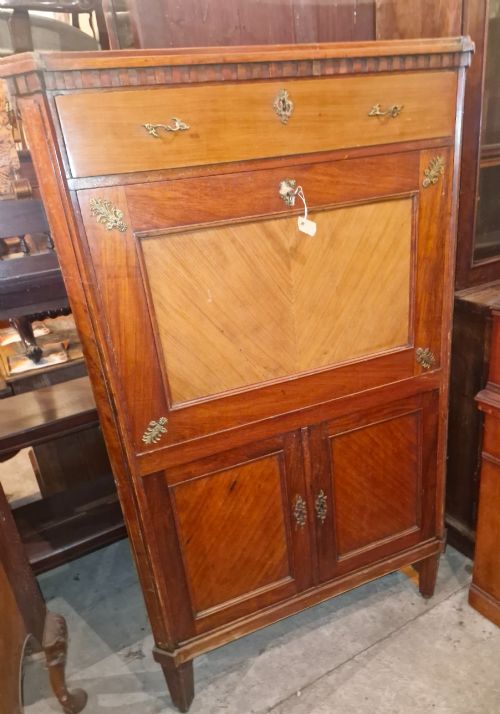
A parquetry cabinet encompasses various forms designed for storage and display, ranging from bedside tables and commodes to larger vitrines and writing desks. When exploring a parquetry cabinet, buyers frequently encounter pieces originating from nineteenth-century France alongside revival styles inspired by earlier European periods. These items typically combine utilitarian storage with decorative geometric surface patterns executed in contrasting timbers.
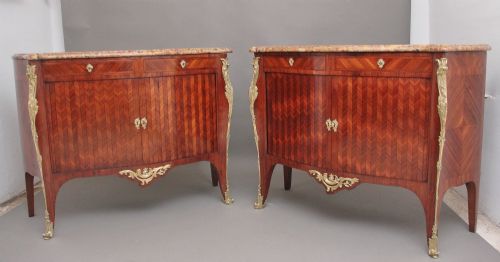
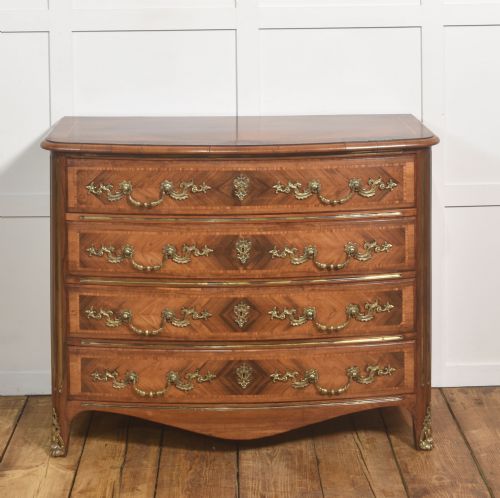
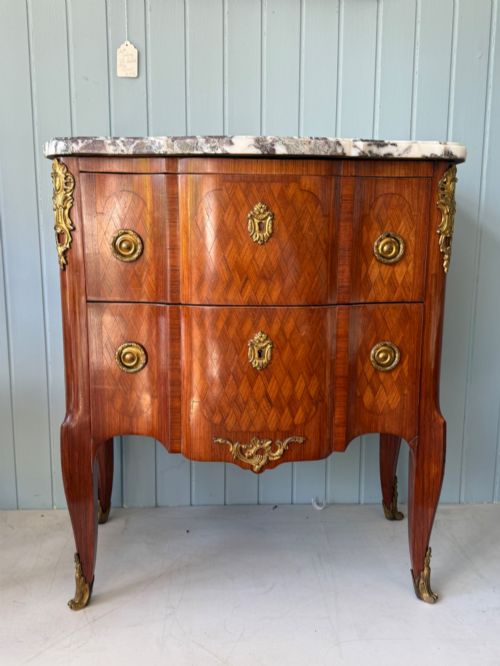
The selection extends across diverse configurations such as serpentine chests of drawers, display cabinets, and compact bedside cupboards. Many examples incorporate stone surfaces or gilt mounts, reflecting continental design preferences from the eighteenth century onwards. Such furniture serves both practical domestic functions and decorative display roles within traditional interiors.
Materials and Construction
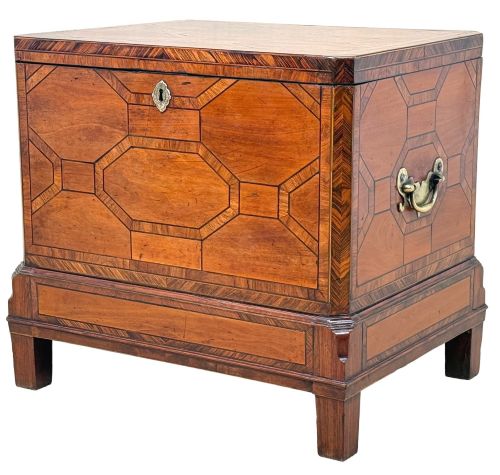
Construction relies upon applying carefully cut wood veneers onto underlying carcase structures to form precise geometric compositions. Cabinetmakers utilise dense decorative hardwoods such as kingwood, satinwood, and walnut to create tonal variation across the patterned panels. These wooden elements often pair with cast brass, ormolu mounts, and polished marble tops to complete the piece.
The assembly process demands precise joinery to ensure the veneered surfaces remain stable over time despite changes in ambient humidity. Metal mounts are secured with traditional fixings to frame the wooden panels and protect vulnerable corners. Glass panels and mirrored sections appear in display cabinets and vitrines to lighten the visual weight of heavy timber frames.
Several compact bedside cabinets hide secret drawers designed for midnight correspondence.
Execution and Detail
Quality separates through the precision of the veneer work and the crispness of the cast metal mounts. Superior examples demonstrate seamless alignment in geometric wood patterns and heavier, more finely chased ormolu details. Lesser pieces may display simpler timber selection and less refined hardware fittings.
The integration of secondary materials such as marble tops and porcelain plaques also distinguishes different grades of production. Well-executed items maintain structural integrity in drawers and doors while preserving balanced proportions across the entire piece.
Maison Gagneau·Blake London·Sormani
The Parquetry Cabinet Glossary
- Parquetry
- A geometric mosaic of wood veneers arranged in repeating patterns such as cubes, triangles, or chequers to decorate furniture surfaces. This technique forms the primary visual characteristic of the furniture category.
- Ormolu
- Gilded bronze mounts cast and chased by hand to adorn the corners, feet, and friezes of fine cabinets. These decorative metal elements provide contrast against polished wooden veneers.
- Commode
- A low decorative chest of drawers or cabinet standing on legs, originating in France during the eighteenth century. They frequently feature marble tops and elaborate veneering.
- Vitrine
- A glass-fronted display cabinet intended for the presentation of porcelain, glass, and small decorative objects. These pieces often incorporate glazed side panels alongside front doors.
- Kingwood
- A dense, heavily figured timber native to Brazil, prized for its dark brown colouring and striking golden streaks. Cabinetmakers utilised this wood extensively for contrasting geometric veneer work.
Parquetry Cabinet: Frequently Asked Questions
How do I clean parquetry?
Dust surfaces regularly with a soft, dry cloth to prevent dirt accumulation within the veneer joints. Avoid using liquid polishes or harsh chemical cleaners that might degrade the historic finish.
Apply a microcrystalline wax sparingly when the timber appears dry, buffing gently to maintain a natural sheen. Protect the wooden surfaces from direct sunlight and excessive moisture to prevent warping or fading.
Can I use a commode as a bedside table?
Larger commodes require ample bedroom space, but smaller bedside cabinets and chevets serve this exact domestic purpose. Measure the height of the bed to ensure comfortable access to the surface and any storage drawers.
Consider the presence of a marble top when placing water glasses or bedside lamps on the cabinet. Stone surfaces offer natural resistance to moisture and heat compared to polished wood.
What is the difference between marquetry and parquetry?
Parquetry employs geometric wood pieces arranged in strict repeating patterns like cubes or lozenges. It focuses on abstract lines and architectural precision rather than pictorial representation.
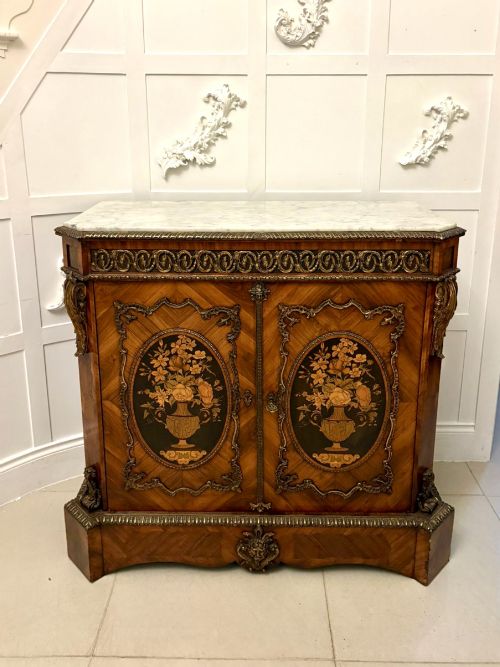
Marquetry, by contrast, uses varied veneers to create pictorial scenes involving flowers, foliage, or figures. Both techniques decorate fine furniture surfaces but achieve different visual effects.
How do I identify French revival furniture?
Revival furniture from the nineteenth century reinterprets earlier monarchical styles such as Louis XV and Louis XVI. Look for characteristic cabriole legs, symmetrical ormolu mounts, and curved serpentine fronts. Nineteeth-century interpretations often combine older decorative motifs with modern mechanical construction methods. Examine the internal secondary timbers and drawer linings to determine the true age of the piece.