


Barley Twist Leg Cabinet
A barley twist leg cabinet brings sculptural turned timber and practical storage into a room, offering period character through distinctive spiralling supports.
Barley Twist Leg Cabinet
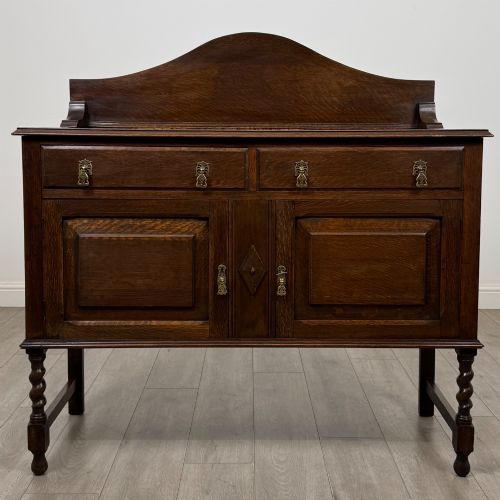
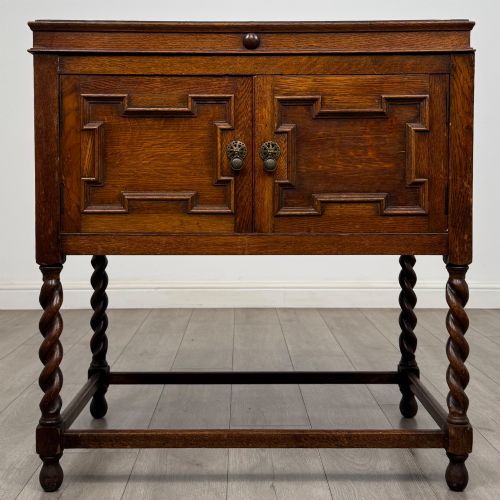
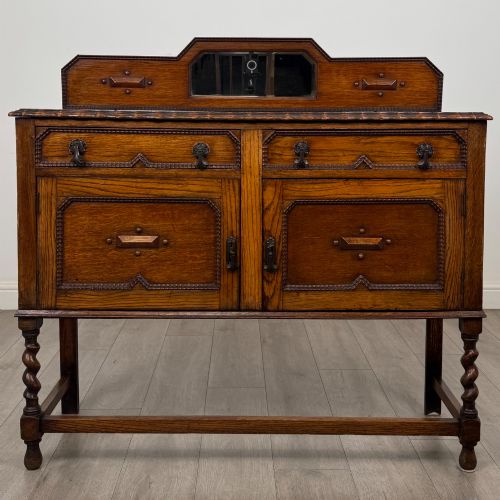
A barley twist leg cabinet combines a raised cupboard body with helical turned supports, appearing in forms such as cabinets on stands, sideboards, and side cabinets. These pieces span centuries of production, from seventeenth-century origins through to twentieth-century revivals.
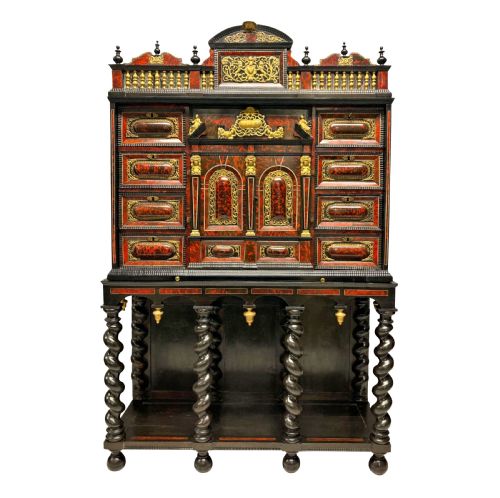
Buyers browsing this selection frequently encounter sturdy oak and walnut examples from the Edwardian era and the nineteen-twenties, alongside more elaborate Flemish and Baroque interpretations. The combination of enclosed storage and architectural turning defines the aesthetic of the group.
Materials and construction methods
Cabinet makers relied predominantly on native and continental timbers, using solid oak and walnut for structural stability and decorative grain figuring. Oyster veneers in laburnam and walnut appeared on refined surfaces, creating circular grain patterns across drawer fronts and doors.
The characteristic spiral legs were shaped by hand or lathe, requiring precise joinery to support the weight of heavy timber carcases. Additional decorative elements such as tortoiseshell, brass hardware, and ebonised wood details enhanced the visual depth of Flemish and Baroque designs.
Some seventeenth-century stands secretly doubled as miniature architectural facades to impress visitors.
Assessing craftsmanship and finish
Quality in a barley twist leg cabinet rests on the crispness of the timber turning and the depth of the grain figure. Superior examples display carefully matched veneers and hand-carved details that remain sharp rather than softened by excessive wear or later sanding.
The structural integration of the stand and upper cabinet marks the distinction between standard production and exceptional joinery. Tighter tolerances in drawer construction and original brass or metal mountings indicate higher workshop standards.
The Barley Twist Leg Cabinet Glossary
- Barley twist
- A type of turning shaped like a spiral or helix, popular on furniture supports during the seventeenth century and later revival periods.
- Oyster veneer
- Slices cut transversely across small branches or roots to produce circular or oval patterns of wood grain.
- Cabinet on stand
- A form comprising a main storage body elevated on a separate frame with legs, often featuring drawers or cupboards below.
- Jacobean Revival
- A nineteenth and twentieth-century style imitating the heavy oak furniture and architectural detailing of the early seventeenth century.
Barley Twist Leg Cabinet: Frequently Asked Questions
How do I date a barley twist cabinet?
Dating relies on timber species, construction methods, and secondary woods used inside drawers and carcases. Earlier seventeenth-century pieces show hand-cut joinery and different framing techniques compared to twentieth-century revival pieces.
Hardware styles and finishing methods also provide clues, as older cabinets often feature hand-beaten brass hinges and locks rather than mass-produced ironmongery.
Were these cabinets used for storage?
These cabinets served primarily to store valuables, documents, or collections behind locked doors. The elevated stands kept contents away from damp floors and made accessing items more convenient.
Over time, forms adapted to changing domestic needs, evolving from specialised collectors' cabinets and writing bureaus into general sideboards and night tables.
How do I place one in a modern room?
A barley twist cabinet works well against a plain wall where the spiralling legs and rich wood grain can be seen clearly. Pairing the piece with neutral surroundings allows the carved details and historical character to stand out.
These cabinets provide practical surface space on top for lamps or decorative objects while offering concealed storage underneath.
What is the difference between original and revival pieces?
Original pieces from the seventeenth or eighteenth centuries carry the wear, patination, and construction methods characteristic of their period. Revival pieces made during the Edwardian era or the nineteen-twenties emulate these earlier styles using contemporary workshop tools.
Both categories offer distinct craftsmanship, with revivals often providing robust construction suited to everyday modern use.