



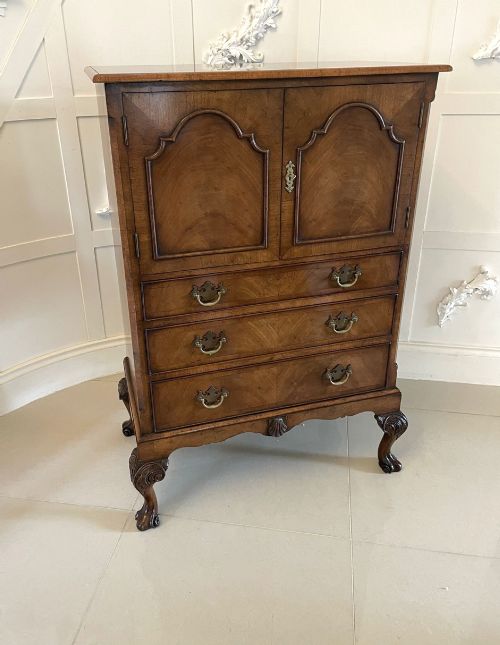
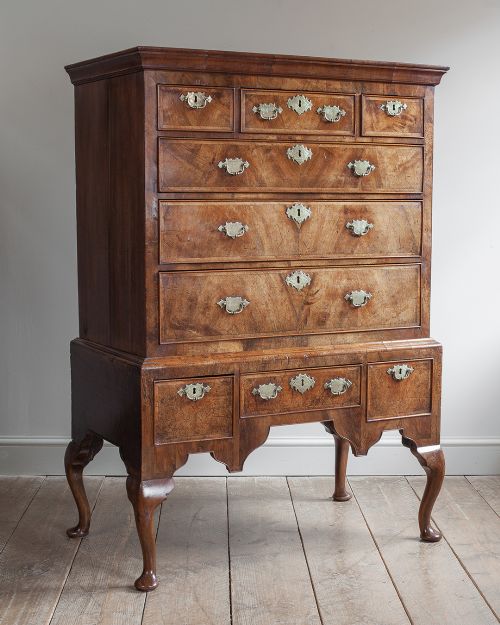
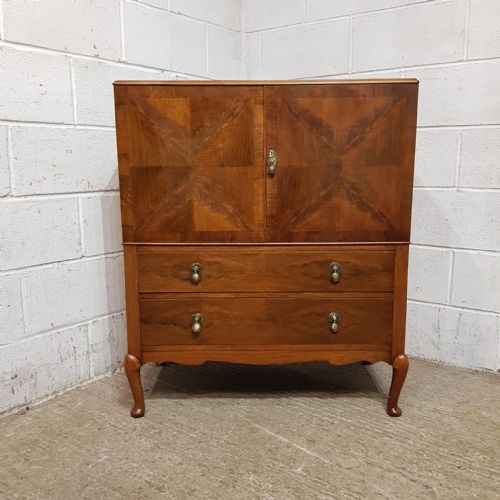
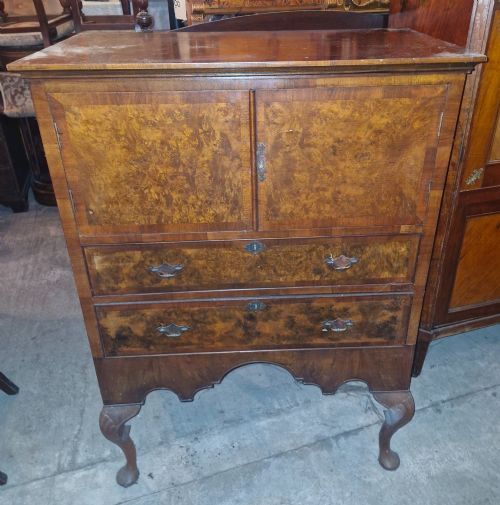
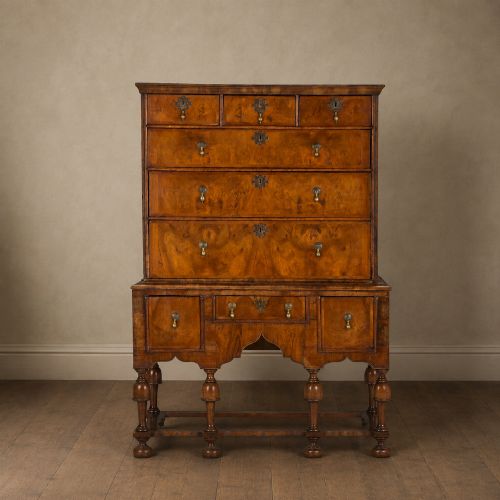
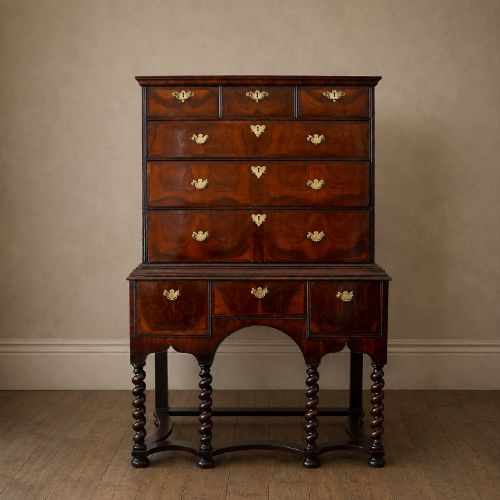
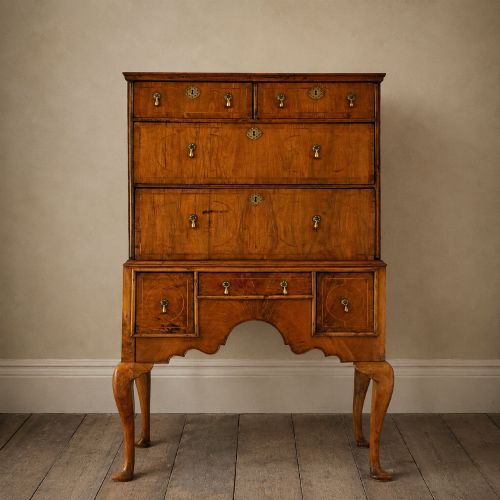

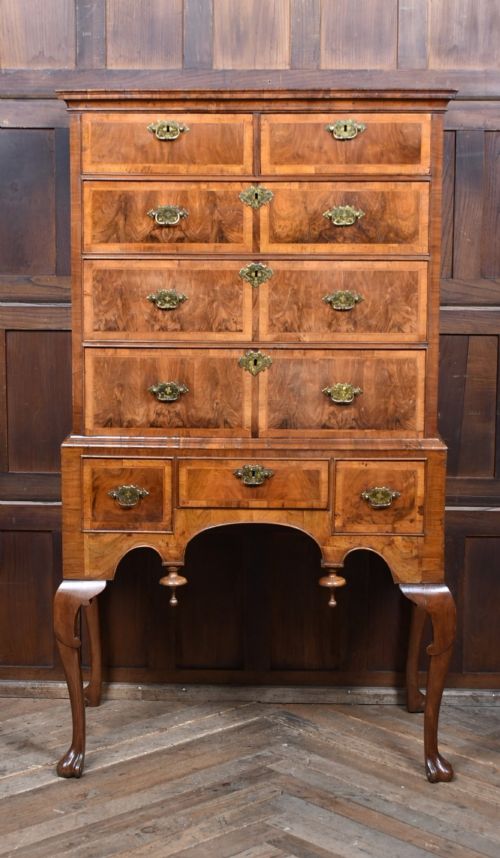
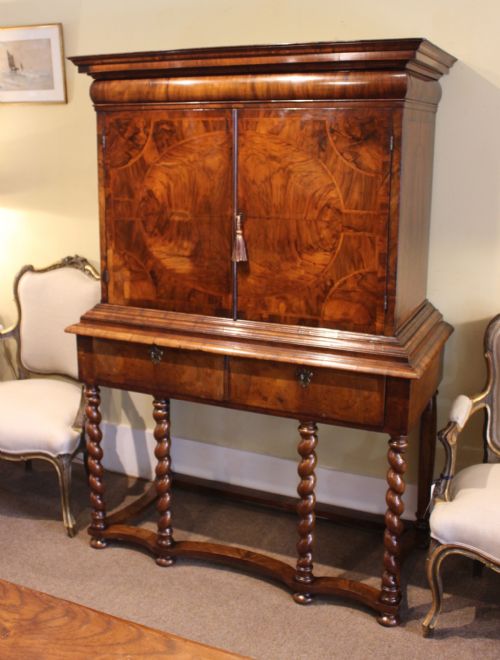
Queen Anne Chest on Stand
A queen anne chest on stand brings elevated storage and rich timber grain to a room.
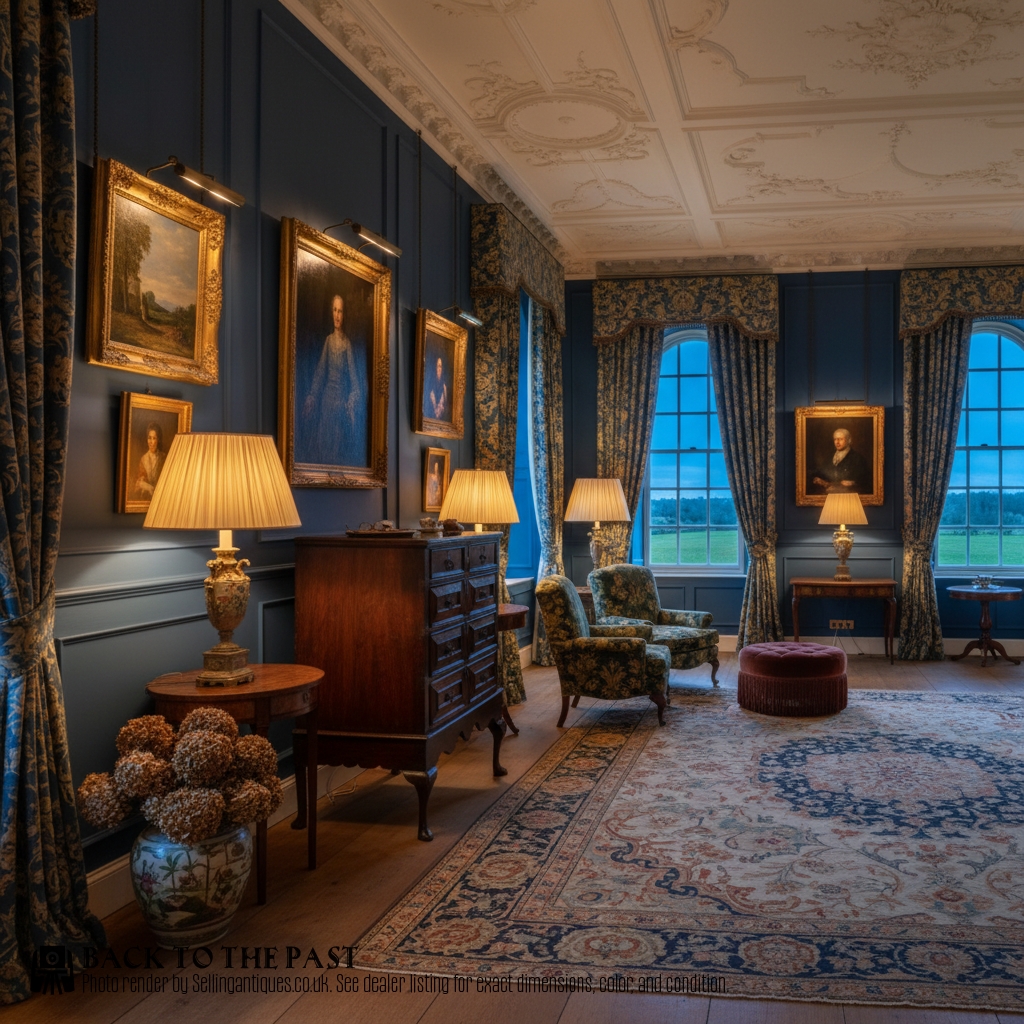
Queen Anne Chest on Stand
A queen anne chest on stand combines a drawer section raised on a distinct base or frame.
The pieces appearing here stem primarily from the eighteenth century, alongside later revivals from the twentieth century.
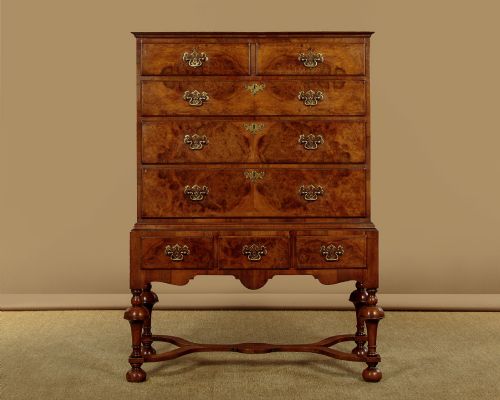
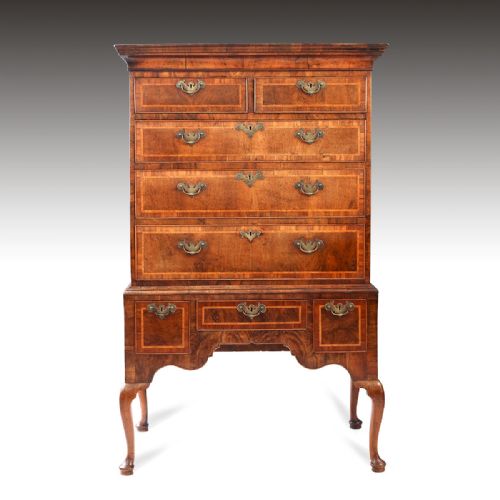
Walnut, burr walnut and oak dominate the surviving examples, often showing banded or crossbanded surfaces.
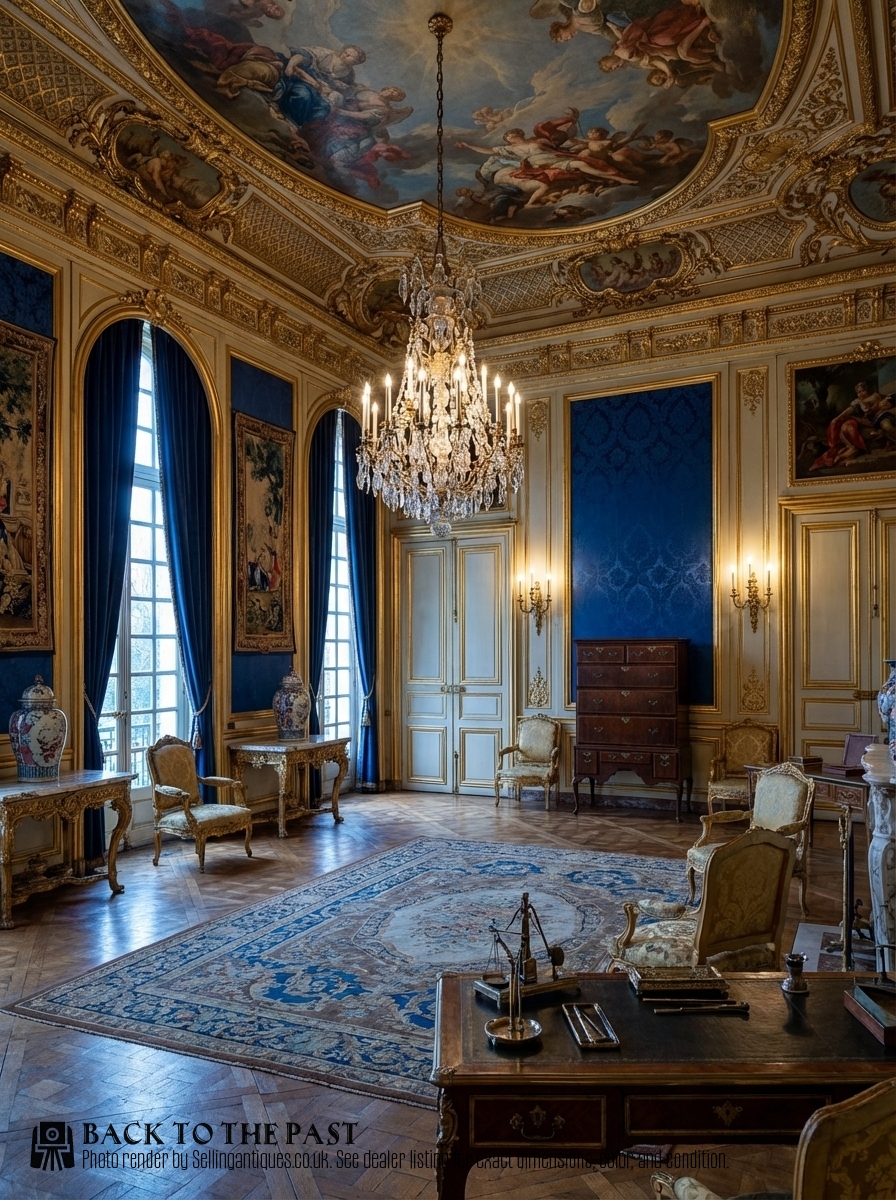
Materials and Construction
Cabinet makers utilised solid timbers alongside burr walnut veneers to achieve rich, patterned drawer fronts.
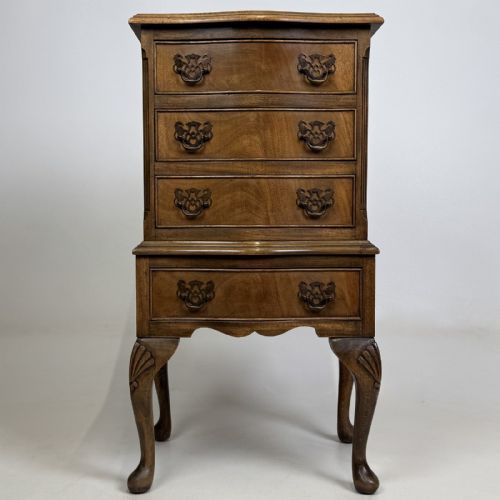
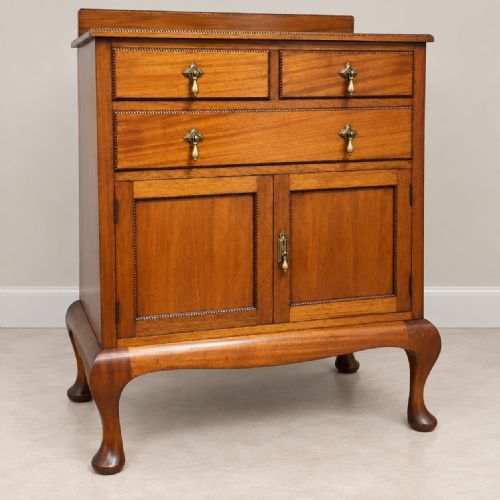
Brass handles and escutcheons punctuate the facades, while stands elevate the primary storage compartments on legs.
Queen Anne Chest on Stand Retail Price Guide 2026
Typical asking prices for queen anne chest on stand among the pieces listed under this phrase on Sellingantiques today, from the lower quarter to the upper quarter. They describe what is for sale here now, not the wider market.
Listings feature oak, walnut, and burr walnut materials across eighteenth-century and nineteen-twenty periods.
Judging Quality
The refinement of the timber figure and the crispness of the crossbanding separate standard examples from finer works.
Proportions between the upper chest and the supporting stand dictate the visual balance of the piece.
The Queen Anne Chest on Stand Glossary
- Chest on stand
- A two-part item of furniture featuring a main chest of drawers raised upon a separate framed base.
- Burr walnut
- A figured wood veneer harvested from walnut tree growths, prized for its swirling grain patterns.
- Crossbanding
- A decorative border technique where strips of veneer are laid perpendicular to the main grain.
- Escutcheon
- A protective metal plate surrounding a keyhole on a drawer front.
- Secretaire drawer
- A specialised pull-out drawer containing a fitted writing surface and small internal compartments.
Queen Anne Chest on Stand: Frequently Asked Questions
How do walnut and oak versions differ?
Walnut and burr walnut examples offer highly figured, decorative grain patterns that suit formal interiors.
Oak versions tend to present a more robust, provincial character with straightforward timber grain.
Are twentieth-century pieces common?
The archive and current selection include pieces made around nineteen-twenty in the george i style.
These later interpretations replicate the proportions and veneering techniques of the original eighteenth-century period.
How should I live with one?
Position the piece in a principal room where its raised height and drawer storage can be fully appreciated.
Keep the timber away from direct heat sources to protect the delicate walnut veneers and polished surfaces.