
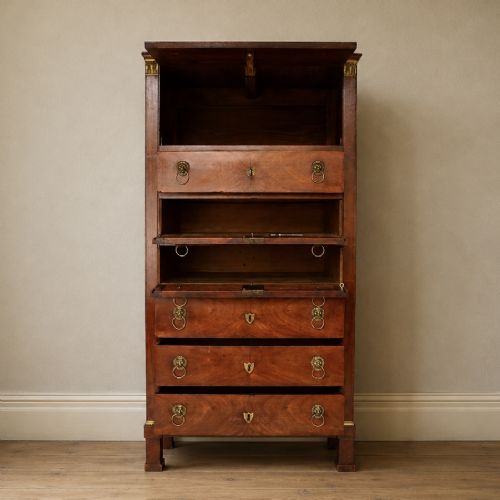
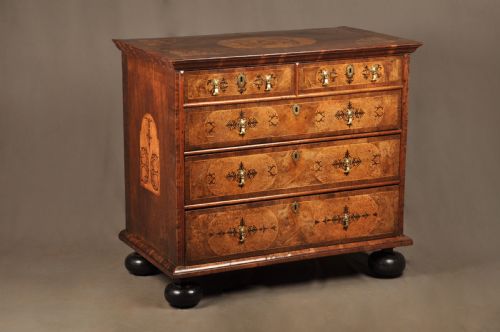
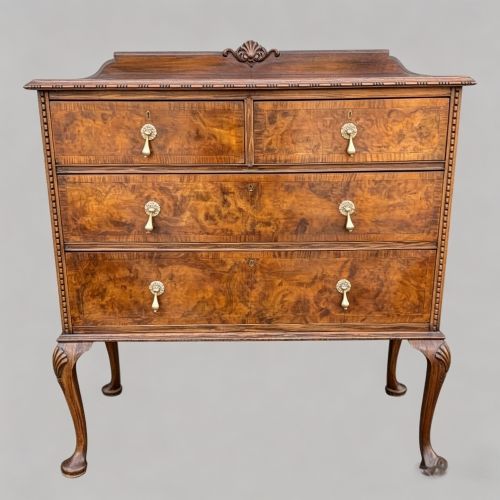
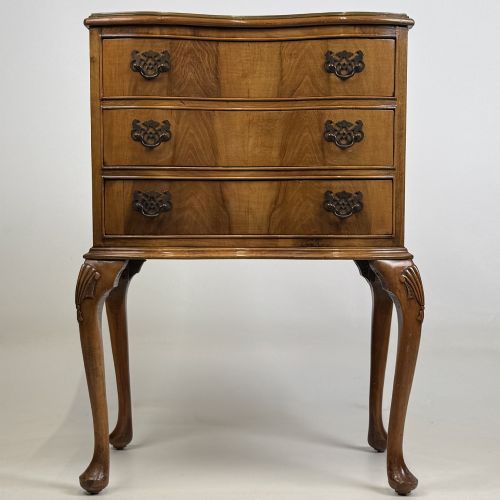


Carved Walnut Tallboy
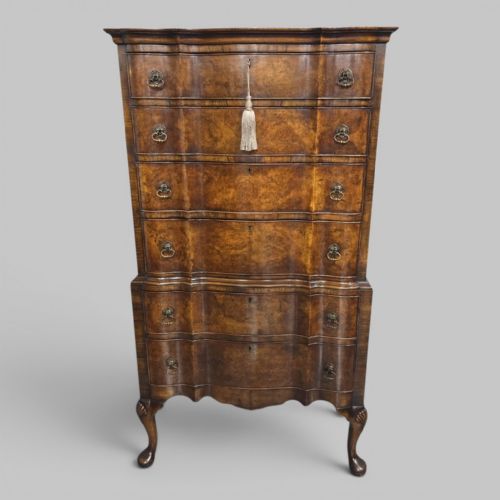
These carved walnut tallboy pieces bring deep timber tones and stately height to a room, offering generous storage for the discerning collector.
What carved walnut tallboy pieces are
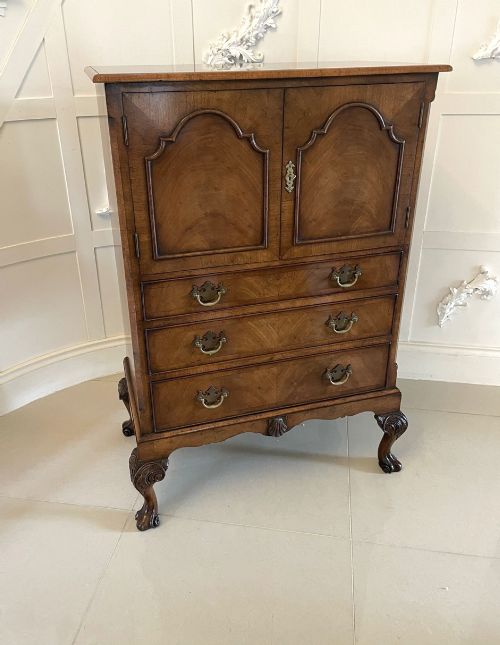
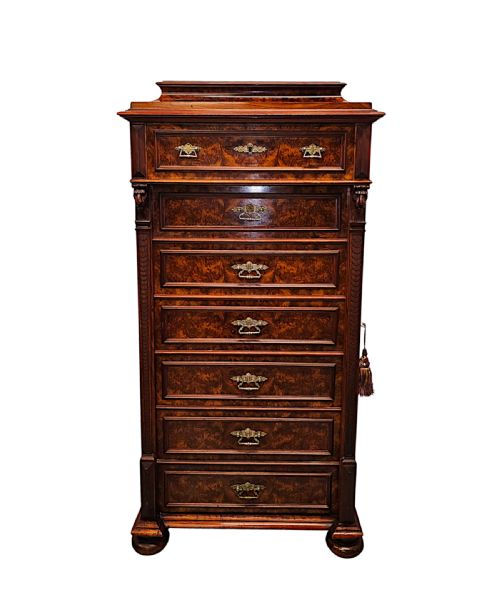
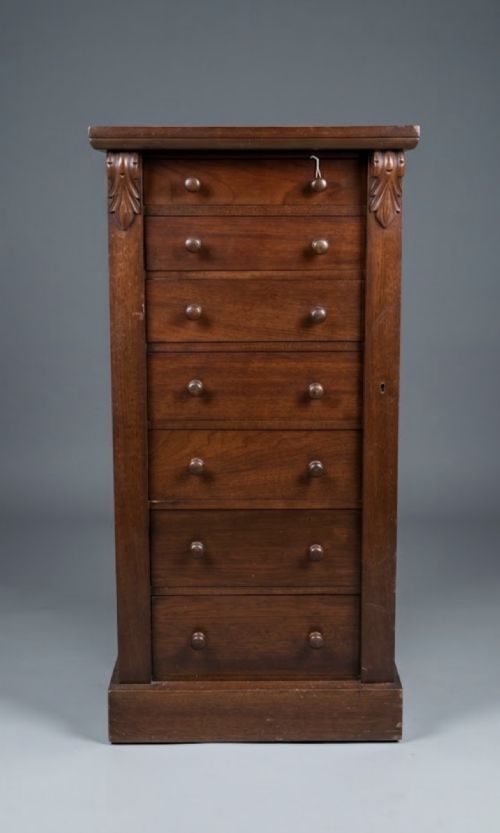
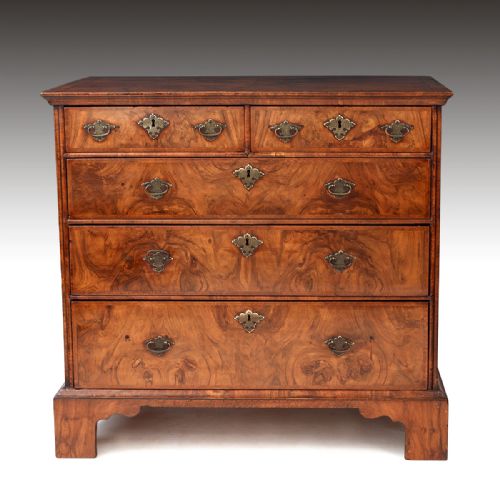
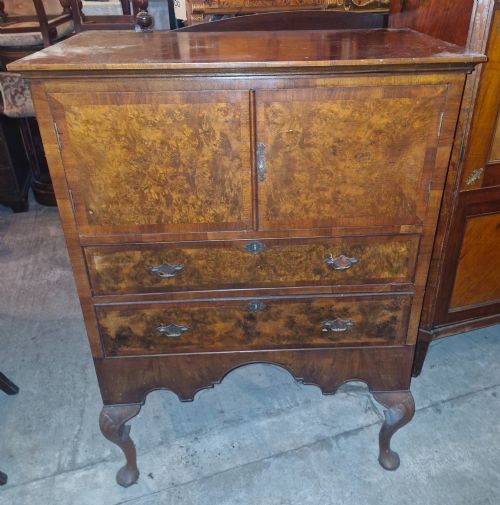
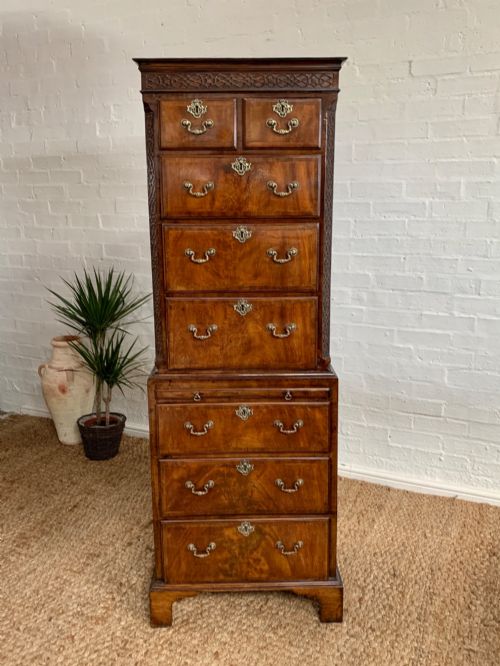
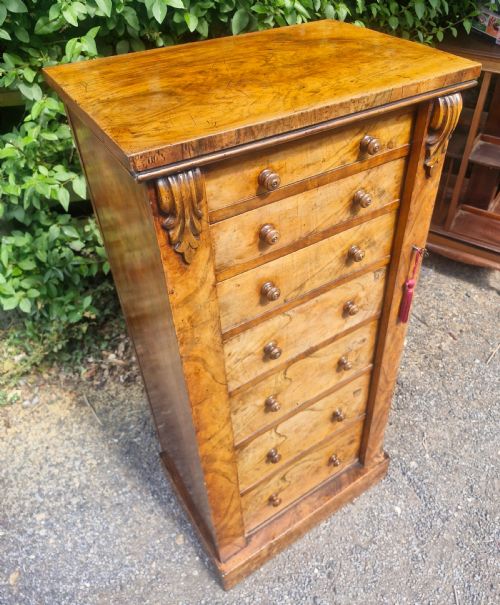
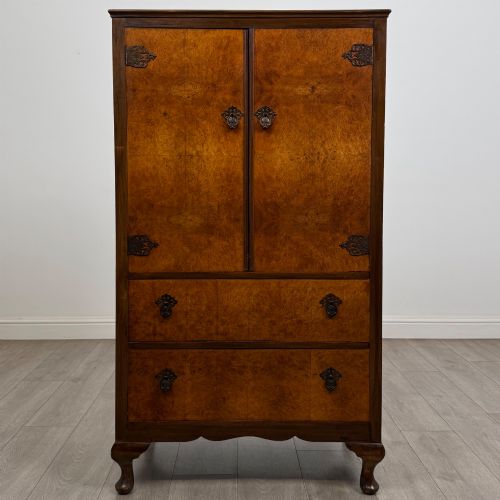
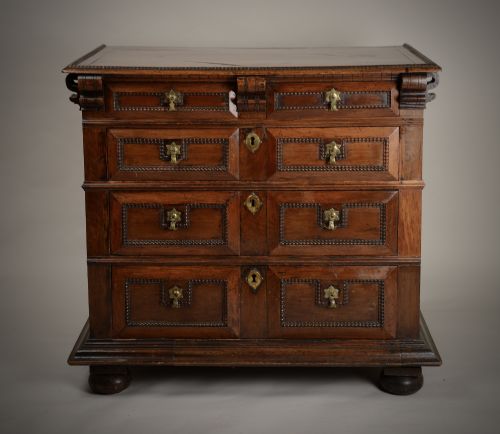
When searching for a carved walnut tallboy, a buyer expects a tall vertical chest designed for domestic storage, often expressed through tall drawer arrangements or chests on stands. The examples on this page span the nineteenth century, the Edwardian era, and the nineteen-twenties, presenting both standard drawer configurations and distinctive Wellington styles.
The materials recorded in these listings rely primarily on walnut and burr walnut timbers, complemented by brass and metal hardware. Stylistic influences draw upon Victorian, Late Victorian, and George I styles, showcasing how cabinet makers adapted historical aesthetics for later homes.
How they were made
The construction of these pieces relies heavily on walnut and burr walnut timbers, selected for their rich grain patterns and deep colouration. Cabinet makers shaped these woods into substantial chests of drawers, incorporating intricate carving to define the style of the period.
Functional metalwork completes the construction, utilising brass and other metals for handles, drawer pulls, and locking mechanisms. These hardware elements are integrated directly into the timber frame to support daily use.
Retail Price Guide 2026
Typical UK retail prices for carved walnut tallboy, calculated from the Sellingantiques database of over a million retail prices indexed since 2003. This retail price guide relies exclusively on Sellingantiques data; no external sources or auction records are used, so the figures do not describe the wider market.
Current listings span the nineteenth century, the Edwardian era, and nineteen-twenty, featuring walnut, burr walnut, brass, and metal.
What varies in quality
The selection of timber dictates much of the character, particularly where burr walnut is utilised to create striking grain figures across the drawer fronts. Finer examples display meticulous placement of these veneers alongside crisp, purposeful carving that defines the silhouette.
Proportion and execution distinguish the various pieces, from substantial nineteenth-century Wellington chests to the lighter stance of a George I style chest on stand. The integration of period-appropriate brass hardware further separates standard production from superior craftsmanship.
The Carved Walnut Tallboy Glossary
- Tallboy
- A tall chest of drawers, typically formed of one chest stacked upon another or built as a single tall vertical unit to maximise storage while occupying a compact floor footprint.
- Burr Walnut
- A specialised wood cut from walnut tree growths, prized by cabinet makers for its swirling, highly figured grain patterns that create decorative surfaces on drawer fronts.
- Wellington Chest
- A tall, slender chest of drawers secured by a hinged vertical locking strip on one side, traditionally designed to protect the contents.
- Chest on Stand
- A form where a primary chest of drawers is raised upon a separate support frame with legs, lightening the overall visual weight of the piece.
Frequently Asked Questions
What is a tallboy?
A tallboy is a vertical chest of drawers designed to provide ample storage without taking up excessive floor space in a room.
These pieces typically feature multiple stacked drawers, making them practical for organising clothing and linens in domestic settings.
How do I care for walnut furniture?
Walnut furniture requires gentle cleaning with a soft, dry cloth to remove dust and maintain the natural finish of the timber.
Keep these pieces away from direct sunlight and excessive temperature changes to protect the wood and any delicate veneers.
What is burr walnut?
Burr walnut is a specialised timber derived from the knotty growths of the walnut tree, prized for its intricate and swirling grain patterns.
Cabinet makers utilise these figured sections to create striking decorative panels on the fronts of chests and drawers.
How do I identify a George I style piece?
George I style pieces reflect the design characteristics popular during the early eighteenth century, often reinterpreted by later makers.
These designs frequently emphasise clean lines, rich walnut timber, and elevated forms such as chests on stands.