

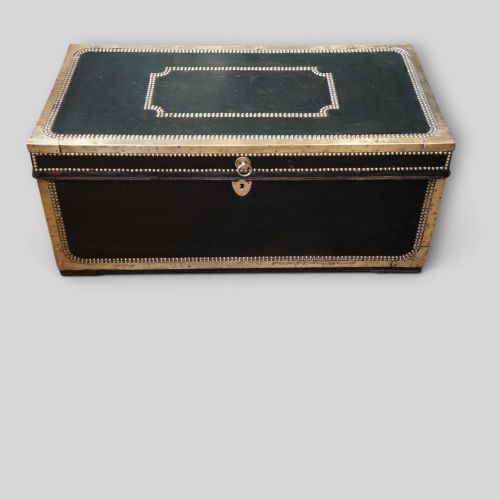
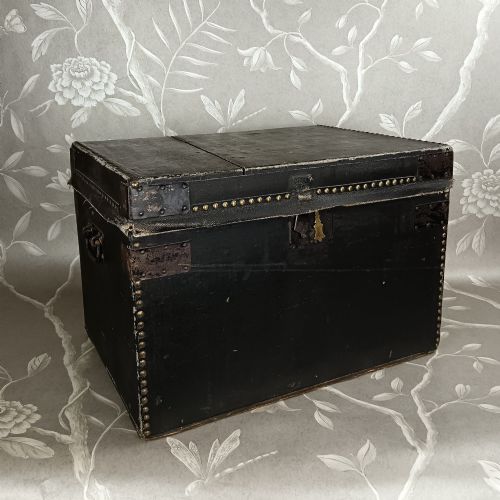
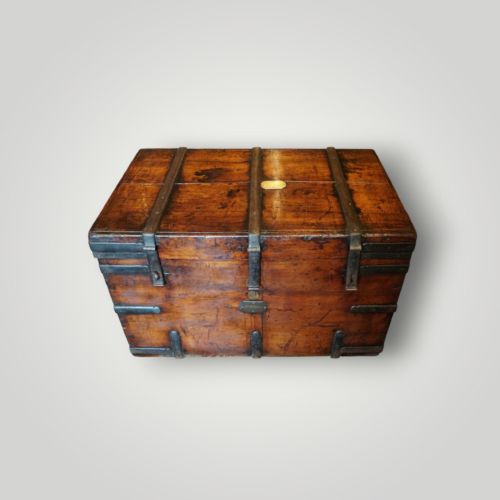
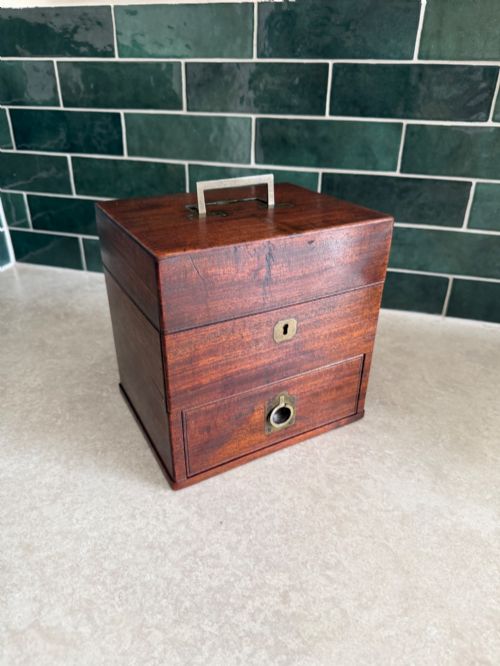
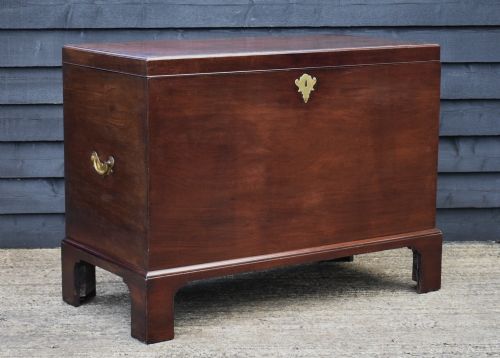
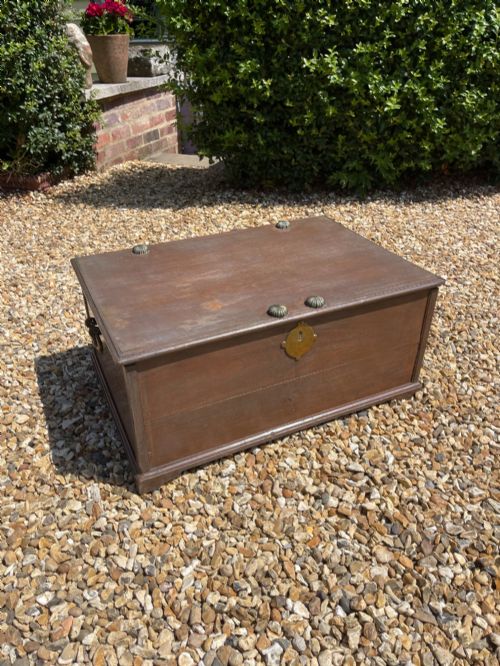
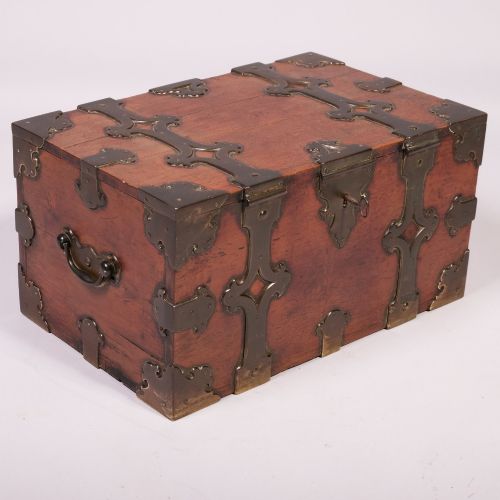
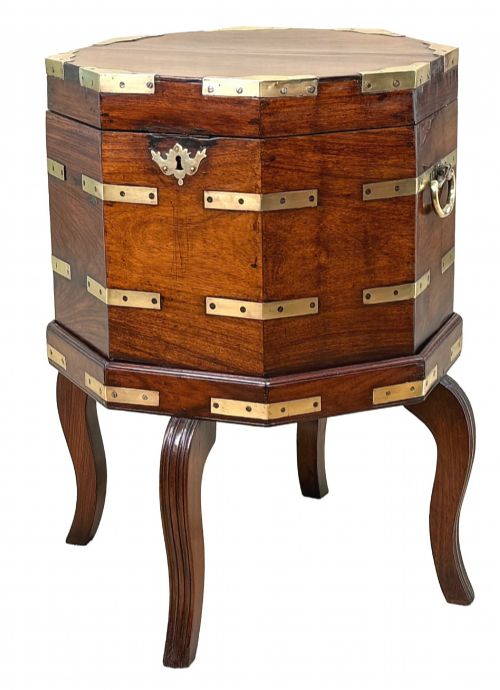
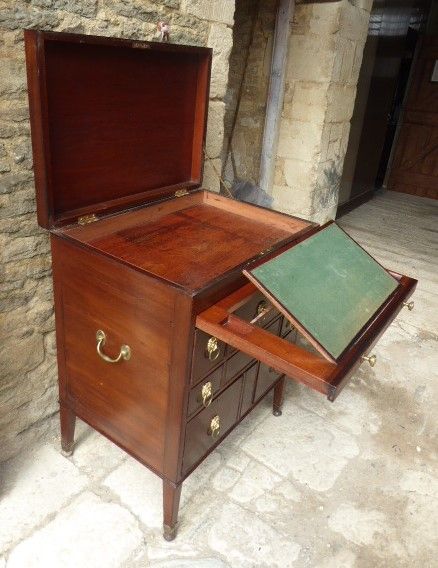


Georgian Campaign Chest
A georgian campaign chest is a portable piece of officers' furniture built in sections to travel the empire, offering clever storage and sturdy brass fittings.
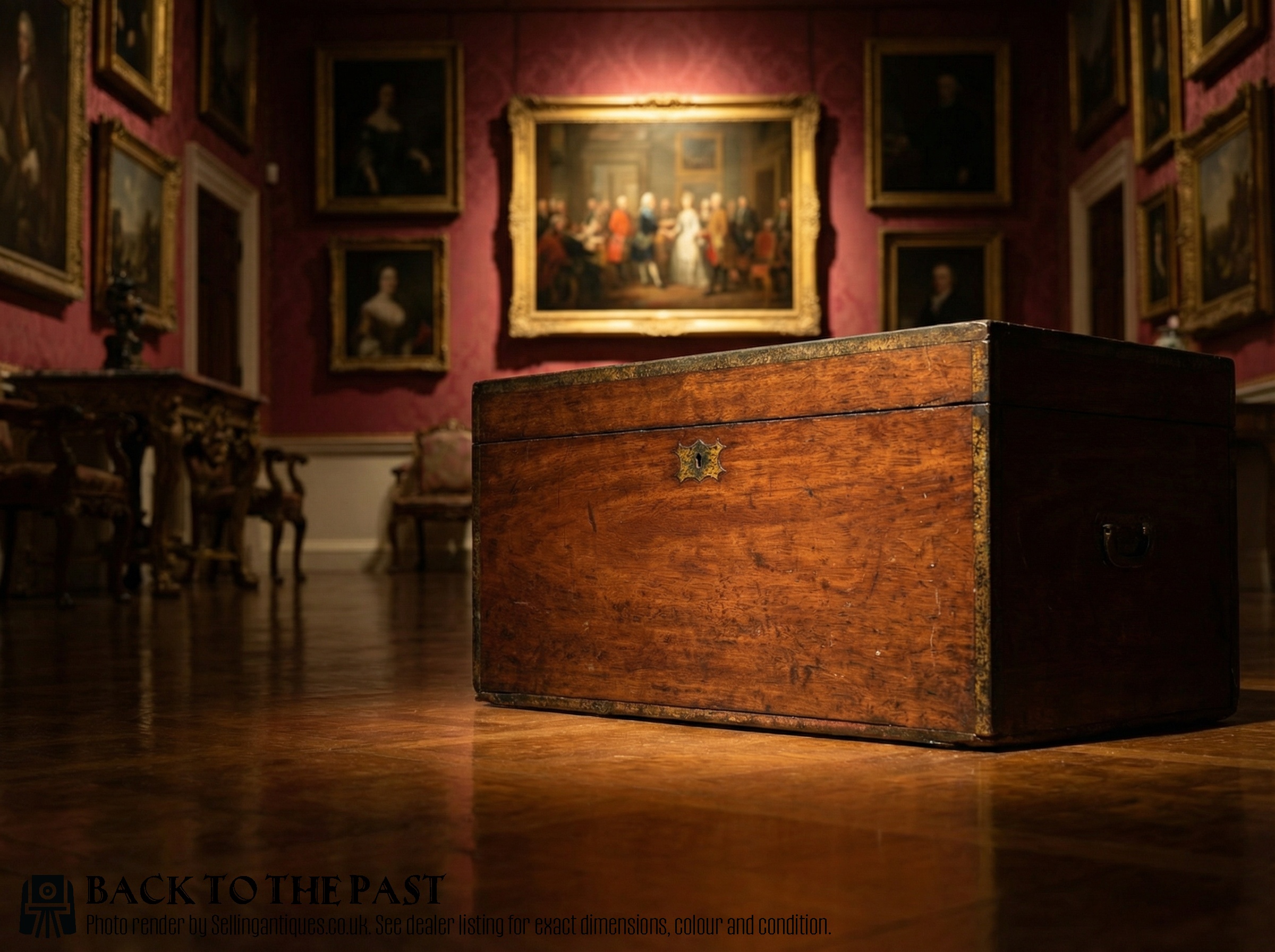
Georgian Campaign Chest
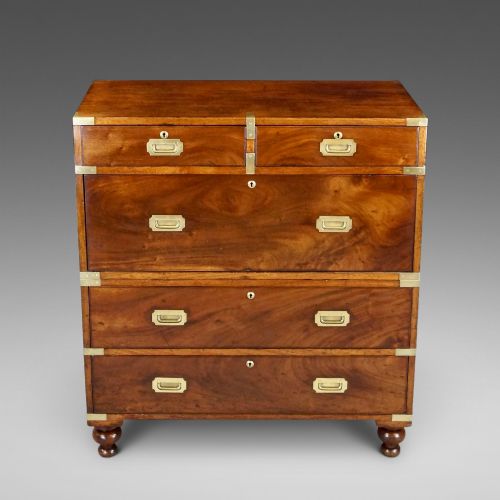
A georgian campaign chest takes the form of a split-carcase chest of drawers, built in two separate stacking sections designed for easy transport by sea or land.
The pieces seen here range from mahogany and walnut chests of drawers to camphorwood sea chests, teak trunks, and fitted dressing boxes or apothecary cases.
Originating largely from the Georgian and Regency periods, these items reflect the practical demands of military officers and colonial travellers requiring functional, secure possessions.
Materials and Technique
Craftsmen utilised dense, resilient timbers such as mahogany, walnut, camphorwood, teak, and padouk to withstand extreme climates and the rigours of transit.
Carcases were reinforced with brass corners, straps, and bound edges to protect vulnerable joints from heavy handling, alongside recessed brass carrying handles.
Joinery had to remain stable despite humidity changes, frequently incorporating clever internal compartments, folding writing slopes, and modular divisions.
Georgian Campaign Chest Retail Price Guide 2026
Typical asking prices for georgian campaign chest among the pieces listed under this phrase on Sellingantiques today, from the lower quarter to the upper quarter. They describe what is for sale here now, not the wider market.
Sir Randolph Isham Routh carried an iron-bound trunk into the chaos of Waterloo as Commissary General, proving paperwork travelled into battle.
Indicators of Quality
Quality rests upon the integrity of the original brass hardware and flush-fitting handles, where replacement mounts or missing corner plates diminish the piece.
The choice of timber and the precision of the two-part carcase construction separate standard utilitarian trunks from finer officers' furniture made with figured mahogany or camphorwood.
Internal complexity, such as retained apothecary bottles, original leather linings, or fully fitted writing and washing compartments, elevates the standing of an individual item.
Samuel Pratt·Wm. Insall of Bristol·Chapple & Sons·Seabrook of St.Pauls, London·William Sweetland
The Georgian Campaign Chest Glossary
- Two-part chest
- A chest of drawers constructed in separate upper and lower stacking sections designed to ease movement during military travel. Brass carrying brackets on the sides facilitate lifting.
- Campaign style
- Furniture built for transport, characterised by modular sections, folding elements, and protective brass hardware. It prioritises portability without sacrificing utility.
- Camphorwood
- Aromatic timber frequently utilised for military chests and sea trunks due to its natural insect-repellent properties. It protects stored uniforms and papers from tropical pests.
- Recessed handle
- A flush-mounted brass handle set into the wood so it does not project beyond the surface during transit. This prevents snagging and allows multiple chests to stack tightly.
- Cellarette
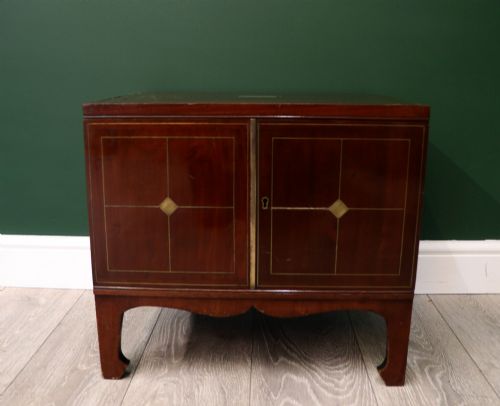
- A fitted cabinet or box designed to hold bottles securely during a journey. They often feature partitioned interiors lined to protect glass decanters.
Georgian Campaign Chest: Frequently Asked Questions
Why are these chests made in two parts?
The two-part construction allowed officers to divide a heavy chest of drawers into manageable lifting sections for loading onto pack animals, wagons, or ships.
Once at the destination, the sections stacked securely one on top of the other to recreate a full-height tallboy or chest.
What is the difference between a sea chest and a campaign chest?
A sea chest is typically a heavy trunk, often in camphorwood or teak with rope or iron handles, built to withstand the hold of a ship.
A campaign chest usually refers to a refined set of drawers designed for an officer's tent or quarters, featuring fine mahogany and flush brass hardware.
How do I care for camphorwood or mahogany furniture?
Keep these pieces away from direct heat sources and sudden humidity shifts to prevent the timber from splitting or warping.
Apply a traditional beeswax polish sparingly to maintain the natural lustre of the wood without building up a heavy residue.
How can I tell if the brass fittings are original?
Original brass fittings show consistent patination, wear patterns, and period-appropriate casting techniques that match the age of the timber.
Look closely at the screw slots; hand-cut or older screws matching the surrounding wood often indicate untouched hardware.