




William and Mary Box
These William and Mary box pieces are 17th Century storage boxes and caskets built for practical domestic security.
William and Mary Box
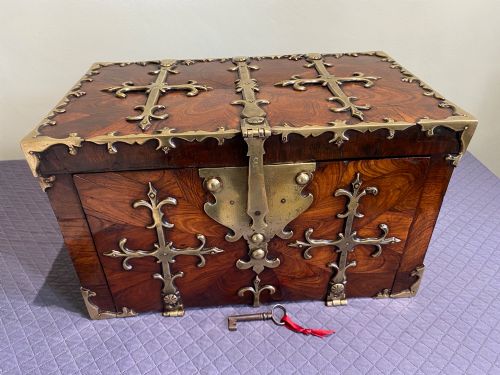
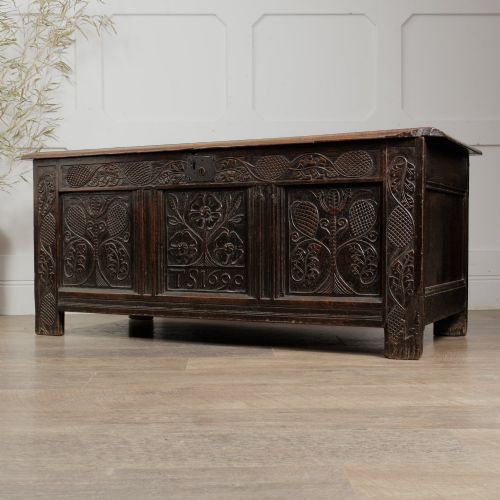
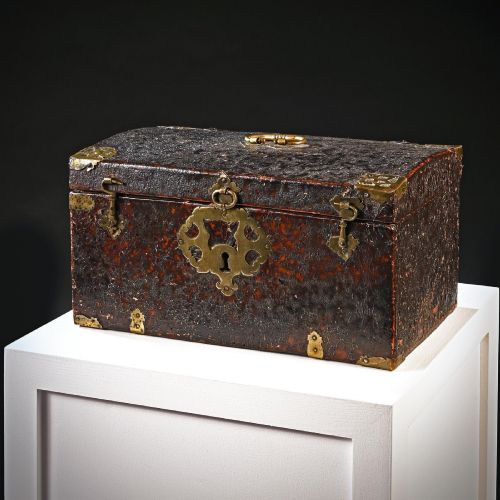
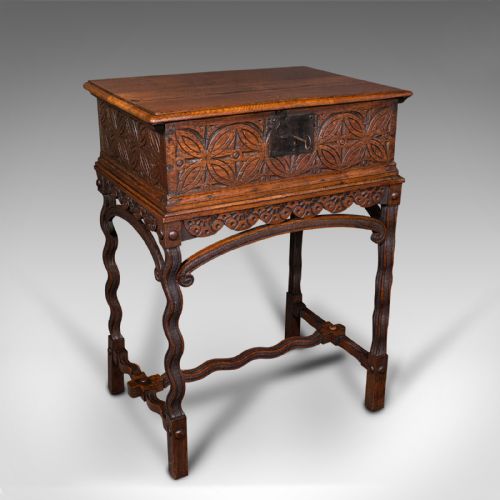
A william and mary box represents 17th century storage craftsmanship designed for specific household items like lace, Bibles, and documents. These pieces appear as tabletop boxes, caskets, and larger storage boxes often mounted on bespoke or later stands.
The form includes the classic bible box, the low lace box, and larger strong boxes. Oak and olive wood dominate the physical evidence across these listings.
Most examples originate from the 17th century, reflecting the precise structural methods and joinery of that era. Buyers find both simple panelled oak versions and highly decorative veneered pieces.
How They Were Made
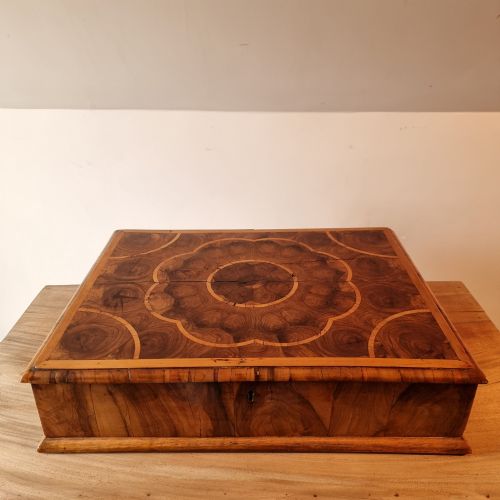
Cabinet makers utilised solid oak and walnut for the primary structure, applying intricate techniques like oyster veneering in olive wood. Sycamore inlay and brass hardware further enriched the exterior surfaces of finer boxes.
Decorative work on these pieces often involved lunette carving and precise geometric veneers. Iron fittings and hinges provided structural security for documents and valuables.
Retail Price Guide 2026
Typical UK retail prices for william and mary box, calculated from the Sellingantiques database of over a million retail prices indexed since 2003. This retail price guide relies exclusively on Sellingantiques data; no external sources or auction records are used, so the figures do not describe the wider market.
Some lace boxes spent centuries guarding delicate neckwear before finding a second career holding modern TV remotes.
What Varies in Quality
The distinction between standard and superior pieces rests on surface enrichment and timber selection. Olive wood oyster veneer with sycamore inlay occupies the upper tier, whilst plain solid oak represents the utilitarian baseline.
Carving detail also separates grades, moving from simple panel moulding to intricate lunette carving. The presence of contemporary stands or later bespoke frames alters the formal classification of the piece.
The William and Mary Box Glossary
- Oyster Veneer
- A method of cross-cutting small branches of olive wood or walnut to create circular or elliptical patterns. This technique was popular in the late seventeenth century for decorative surfaces.
- Bible Box
- A small desk-form box with a sloping or flat lid, originally built to house a family Bible. These often feature oak construction and interior compartments.
- Lace Box
- A shallow storage box designed to hold delicate lace bands and collars. Olive wood and walnut examples frequently display geometric veneer work.
- Lunette Carving
- A semicircular decorative motif carved into timber panels in low relief. It defines the surface ornamentation of many seventeenth-century oak pieces.
- Strong Box
- A heavily reinforced storage box utilising iron straps and secure locking mechanisms. These were engineered to protect valuable documents and currency.
Frequently Asked Questions
What were seventeenth century boxes used for?
These boxes served secure domestic functions for storing family Bibles, lace bands, and important legal documents. Their robust construction kept valuable items safe from dust and theft.
Smaller examples sat on tables for daily access, whilst stronger variants housed currency and private papers.
How do I identify a seventeenth century piece?
Identification relies on material usage, traditional joinery methods, and period-specific decoration such as lunette carving. Seventeenth-century pieces typically employ solid oak, walnut, or olive wood veneer.
Hardware like iron hinges and latches also corresponds to the period manufacturing techniques.
Are these boxes mounted on stands?
Certain storage boxes include stands, which may be contemporary to the piece or added later in furniture history. Chests on stands elevate the storage box into a distinct piece of freestanding furniture.
Listings differentiate between table-standing boxes and those configured with bespoke or later frames.
How should I care for veneered wood?
Veneered surfaces require stable indoor humidity and protection from direct sunlight to prevent timber movement. Gentle dusting maintains the polish on olive wood and walnut without harsh chemicals.
Avoiding excessive moisture preserves both the oyster veneer and the underlying timber.