


Seventeenth Century Oak Box
A seventeenth century oak box offers substantial storage and rugged construction, combining period timber with utilitarian design.

Seventeenth Century Oak Box
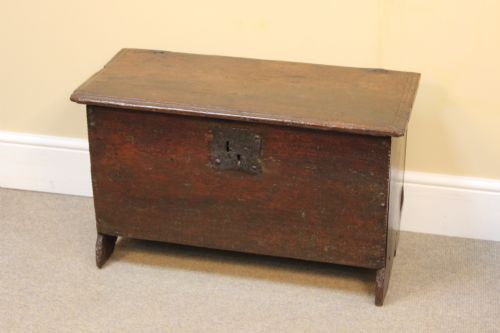
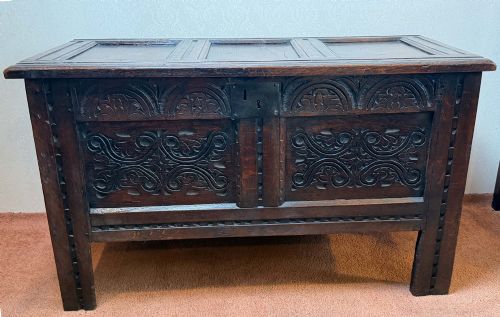
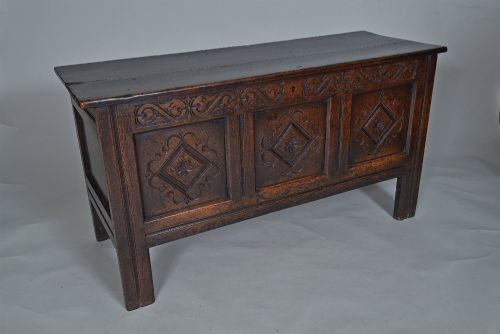
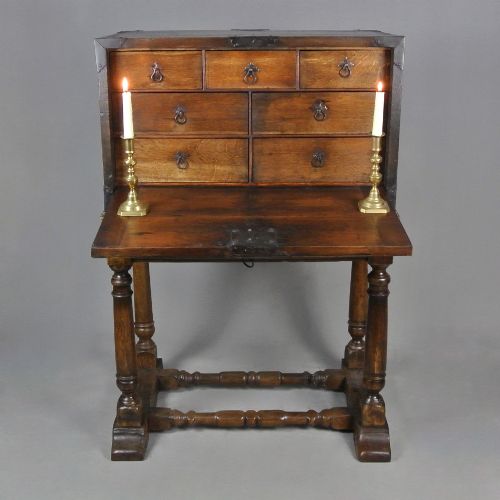
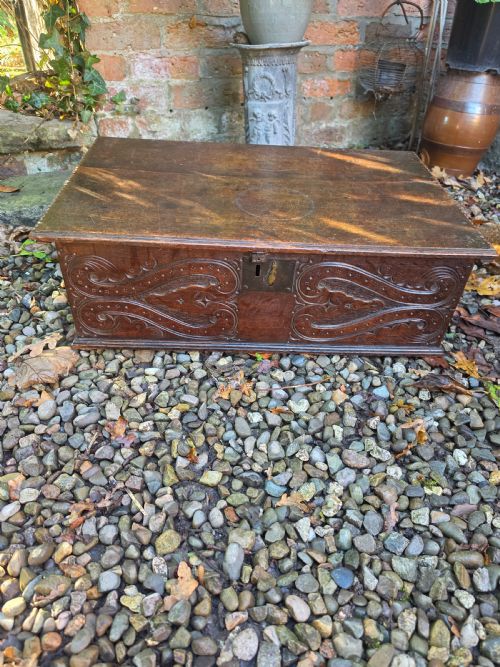
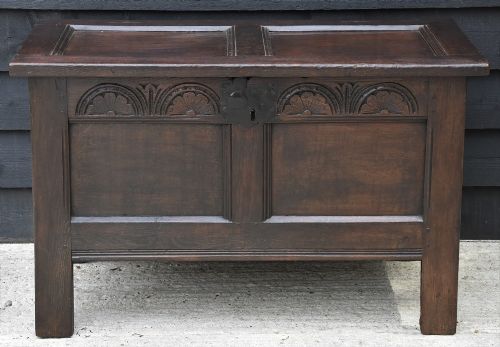
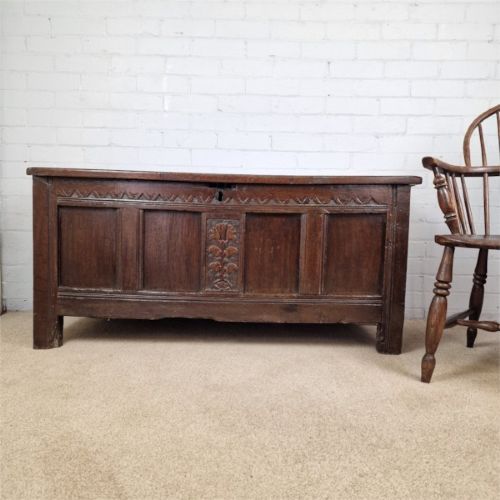
A seventeenth century oak box encompasses a variety of storage pieces, from small desk and bible boxes to larger coffers, chests, and strong boxes. These items serve practical domestic and administrative functions, holding valuable books, documents, or personal belongings.
Buyers on this page most frequently encounter coffers and chests alongside smaller tabletop variants like desk boxes and bible boxes. Regional examples emerge from places such as Dorset, Wales, and the Gower Peninsula, displaying distinct local woodworking traditions.
Construction dates span the seventeenth century, with associated items appearing from later periods including the eighteenth, nineteenth, and early twentieth centuries. Jacobean and Charles II styles dominate the aesthetic, linking these objects directly to seventeenth century British craftsmanship.
How they were made
Makers utilised solid oak as the primary timber, occasionally supplementing it with fruitwood, ebonised wood, and wood inlay. Timber selection relied on locally available hardwoods, ensuring sturdy and resilient bodies designed to endure heavy daily use.
Joining techniques combined frame and panel construction with traditional pegged joints, while iron, brass, wrought iron, and steel provided hardware. Complex locks, hinges, and internal drawers completed the functional design of secure storage vessels.
Seventeenth Century Oak Box Retail Price Guide 2026
Typical asking prices for seventeenth century oak box among the pieces listed under this phrase on Sellingantiques today, from the lower quarter to the upper quarter. They describe what is for sale here now, not the wider market.
Listings feature oak, fruitwood, and ebonised wood alongside iron and brass hardware, spanning seventeenth to twentieth century periods in various chest and box forms.
What varies in quality
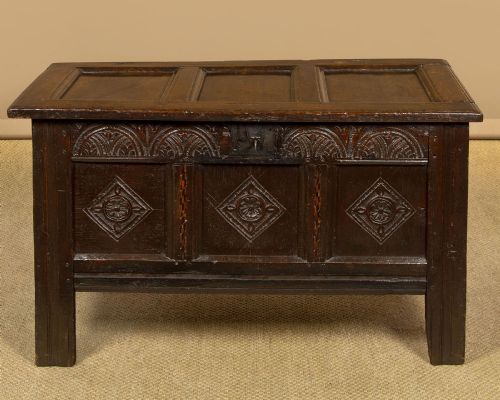
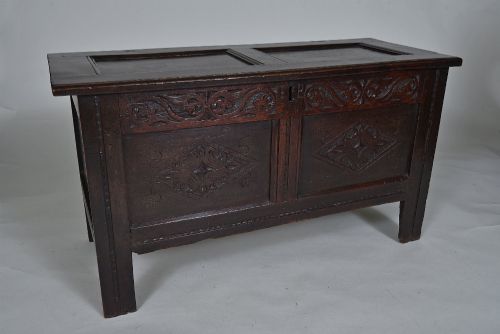
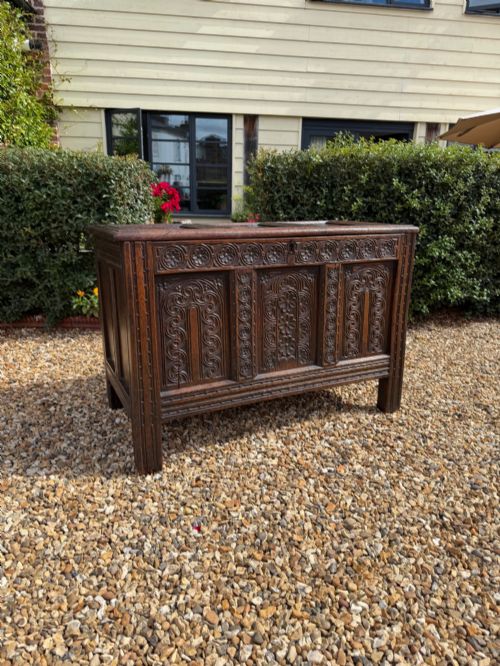
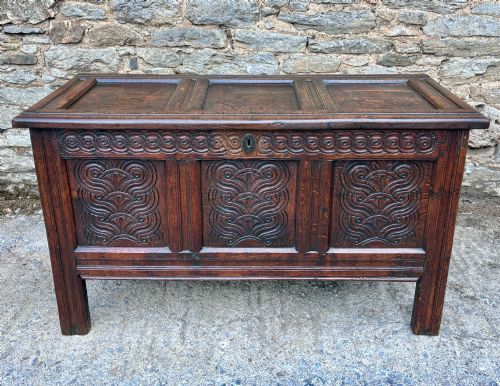
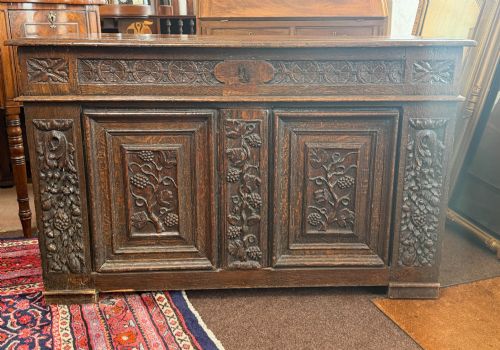
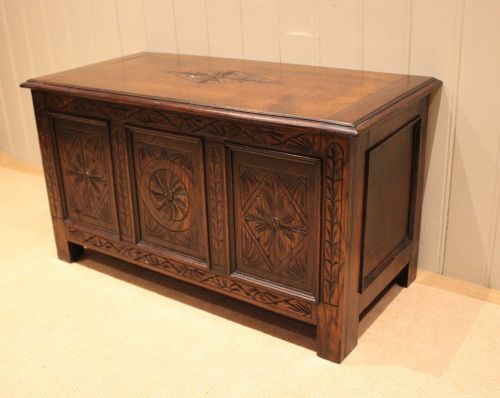
Quality differences stem from the intricacy of hand carving, such as arcaded patterns, linen fold panels, or geometric motifs, compared to plain surfaces. The presence of original hardware, including complex steel locks and hinges, elevates the standing of an individual piece.
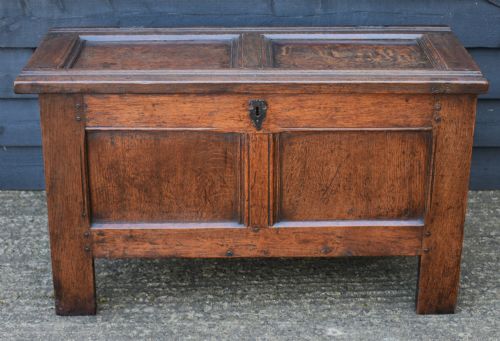
Proportion and scale also distinguish examples, with smaller desk boxes and small-proportioned panelled coffers demonstrating refined domestic scaling. Regional variations, such as specific regional carving styles or documented origins, add discernible character to the execution.
Thomas Dennis
The Seventeenth Century Oak Box Glossary
- Coffer
- A large wooden chest used traditionally for storing valuables, linen, or documents. These pieces often feature hinged lids and robust panelled construction.
- Bible box
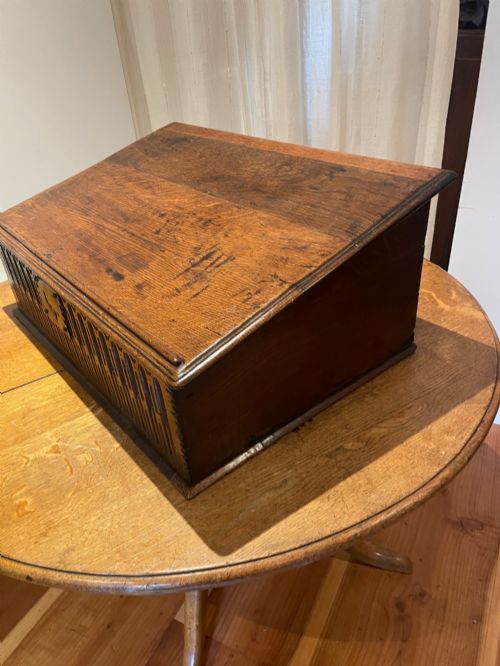
- A small tabletop box constructed to store a family bible or important writing materials. They frequently feature sloping lids suitable for resting books or paper.
- Desk box
- A portable box designed for writing, typically equipped with an angled lid and internal compartments or drawers. They represent early forms of portable desks.
- Jacobean
- A design style spanning the late sixteenth and seventeenth centuries, characterised by dark oak, geometric mouldings, and strapwork carving. This style heavily influences seventeenth century case furniture.
- Linen fold
- A carved wooden panel motif resembling folded cloth or linen. This decorative technique appears frequently on seventeenth century panels.
Seventeenth Century Oak Box: Frequently Asked Questions
What is a seventeenth century oak box used for?
These boxes provided secure storage for household valuables, legal documents, books, and textiles in early homes. Smaller desk and bible boxes functioned as portable writing desks or dedicated enclosures for family bibles.
Larger variations like coffers and mule chests accommodated bulkier items such as blankets, clothing, and grain. Their heavy timber construction ensured contents remained protected from dampness and theft.
How do I tell periods apart?
Identifying periods relies on examining construction methods, timber patination, and decorative motifs such as arcading or geometric strapwork. Seventeenth century pieces display pegged joinery, hand-riven oak, and period-specific ironwork.
Later reproductions or nineteenth and twentieth century interpretations often reveal machine sawing, standardised screws, or simplified carving techniques. Comparing the hardware and internal surfaces helps confirm the age of the timber.
How do I live with a seventeenth century oak box?
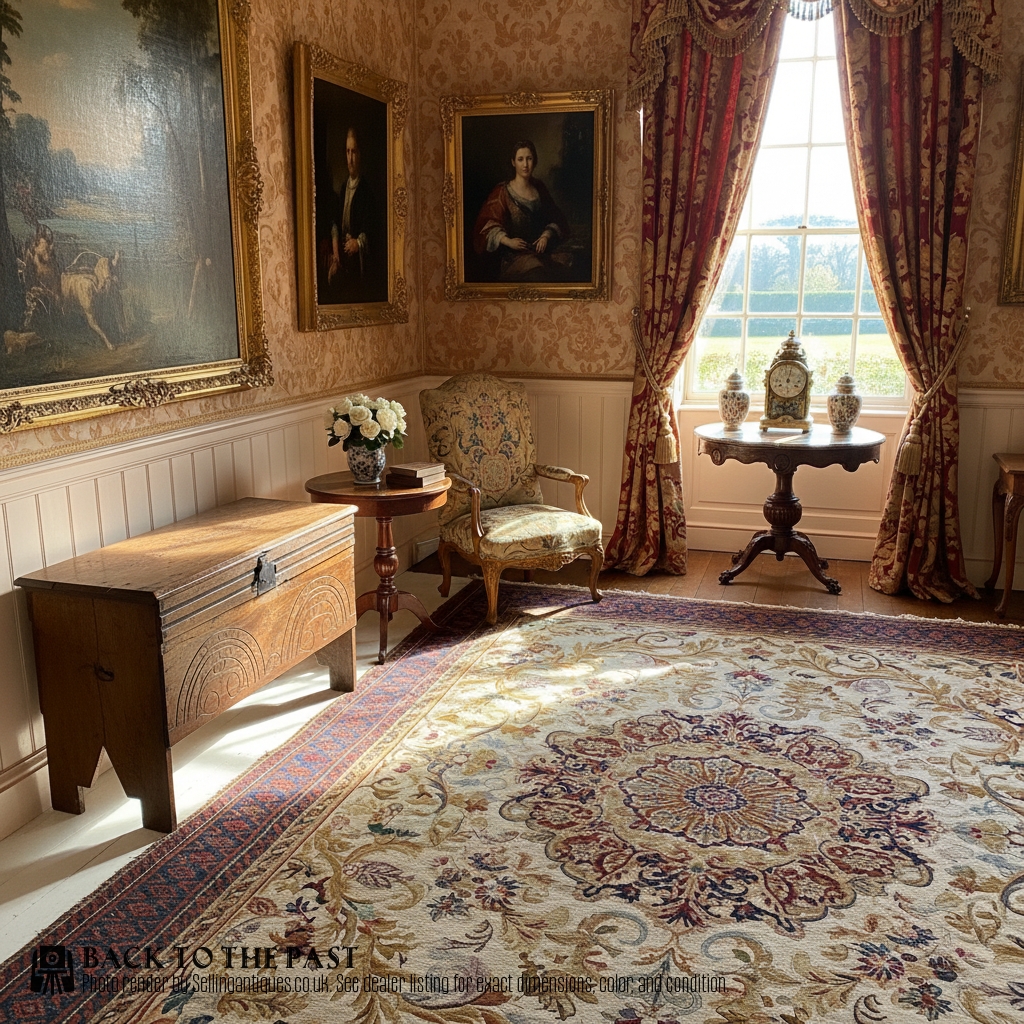
These boxes integrate easily into modern interiors as coffee tables, end tables, or functional hallway storage. Their dark oak surfaces and neutral tones complement both traditional and contemporary room schemes.
Positioning pieces away from direct heat sources and sudden humidity changes preserves the ancient wood. Regular dusting and occasional waxing maintain the natural lustre of the timber without damaging the patina.