
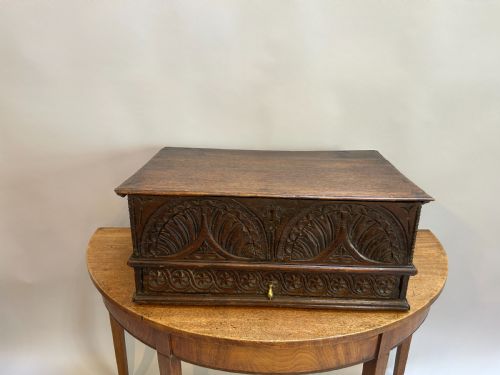
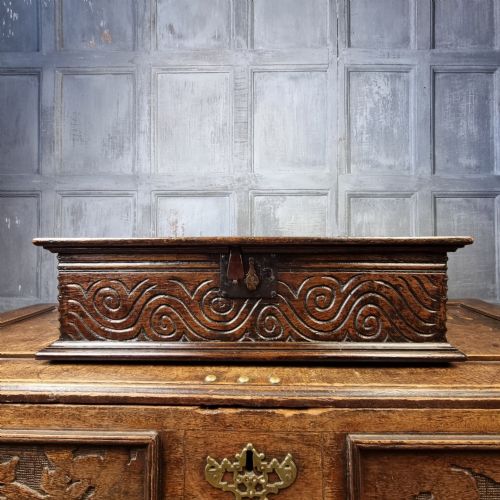


Carved Wooden Bible Box
A carved wooden bible box holds the domestic scriptures and records of centuries past in solid timber.
Carved Wooden Bible Box
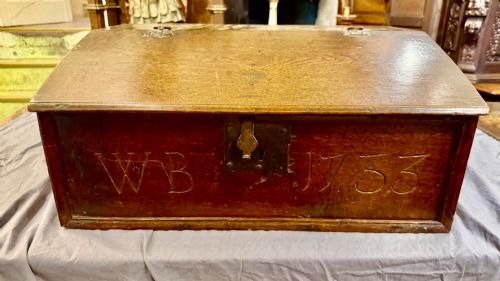
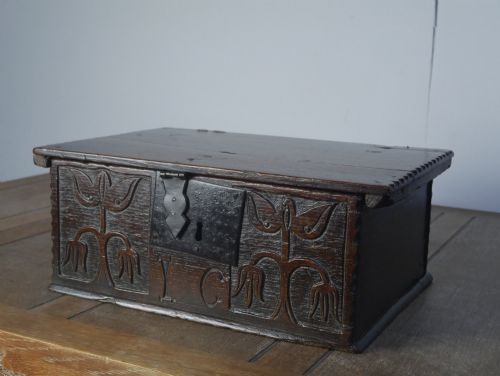
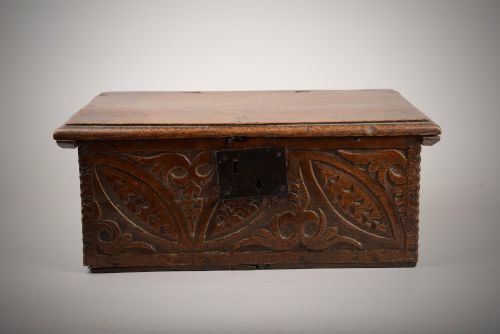
A carved wooden bible box meets the buyer as a sturdy tabletop receptacle intended to safeguard texts and documents. The pieces recorded here span from the seventeenth century through the eighteenth century, with occasional later revival examples.
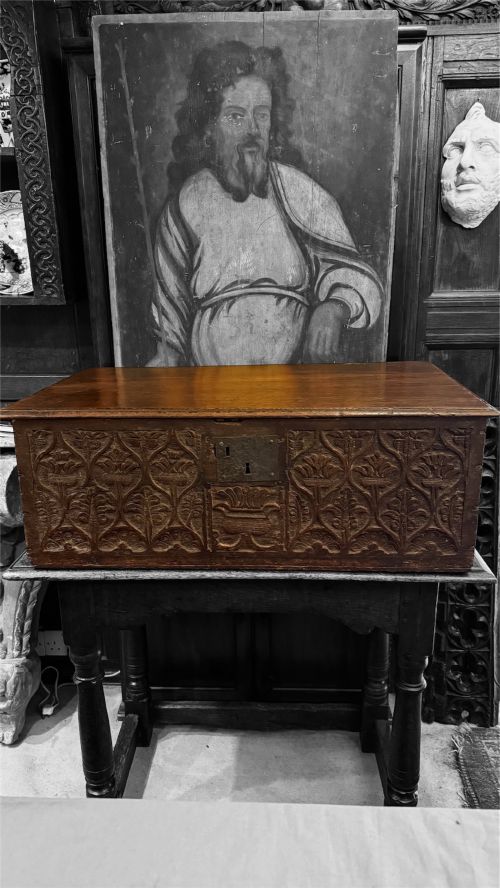
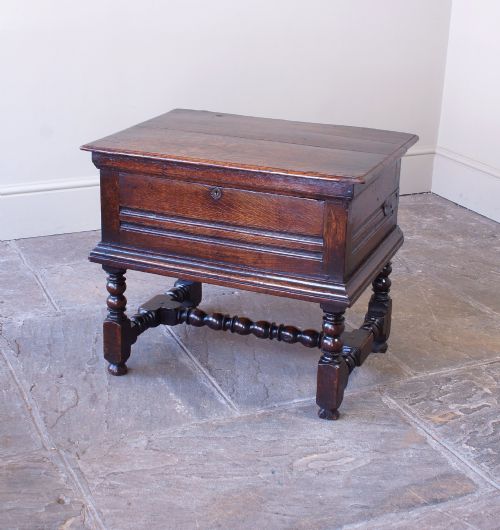
Most items on this page appear in oak, frequently taking the shape of document boxes, desk boxes, slant front bible boxes, or table boxes. Certain variants incorporate internal drawers, a frieze, or sit upon custom frames and stands.
Materials and construction
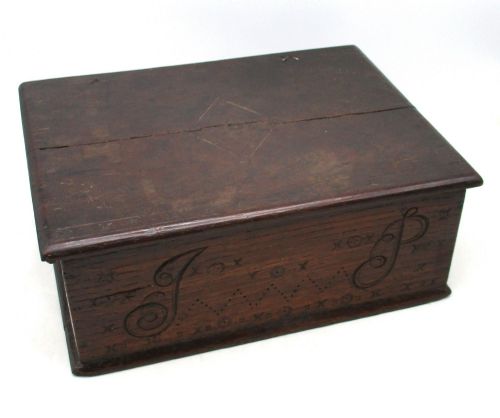
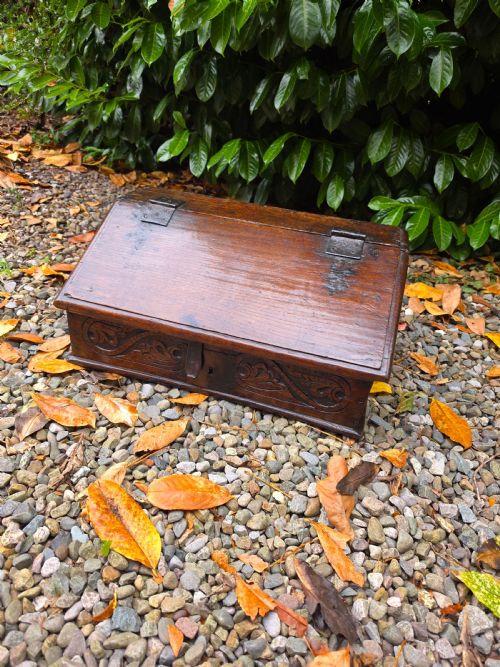
Carpenters constructed these boxes primarily from solid oak, sometimes utilising elm for domestic items. Decoration relies upon traditional chip carving, incised initials, and occasionally holly and bog oak inlay.
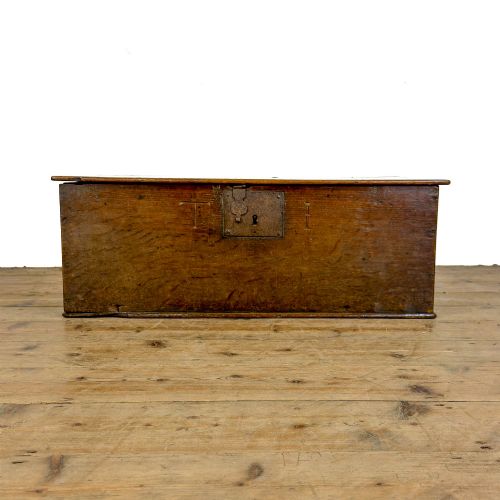
Hardware consists of wrought iron hinges, iron fittings, and brass components to secure lids and internal compartments.
Materials recorded across these listings include oak, elm, bog oak, and holly, alongside iron and brass hardware.
Quality and character
The standard of a carved wooden bible box depends upon the crispness of the original chip carving and the retention of integrated internal drawers. Pieces bearing contemporary dates, owner initials, or established provenance hold distinct documentary interest.
Proportion and timber selection separate ordinary containers from those displaying refined Jacobean, William and Mary, or early Georgian cabinet-making.
The Carved Wooden Bible Box Glossary
- Bible Box
- A small wooden chest originally designed to store a family Bible or important manuscripts securely. These containers typically rest upon tables or desks.
- Chip Carving
- A primitive method of surface decoration where small chips are removed from the timber to create geometric patterns. This technique appears widely on seventeenth century English and Welsh examples.
- Coffer Bach
- A miniature Welsh oak chest, translating as little coffer, utilised for holding valuables or documents. These pieces frequently share construction traits with standard desk boxes.
- Bog Oak
- Subfossil oak timber retrieved from peat bogs, possessing a dark, blackened hue. Craftsmen utilised this dense material for contrasting inlay work.
- Slant Front
- An angled lid configuration designed to provide a writing surface for correspondence or reading. This form bridges the evolution from a simple storage box to a desk.
Carved Wooden Bible Box: Frequently Asked Questions
What is a carved wooden bible box?
A carved wooden bible box is a lidded container historically used to protect sacred texts and domestic records from dampness and wear.
Craftsmen built these portable receptacles to sit on tables, featuring hinged lids and occasionally small internal drawers for ink and quills.
Where were bible boxes placed?
These boxes sat upon sturdy tables, jointed stools, or dedicated desk stands within domestic parlours and ecclesiastical spaces.
Their portable nature allowed users to move the repository between rooms depending on where reading or writing took place.
What is the difference between a bible box and a document box?
While both serve similar storage functions, bible boxes often feature sloped lids for reading or specific dimensions tailored for sacred volumes.
Document boxes generally focus on flat lids for stacking letters, deeds, and personal correspondence securely.