
Oak Coffer Box
An oak coffer box provides sturdy traditional storage, bringing centuries of robust timber construction and panelled design directly into modern rooms.
Oak Coffer Box
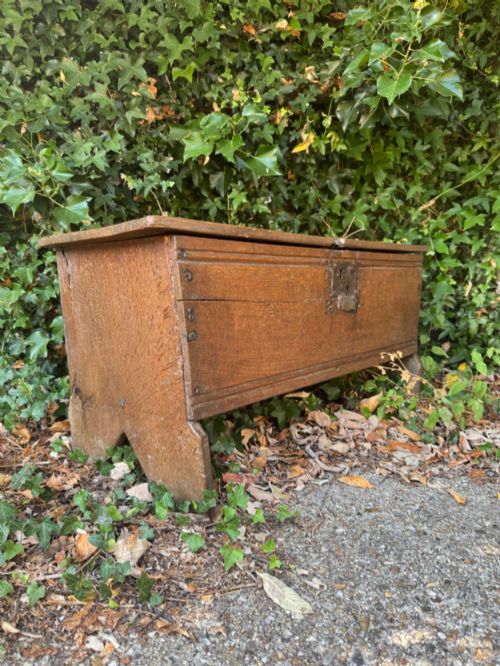
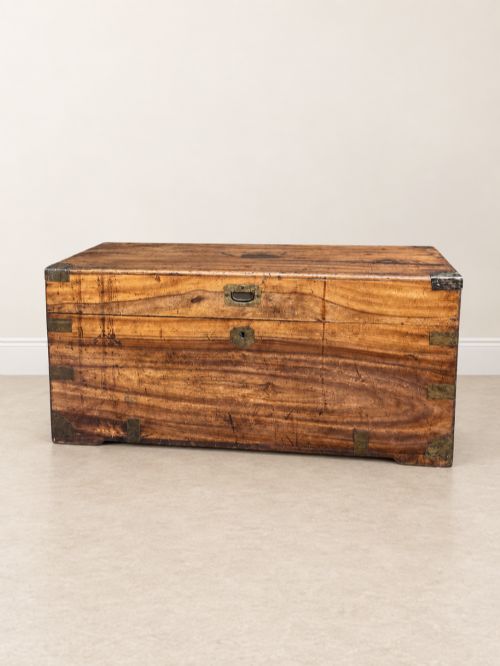
An oak coffer box is a heavy timber storage chest designed primarily for domestic storage and seating throughout the centuries. Buyers searching for this phrase encounter sturdy receptacles ranging from early medieval examples to later revival pieces.
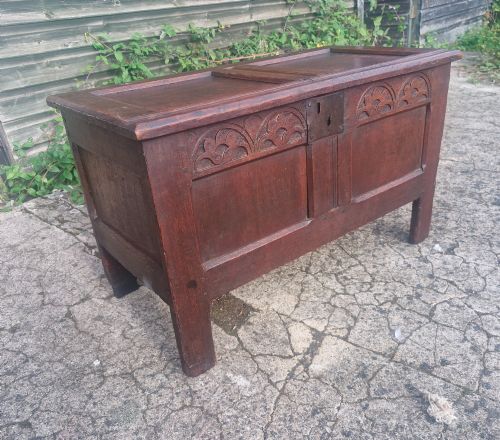
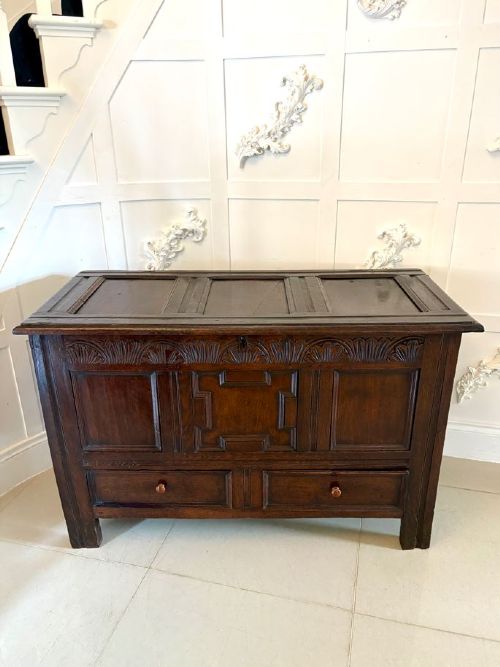
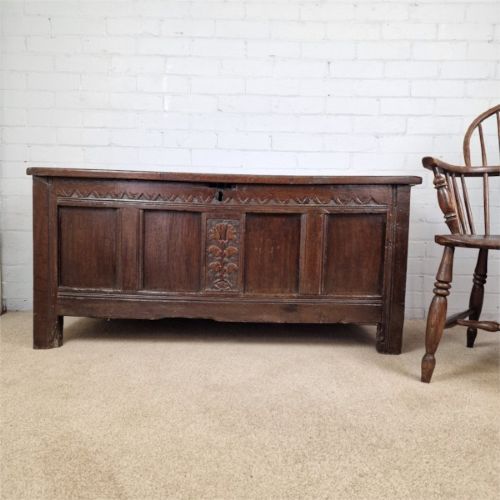
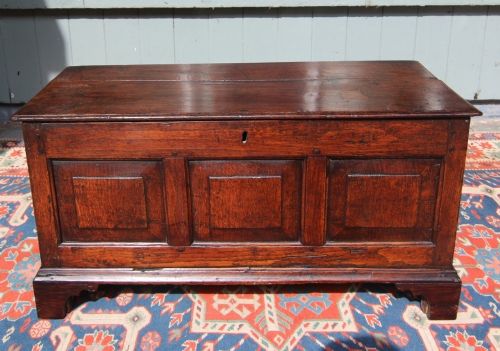
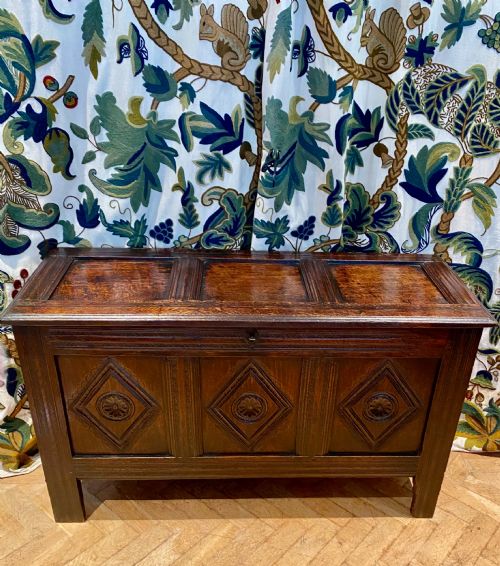
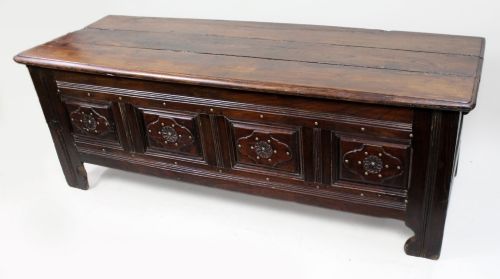
The versions most commonly met on this page date from the seventeenth and eighteenth centuries, often displaying panelled construction and hand-carved detailing. Regional variations such as Welsh vernacular pieces also appear frequently among the listings.
Forms extend beyond standard blanket chests to include specialised document boxes, arrow boxes, and box settles with integrated seating. These domestic containers served practical household functions long before modern wardrobes and cupboards became common.
Materials and construction methods
Makers built these pieces primarily from solid English oak, utilising the timber's natural density and strength to create rigid box structures. Secondary woods like elm occasionally appear in regional variants.
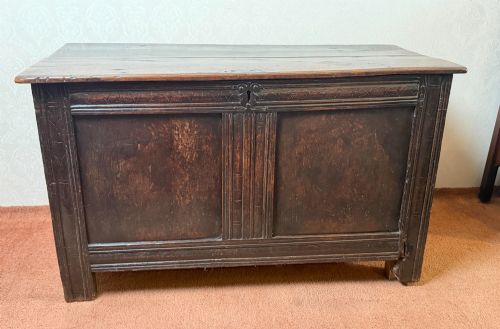
Construction relied on traditional frame and panel techniques, allowing the solid timber to expand and contract naturally with seasonal humidity changes. Wrought iron and brass hinges, strapwork, and locks secured the heavy lids.
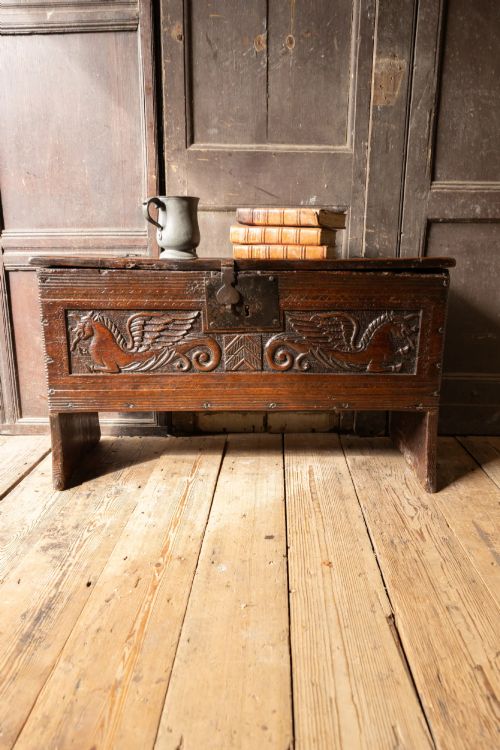
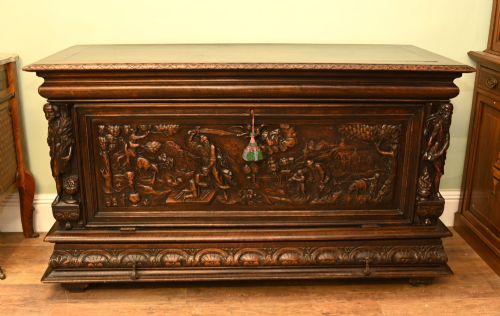
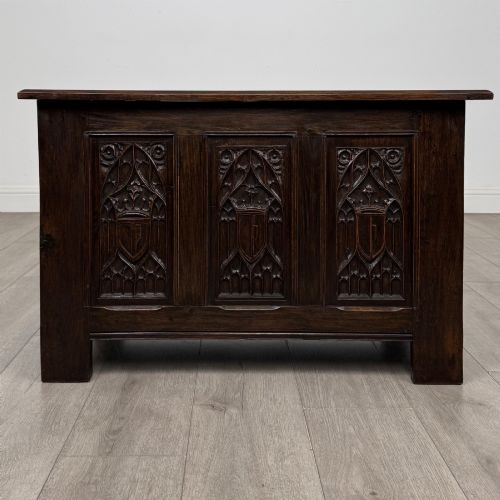
Decoration often involved hand carving using gouges and chisels to produce geometric lunettes, scrolling foliage, and architectural motifs. Selected examples incorporate contrasting marquetry inlay using various decorative woods.
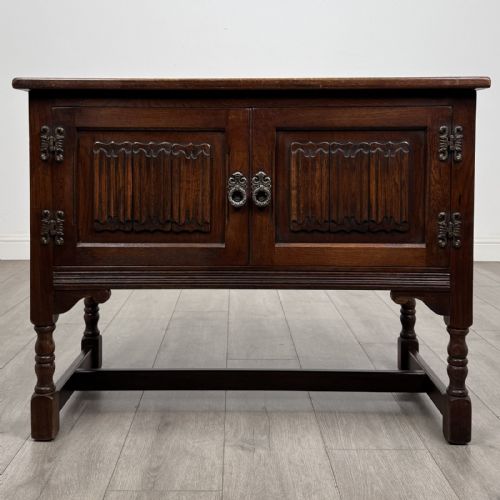
The inventory records diverse styles including Jacobean, Georgian, French Provincial, and Welsh Vernacular.
Evaluating quality and craftsmanship
Quality rests heavily on the integrity of the timber, the depth and crispness of the hand carving, and the survival of original structural elements. Finer examples retain their initial boarded lids, floorboards, and primary ironwork rather than replacement components.
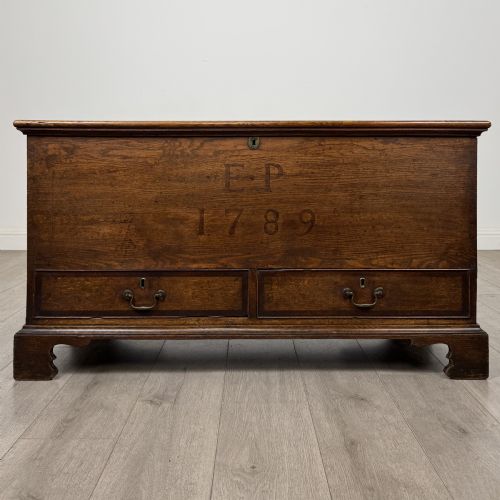
Proportion and scale dictate desirability, with smaller coffers and miniature document boxes often commanding greater interest than standard utilitarian chests. The presence of dated inscriptions, maker marks, or documented regional provenance elevates certain specimens above standard workshop output.
The Oak Coffer Box Glossary
- Coffer
- A heavy wooden chest traditionally used for storing valuables, textiles, or documents. These sturdy containers often doubled as benches or tables in early homes.
- Panel
- A central thin piece of wood fitted into a surrounding grooved wooden frame. This construction method prevented the solid oak from splitting as humidity shifted.
- Mule chest
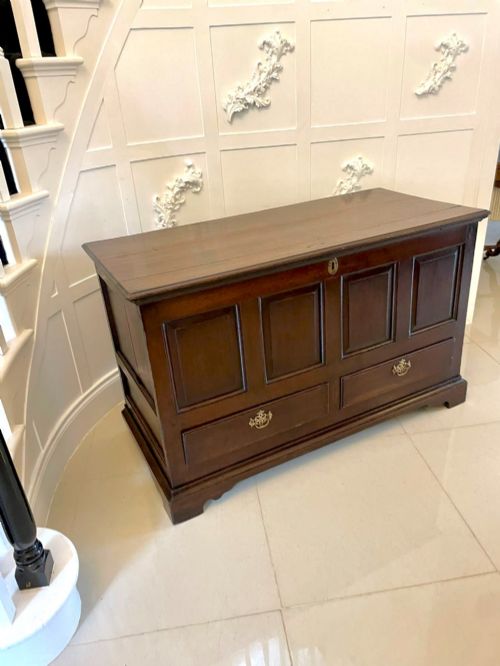
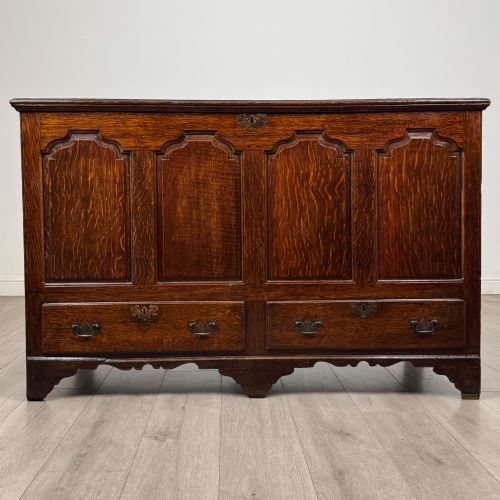
- A storage chest featuring one or more drawers built into the base beneath the main compartment. They bridge the design gap between simple coffers and full drawer chests.
- Lunette
- A semicircular decorative carving often filled with fan or floral motifs. Seventeenth-century makers frequently deployed this ornament across the top rails of panels.
- Vernacular
- Regional furniture built by local craftsmen using traditional local styles rather than high-fashion metropolitan designs. Welsh vernacular pieces display distinctive local framing habits.
Oak Coffer Box: Frequently Asked Questions
How were oak coffer boxes originally used?
These robust chests served primarily to store valuable textiles, household linens, and important documents securely in domestic settings. Their flat lids also allowed them to function as tables, benches, or sleeping platforms in medieval and early modern homes.
As domestic spaces evolved, they transitioned into general blanket boxes and hallway seating. Their heavy construction ensured the contents remained protected from dampness and pests.
How can I tell a seventeenth-century coffer apart from a later revival piece?
Early pieces display distinct tool marks, pegged mortise and tenon joints, and timber that has oxidized naturally over centuries. The grain texture and ironwork wear patterns on genuine period examples differ substantially from nineteenth or twentieth-century revival interpretations.
Construction details like hand-split oak boards and primitive hinge systems further separate authentic early work from later copies. Examining the underside and interior surfaces often reveals the true age of the timber.
Where should I place an oak coffer box in my home?
A coffer functions exceptionally well as a hall bench, providing a sturdy seat alongside concealed interior storage for shoes and boots. They also serve effectively at the foot of a bed for spare blankets and linens.
Keep wooden chests away from direct heat sources and intense sunlight to prevent the dry oak from splitting. Maintaining stable room humidity preserves the historic finish and structural stability of the timber.
What is the difference between a coffer and a mule chest?
A standard coffer consists solely of a top-opening lid over a single deep compartment. A mule chest incorporates one or more functional drawers beneath the main upper well.
This drawer addition marked a significant evolution in furniture design during the seventeenth and eighteenth centuries. It allowed users to access smaller items without lifting the heavy top lid.