



Carved Oak Tabletop Chest
A carved oak tabletop chest offers compact storage for documents and valuables, combining solid timber construction with period joinery.
Carved Oak Tabletop Chest
When you search for a carved oak tabletop chest, you enter a field spanning miniature furniture, coffers, and specialised desktop cabinets. These pieces range from seventeenth-century desk and bible boxes to eighteenth-century Welsh coffor bach designs and nineteenth-century collectors cabinets.
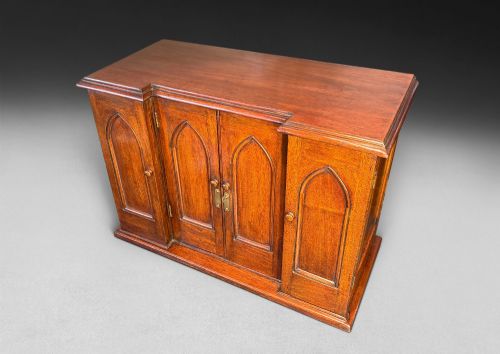
The versions most commonly met on this page include miniature coffers and small-scale cabinets constructed primarily from oak. They appear across various historic periods, including Georgian, Edwardian, and nineteenth-century Gothic Revival styles.
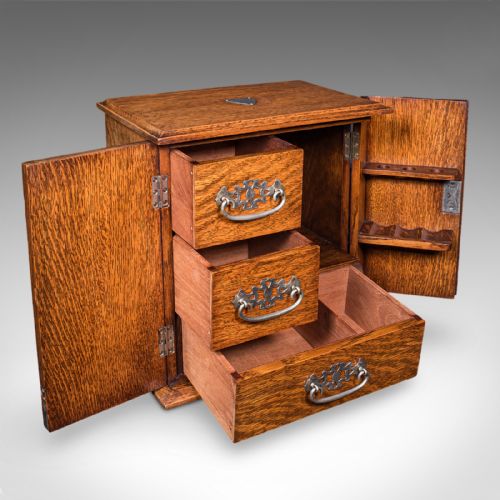
Makers and regional workshops produced these small containers for specific domestic tasks, resulting in forms like watchmaker cabinets and smoking cases. Buyers encounter these items preserved in oak, often accompanied by brass and iron hardware.
How they were made
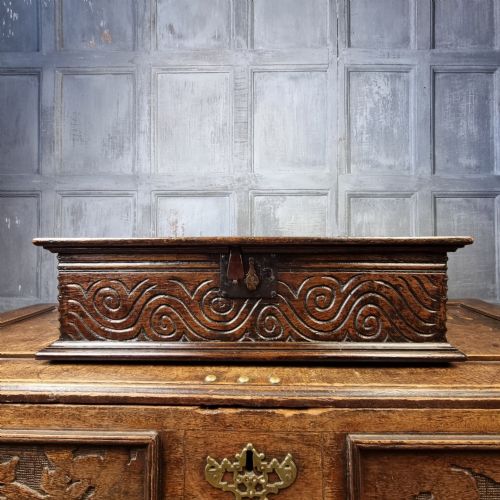
The construction of a carved oak tabletop chest relies on solid oak timbers shaped with hand tools and traditional joinery techniques. Makers utilised sturdy panels, pegged joints, and surface carving to decorate the exterior surfaces of these small containers.
Hardware elements such as brass hinges, brass locks, and iron mounts secure the lids and doors of these boxes and cabinets. The integration of metal fittings provides both structural reinforcement and functional closure for daily use.
A doctor needed a special smoking cabinet just to keep the local gossip contained.
What varies in quality
Quality in a carved oak tabletop chest is determined by the crispness of the period carving and the integrity of the original oak timber. Pieces featuring deeply articulated detail and well-preserved surface patination sit at the top of the range.
The presence of original brass or iron hardware and intact internal fittings elevates an example above altered or later-repaired counterparts. Construction fidelity, such as precise joinery in miniature coffers and cabinets, marks the distinction between standard and superior pieces.
Manoah Rhodes & Sons Ltd
The Carved Oak Tabletop Chest Glossary
- Coffor bach
- A traditional Welsh miniature coffer or chest used historically for storing valuables or linen. These small oak pieces often feature pegged construction and carved fronts.
- Bible box
- A small tabletop desk box originally designed to house a family bible and writing materials. They frequently date to the seventeenth century and feature sloped or flat lids.
- Watchmaker cabinet
- A specialised multi-drawer tabletop cabinet utilised by horologists to store small components and tools. They appear in oak from the interwar period and earlier.
- Gothic Revival
- A nineteenth-century design style incorporating medieval architectural motifs such as pointed arches and tracery. This aesthetic strongly influences Victorian oak cabinetwork.
Carved Oak Tabletop Chest: Frequently Asked Questions
What is a coffor bach?
A coffor bach is a small Welsh miniature coffer traditionally made of oak during the eighteenth century. These tabletop chests served as storage for valuables, documents, or keepsakes.
They mirror the construction of larger blanket chests but scale down dimensions for domestic tabletop placement. Many examples feature panelled construction and characteristic surface carving.
How were tabletop cabinets used?
Tabletop cabinets housed specialised items such as watches, documents, smoking accessories, or household receipts. Their compact footprint allowed them to sit securely upon desks or sideboards.
Different trades and households adapted these small containers to their daily storage requirements. Watchmakers and doctors utilised specialised internal drawer layouts for their tools and instruments.
How do I date an oak chest?
Dating relies on examining the construction methods, tool marks, and stylistic motifs present on the piece. Seventeenth-century boxes typically display hand-riven oak boards and simple pegged frame-and-panel assembly.
Later nineteenth and twentieth-century examples incorporate machine-sawn timber and different hardware styles. Comparing the decorative carving to established period styles helps narrow the origin.
Are these chests made of solid oak?
The listings on this page consist of oak timber, frequently paired with brass and iron hardware fittings. Solid oak forms the primary structural carcass for these miniature chests and cabinets.
Makers selected oak for its durability and prominent grain pattern. Secondary woods may appear in concealed areas like drawer linings, depending on the period.