


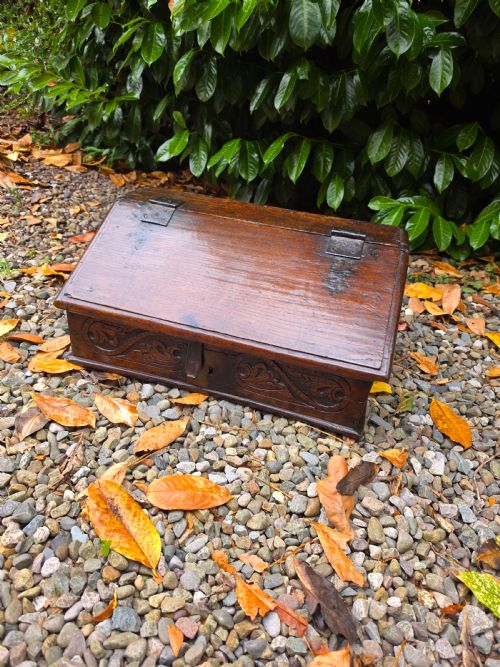

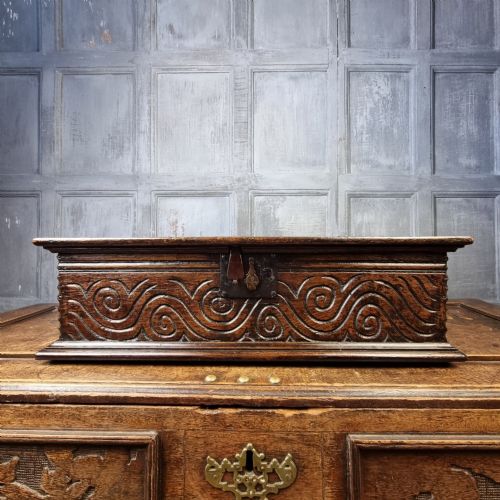
Carved Oak Desk Box
A carved oak desk box brings centuries of heavy timber utility and fine hand-carving directly onto a modern table.
Carved Oak Desk Box
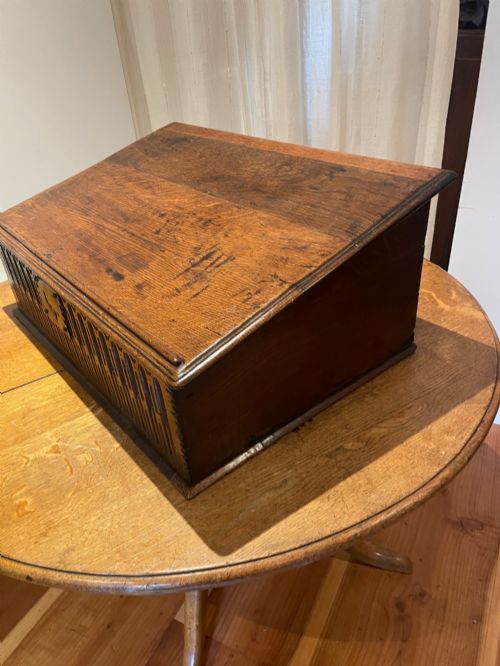
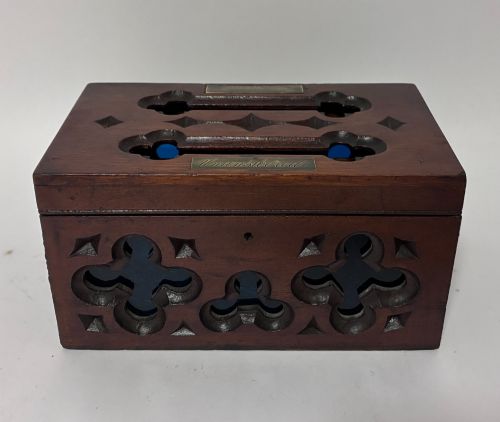
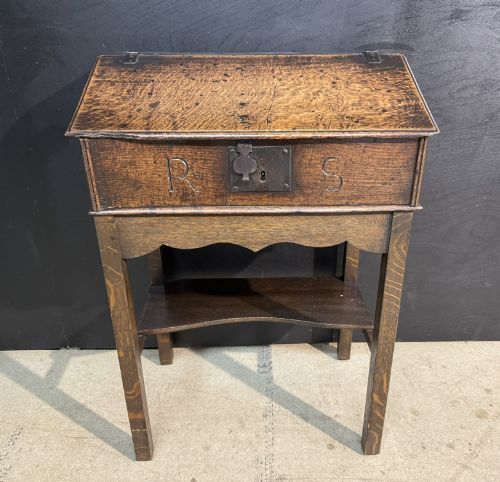
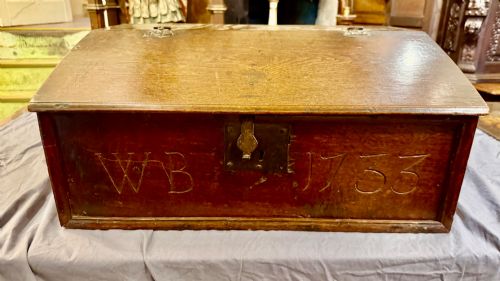
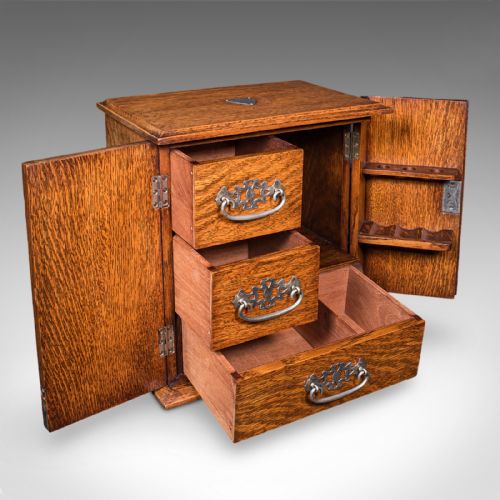
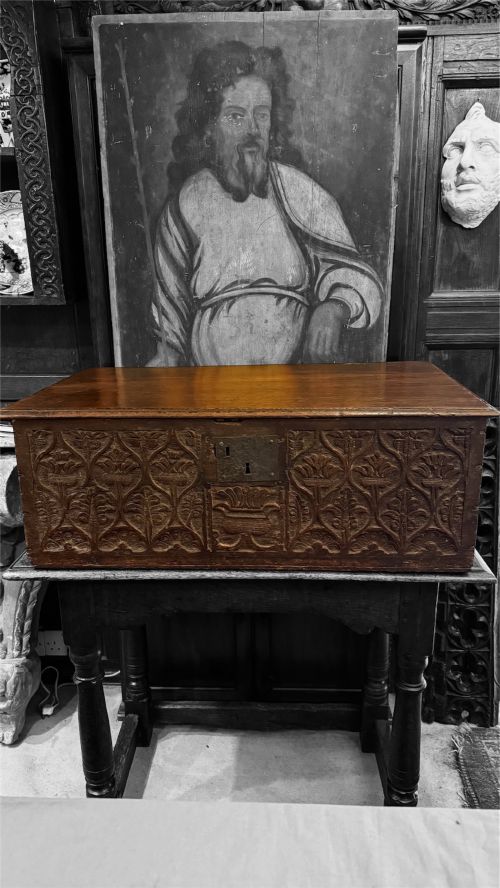
When you search for a carved oak desk box, you are looking at solid timber receptacles designed for holding documents, writing implements, and personal valuables. The majority of pieces on this page span the seventeenth and eighteenth centuries, taking the form of Bible boxes, document chests, and slant-front writing slopes.
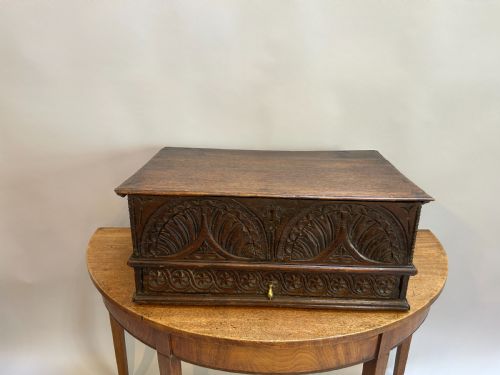
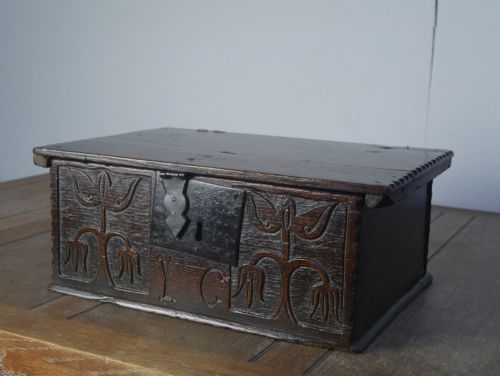
Many of these containers sit flat upon a table or desk, whilst others incorporate internal drawers, hidden compartments, or even original stands. You will encounter formats featuring chip carving, inscribed initials, and dated friezes originating from English and Welsh workshops.
How they were made
The primary material across these pieces is solid oak, often joined using traditional pegged mortise and tenon construction to ensure structural rigidity. Makers utilised iron hinges and brass lock plates to secure the lids, occasionally incorporating secondary timbers like holly or bog oak for contrasting inlay work.
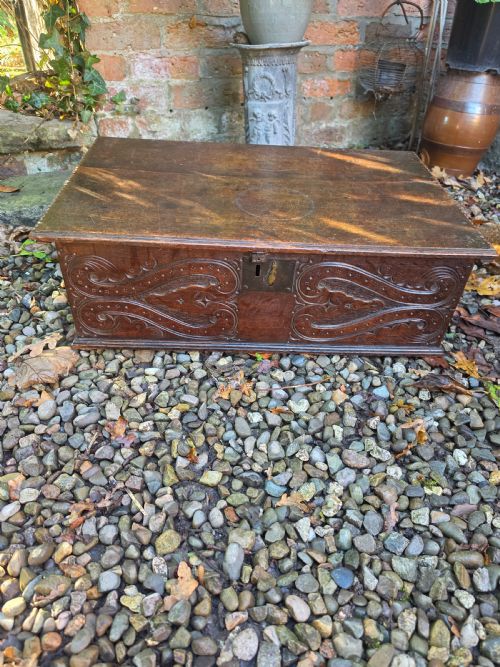
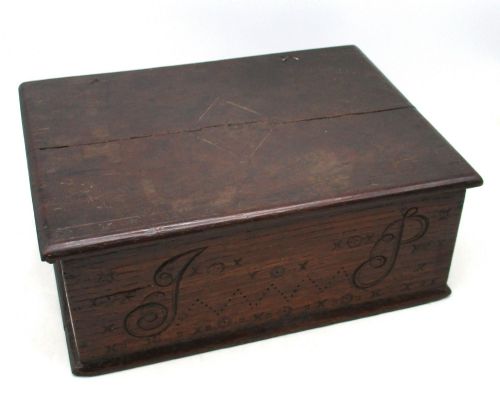
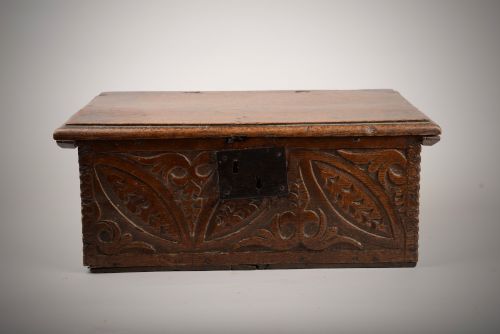
Surface decoration relies on hand-carved relief patterns, chip carving, and incised owner details rather than applied veneers. Boards were split or sawn by hand, leaving tool marks that distinguish early vernacular joinery from later industrial production.
Carved Oak Desk Box Retail Price Guide 2026
Typical asking prices for carved oak desk box among the pieces listed under this phrase on Sellingantiques today, from the lower quarter to the upper quarter. They describe what is for sale here now, not the wider market.
What varies in quality
Quality in a carved oak desk box rests upon the crispness of the original chisel work and the proportion of the timber boards. Superior examples display deep, deliberate carving on the front panel and lid, whereas lesser pieces show worn or shallow decoration.
The survival of original internal fittings, such as small drawers, till compartments, and wrought iron hardware, elevates a piece significantly. Furthermore, untouched surfaces with honest patination and minimal timber replacement command greater appreciation than heavily restored boxes.
The Carved Oak Desk Box Glossary
- Bible box
- A small lidded chest traditionally used to store a family Bible and important papers. These receptacles frequently double as writing desks when placed upon a table.
- Slant-front
- A hinged sloping lid designed to provide an ergonomic surface for handwriting. This format evolved into the more complex bureau styles of later periods.
- Chip carving
- A decorative technique where small chips are removed from the surface of the wood to create geometric patterns. It appears frequently on seventeenth-century vernacular boxes.
- Frieze
- The horizontal decorative band running along the upper portion of the box front. Carvers often utilised this space for initials, dates, or running scroll motifs.
Carved Oak Desk Box: Frequently Asked Questions
How were these boxes originally used?
These boxes served as portable storage for valuable documents, writing materials, and household Bibles before dedicated desks became common.
Owners kept them locked to protect personal papers, placing them on tables or laps when writing letters.
How do I date a seventeenth-century box?
Dating relies on construction methods like peg joinery, ironwork style, and the character of the hand-carving.
Many pieces also feature carved initials and dates directly into the oak frieze or front panel.
Can I use one as a laptop stand?
Their sturdy solid oak construction easily supports modern electronic devices and writing equipment.
Ensure the dimensions and lid angle suit your daily workspace requirements before placing items on top.
What is the difference between a Bible box and a document box?
Bible boxes generally feature a flat or gently sloping lid sized to fit a large volume.
Document boxes tend to be shallower or squarer, constructed specifically for folded legal papers and letters.