



18th Century Desk Box
An 18th century desk box provides compact, portable storage for correspondence and documents, offering sturdy craftsmanship and period timber character.
18th Century Desk Box
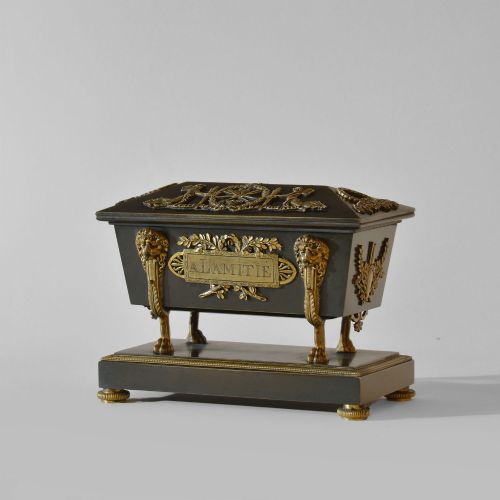
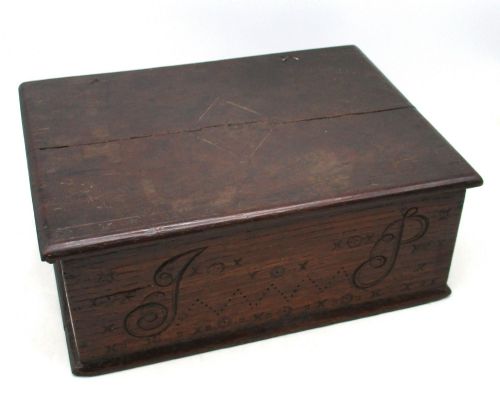
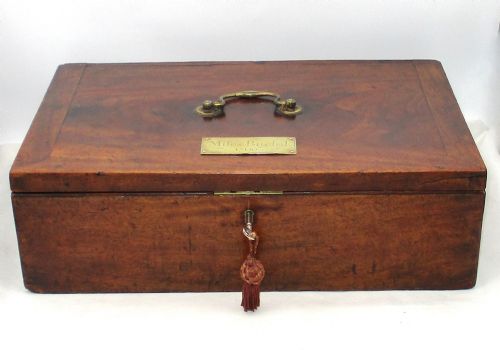
An 18th century desk box encompasses portable writing chests, document containers, and table-top storage forms built to house letters, ink, and papers securely. Buyers seeking these items will frequently encounter solid oak Bible boxes and mahogany stationery containers originating from the Georgian era.
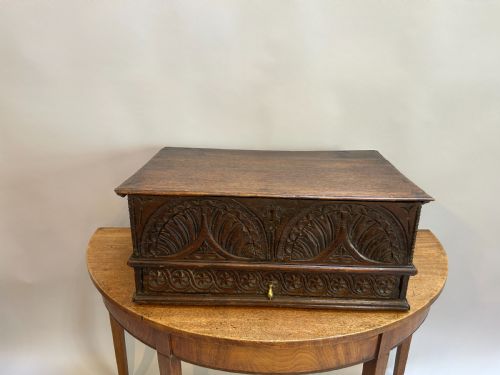
The selection ranges from utilitarian oak storage pieces featuring carved friezes and internal drawers to refined flame mahogany writing slopes and inlaid satinwood items. These objects served domestic and professional needs in homes and offices before fitted desks became standard.
Originating predominantly from British workshops, the pieces reflect regional timber choices such as Welsh oak and English elm alongside imported hardwoods. Their compact proportions make them practical for modern interiors while retaining tangible age.
How they were made
Cabinetmakers constructed these boxes using solid timbers including oak, mahogany, walnut, and elm, frequently employing pegged joints for earlier pieces and precise dovetailing for later mahogany examples. Surfaces were often enhanced with decorative stringing, holly and bog oak inlay, or geometric marquetry.
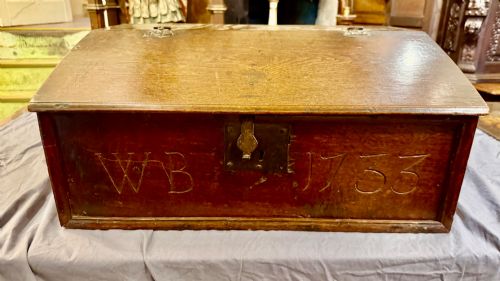
Hardware played a functional and decorative role, with brass carrying handles, escutcheons, hinges, and corner brackets securing the lids and corners against heavy daily use. Linings of baize, velvet, or marbled paper completed the interiors where ink and quills were stored.
18th Century Desk Box Retail Price Guide 2026
Typical asking prices for 18th century desk box among the pieces listed under this phrase on Sellingantiques today, from the lower quarter to the upper quarter. They describe what is for sale here now, not the wider market.
Some miniature Welsh oak bureaus and tiny desk boxes suggest that children practised their handwriting on furniture built precisely to scale.
What varies in quality
The standard of timber selection and decorative execution largely distinguishes one piece from another, particularly when comparing plain utility boxes to highly figured flame mahogany or intricately inlaid satinwood examples. Original brass hardware, intact internal compartments, and undamaged secondary woods elevate a box above heavily altered or later-assembled counterparts.
Proportion and execution of carving also dictate distinction, as demonstrated by crisp relief carving on oak Bible boxes versus softer, worn surfaces. The presence of original locks, keys, and untouched patination indicates superior preservation over generations.
Robert Hennell·James Phipps I
The 18th Century Desk Box Glossary
- Bible box
- A sloping-lidded wooden container originally designed to hold family scriptures or parish records, frequently adapted for general correspondence.
- Writing slope
- A portable box with an angled hinged lid that opens to reveal a slanted writing surface and fitted compartments for ink and pens.
- Escutcheon
- A protective brass plate surrounding a keyhole, designed to prevent the surrounding wood from splitting when the key is turned.
- Dovetail
- A joint formed by interlocking wedge-shaped fingers, commonly used to join the corners of drawers and box walls securely.
- Stringing
- Thin bands of contrasting wood inlaid into the surface of a box to create decorative geometric borders.
18th Century Desk Box: Frequently Asked Questions
How were desk boxes used?
These boxes provided a portable writing surface and secure storage for letters, seals, and inkwells before fitted writing desks became common.
Owners placed them on tables or laps to draft correspondence, locking the lid afterward to protect private documents.
How do I tell oak from mahogany?
Oak displays prominent visible grain rings and medullary rays, often appearing in earlier 17th and 18th century utility pieces.
Mahogany exhibits a denser, reddish-brown grain that takes a high polish, typically seen in later Georgian and Sheraton pieces.
Where should I place a box?
These boxes suit placement on sideboards, desks, or low tables where their top surfaces and decorative brass fittings remain visible.
They also function practically for storing small modern stationery items inside their historical compartments.
What is a Bible box?
A Bible box is a sturdy rectangular wooden chest with a slanted lid, built to store religious texts and writing materials safely.
Over time, many served primarily for general household documents and letters rather than sacred books.