


Inlaid Oak Coffer
An inlaid oak coffer is a sturdy wooden chest designed for storage, combining practical utility with decorative timber work.
An inlaid oak coffer
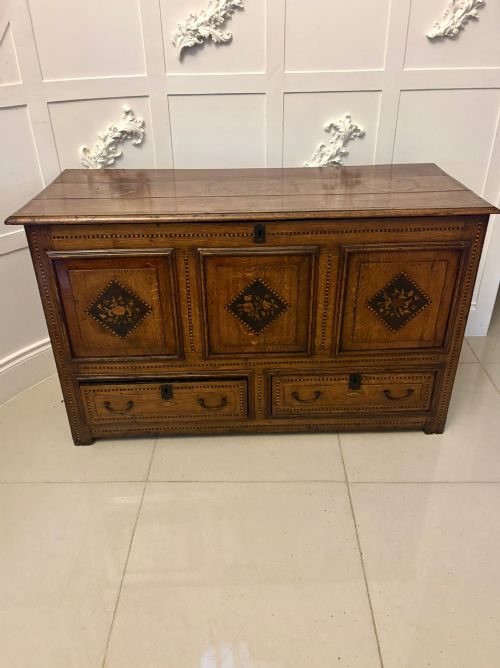
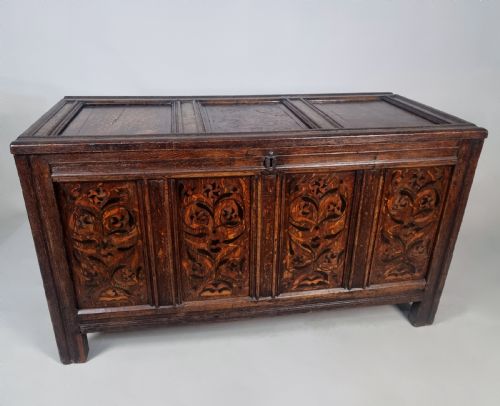
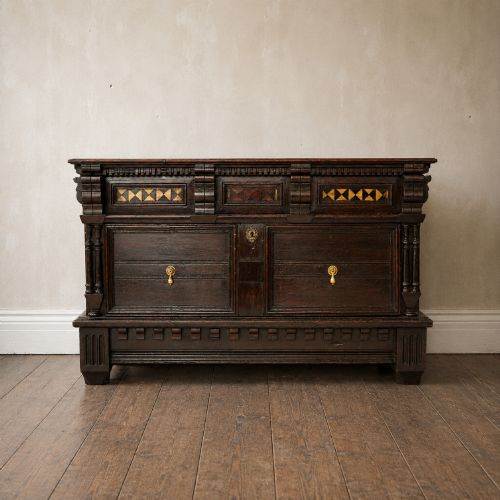
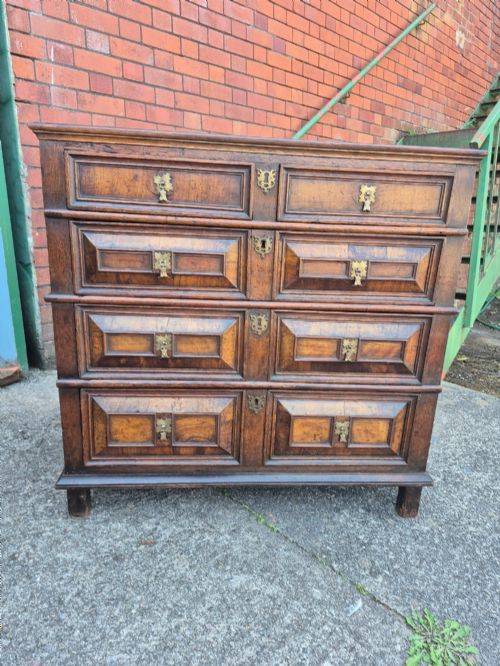
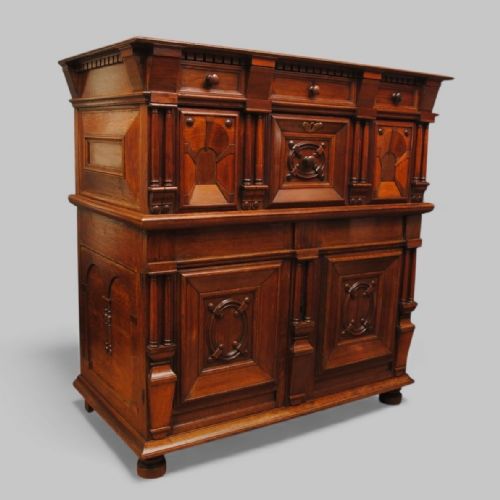
When you search for an inlaid oak coffer, you encounter heavy timber storage chests originating primarily from the seventeenth and eighteenth centuries, shaped by British and European cabinet-making traditions. The forms span large panelled blanket boxes, mule chests fitted with drawers, smaller desk boxes, and miniature coffor bach examples.
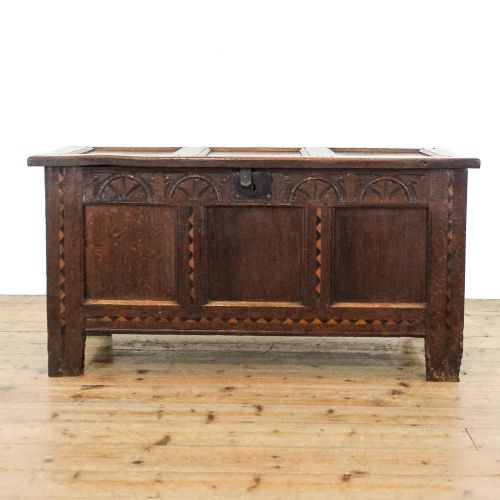
Jacobean, Charles II, and Georgian periods dominate the provenance, with regional variations stretching from Yorkshire and Leeds down to Welsh country workshops. The standard survivor on this page is a rectangular chest constructed with stile and rail framing, housing multi-panelled fronts embellished with contrasting wood details.
Collectors find these pieces valued for their robust timber construction and the visual rhythm of their geometric or floral embellishments. They served historic households as strongboxes and linen stores, and today they function as focal storage units in traditional or contemporary interiors.
Materials and Construction
Cabinet makers built these chests using solid oak timber, frequently augmented with secondary woods such as elm, boxwood, and ebony for framing and structural stability. Iron hinges, brackets, and brass lock plates provided the necessary mechanical hardware for secure daily use.
The decorative schemes rely on mixed inlay woods, parquetry, and marquetry techniques, utilising lighter woods like holly alongside dark bog oak to create sharp tonal contrasts. Artisans also employed hand-carving alongside timber inlay, chiselling strapwork, initials, and foliate motifs directly into the oak panels.
Retail Price Guide 2026
Typical UK retail prices for inlaid oak coffer, calculated from the Sellingantiques database of over a million retail prices indexed since 2003. This retail price guide relies exclusively on Sellingantiques data; no external sources or auction records are used, so the figures do not describe the wider market.
Current listings feature oak coffers spanning the seventeenth century, the eighteenth century, and the Georgian era, incorporating holly, bog oak, and iron hardware.
Distinctions in Execution
The sophistication of the timber inlay separates standard storage boxes from exceptional examples, with intricate marquetry and multi-wood parquetry demanding far greater skill than simple line inlay. The quality of the carving on the surrounding oak stiles and rails further dictates the artistic tier of the piece.
Proportion and scale heavily influence desirability, as diminutive forms like the Welsh coffor bach or small mule chests command intense interest compared to standard domestic blanket boxes. Original surface patination and the retention of internal fitments, such as candle boxes and small drawers, complete the hierarchy.
The Inlaid Oak Coffer Glossary
- Coffer
- A heavy wooden chest traditionally used for storing valuables, linens, and documents. These pieces usually feature a hinged lid and boarded or panelled construction.
- Mule chest
- A storage chest that includes one or more drawers at the base beneath the main compartment. They bridge the gap between traditional coffers and modern chests of drawers.
- Coffor bach
- A Welsh miniature chest or coffer, often constructed with drawers and intricate panel work. These small items served specific domestic storage roles.
- Marquetry
- A decorative technique where thin veneers of various woods are applied to a structural carcass to form pictorial or geometric patterns. It provides surface ornamentation without relying on deep carving.
- Bog oak
- Oak timber that has been buried in peat bogs for centuries, turning a distinctive dark brown or black shade. Craftsmen utilised this material for contrasting details in inlay work.
Frequently Asked Questions
What did people store inside an inlaid oak coffer?
Historic households utilised these heavy chests primarily for storing valuable textiles, fine linen, wool blankets, and family documents. Their robust construction and lockable lids kept contents safe from dampness and theft.
As domestic wealth grew, smaller compartments or internal candle boxes were introduced to organise smaller personal items, coins, and legal papers.
How do I date a seventeenth century oak coffer?
Dating relies heavily on construction methods, timber preparation, and the style of the carved or inlaid ornament. Seventeenth century pieces often display pegged mortise and tenon joints with hand-split oak panels.
Hardware elements, such as iron strap hinges and forged locks, also provide crucial physical evidence for establishing the correct period of manufacture.
Where were most British oak coffers made?
Regional workshops across Britain produced these chests, with distinct styles emerging from areas like Yorkshire, Leeds, and rural Wales. Local cabinet makers utilised timber native to their specific districts.
Specific regional traits, such as the Welsh coffor bach format or Yorkshire panel arrangements, help experts attribute geographic origins to surviving examples.
Can I use a coffer as a coffee table?
Many collectors and homeowners place sturdy oak coffers in living spaces to function as stable coffee tables while providing hidden storage. Their flat lids accommodate books and decorative objects comfortably.
One should ensure the antique lid hinges and structural frame remain stable enough to support daily use before placing heavy items on top.
What is the difference between a coffer and a chest?
In historical terminology, a coffer specifically denotes a strongbox with a lid designed for travel or secure storage, often featuring more elaborate decoration. A blanket chest generally refers to simpler domestic furniture intended strictly for linen.
Over time, these terms became largely interchangeable in marketplace descriptions, covering panelled timber storage units of various proportions.