


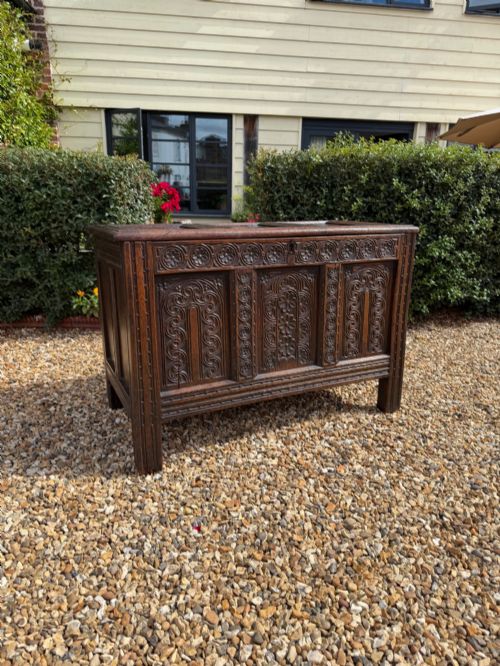
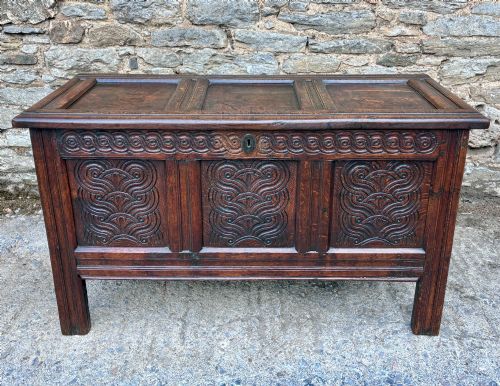
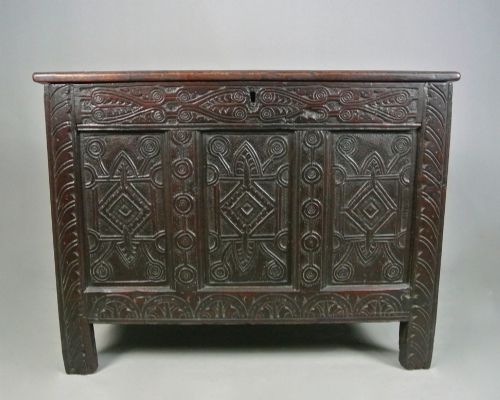
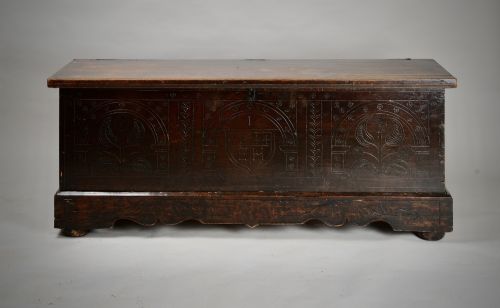
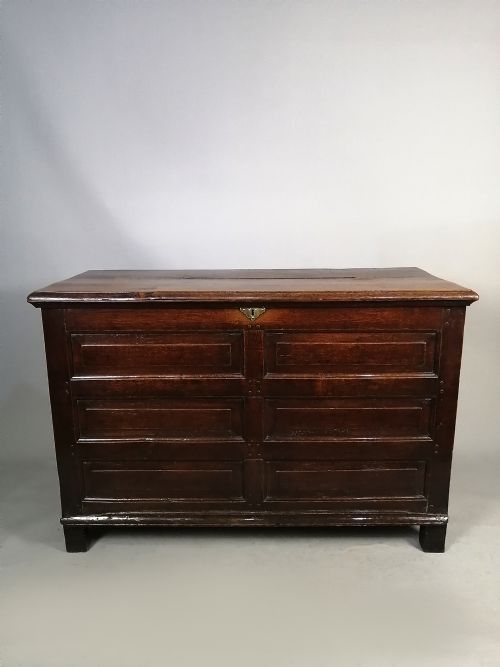
17th Century Trunk
A 17th century trunk brings heavy timber and centuries of domestic history straight into a modern room.
Defining the 17th Century Trunk
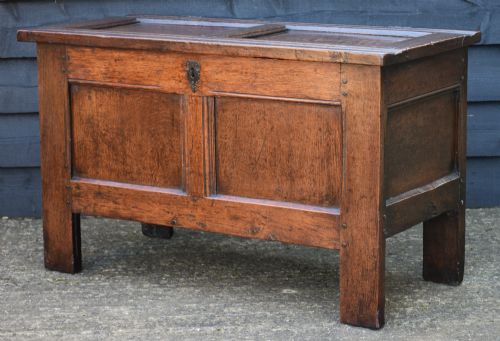
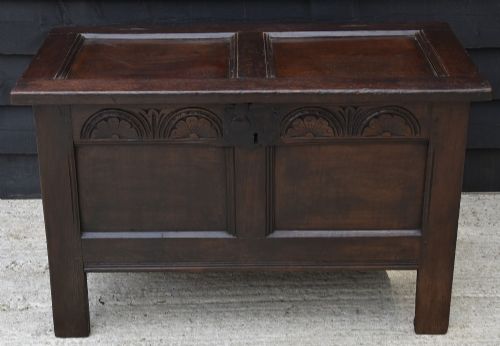
A 17th century trunk encompasses sturdy storage pieces designed for domestic utility, travel or safekeeping valuables in early households. These items frequently cross over with the definitions of coffers, blanket boxes, bible boxes and joined chests.
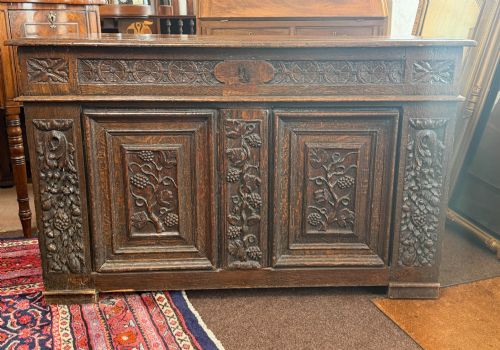
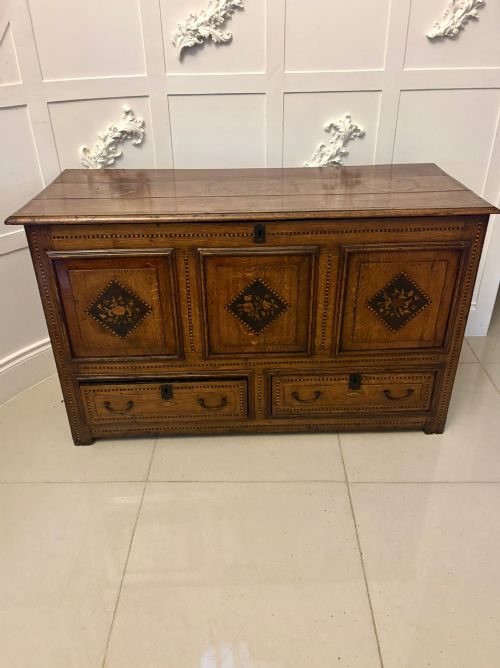
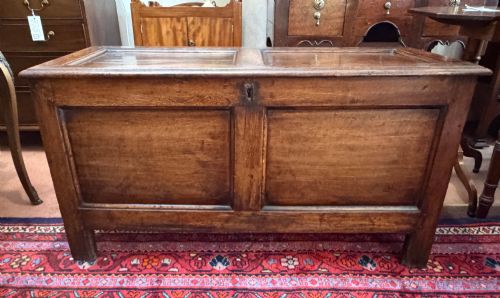
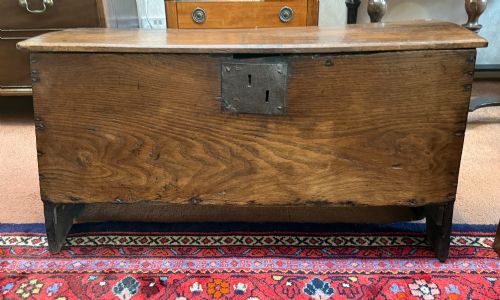
The versions most commonly met here lean heavily toward English production in solid oak, alongside occasional examples in elm, walnut or leather-studded frames. Forms range from simple plank construction and sword chests to geometric panelled mule chests with lower drawers.
Pieces from this era often carry multiple functional descriptions in their titles, reflecting their versatile historic use as storage for textiles, writing materials or personal documents. Surviving items bridge the gap between late medieval utility and the more refined cabinetry of the Georgian period.
Materials and Construction
Makers relied on native timber, predominantly solid oak supplemented by elm and walnut, worked entirely by hand using axe, saw and chisel. Boards were joined using traditional pegged mortise-and-tenon joints or secured via simple six-plank construction.
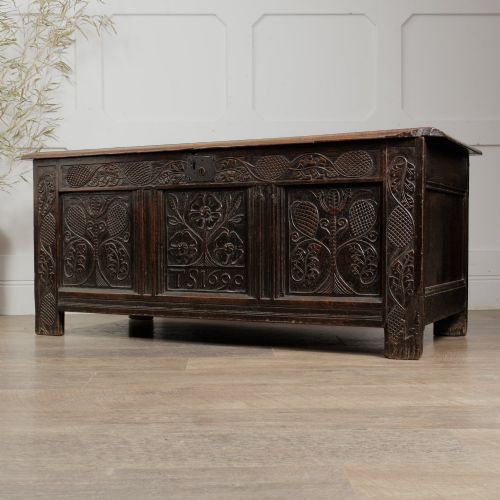
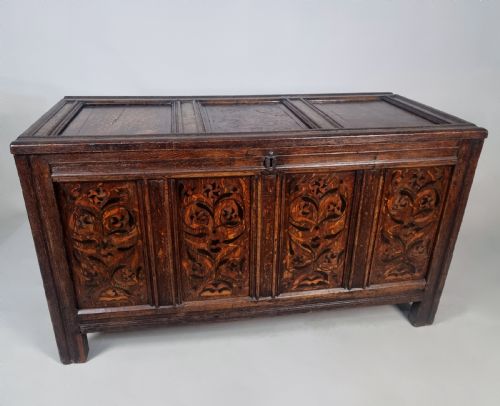
Iron fittings such as strap hinges, locks and decorative studded elements provided both structural reinforcement and security. Surfaces show carved geometric patterns, panelled fronts and occasionally inlay work rather than applied veneers.
Recorded forms include mule chests, bible boxes, sword chests, and travelling trunks alongside standard coffers.
Distinctions in Quality
The hierarchy of these pieces rests on the integrity of the timber, the complexity of the joinery, and the survival of original hardware. Joined chests with panelled construction represent a higher tier of craftsmanship than basic boarded boxes.
Subtleties such as crisp hand-carving, original iron hinges, and undisturbed surface patination elevate certain examples well above standard utility items. Alterations to hinges, feet or replacement boards naturally shift a piece's standing among collectors.
The 17th Century Trunk Glossary
- Coffer
- A heavy wooden chest traditionally used for storing valuables, linen or documents. These pieces often feature hinged lids and sturdy boarded or panelled sides.
- Mule chest
- A storage chest featuring one or more drawers beneath the main lift-top compartment. This form bridges the gap between a simple trunk and a full chest of drawers.
- Six-plank construction
- A simple method of building a box using six separate boards joined edge-to-edge at the corners. It represents some of the earliest and most direct furniture making techniques.
- Bible box
- A small desktop box or miniature trunk designed to hold sacred texts and writing implements. They frequently share decorative motifs with larger coffer chests of the same decade.
- Jacobean
- The stylistic period spanning the early to mid seventeenth century, characterised by rigid geometric decoration and dark oiled timber. Carved strapwork and channel moulding are frequent hallmarks of this aesthetic.
Frequently Asked Questions
What were 17th century trunks used for?
These robust containers served primarily for storing household textiles, garments, linen, and valuable documents securely away from damp floors and pests. Their heavy lids also allowed them to double as temporary seating or tables within modest homes.
Over time, specific variations developed for specialised tasks, such as holding family bibles, transporting goods on travels, or stowing weapons like swords.
How do I identify a genuine 17th century trunk?
Authentication relies on observing hand-tooled tool marks, pegged joinery, timber shrinkage, and the natural oxidisation of the wood over centuries. Genuine examples display historical wear patterns consistent with centuries of manual use.
Hardware such as wrought iron strap hinges and original locks provide crucial physical evidence. Comparison with documented period joinery helps confirm authenticity.
Are these trunks suitable for daily use today?
Solid oak and elm construction makes these pieces remarkably durable for contemporary domestic settings. Many owners utilise them as blanket boxes at the foot of a bed or as coffee tables in a living room.
Internal spaces offer practical storage for modern items while maintaining historic character. Care should be taken to keep them away from direct heat sources to prevent wood splitting.
What is the difference between a coffer and a trunk?
Historically, the terms often overlapped, but a coffer typically implies a more formally joined and panelled construction meant for stationary indoor storage. Trunks frequently suggest pieces intended for travel or constructed with simpler plank methods.
Both categories share the primary function of a hinged lid opening to a deep internal cavity. Surviving titles often combine these terms interchangeably based on proportion and build.