


Carved Frieze Chest
A carved frieze chest offers sturdy timber storage carrying decades of hand-carved decoration, grounding a room with genuine period character.
Carved Frieze Chest
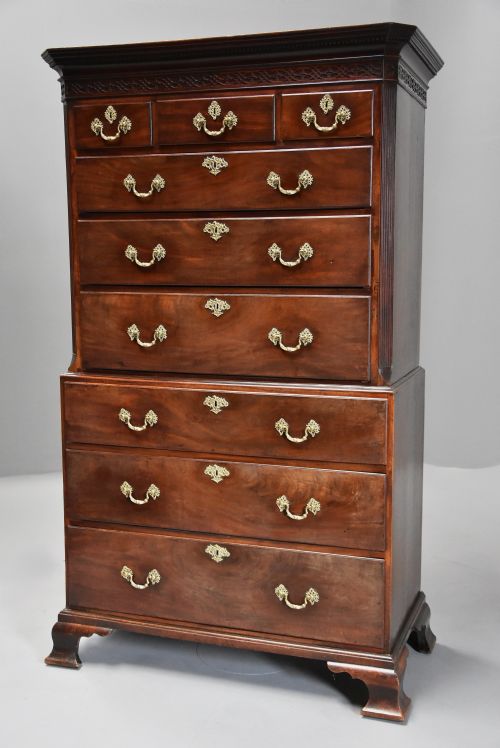
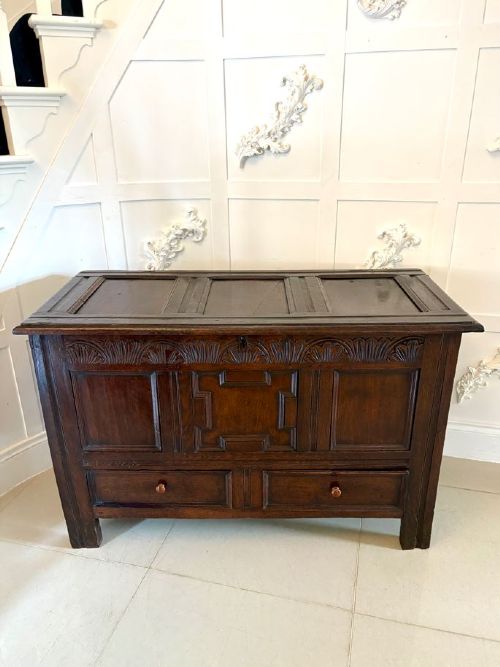
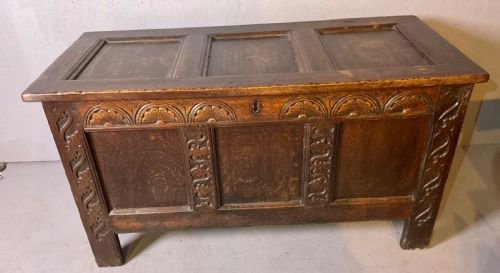
A carved frieze chest is a robust storage piece, appearing here predominantly as an oak coffer or mule chest from the seventeenth and eighteenth centuries, alongside occasional nineteenth-century mahogany chests of drawers and smaller bible boxes.
Buyers encounter sturdy panelled coffers featuring decorative carved bands along the upper rail, sometimes fitted with internal candle boxes or drawers.
The form spans centuries of domestic utility, changing from early oak coffers to later Georgian mule chests that incorporate drawer storage beneath the main compartment.
Materials and construction
Joiners built these pieces primarily from solid oak using frame and panel construction to accommodate seasonal wood movement, reinforced with iron or brass hardware.
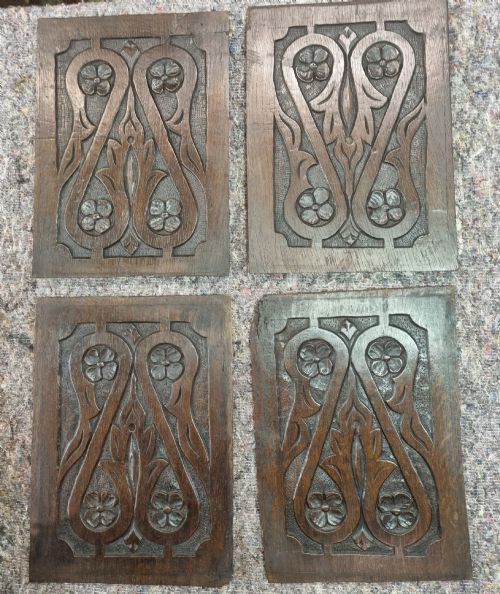
Craftsmen applied surface decoration directly to the timber using hand chisels and gouges, forming the characteristic carved frieze along the top rail of the chest.
Several seventeenth-century chests still hide tiny internal compartments, originally meant for hiding secret family stashes of coin or contraband.
Judging quality and proportion
Quality rests in the crispness of the hand-carved frieze and the integrity of the timber, where thick panels and minimal replacement parts elevate a piece.
Better examples maintain balanced proportions and original surface patination, whereas lesser pieces often show heavy timber shrinkage or extensive later alterations.
The Carved Frieze Chest Glossary
- Frieze
- The horizontal decorative band running across the upper portion of a chest, frequently carved with floral or geometric motifs.
- Coffer
- A heavy wooden storage chest with a hinged lid, traditionally used for valuables and textiles before fitted wardrobes existed.
- Mule chest
- A storage chest featuring one or more drawers built into the base beneath the main compartment.
- Bible box
- A small tabletop box with a sloped or flat lid, often incorporating a carved frieze and internal drawers for documents.
Carved Frieze Chest: Frequently Asked Questions
What is a carved frieze chest used for today?
These chests serve as practical living room or bedroom storage for blankets, linens, and bulky items while providing a flat surface for display.
Their robust construction allows them to function effectively as coffee tables or window seats in traditional and modern interiors alike.
How do I tell a seventeenth-century chest from a later one?
Early seventeenth-century examples rely on heavy oak construction with pegged frame and panel joinery, displaying deep hand-carved friezes characteristic of the period.
Later pieces from the eighteenth and nineteenth centuries introduce secondary woods, mahogany veneers, or integrated base drawers that reflect changing domestic needs.
What is the difference between a coffer and a mule chest?
A traditional coffer consists of a simple chest box accessed solely through the top lid for storing textiles and household goods.
A mule chest incorporates one or more drawers beneath the primary compartment, bridging the gap between a chest and a chest of drawers.
How do I care for antique oak furniture?
Keep wooden chests away from direct heat sources and drastic humidity changes to prevent the timber from splitting or warping over time.
Apply a traditional beeswax polish occasionally to nourish the dry oak surface and maintain its natural depth of colour.