


English Oak Coffer Box
An English oak coffer box is a sturdy period storage chest that brings centuries of rustic utility and hand-carved character to a modern room.
English Oak Coffer Box
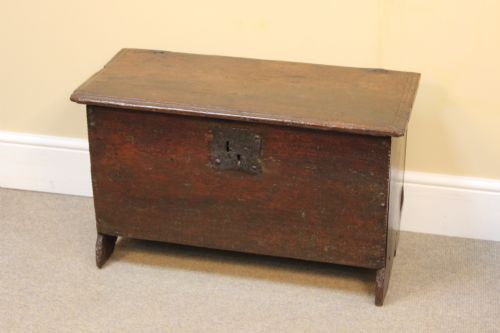
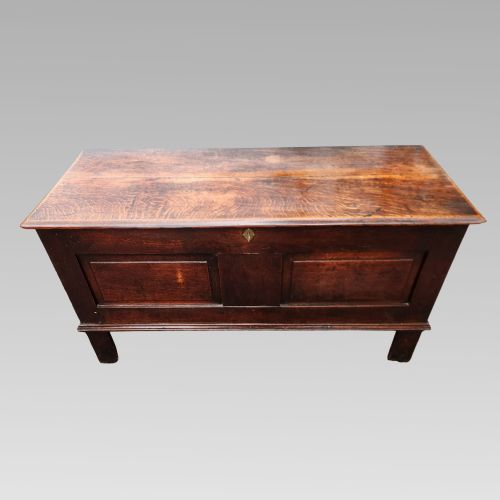
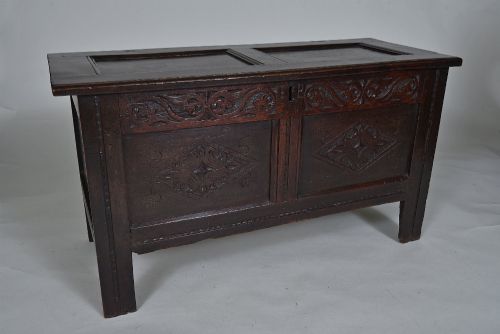
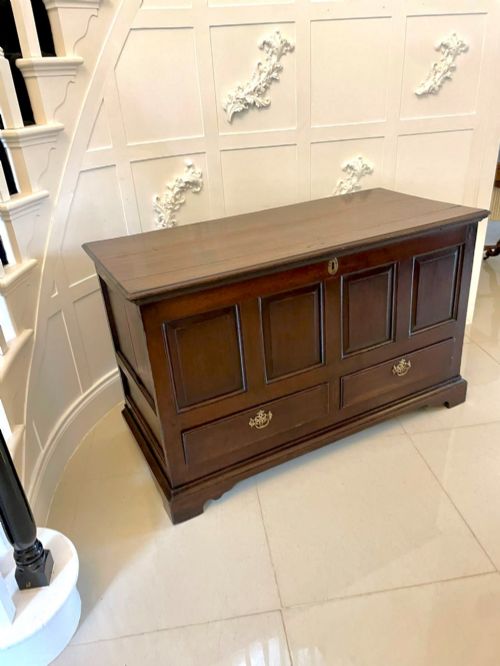
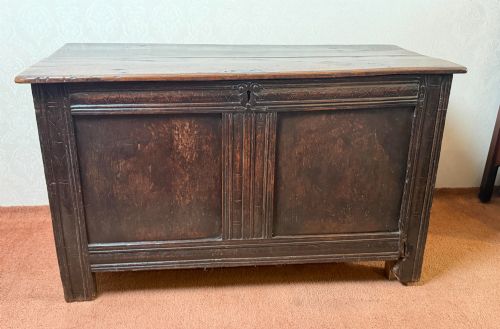
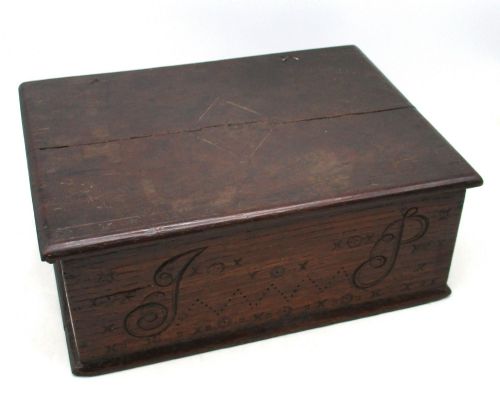
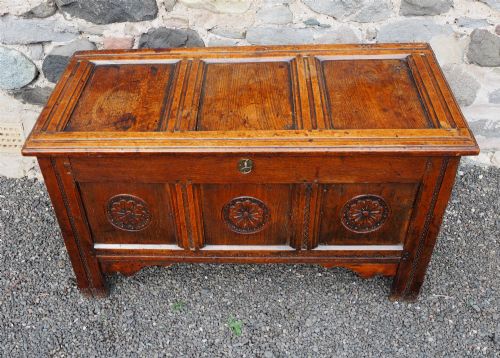
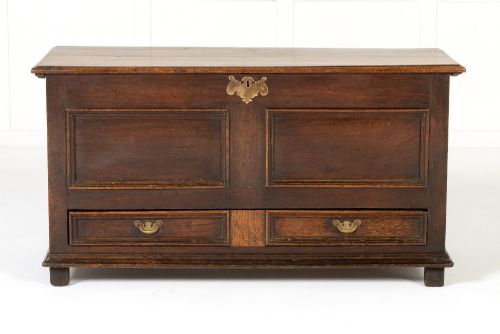
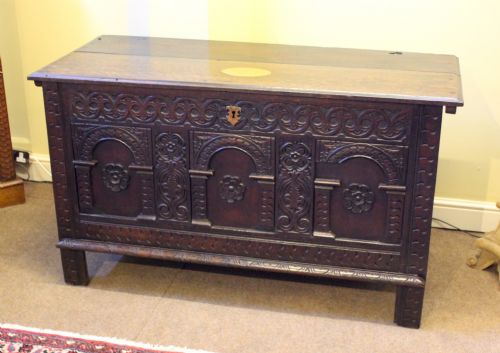
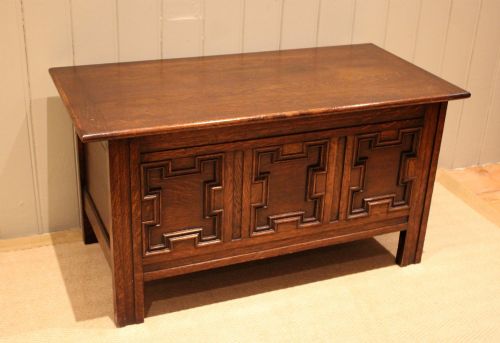
An english oak coffer box represents a durable tradition of domestic storage, spanning origins from the sixteenth century through the Georgian era. These pieces appear as large blanket chests, smaller document and bible boxes, and mule chests fitted with lower drawers.
The sixteenth and seventeenth centuries dominate the selection, bringing heavy boarded constructions and carved panels into the room. Later eighteenth-century and Georgian examples refine these forms while retaining the essential timber construction.
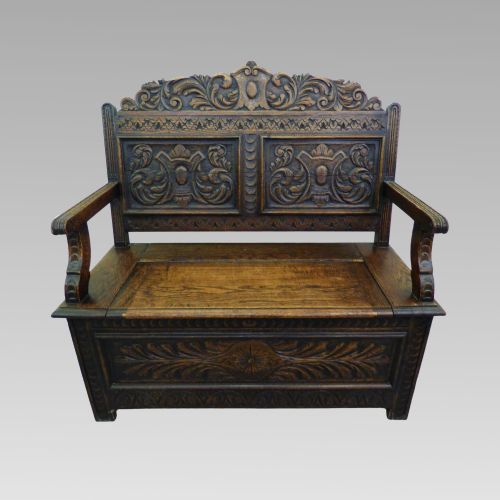
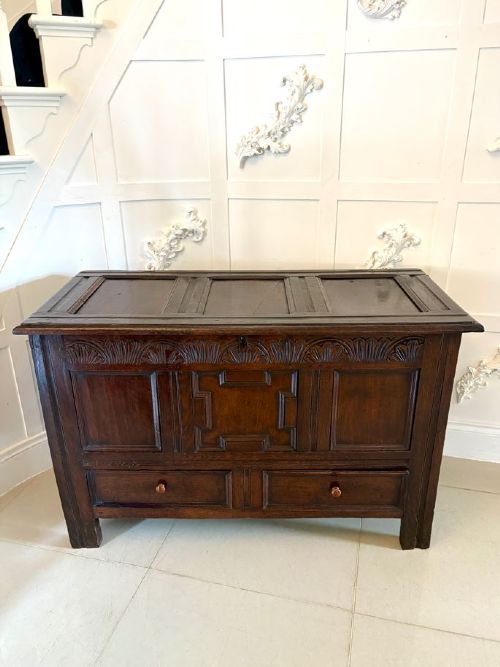
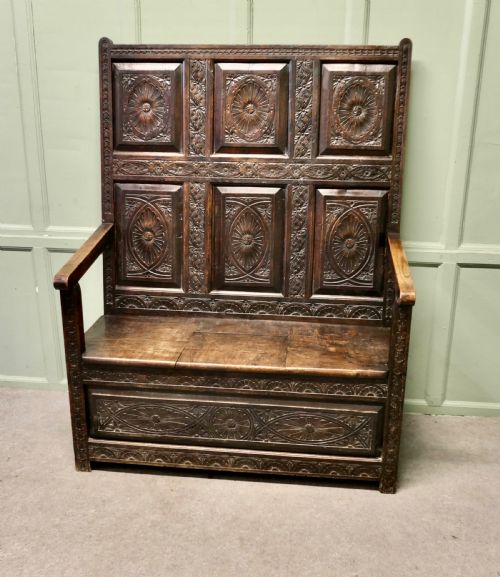
Mule chests and box settles expand the basic form to include drawers or high backs, offering versatile seating and storage. Buyers find these items functioning as window seats, blanket repositories, and occasional tables.
How they were made
Joiners built these pieces using solid oak boards, often held together with pegged mortise and tenon joints or heavy iron hardware. Metal hinges, iron straps, and brass details reinforce the lids and corners.
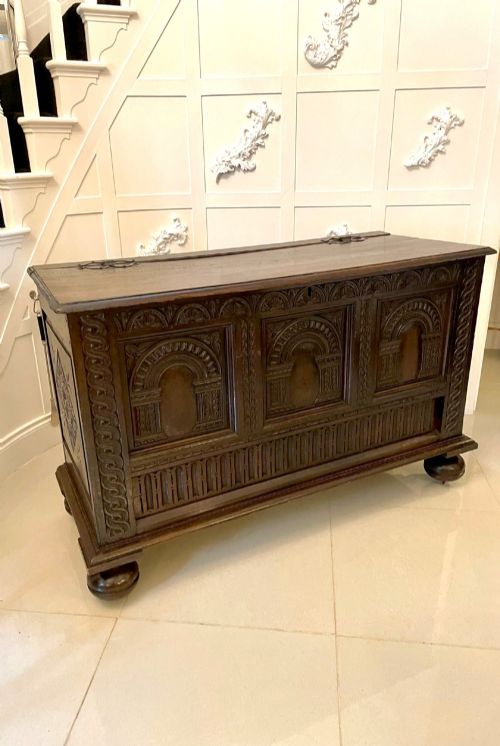
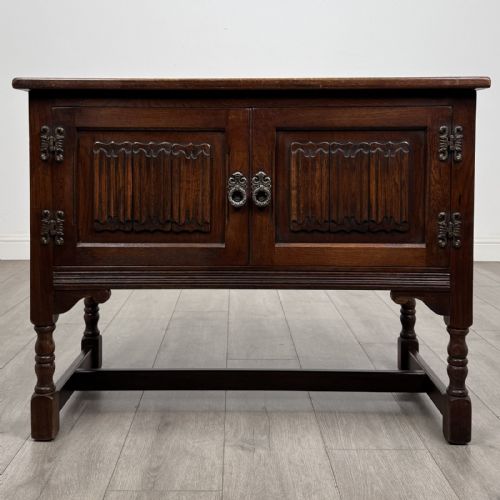
Carvers applied geometric arcading, stylized foliage, and linenfold patterns directly to the oak panels using hand chisels. Wood inlay and dark surface patination occasionally complement the carved decoration.
English Oak Coffer Box Retail Price Guide 2026
Typical asking prices for english oak coffer box among the pieces listed under this phrase on Sellingantiques today, from the lower quarter to the upper quarter. They describe what is for sale here now, not the wider market.
Some seventeenth-century bible boxes doubling as portable writing desks travelled across the country to keep sermons safe from wandering livestock.
What varies in quality
Depth and crispness of the hand-carving separate standard utility chests from finer civic or domestic commissions. Crisp arcading and balanced panel proportions indicate a skilled hand at the bench.
Survival of original timber boards, hinges, and lids governs the integrity of each piece. Surface patination achieved through centuries of handling adds depth to the better examples.
The English Oak Coffer Box Glossary
- Coffer
- A large wooden chest used historically for storing valuables, linen, or documents. These pieces typically feature a hinged lid and heavy timber construction.
- Mule chest
- A storage chest with one or more drawers built into the base beneath the main compartment. This form bridges the traditional coffer and the chest of drawers.
- Bible box
- A small tabletop or desk box designed to hold sacred texts and family documents. They often feature sloping lids and compact proportions.
- Linenfold
- A style of wood carving that imitates folded fabric, popular on Tudor and Jacobean panels. This technique adds texture to the front of chests and cupboards.
- Arcading
- A decorative series of arches supported by piers, carved in relief onto woodwork. This classical motif appears frequently on seventeenth-century pieces.
English Oak Coffer Box: Frequently Asked Questions
What is an english oak coffer box used for?
These pieces serve primarily as practical storage furniture for blankets, linens, and household items. Their flat lids also allow them to function as window seats, benches, or occasional tables.
Historically, households relied on them to secure valuable documents, silver, and clothing against theft and dampness. Today, they bring historic character and enclosed storage into contemporary living spaces.
How do I date an antique oak coffer?
Dating relies on observing construction methods, hardware types, and decorative styles characteristic of specific reigns or centuries. Sixteenth-century examples often use boarded construction, while seventeenth-century pieces favour frame and panel methods with carved arcading.
Changes in hinge design and drawer configuration point toward later eighteenth-century or Georgian periods. Comparing the joinery and tool marks helps narrow the decade of manufacture.
Are these chests heavy to move?
Solid oak construction and thick timber boards make these chests exceptionally heavy and solid. Moving them typically requires two people, especially larger seventeenth-century blanket chests and mule chests.
Smaller bible boxes and document boxes lift easily by hand, but larger floor-standing trunks remain stationary once placed in a room.
How do I care for antique oak furniture?
Maintaining these pieces requires placing them away from direct heat sources and dramatic humidity fluctuations. Excessive dryness causes the old oak timber to split or warp.
Occasional application of appropriate wax feeds the wood and preserves the surface patination. Avoid harsh modern cleaning chemicals that strip the historic finish.